Why Study and Celebrate the Biblical Feasts?

If you had to sum up the entire message of the Bible in one word what would it be? Probably words such as love, hope, salvation, eternal life or heaven are coming to your mind. But I challenge you to find a better word than the following: r-e-c-o-n-c-i-l-i-a-t-i-o-n. The dictionary defines reconciliation as “to restore to friendship or harmony, to settle or resolve a quarrel, to make consistent or congruous.” 

When the first humans chose to listen to the lies of the serpent and to rebel against YHVH and to give in to sin at the tree of the knowledge of good and evil at the very beginning, our first parents chose the path of separation from their Heavenly Father. Sin causes man to be separated from our totally holy, righteous, sinless and loving Creator.

Since that time YHVH has been endeavoring to reconcile man to himself. He has laid out the criteria for this to occur—for man to once again have a loving and intimate relationship with his Heavenly Father as did Adam and Eve before they sinned.
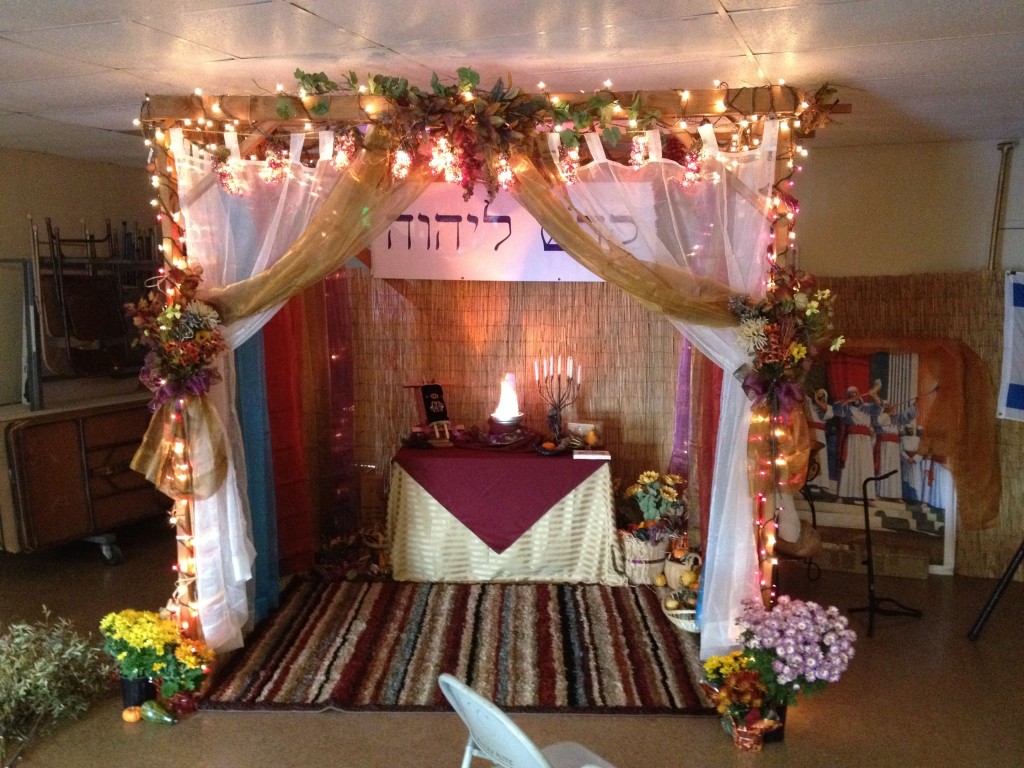
Sukkah 2

The seven biblical feasts of YHVH prophetically represent the steps man must take to be reconciled to his Heavenly Father. They are the complete plan of salvation or redemption rolled up into an easy-to-understand seven step plan. Though a child can understand these steps, the truths contained therein


Continue reading →


Blog Scripture Readings for 2/3 through 2/9/13

Aside

Parashat Mishpatim — Exodus 21:1 – 24:18
Haftarah — 2 Kings 12:1 – 17 **
Prophets — 2 Kings 15:1 – 21:26
Writings — Psalms 119:33 – 119:144
Testimony — Luke 23:44 – 24:52; John 1:1 – 3:21

Most of this week’s blog discussion points will be on these passages. If you have general comments or questions on the weekly Scripture readings not addressed in a blog post, here’s a place for you to post those. Just use the “leave a reply” link below.

The full “Read Through The Scriptures In A Year” schedule, broken down by each day, can be found on the right sidebar under “Helpful Links.” There are 4 sections of scripture to read each day. One each from the Torah, the Prophets, the Writings, and from the Testimony of Yeshua. Each week, the Torah and haftarah readings will follow the traditional one-year reading cycle.

Weekly Blog Scripture Readings for 2/3 through 2/9/13.

** A different Haftarah is read when it is a special sabbath in Jewish tradition. On 2/9 is the traditional “Shabbat Shekalim”, the Sabbath that falls just before the last rosh chodesh (new moon/month) of the year when the Shekels were “due” into the temple treasury. This haftarah is read as a reminder.


Exodus 19 Versus Hebrew 4:16 on Coming Before Elohim

Why is it essential to study the example of the children of Israel preparing themselves to come into the presence of YHVH in Exodus 19? After all, if Yeshua did it all for us, we can just come boldly before the Father’s throne anytime, anyway we want, right (Heb 4:16)?

9842706

Let’s explore this concept a little to see what the Bible has to say about it.

Paul says in I Corinthians 10:11,

Now all these things happened to them [i.e., the children of Israel] as examples, and they were written for our admonition, upon whom the ends of the ages have come. (See also Rom 15:4.)

The writer of Hebrews has something similar to say in his prefatory remarks to his statement in Hebrews 4:16 about coming boldly before the throne of YHVH through the merits of the sinless righteousness of Yeshua our High Priest. In the preceding several verses, the author draws upon the example of the children of Israel (Heb 4:1–10) as an example for us not to follow. They were a faithless and disobedient lot (they rebelled against the Torah-word of Elohim)!

Then in Hebrew 4:11, the author starts with the connecting word “therefore,” indicating that what follows is related to that which preceded it. He goes on to admonish us not to follow the Israeites’ example of disobedience (i.e., Torahlessness or lack of faith in and obedience to the word of Elohim).

Next, the author likens the word of Elohim to a sharp two-edged sword Continue reading →


What Does YHVH Require of Humans to Come into His Presence?

What are the terms and conditions to coming into the presence of Elohim? Even though now we have access to the Father by the blood of Yeshua the Lamb of Elohim, and even though the veil between the Holy of Place and the Holy of Holies (representing the divine presence or throne room of Elohim) has been opened for all to come in), what can we learn from this passage about preparing ourselves to come into YHVH’s presence? Let’s read and find out.

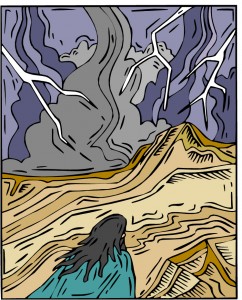
Mt. Sinai 2-20474010

Exodus 19, An invitation. In this chapter, YHVH invites his people to come near to him, to receive his Torah, and to enter into a spiritual relationship with him. He had just delivered them from their sins, suffering and bondage when he led them out of Egypt (Exod 19:4). He now offered them enticing blessings and status among the nations of the world (Exod 19:6) if, and only if, his people would agree to his terms and conditions (Exod 19:5).

But YHVH would not allow his people to accept his benefits on their terms, but only on his terms. This is where men and religious systems have missed it: they want to accept YHVH on their own terms, not YHVH’s terms. Such is the religion of humanism—that man knows better than YHVH what is good for him, which is the religion the serpent pawned off on the first man and woman at the tree of knowledge. The problem is that accepting YHVH on our terms is called sin, which leads to misery and eventually to eternal death!

There are preconditions to meeting with YHVH and coming into relationship with him—coming to his high and holy mountain, his place of abiding, and his presence. Continue reading →


New Video: The Two Sticks Message from Abraham to the New Jerusalem

In this teaching, Natan Lawrence traces the spiritual history of the one new man (i.e., born-again believers) back to Abraham, through the prophets, then to Yeshua and apostles and forward to the New Jerusalem. Why is this important to know? Because it’s the history of your spiritual family, and to know your spiritual heritage and destiny, you need to have a sense of your family history.


The Two Sticks Message from Abraham to the New Jerusalem

The Story of Redeemed Israel from Abraham to the New Jerusalem

The truth of the two houses of Israel literally permeates the entire Bible from Genesis to Revelation. Entire chapters and whole books of the Bible are dedicated to this message, so it’s not one that can be ignored. Multiple books could be written and numerous sermons preached on this subject. However, just for the fun, let’s see if we can condense this vast subject down into a short teaching, and yet still capture the essence of what the Bible reveals on this vital topic.

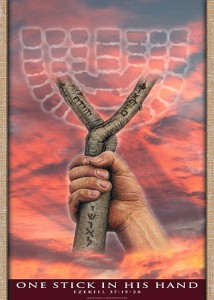
One Stick in His Hand

Image courtesy of messianicisrael.com

The biblical prophets likened the nation of Israel to an olive tree that had split into two sub-trunks. One of these smaller trunks represented the nation of Judah, while the other smaler trunk the nation of Ephraim (and Manasseh) or Samaria. It was the same tree with the same main trunk and roots, but it became smaller trunks. One trunk went one way, and the other went the other way. Eventually, YHVH broke these two trunks off of the main trunk of the olive tree, but then promised to graft them back into the main tree trunk and make of two nations one nation or one tree again. Before discussing this, let’s review some family history.

A Special People—A Special Assignment

Back in Genesis, nearly 4000 years ago,

Continue reading →


Blog Scripture Readings for 1/27 through 2/2/13

Aside

Parashat Yitro — Exodus 18:1 – 20:23
Haftarah — Isaiah 6:1 – 7:6; 9:5–6 (9:6–7) *
Prophets — 2 Kings 7:1 – 14:29
Writings — Psalms 113:1 – 119:32
Testimony — Luke 20:1 – 23:43

Most of this week’s blog discussion points will be on these passages. If you have general comments or questions on the weekly Scripture readings not addressed in a blog post, here’s a place for you to post those. Just use the “leave a reply” link below.

The full “Read Through The Scriptures In A Year” schedule, broken down by each day, can be found on the right sidebar under “Helpful Links.” There are 4 sections of scripture to read each day. One each from the Torah, the Prophets, the Writings, and from the Testimony of Yeshua. Each week, the Torah and haftarah readings will follow the traditional one-year reading cycle.

Weekly Blog Scripture Readings for 1/27 through 2/2/13.

* Verse numbers in parenthesis refer to the verse number in Christian Bibles.