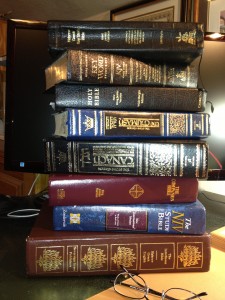
Numbers 13:28, This verse begins with the word but or nevertheless. The spies’ initial report (verse 27) was factual and was in agreement with what YHVH had already said about the land, but all that was disqualified and negated in the minds of the faithless spies by the statement in verse 28 beginning by the qualifier but.
Medieval Jewish Torah commentator Rambam comments that the key word in their report that revealed them to be lacking in faith was the word but. By using a word that implied a contradiction to the optimism of their first two sentences, they were, in effect, telling that nation that no matter how rich and blessed the land was, it was beyond their reach. The inhabitants were too strong and their cities too impregnable. Ordinary human beings could not do battle with giants. Thus the spies were advising the nation not even to attempt an assault on Canaan.
Numbers 13:32, It is a land which devours its inhabitants.The Jewish commentators in TheArtScrollStone Edition Chumash cogently observe, “Such misinterpretations are typical of people who choose not to have faith. Invariably they interpret events in a way that will conform to their own notions” (p. 803). Having faith in YHVH is a conscious choice that one has to make. Faith does not come automatically. Fear, doubt and unbelief do, however, and are part of the fallen nature or evil inclination that all men possess.
Paul talks about leaving behind the fallen, faithless, sin-bent nature (Rom 7) and moving into a walk of faith in the Spirit of Elohim when in Romans 8:1–2 he contrasts the “law of sin and death” with “the law of the Spirit of life in Messiah Yeshua.” Through Yeshua we become more than conquerors (Rom 8:37). First John 5:4 says, “For whatever is born of Elohim overcomes the world, and this is the victory that overcomes the world, even our faith[i.e. faith in Yeshua who is the Author and Finisher of our faith, the One who gives us the gift of faith, the One in whom we have faith, and on whose words and promises believers stand firm and secure as a house built on a rock].”
Fear of death is the mother of all fears and is what plagued the disbelieving Israelites. Through identification with Yeshua’s death, burial and resurrection at baptism (Rom 6:3–6) we too (through Yeshua) can be victorious over the sting of death and the grave, which is the death sentence upon all Torah-lawbreaking mortals (note 1 Corinthians 15:47–58 and rejoice!).
Most of this week’s blog discussion points will be on these passages. If you have general comments or questions on the weekly Scripture readings not addressed in a blog post, here’s a place for you to post those. Just use the “leave a reply” link below.
The full “Read Through The Scriptures In A Year” schedule, broken down by each day, can be found on the right sidebar under “Helpful Links.” There are 4 sections of scripture to read each day. One each from the Torah, the Prophets, the Writings, and from the Testimony of Yeshua. Each week, the Torah and haftarah readings will follow the traditional one-year reading cycle.
Weekly Blog Scripture Readings for 5/26 through 6/1/13.
Romans 10:3, Elohim’s righteousness … their own righteousness.
Imputed Righteousness/Faith in Yeshua Combined with Torah-Obedience Equals True Righteousness
Rom 9:31–33, But Israel, which followed after the law of righteousness, hath not attained to the law of righteousness. Wherefore? Because they sought it not by faith, but as it were by the works of the law. For they stumbled at that stumblingstone; as it is written, “Behold, I lay in Zion a stumblingstone and rock of offence: and whosoever believeth on him shall not be ashamed.”
There is a psuedo-righteousness that comes from a perfect and legalistic obedience to the Torah. Theoretically, one could keep all the regulations of Torah, but without a circumcised heart characterized by love and faith, and still miss true righteousness. A letter-of-the-law, works-based or legalistic adherence is the pseudo-righteousness that Yeshua was attacking in the hypocritical religionists of his day. They were self-righteously proud of their works, yet they had missed the heart and the spirt of the Torah. Yeshua called these things — judgment, mercy and faith (i.e, the heart and the spirit of the Torah) — the weightier matters of the Torah (Matt 23:23).
Next we see that true righteousness combines faith in Yeshua the Living Torah with obedience to the Written Torah. Continue reading →
Numbers 9:6–11, Defiled by a human corpse. This passage can also be understood allegorically.
The second Passover is a prophetic picture pertaining to the lost and scattered sheep of the house of Israel who, like those individuals in this passage, had been journeying in exile (just like the prodigal son in Yeshua’s parable) among the Gentiles in a foreign land and away from the land and Elohim of Israel.
In the process of their spiritual wandering, they have become defiled by sin and death (likened here to touching a human corpse), since the wages of sin is death (Rom 6:23), and all men have sinned and fallen short of the YHVH’s glory (Rom 3:23).
While in exile (again like the prodigal son in the parable), they awake to their spiritual apostasy and want to come back home to observe the Passover (a picture of redemption or salvation). Passover is the only biblical festival for which YHVH’s allows a make up.
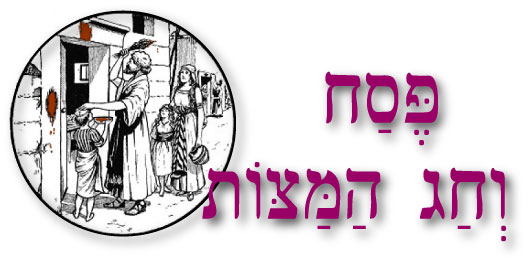
At the first Passover in Egypt, those who weren’t in their houses under the lamb’s blood-painted doors fell under the death penalty for sin and were killed. This teaches us that Passover is a picture of man’s obtaining salvation through the blood of Yeshua, the Messiah who is the Lamb of Elohim.
YHVH desires that all men be saved and come to know Yeshua the Savior, and Passover is a picture of this. This is why he gives men a second chance to keep the Passover—he wants all to be saved (John 3:16; 2 Pet 3:9), including his lost, scattered, exiled and prodigal children from the house of Israel.
Please allow me to thank those of you who have contributed financially to Hoshana Rabbah Biblical Discipleship Resources. Also, thanks to those who have supported us through prayer, by your viewership, readership and by referring this ministry to your friends. We are deeply grateful for all of your love and support!
When I say “we,” I’m not referring to the hired staff that we don’t have, although from appearances (our website, teachings, videos, and so on) it may seem otherwise. Hoshana Rabbah is made up of my wife, Sandi, and me. That’s it. What’s more, I work a full-time job (40 to 60 hours per week), which is how I support my family (I receive no remuneration from this ministry—my work is all volunteer). Additionally, I pastor a local congregation (from which I also receive no remuneration). For her part, Sandi, who manages the website (a huge, time consuming responsibility) receives a small financial allowance each month (she could easily make three or four times as much in the corporate world). Beyond this, all financial contributions go directly into the ministry to pay for expenses to serve the needs of the body of Yeshua. So again, thank you for your support. We do this because we love Yeshua, because he has called us with an irresistible and irrevocable ministry calling, and because we love the brethren. It’s not about us, it’s about Him, so give our Lord all the glory!
Now having shared this, please let me share with you some ministry update information. Continue reading →
What does it mean to have a circumcised heart? What’s an uncircumcised heart? How does one go from having a hard and stoney heart to a soft heart upon which YHVH can write his Torah—his instructions in righteousness? This video discusses this critical, salvational issue.
Here is a study guide to go with this video—
The heart of man in its natural, spiritually unregenerted state is hard, obstinate and rebellious toward the Torah-instructions of YHVH Elohim. Man can’t help himself—this is just the way he is innately. This is the bad news. the good news, however, is that YHVH Elohim, man’s creator, knows how to fix the problem. The solution is the “rain” of YHVH’s Holy Spirit, which can fall on the stoney ground of men’s heart, soften that hard ground, and allow the good seed of Elohim’s Word to germinate, grow and eventually bear spiritual fruit. A day is coming in the near future prior to the return of Yeshua the Messiah when YHVH will pour out his Spirit upon many people causing them to forsake their wicked and rebellious ways and turn to him in loving obedience.
The Bad News: The Problem Is Man’s Sinful Condition
We must first discuss the bad news before we can talk about the good news. Sadly, modern gospel preachers often omit or only lightly touch on or water down the bad news of the sinful condition of man’s spiritually unregenerated heart. Here’s what the Word of Elohim has to say about men’s heart
Jer 17:9 The heart is deceitful [sly, insidious, deceitful, slippery] above all things, and desperately wicked [to be weak, sick, frail, to be incurable, to be sick]: who can know it?
Rom 3:10–18 As it is written, There is none righteous, no, not one: There is none that understandeth, there is none that seeketh after Elohim. They are all gone out of the way, they are together become unprofitable; there is none that doeth good, no, not one. Their throat is an open sepulchre; with their tongues they have used deceit; the poison of asps is under their lips: Whose mouth is full of cursing and bitterness: Their feet are swift to shed blood: Destruction and misery are in their ways: And the way of peace have they not known: There is no fear of Elohim before their eyes.
Rom 7:14–25 For we know that the law is spiritual: but I am carnal, sold under sin. For that which I do I allow not: for what I would, that do I not; but what I hate, that do I. If then I do that which I would not, I consent unto the law that it is good. Now then it is no more I that do it, but sin that dwelleth in me.For I know that in me (that is, in my flesh,) dwelleth no good thing: for to will is present with me; but how to perform that which is good I find not. For the good that I would I do not: but the evil which I would not, that I do. Now if I do that I would not, it is no more I that do it, but sin that dwelleth in me. I find then a law, that, when I would do good, evil is present with me. For I delight in the law of Elohim after the inward man: But I see another law in my members, warring against the law of my mind, and bringing me into captivity to the law of sin which is in my members. O wretched man that I am! who shall deliver me from the body of this death? I thank Elohim through Messiah Yeshua our master. So then with the mind I myself serve the law of Elohim; but with the flesh the law of sin.
Rom 8:1 There is therefore now no condemnation to them which are in Messiah Yeshua, who walk not after the flesh, but after the Spirit. For the law of the Spirit of life in Messiah Yeshua hath made me free from the law of sin and death. For what the law could not do, in that it was weak through the flesh, Elohim sending his own Son in the likeness of sinful flesh, and for sin, condemned sin in the flesh: That the righteousness of the law might be fulfilled in us, who walk not after the flesh, but after the Spirit. For they that are after the flesh do mind the things of the flesh; but they that are after the Spirit the things of the Spirit. For to be carnally minded is death; but to be spiritually minded is life and peace. Because the carnal mind is enmity against Elohim: for it is not subject to the law of Elohim, neither indeed can be. 8 So then they that are in the flesh cannot please Elohim. 9 But ye are not in the flesh, but in the Spirit, if so be that the Spirit of Elohim dwell in you. Now if any man have not the Spirit of Messiah, he is none of his.
Heb 3:7–19 Wherefore (as the Ruach HaKodesh saith, Today if ye will hear his voice, Harden [to render obstinate, stubborn] not your hearts, as in the provocation, in the day of temptation in the wilderness: When your fathers tempted me, proved me, and saw my works forty years. Wherefore I was grieved with that generation, and said, They do alway err in their heart; and they have not known my ways. So I sware in my wrath, They shall not enter into my rest.) Take heed, brethren, lest there be in any of you an evil heart of unbelief [unfaithfulness, faithless, want of faith, unbelief, weakness of faith], in departing from the living Elohim. For some, when they had heard, did provoke [exasperate, to rouse to indignation]: howbeit not all that came out of Egypt by Moses. But with whom was he grieved forty years? was it not with them that had sinned, whose carcases fell in the wilderness? And to whom sware he that they should not enter into his rest, but to them that believed not? So we see that they could not enter in because of unbelief [unfaithfulness, faithless, want of faith, unbelief, weakness of faith].
Heb 4:6–7 Seeing therefore it remaineth that some must enter therein, and they to whom it was first preached entered not in because of unbelief [obstinacy, obstinate opposition to the divine will]: Again, he limiteth a certain day, saying in David, To day, after so long a time; as it is said, To day if ye will hear his voice, harden [to render obstinate, stubborn, to be hardened, to become obstinate or stubborn] not your hearts.
Rom 3:23 For all have sinned, and come short of the glory of Elohim.
1 John 1:8–10 If we say that we have no sin, we deceive ourselves, and the truth is not in us If we confess our sins, he is faithful and just to forgive us our sins, and to cleanse us from all unrighteousness. If we say that we have not sinned, we make him a liar, and his word is not in us.
The Good News: The Father Is Calling His Prodigal Children Back to Him
Because of man’s sinful rebellion against Elohim, which commenced at the tree of knowledge, man has been in a state of spiritual wandering, separation and exile from a loving relationship with Elohim ever since. This reality is illustrated by two notable historical examples from the pages of the Bible. Because of sin and rebellion, YHVH cast Adam and Eve out of the Garden of Eden, and similarly, he cast Israel out of the Promised Land because of their apostasy from the Torah. Continue reading →