After Two Days (Is That Now?)

Hosea 5:15–6:3, I will go and return to my place. This passage is a clear prophecy concerning the resurrection of the righteous dead of which Messiah Yeshua is the first to raise.

Verse two contains a Hebrew parallelism, which is a Hebraic literary device where the same thought is expressed differently back-to-back. The word revive is the Hebrew word chayah, the basic Hebrew root verb meaning “to live or to have life.” The word raise up is the Hebrew word quwm meaning “to rise, arise, stand, stand up.” According to TWOT, the basic meaning of this word “denotes rising up from a prostrate position (e.g. Josh 3:16).”

YHVH is speaking here in the broader context of this passage concerning his Messianic role as the lion of Judah (Rev 5:5). After presenting himself as such to both houses of Israel (Ephraim [i.e., the Christians] and Judah [i.e., the Jews]) at his first coming, verse 14 states that Messiah would “go away … and none shall rescue him.”

Then in verse 15 we read that, “I [Messiah speaking] will go and return to my place till they [Ephraim and Judah] acknowledge their offense and seek my face ….” (This refers to Yeshua’s absence from the earth between his first and second comings.) What is their offense? Continue reading →


Which Mountain Will You Choose: Gerizim or Ebal?

Deuteronomy 11:26–28, This passage begins with the words, “Behold, I set before you this day a blessing and a curse; a blessing, if you will obey the commandments of YHVH your Elohim, which I command you this day; and a curse, if you will not obey the commandments of YHVH your Elohim, to go after other gods, which you have not known” (Deut 11:26–28).

9939332

After this, in verse 29, YHVH instructs the Israelites that upon entering the Promised Land, they are to stop between the mountains of Gerizim and Ebal, which are located at the entry point of the land. The former mountain represents a blessing, while the later represents a curse. The town of Shechem is located between the two mountains. The Hebrew word Shechem means “shoulder” or “back” (Strong’s H7927). The shoulder supports the head, which through the disposition of the mind and the direction in which the head is pointed, determines the path a person will walk whether good or evil.

It was at Shechem, between the two mountains representing good and evil, that Israel renewed its covenant with YHVH before entering the Promised Land (Josh 8:30–35). The power of the covenant that the people made with YHVH on that day thousands of years ago is still visible in the modern land of Israel: Mount Ebal is bare and devoid of vegetation, Continue reading →


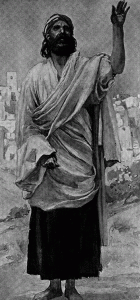
Hosea: An Ancient Prophecy That Involves Us

Hosea 2:1–22, Hosea: The Story of YHVH’s Unfailing Love for His People

The prophet Hosea, a native of the northern kingdom of Israel, ministered to that nation (called Ephraim or the house of Israel, as opposed to the southern kingdom, called Judah or the house of Judah) for about 38 years during the middle part of the eighth century b.c. (from about 770–725 b.c.). He lived in the final tragic days of the house of Israel and prophesied that Israel’s enemy, the Assyrians, would be instruments in YHVH’s hands to bring judgment against Israel if that nation did not repent and cease its spiritual harlotry and idolatry. That the book contains references to the kingdom of Judah is probably due to the fact that the northern kingdom fell in 721–722 b.c. while Hosea was still ministering and that he most likely transplanted to Judah where he may have finished writing his book (niv Study Bible, p. 1312).

25341417

The theme of the Book of Hosea revolves around the prophet’s personal family life. YHVH’s prophets were often required to act out in their personal life something that would serve as a prophetic allegory of what would happen to the people of Israel if they failed to repent of their sin and return to YHVH. In Hosea’s case, YHVH required him to act out what had already happened to the northern kingdom. Because they had turned from YHVH, their spiritual husband, and taken to consorting with foreign spiritual lovers characterized by their forsaking the Torah, turning to serve pagan gods, and succumbing to heathen religious rituals and lifestyles, YHVH instructed the prophet to marry a harlot. In this way, the family life of Hosea would become a spiritual mirror that could be held up in front of the nation so that it could see itself as YHVH’s saw it. Furthermore, being married to an unfaithful wife gave Hosea direct insight into the emotional turmoil a husband endures when married to an adulterous woman that would provide the passion and impetus when defending YHVH in writing about the spiritual plight of adulterous Israel.

Hosea’s life must have been a sad one, for his adulterous wife bore him three children. From the text, it cannot be determined whether they were his children, or another man’s. Despite this, Hosea accepted his wife and children with an unconditional love representing YHVH’s love for Israel, Continue reading →


No Pain, No Gain

Deuteronomy 8:2–3, 6ff, YHVH afflicted/humbled you. Does the concept of YHVH afflicting his people bother you? Perhaps he will do this to us if and when we need it? The word afflict/anah (Strong’s H6031) literally means “to become low, depressed, put down or stoop.” (Note some other places where anah is used: Pss 55:19; 88:7; 90:15; 119:71, 75.) Scripture says that Israel exited Egypt with “a high hand/upraised arm” (Exod 14:8 and Num 33:3). The word high/upraised can connote haughtiness or arrogance, or it can mean that the children left Egypt triumphantly and in jubilation waving banners (The ArtScroll Stone Edition Chumash, p. 369). What do you think? Did they leave Egypt in a spirit of contrition or arrogance? If the former, then why would they need humbling?

Are we any different? Do we need to be humbled? Down through the ages, YHVH has allowed his servants to suffer, but it was for their spiritual growth and benefit. What did Paul say about his thorn in the flesh? (See 2 Cor 12:7.) Why did Job experience what he did? (Read Job 42.) The process of humbling us so that we might have a higher view of YHVH results in greater contrition on the part of humans. When this happens, the blessings, power, anointing and provision of YHVH are able to flow into our lives more readily.

How has YHVH been trying to humble your flesh that he might bring you to a deeper level spiritually? The ArtScroll Chumash comments, “It is true that Elohim subjected the people to some hardships in the wilderness, but even that was for their good; just as a father may chastise his child to prepare him for the future” (p. 983). Discuss this issue in light of the sufferings of YHVH’s servants while they were faithfully awaiting their spiritual inheritance as recorded in Hebrews 11. (Compare this with Jas 1:12–17 and 1 Cor  3:13.) Discuss the two types of judgments of YHVH as recorded in Scripture: his judgments unto repentance and his judgments unto death. What are some examples of each? Do YHVH’s saints have to go through the latter type of judgment? (Examples: Noah and the flood; Lot and Sodom and Gomorrah; the Israelites in the plagues on Egypt; the saints and the tribulation, the great tribulation versus the wrath of Elohim periods at the end of the age [these are three separate periods/events]; see also Heb 12:3–11).


New Video:Yeshua Is Your Savior, But Is He Your LORD?

Yeshua as Lord (Master) is mentioned some 740 times in the New Testament, even more than his being the Messiah (or Christ). Understanding the implications of his lordship over our lives has major implications on our salvation — even whether we are saved or not. In this video, find out why and how he is Lord (Master) and how it affects you now and eternally.


Blog Scripture Readings for 7/21 through 7/27/13

Aside

Parashat Eikev — Deuteronomy 7:12 – 11:25
Haftarah — Isaiah 49:14 – 51:3
Prophets — Hosea 2:1 – 8:14
Writings — Nehemiah 8:1 – 13:31; 1 Chronicles 1:1 – 1:54
Testimony — Colossians 1:1 – 4:18; 1 Thessalonians 1:1 – 3:13

Most of this week’s blog discussion points will be on these passages. If you have general comments or questions on the weekly Scripture readings not addressed in a blog post, here’s a place for you to post those. Just use the “leave a reply” link below.

The full “Read Through The Scriptures In A Year” schedule, broken down by each day, can be found on the right sidebar under “Helpful Links.” There are 4 sections of scripture to read each day. One each from the Torah, the Prophets, the Writings, and from the Testimony of Yeshua. Each week, the Torah and haftarah readings will follow the traditional one-year reading cycle.

Weekly Blog Scripture Readings for 7/21 through 7/27/13.


He’s Your Savior, But Is He Your LORD?

The Lordship of Yeshua

The Lordship of Yeshua over all aspects of our lives must be stressed in the Hebraic Roots Movement and, presently, to our shame, it is not. The rule of Torah is trumpeted loudly by many Hebraic roots Torah teachers, but the lordship of Yeshua, sadly, is not. Yet the lordship of Yeshua is a dominant theme in the Testimony of Yeshua (or New Testament), and we’re preaching a skewed gospel message if we don’t teach this. Not only this, but we need to teach that the Torah and Yeshua are synonymous concepts, and that without Yeshua in our lives, we can’t even properly obey the Torah.

33389587

In the Scriptures, Yeshua has many titles. In the Testimony of Yeshua he is referred to as Christ or the Messiah 569 times. But this isn’t his main title. The title Lord holds that place with more than 700 references in the Testimony of Yeshua. By comparison, the name Jesus occurs 745 times in the Testimony of Yeshua.

The Greek word for lord is kurios, which is defined as “he to whom a person or thing belongs, about which he has power of deciding; master, lord; the possessor and disposer of a thing; the owner; one who has control of the person, the master; in the state: the sovereign, prince, chief, the Roman emperor; is a title of honour expressive of respect and reverence, with which servants greet their master; this title is given to: God, the Messiah.”

Acts 10:36 and Romans 10:12 say that Yeshua is Lord of all. The lordship of Yeshua over all aspects of our lives must be stressed in the Hebrew Roots Movement. Currently it is not, even though his title Lord is mentioned more than 700 times in the Testimony of Yeshua.

We must also teach that the lordship of Yeshua equates with the rule of the Torah in our lives. This may be a hard concept for many coming out of the church system to swallow, but it is the truth of Scripture. It goes like this: The Torah = the Word of Elohim = Yeshua = the Living Word of Elohim incarnate = the Lord/Master of our Lives (John 1:1, 14; Rom 10:4–8).

Romans 10:4 says Yeshua is the “end goal of the Torah.” Continue reading →