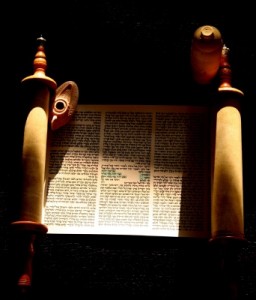
Hear O Israel… and Pass It On

Deuteronomy 6:4, Hear O Israel. This statement (verses 4–9 coupled with Lev 19:18) is known as the “Shema” and is a statement of faith in the Jewish religion. In Mark 12:29–31, Yeshua also cites the Shema as the summation of all that Torah commands humans in order to have a proper relationship with YHVH and their fellow man. The word shema means “to hear, listen, obey.” How often, when it comes to obeying YHVH do we draw near or honor him with our lips, but our hearts are far from him? (See Mark 7:6; Isa. 29:13; Matt. 15:8.)
4319029

In Deuteronomy 6:10–16, YHVH is constantly warning his people against idolatry; idolatry is anything that gets in the way of our relationship with him. What is of higher priority in your life than serving YHVH? What in your life takes more of your time, energy and money than serving YHVH? What draws your heart away from the study of his written Word, from prayer and fellowship? What or who hinders you from moving forward in your spiritual walk? What in your life keeps YHVH from getting out of a spiritual box in your life? This is idolatry!

Several times YHVH instructs the children of Israel to be certain to instruct their children in the ways of Torah-righteousness. In the Shema, YHVH commands, “And you shall teach them [i.e., his Word] diligently to your children, and talk of them when you sit in your house, and when you walk by the way, and when you lie down, and when you rise up” (Deut 6:7). Then in verses 20–25 of the same chapter we read,

“When your son asks you in time to come, saying, `What is the meaning of the testimonies, the statutes, and the judgments which YHVH our Elohim has commanded you?’ Then you shall say to your son: `We were slaves of Pharaoh in Egypt, and YHVH brought us out of Egypt with a mighty hand; and YHVH showed signs and wonders before our eyes, great and severe, against Egypt, Pharaoh, and all his household. Then He brought us out from there, that He might bring us in, to give us the land of which He swore to our fathers. And YHVH commanded us to observe all these statutes, to fear YHVH our Elohim, for our good always, that He might preserve us alive, as it is this day. Then it will be righteousness for us, if we are careful to observe all these commandments before YHVH our Elohim, as He has commanded us.’”

Too often in the church-system Continue reading →


Yeshua in Us: The Power to Obey Torah

Philippians 1:11, The fruits of righteousness which are by Yeshua the Messiah. It is impossible for a man to keep the Torah on his own strength as Yeshua’s encounter with the rich young ruler proves (Matt 19:16–22). When the young man asked Yeshua what he must do to have eternal life, Yeshua seems to set the man up for a fall when he declares, “If you want to enter into life, keep the commandments.” Yeshua is not being disingenuous here. Were one to keep the Torah perfectly without sinning, hypothetically, one would not fall under the death penalty for violating the laws of Elohim (i.e., sin). Presumably one could earn eternal life by one’s own good works. But no man has ever accomplished this superhuman feat except the superhuman Yeshua! Continuing, when the young ruler proudly declares his perfect Torah obedience, Yeshua shows him that he was, in fact, violating the Torah in at least one area—covetousness and greed. Yeshua shows him how to come into Torah compliance, and then admonishes him to come and to follow him. What Yeshua is teaching here is that it’s impossible to keep the Torah perfectly without factoring Yeshua, the Living Torah, into the equation. The point that we can’t keep the Torah without Yeshua directly intervening in our lives, I hope to conclusively demonstrate below.

Torah scroll open 2

One way that Yeshua helps his followers obey the Torah is by sending us his Spirit as an internal spiritual force into our hearts to nudge and lead us into Torah-obedience.

What’s more, Yeshua also gives us the divine gift of his grace to accomplish the same thing. His grace removes the guilt, stain and penalties for our past sins, and with a clear conscience and a clean spiritual slate before YHVH, minus the past baggage of sin weighing us down, we are able to go forward under the power of YHVH’s Spirit to walk in accordance with his Torah. Praise Yeshua! An illustration of this would be a runner who trains wearing a backpack filled with rocks. Once the weight is removed from his back, when he runs, he feels as if he were flying through the air.

Our faith in, love for and continual abiding in Yeshua is the key to receiving his systemic spiritual empowerment to walk a life that mirrors Yeshua. Paul invites us Continue reading →


Knowing How to Add & Subtract May Not Always Be a Good Thing

Deuteronomy 4:2, You shall not add to the word that I command you, nor shall you subtract/diminish from it. YHVH warns his people against adding or subtracting from his written Word elsewhere, as well (Deut 12:32; Rev 22:18–19). Men seem inclined to ignore YHVH’s command in this regard.

21120517

Whole religions have been founded based on disregarding this prohibition. Some claim to be Bible-based (e.g. Mormonism with their Book of Mormon and rabbinic Judaism with its Talmud) and some do not (Islam with its Quran). Who is the author of and real power behind adding to, subtracting from or twisting YHVH’s Word? (See Gen 3:1ff and Matt 4:3ff.)

What did Yeshua warn the religionists of his day against in this regard? He said, “Thus have you made the commandment of Elohim of none effect by your tradition” (Matt 15:6) and, “Howbeit in vain they do worship me, teaching for doctrines the commandments of men” (Mark 7:7).

What are some examples of traditions and theologies in the modern-day Christian and Jewish religions where YHVH’s Word has been superseded by man’s traditions?

What are some traditions and doctrines of men you have turned away from in order to bring yourself into greater alignment with YHVH’s Word? How is your life better for it? What has been the reaction of those around you in response to your aligning your life more closely with the truth of YHVH?


Blog Scripture Readings for 7/14 through 7/20/13

Aside

Parashat Va’etchanan — Deuteronomy 3:23 – 7:11
Haftarah — Isaiah 40:1 – 40:26
Prophets — Ezekiel 43:1 – 48:35; Hosea 1:1 – 1:11
Writings — Nehemiah 1:1 – 7:73
Testimony — Ephesians 4:1 – 6:24; Philippians 1:1 – 4:23

Most of this week’s blog discussion points will be on these passages. If you have general comments or questions on the weekly Scripture readings not addressed in a blog post, here’s a place for you to post those. Just use the “leave a reply” link below.

The full “Read Through The Scriptures In A Year” schedule, broken down by each day, can be found on the right sidebar under “Helpful Links.” There are 4 sections of scripture to read each day. One each from the Torah, the Prophets, the Writings, and from the Testimony of Yeshua. Each week, the Torah and haftarah readings will follow the traditional one-year reading cycle.

Weekly Blog Scripture Readings for 7/14 through 7/20/13.


What Does the Phrase “Under the Law” Mean?

This brief teaching is the summation of 40 years of studying what it means to be “under the law.” It’s a hot-button phrase that is repeated often in the Torah-phobic Babylonian church system. Though this article is a little technical at times, reading it will show you how to answer your Christian friends who think you’ve gone off the deep end and fallen from grace with all this Hebrew roots, Torah stuff. Get your Bible out, roll up your  sleeves and let’s go deep… Enjoy! 

An Analysis of the “Under the Law [Torah]” Passages in the Testimony of Yeshua 

Romans 3:19, Now we know that what things soever the law [Torah] says, it says to them who are under the law: that every mouth may be stopped, and all the world may become guilty before Elohim.

Explanation: The Jews were self confident in their special relationship with YHVH because (a) they were Jews and the seed of Abraham, (b) because YHVH had given them the Torah, and (c) because they were circumcised, yet many had failed to obey the Torah, thus making their outward appearance of righteousness (i.e., their circumcision) a pointless sham. Whether one is uncircumcised or not is immaterial; rather, what matters to YHVH is one’s heart orientation toward him (i.e., is one circumcised in heart or not, Rom 2–3:4). After all, circumcision can’t be a salvation issue, since it’s impossible for one half of humanity to be circumcised, while the entire population (both men and women) can be circumcised in heart!
Paul was being accused of promoting Torahlessness because of his stand that circumcision was not a salvation requirement, and that a Jew who is circumcised, and yet lives a Torahless life is no better than a Gentile sinner. In fact, an uncircumcised Gentile who follows the basics of the Torah that are written in his consciences will be blessed on the day of judgment (Rom 2:14–16).
Paul is attempting to level the spiritual playing field (or to tear down the middle wall of partition) between Jews and Gentiles by showing that a hypocritical, law-touting, circumcised Jew has no standing in righteousness before YHVH, while an uncircumcised Gentile who knows little about the Torah, yet follows the light of truth that he has with his whole heart has righteous standing before YHVH.
The bottom line is that Continue reading →


New Video: Elijah and John the Baptist Generations—Rise Up Against Evil!

In the end times before the second coming of Yeshua (Jesus) the Messiah, Elohim (God) is raising up a new generation of righteous servants who will boldly and in the power of the Holy Spirit stand against evil on this earth preparing the way for Messiah. They will walk in the powerful anointing of Phinehas, David, Elijah and John the Baptist. In this video, find out if you’re called to be part of this end-times army of spiritual warriors.


Q & A From the Mail Box: Is Yeshua on the Father’s Throne?

Question:
From Susan: Is there a Scripture that shows Jesus is on the throne as God?
21123161
Answer:
First, John 1:1 says that Yeshua is God (in Hebrew: Elohim). He is called God in other places in the NT (or Testimony of Yeshua) as well (e.g., Tit 2:13; 3:4).
Second, in the Book of Revelation, there is only one throne mentioned (e.g. Rev 3:21; 4:5; 5:6,13; 7:10, 11, 17; 22:1), not two or three, as is often supposed; that is, one for the Father, the Son and the Holy Spirit. Please note Rev 22:1 where it mentions the throne (singular) of God and the Lamb. The Scriptures reveal that Yeshua is both the Lamb of God (John 1:29; 36) and God (Elohim).
What else can we deduct from this except that Yeshua is on the same throne with his Father, that they are one (Hebrew: echad meaning “a compound unity”). Also note Rev 3:21 where Yeshua says that he will sit down on his Father’s throne (singular). The word throne can be taken literally or metaphorically, but even so, it’s still singular, and it’s his Father’s throne and he’s on it (note also Rev 7:17). It must be a rather large throne!