Blog Scripture Readings for 10-4 Through 10-10-15

Aside

THIS WEEK’S SCRIPTURE READINGS FOR STUDY AND DISCUSSION:

Parashat B’reisheet — Genesis 1:1 – 6:8
Haftarah — Isaiah 42:5 – 43:10
Prophets — Joshua 1:1 – 7:25
Writings — Psalms 1:1 – 7:17
Testimony — Matthew 1:1 – 6:15

Most of this week’s blog discussion points will be on these passages. If you have general comments or questions on the weekly Scripture readings not addressed in a blog post, here’s a place for you to post those. Just use the “leave a reply” link below.

The full “Read Through The Scriptures In A Year” schedule, broken down by each day, can be found on the right sidebar under “Helpful Links.” There are 4 sections of scripture to read each day. One each from the Torah, the Prophets, the Writings, and from the Testimony of Yeshua. Each week, the Torah and haftarah readings will follow the traditional one-year reading cycle.

Weekly Blog Scripture Readings for 10/4 through 10/10/15.


ON VACATION! Gone to the Feast of Tabernacles

For the next week-and-a-half I will be on vacation celebrating the Feast of Tabernacle in a remote are of scenic SW Oregon. There is no cell-phone service or internet connections there, so I won’t be able post anything on this blog while I’m away.

For those of you not able to attend a Sukkot gathering, I encourage you to go to the Hoshana Rabbah website or our YouTube channel for teachings on the Feast of Tabernacles (Sukkot). To access both, go to http://www.hoshanarabbah.org.

See you when I get back!

content


Blog Scripture Readings for 9-27 Through 10-3

Aside

THIS WEEK’S SCRIPTURE READINGS FOR STUDY AND DISCUSSION:

Parashat V’zot HaBerachah — Deuteronomy 33:1 – 34:12***
Haftarah — Joshua 1:1–18
Prophets — Zechariah 9:1 – 14:21
Writings — 2 Chronicles 30:1 – 36:23
Testimony — Revelation 16:1 – 22:21

Most of this week’s blog discussion points will be on these passages. If you have general comments or questions on the weekly Scripture readings not addressed in a blog post, here’s a place for you to post those. Just use the “leave a reply” link below.

The full “Read Through The Scriptures In A Year” schedule, broken down by each day, can be found on the right sidebar under “Helpful Links.” There are 4 sections of scripture to read each day. One each from the Torah, the Prophets, the Writings, and from the Testimony of Yeshua. Each week, the Torah and haftarah readings will follow the traditional one-year reading cycle.

***V’zot HaBerachah is usually read on Simchat Torah

Weekly Blog Scripture Readings for 9/27 through 10/3/15.


What and When Is the “Day” of YHVH’s Wrath?

The Day of YHVH’s Wrath

There comes a time in the chronology of end times events that accompany the return of Yeshua when YHVH will pour out his wrath upon rebellious men. The Bible refers to this as “the day of YHVH” or “the day of his wrath” — a phrase which occurs more than two dozen times in the prophetic writings of Isaiah, Ezekiel, Joel, Amos, Obadiah, Zephaniah, Zechariah and Malachi. What is this day?

Hand of a god-like creature pointing with finger.

First, let’s discuss whether “the day of YHVH’s wrath” is a literal day, or rather a time period, since the Hebrew word for day (Heb. yom) can have both meanings. The prophet Isaiah may give us a clue. In several places, he mentions “the day of YHVH’s vengeance” (or words to this effect). This is the time period when YHVH will judge the nations including Babylon the Great, which is in existence at Yeshua’s second coming (see Rev 17, 18 and 19). In three places, Isaiah indicates that the day of YHVH will last for one year (Isa 34:8; 61:2 and 63:4). Interestingly, in Isaiah 63:4, the prophet couples the idea of the day of YHVH’s vengeance being a year long with the jubilee year (i.e., “the year of my redeemed has come”). This occurs as the Messiah (the subject of Isa 63:1–6) judges the enemies of Israel (notably Edom) and at the same time he is about to redeem his people. This could be a reference to the regathering and return scattered Israel to its Promised Land inheritance, or to the redemption of the righteous dead at the first resurrection. Perhaps while Yeshua is judging Israel’s enemies at his second coming, he will at the same time begin regathering the lost and scattered 12 tribes of Israel in a major way. Yeshua seems to allude to this in Matthew 24:31 when he sends out his angles to gather his elect from the four corners of the earth.

What Is the Wrath of YHVH/Elohim?

In the Book of Revelation, the term wrath of God/Elohim or similar language is found ten times in reference to YHVH’s fierce judgments against unrepentant and rebellious sinners. It is my belief that these judgments occur just prior to the return of Yeshua the Messiah.

But to better understand the term “the wrath of Elohim” and it’s end time prophetic implications, let’s quickly review its broader use by the biblical prophets as they apply it to Continue reading →

 

New Video: The Resurrection of the Dead to Immortality

Nearly all humans long to fear death and long to live forever. The question persists deep in the heart of all people, is this physical life all there is, or is there life after death? How can one conquer death and the grave and acheive immortality? Is there something beyond this physical life that’s better? This video, based on the truth of the Bible, answers these question.


Yom Kippur: Past, Present and Future

Introduction

Yom Kippur is a day of contradictions and contrasts: Joy and sorrow. Rewards for the righteous and judgments for the wicked rebels. Joy for the righteous when Satan and his demons, death and Babylon are destroyed by the King of kings.

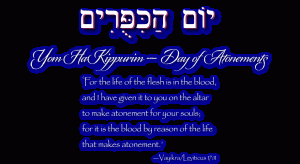
Yom Kippur_heb_960

On this day the high priest of ancient Israel went into the holy of holies of the Tabernacle of Moses (and later the temple in Jerusalem). There he sprinkled blood on the mercy seat (Heb. kapporet) and the ground seven times. Atonement was made for the high priest himself, his family as well as for all Israel. On this day the sanctuary, tabernacle, the priesthood and the all Israelites were cleansed. It represented corporate or community cleansing and entering into a deeper and more intimate relationship with YHVH.

The Passover and Day of Atonement are related though different:

Pesach (Passover) is the time of the sacrifice or atonement for personal sin—initial repentance from sins committed before being born again.

Yom Kippur (Day of Atonement) is the time of the atonement or covering of the individual’s as well as the corporate sins of Israel committed in ignorance (Heb 9:27) during the past Continue reading →