New Video: What Are the Pagan Roots of Anti-Torah Church Theology? Pt 1

How did the mainstream church come to believe that the law of Moses (or the Torah) was done away with?Anti-Torah theology in the Christian church goes back a long way largely to the influence of a heretic in the second century. In this video, learn how this church theologian helped to separate the early church from its pro-Torah Hebraice roots and how his influences are as strong as ever in the modern church.


New Video: The 8 Stages of Exiting Spiritual Babylon

“Come out of her my people,” is the cry of a loving Elohim to his people to exit spiritual Babylonian religious systems. Coming out of unbiblical and manmade spiritual pardigms can be daunting. Where do you go? Who do you trust? This video will be a like a flashlight in a pitch dark, unfamiliar room, for it will help you to navigate the tortuous and perilous waters back to the original faith of Yeshua’s apostles, and back to the pure truth of YHVH Elohim as taught by Yeshua and his disciples all in preparation for being the chaste bride of Yeshua at his second coming.


Who Are the Lost Sheep of the House of Israel?

Matthew 10:6, Lost sheep of the house of Israel. The phrase the house of Israel has several different possible meanings depending on the context of the surrounding verses in which it is found. The phrase the house of Israel is used 146 times in the Scriptures. Prior to the division of the united kingdom after the death of Solomon, this phrase referred to all twelve tribes of Israel. Afterwards (during the time of the prophets), it was used in contradistinction to the phrase “house of Judah” in reference to the Northern Kingdom.

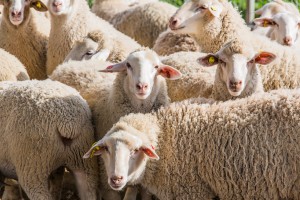
herd of white sheep

In the Testimony of Yeshua, Yeshua makes reference to the “lost sheep of the house of Israel” (Matt 10:6; 15:54). Elsewhere in the Testimony of Yeshua this term refers to all twelve tribes of Israel (Acts 2:36; 7:42; Heb 8:10), and in some references it refers to just the Northern Kingdom (Heb 8:8). The context of the passage of scripture surrounding this phrase determines its meaning.

Although this phrase can include all the tribes of Israel and not just the Jews who were largely from the tribe of Judah, in Matthew 10:6, Yeshua seems to equate the lost sheep of the house of Israel with the Jews who were living in the land of Israel in his day, and not to the rest of the Israelite tribes who were at that time scattered among the Gentile nations. It was Yeshua’s priority to take the gospel message first to the Jews in Jerusalem and Judea, and then to the rest of the world, and he expected his disciples to follow this same pattern (Acts 1:8).

In the larger sense, the Scriptures reveal that all of YHVH’s people have been like sheep that have gone astray spiritually, every man to his own way, because of sin (Isa 53:6). So in the broadest sense, this phrase refers to all the tribes of Israel including Gentiles with which they have mixed themselves through intermarriage.

Eventually, the gospel message is for everyone universally. Yeshua demonstrated this when, on several occasions, he ministered to non-Jewish Gentiles including preaching the gospel message to the Samaritan woman in John chapter four. 


The Hebraisms of Light Versus Darkness in Yeshua’s Saying

Matthew 8:12, Children/Sons of the kingdom. This is a Hebraism or biblical metaphor for the Jewish people. They are the ones who were first presented with the gospel message, but most of them rejected it. The sons of the kingdom will be cast into outer darkness because they didn’t accept Yeshua the Messiah, who is the light of the world (John 1:9; 8:12). It’s rather ironic to be cast into darkness for not accepting the light. Unrepentant sinners prefer darkness over the light because their deeds are evil (John 3:19), so in the end they get what they really wanted.

Anointing

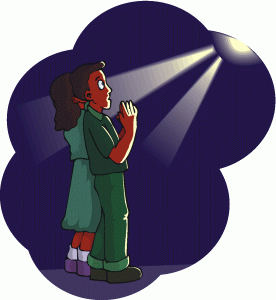
Outer darkness. (Also 22:13; 25:30.) Ancient banquets were held at night in brilliantly lit rooms, and anyone excluded from the feast was cast outside into outer darkness. In his teachings, Yeshua’s uses this term as a metaphor for judgment in reference to those who will be excluded from his kingdom. In the oriental mind, in the days before street lights, it was a dreadful thing to be found outside, late at night no lamp or simply a small clay lamp of that day that put out a tiny, dim flame (Manners and Customs, pp. 62–63). This speaks of the fear that those whom Yeshua will reject will experience.


Noah—Prophetic Pictures of Yeshua and End Time Events

Genesis 6–8, Noah’s flood provides allegorical insights relating to end-times prophecy. In Matthew 24:37, Yeshua compares the end times to the days of Noah. The story of Noah has allegorical implications that give hints about end-times prophecy.

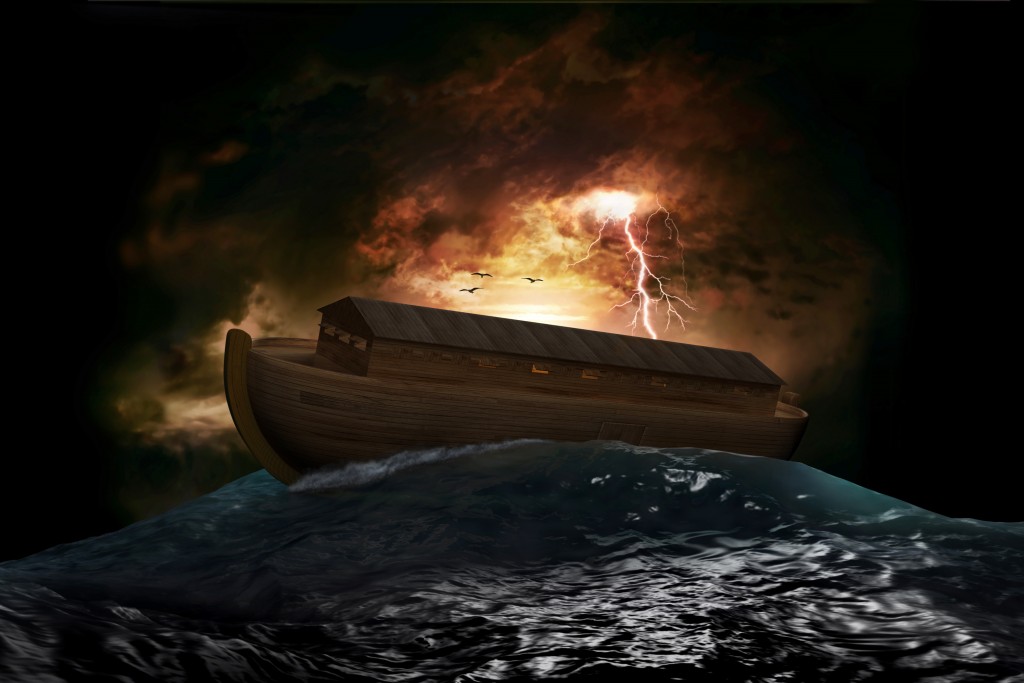
Noah's Ark

In 1 Peter 3:18–22, we learn that the story of Noah is also a picture of salvation and water baptism. Noah is a prophetic type of Yeshua.

To start with, Noah building the ark is a prophetic picture of the redeemed believer working out his own salvation (Phil 2:12), yet while doing so according to YHVH’s exact plans or specifications (e.g., repentance from sin, faith in Yeshua, baptism for the remission of sins, and faithful obedience to YHVH’s commandments).

Noah builds an ark of safety from Elohim’s wrath or judgments against sinful man. The ark is a metaphorical picture of the believer’s salvation, and Noah is a spiritual picture of Yeshua. The flood is also a picture of water baptism for the remission of sins, which ceremonially pictures the death of the old sinful man, and the birth of the new spiritual Continue reading →


In Hebraic Thought, Who and What Is the Narrow Gate?

Quote

Matthew 7:13, Enter the narrow gate. Here Yeshua speaks of the straight gate and the narrow way that leads to life versus the wide and broad gate that leads to destruction.

Open Gates And Wall

In Genesis 28:10–22, we have the account of Jacob’s dream of a ladder reaching into heaven. The dream greatly amazed Jacob and afterwards he concluded he had had a divine encounter. He named the spot where he had the dream Beth El meaning “House of El (God)” and concluded that this spot was “the gate of heaven” (verse 17).

In Hebraic thought, “the ladder” to heaven is equivalent to the Tree of Life, which is another term for the Torah of Elohim. We know that Yeshua was the Torah-Word of Elohim made flesh ( John 1:1,14). Not only that, Yeshua likened himself to a ladder reaching to heaven ( John 1:51).

Furthermore, we see both Moses and Joshua describing the Torah-law of Elohim as a (narrow, by implication) path from which one must turn neither to the left nor to the right (Deut 5:32; 17:11, 20; 28:14; Josh 1:7; 23:6).

In Proverbs, the path of wisdom (i.e., Torah) is also likened to a (narrow, by implication) path from which one must not turn either to the left or to the right (Prov 4:27). The term “gate” (or door) itself in Matthew 7:13 is a Hebraism referring to the means by which one enters into the Tabernacle or Temple of Elohim (Exod 27:14, 16; 32: 35:17; Ezek 40:3, 6, 7, 8, 9, 10, 11, 13 etc.).

The Tabernacle (or Mishkan) of Moses was representative of the pathway to redemption or salvation. Before actually entering the tabernacle, one encountered the altar of the red heifer, which pictures the cross of Yeshua. To enter the tabernacle, one passed Continue reading →

 

New Videos on Sukkot and Shemini Atzeret

The joy of YHVH Elohim is a powerful spiritual force that can carry one past the obstacles, pitfalls and hinderances of life. The redeemed believer has every reason to experience YHVH’s joy and all the more so during the biblical festivals including the Feast of Taberncales, which are prophetic pictures of the wonderful world tomorrow of Yeshua’s millennial kingdom. Watch this video and be encouraged!

Shemini Atzeret or the Eighth Day (mentioned in Lev 23:36) is the most overlooked and misunderstood biblical festival in the Messianic or Hebrew Roots Movement, yet it prophetically represents the final step in YHVH’s glorious plan of salvation for humans. Watch this video, because you need to know “how the story ends” and what you have to look forward to for eternity if you remain faithful to YHVH.