
How to Enter and Stay in the River of Life
Reply


Shabbat shalom to everyone!
Many people lack the love of the truth, while many lack the truth of love. Or stated otherwise, some have a love of the truth, but lack the truth of love.
The following was written by Jerry and posted in the comments section of this blog in response my recent post on Mark 9:38–50 entitled, “Elohim Hates Contention and Strife.”
His comments speak such profound spirit and truth truths in such a simple way that I felt compelled by the Ruach to share them here for all to read. This is the heart of Yeshua and the Father. Thank you Jerry for transmitting to us what YHVH has given to you. This is the body of Yeshua edifying itself.
Please read and ponder. — Natan
Here is another clear and simple admonition to add to the other good references you have provided:
PURSUE SHALOM WITH EVERYONE, and the holiness without which no one will see the Lord. (Heb 12:14)
Many lack a LOVE OF THE TRUTH, while many others lack THE TRUTH OF LOVE. It used to be my nature, and is still the nature of many, to presume I was pursuing a love of the truth, while I was yet falling far short of the truth of love.
True love pursues shalom with everyone, even as it pursues and defends a love of the truth.
We must not compromise His truth OR His love. We must grow up and be mature in the likeness the character of His love – humility, meekness, patience, and kindness – even as we are to grow up and be mature in the knowledge of and obedience to His truth. This is true strength! It is not strength being an arrogant “big mouth”! It is weakness! Being free from the fear of man does not mean being free from the fear of Adonai.
I think the following admonitions of Messiah are quite applicable:
You have heard that it was said, ‘An eye for an eye, and a tooth for a tooth.’ But I tell you, do not resist an evildoer. You have heard that it was said, ‘You shall love your neighbor and hate your enemy.’ But I tell you, love your enemies and pray for those who persecute you…Therefore be perfect, just as your Father in heaven is perfect. (Mat 5:38-39a, 43-44, 48)
If we are commanded by Messiah to even love our enemies who persecute us, how much more are we to love those who are our “neighbors ” who only disagree with us?
It is a shame and a misrepresentation of His name that many who seem to so highly esteem themselves in their knowledge of “the truth”, so lowly esteem Him in their knowledge of His character. Maybe this is some of what the commandment means, “You shall not take the Name of Adonai your Elohim in vain” — supposing one is defending His truth while not displaying His character.
After all, being that He is “the TRUTH” while also being the “Prince of SHALOM”, should we not also be ambassadors of not only “the Truth”, but SHALOM to all, as well?
However, having said this, it must also be qualified that we are not to pursue “shalom” at all costs, for that would ultimately mean to compromise the truth and, in fact, that would not be true shalom at all. That would be the shalom as the world gives it and not truly His shalom (John 14:27). In this sense, we must also remember that Messiah said, “Do not think that I came to bring shalom on the earth; I did not come to bring shalom, but a sword [truth that divides and separates]” (Mat 10:34).

Now that you have received the light of the truth about Christmas, you are responsible before Elohim to live up to that truth. Will you put obedience to the Word of Elohim and his truth first in our life, or continue to walk in sin? To obey Elohim means to cast out of your life all idolatrous practices and cease doing that which is evil and sinful. This is then followed by choosing to obey YHVH Elohim in Spirit and in truth (John 4:23–24). “Therefore to him that knoweth to do good, and doeth it not, to him it is sin” (Jas 4:17).
Come out of [Mystery Babylon the Great], my people, lest you share in her sins, and lest you receive of her plagues. For her sins have reached to heaven, and Elohim has remembered her iniquities. (Rev 18:4–5)
And what agreement has the temple of Elohim with idols? For you are the temple of the living Elohim. As Elohim has said: “I will dwell in them And walk among them. I will be their Elohim, And they shall be My people. Therefore “Come out from among them and be separate,” says Adonai. “Do not touch what is unclean, and I will receive you.” (2 Cor 6:16–17)

Mark 9:38–41, Yeshua forbids sectarianism. Though someone may not be in our spiritual camp, if they are doing good and are not against us, we’re to give them credit of the good they are doing. This is the high road of love, mercy and grace that Yeshua expects his disciples to follow in regards to those of other congregations, denominations or ministries.
Mark 9:38–50, Avoid strife and contention. This is a very enigmatic passage that commentators struggle with trying to explain, since Yeshua links together so many seemingly disparate concepts. I say “seemingly,” since there is nothing average about the Master’s intellect, or his knowledge of spiritual truth. Our inability to comprehend his sayings should only spur us onward to dig all the more into their heights and depths of meaning, thus uncovering the nuggets of truth from within the transcendent intellect of our Master and Creator!
Yeshua the Master begins his discourse by discouraging sectarianism. “Those who aren’t against us are for us.” He then promises rewards to those who are kind to his disciples, implying that his disciples should in turn be kind to others who, though they may not be a part of your particular group, they may not necessarily be working against you, for they may also be kingdom workers but with a different assignment than yours (vv. 38–41).
Next, our Master warns against offense—especially those who offend (or cause to stumble) the little ones who are still young and tender in their faith. Linked with the preceding thought, the implication may be that Yeshua’s servants need to beware of not offending any of his kingdom workers whether they are part of “our group” or not. Only the Almighty sees the larger picture much as a general oversees his troops. The individual soldier knows his own marching orders, and may be oblivious to the orders of other soldier’s elsewhere, and is thus in no position to judge another soldier who has other marching orders.
Yeshua then issues a strong warning against any actions (the hand), or any directions of our lives (the foot), or any perspective (the eye) that may lead us to sin in causing one of YHVH’s kingdom workers elsewhere to stumble spiritually. Such an offense may bring us under the severe and unquenchable fires of YHVH’s eternal judgment. In other words, when we, through offensive actions and perspectives, cause one of YHVH’s kingdom workers who is operating outside of our limited view of things to stumble, we may be doing irreparable damage to the advancement of the kingdom, thus risk bringing the wrath of Elohim squarely down upon us (vv. 42–48).
Yeshua concludes his discourse with an even more mysterious statement that commingles a variety of biblical concepts. Many biblical commentators admit the difficulty of understanding this passage (e.g. Matthew Henry, Adam Clarke, Beale and Carson). He indicates that his disciples, as living sacrifices (Rom 12:1), must allow themselves to be laid on the altar of YHVH’s service like the animal sacrifices of old. As these sacrifices went through the sprinkling of salt (Lev 2:13; Ezek 43:24) and the burning of fire on the altar of sacrifice, even so, as living sacrifices doing YHVH’s kingdom work, Yeshua’s disciples must be willing to endure the fires of trials and adversity. Fire both consumes and purifies, while salt both preserves and seasons—two activities that are continually needed in the disciple’s life as part of their spiritual refinement in order for them to become perfect and sin-free like their Master.
Yeshua ends with the admonition to be salty or spicy (in our words and actions) as we advance his kingdom. But we mustn’t be offensive in our demeanor such that it causes others to stumble, thus breaking the peace between our fellow coworkers, since we are all working together for the same Master. No matter what, maintain peace one with another (vv. 49–50)!
This final admonition brings us full circle back to Yeshua’s initial point in his instructions to his disciple to avoid sectarianism and to be a peacemaker among spiritual brethren. YHVH hates division and strife within the congregation of the righteous and calls it an abomination (Prov 6:16–19). Those who cause it are to be avoided (Rom 16:17; 2 Thess 3:6) if not excommunicated (Tit 3:10)!

Genesis 38:10, The thing which he did. Onan refused to perform his levirate responsibilities likely because of greed. As second of three sons, he would have received only one fourth of Judah’s inheritance with the double portion going to the firstborn son. With the first born son dead, Onan stood to receive two thirds of the inheritance, since now he was the firstborn son. However, by raising up a son to take Er’s place, this would have given that son one-half of Judah’s inheritance and dropped Onan back down to one fourth of the inheritance again. Onan stood to gain financially by not performing his levirate responsibilities and rasing up a son to his older, deceased brother. Therefore, it appears that Onan spilled his seed on the ground because of greed, which is why YHVH killed him.
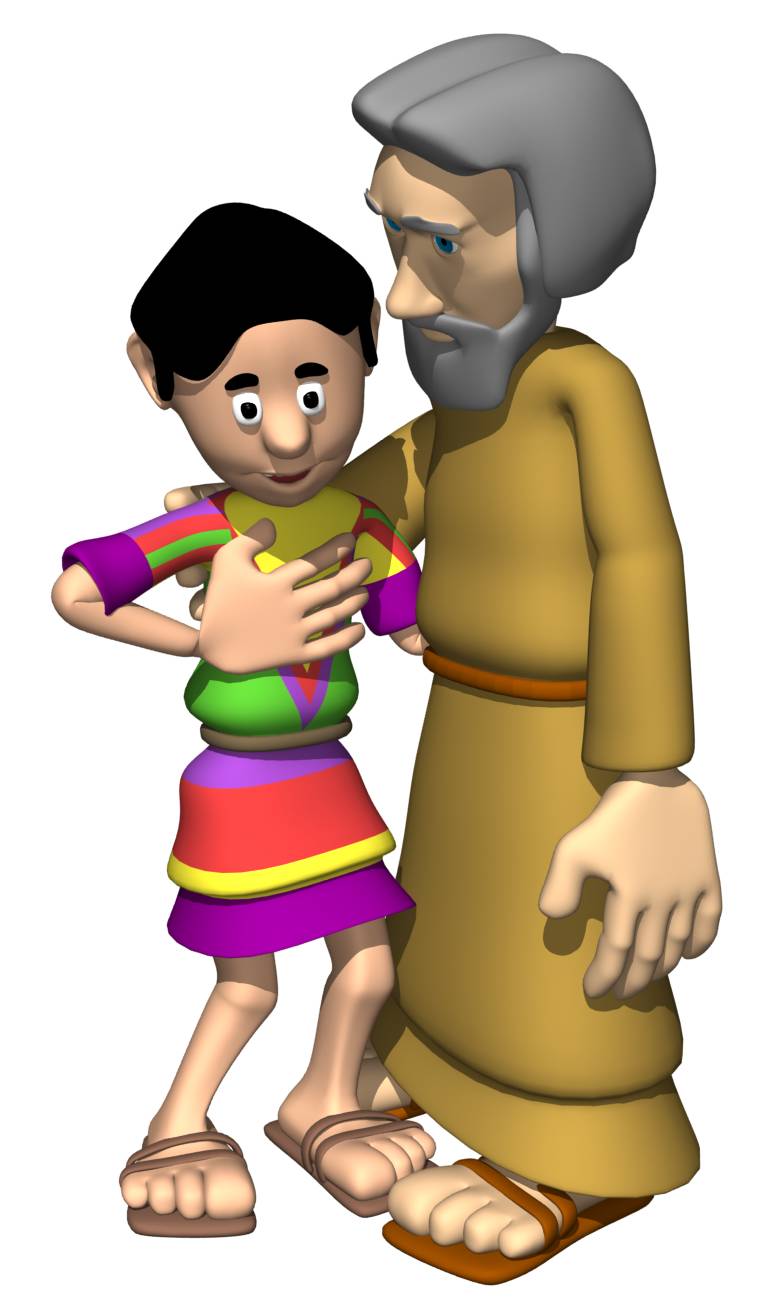
Genesis 37–41 The Life of Joseph—A Foreshadow of Messiah Ben (Son of) Yosef
The spirit of Antimessiah (Antichrist) is on a dramatic rise in our day. It is even rampant among those who are returning to the Hebraic, Torah-centric roots of the Christian faith where some people are losing their faith in Yeshua the Messiah. A few are even converting to Rabbinic Judaism, which denies the messiahship and deity of Yeshua and the divine inspiration of the Testimony of Yeshua. Some of the blame for this can be laid at the feet of a few of the modern-day descendants of the non-believing Pharisees (i.e. the Rabbinic Jews), who use clever arguments to beguile unstable and unlearned souls into humanistic reasoning devoid of a living faith in Yeshua their Savior and the Redeemer of man. Because of a spiritual blindness that Scripture prophesied would come upon the Jews producing a hardness of heart toward Yeshua the Messiah, unbelieving Jews ignore the numerous prophetic shadow-pictures pointing to Yeshua the Messiah contained in their own Tanakh.
May the following study strengthen your faith in Yeshua the Messiah, in his divine origination in the very heart, mind and essence of Elohim, and in the fact that he was foreordained to come to this earth to reconcile sinful man to his Heavenly Father through his self-sacrifice on the cross. All this was prophesied long ago in the Tanakh. The ancient Jewish sages speak of a messianic figure coming called Messiah son of Joseph (Mashiach ben Yosef), the Suffering Servant, whose life and ministry would parallel that of Joseph, yet these same Jewish sages fail to see the connection between Joseph’s life and that of Yeshua. Let’s now chronicle the striking and uncanny parallels between Joseph and Continue reading
This is a gospel-oriented Torah study guide. Our goal is to connect the good news of Yeshua the Messiah (the gospel message) to its Hebraic, pro-Torah roots or foundations. The information given here is more than head knowledge. Understanding and wisdom (the right application of knowledge that is based on truth) is taught thus making biblical truth practical, relevant and applicable to your daily life. The truths of the Bible not only have the power to transform your life here and now for the better, but eventually to take you past the veil of death and into eternity.
This Torah study is subdivided in sections by topic in a magazine format thus making it easy to watch at several sittings.
May you be blessed as you watch this video.
For a free, printable adult and youth Torah study guide on this Torah portion (parashah), please go to http://www.hoshanarabbah.org/parshiot.html