Blog Scripture Readings for 1-15 Through 1-21-17

Aside

THIS WEEK’S SCRIPTURE READINGS FOR STUDY AND DISCUSSION:

Parashat Shemot — Exodus 1:1 – 6:1
Haftarah — Isaiah 27:6 – 28:13; 29:22-23
Prophets — 2 Samuel 11:1 – 17:29
Writings — Psalms 91:1 – 97:12
Testimony — Luke 5:1 – 8:25

Our new Scripture Reading Schedule for 2016-2017 is available to download!

Most of this week’s blog discussion points will be on these passages. If you have general comments or questions on the weekly Scripture readings not addressed in a blog post, here’s a place for you to post those. Just use the “leave a reply” link below.

The full “Read Through The Scriptures In A Year” schedule, broken down by each day, can be found on the right sidebar under “Helpful Links.” There are 4 sections of scripture to read each day. One each from the Torah, the Prophets, the Writings, and from the Testimony of Yeshua. Each week, the Torah and haftarah readings will follow the traditional one-year reading cycle.

Weekly Blog Scripture Readings for 1/15/17 through 1/21/17.


More Snow— A Snowy Shabbat Shalom from Us to You!

my backyard

the front of my office


The Scepter, the Donkey, the Vine, the Bloody Grapes and the Messiah

Sounds like the title of a C.S. Lewis Christian fiction novel, doesn’t it? Well, when unpacked, these three little verses contain a lot prophetically pertaining to the Messiah. They’re like a  riddle. Let’s use the Bible itself to unlock the code. 

Genesis 49:10–12, The scepter. Below is my commentary on these verses.

The scepter shall not depart from Judah, nor a lawgiver from between his feet, until Shiloh come; and unto him shall the gathering of the people be. Binding his foal unto the vine, and his ass’s colt unto the choice vine; he washed his garments in wine, and his clothes in the blood of grapes: His eyes shall be red with wine, and his teeth white with milk.

This passage is a clear reference to the Messiah and the Messianic Age (the time when Messiah would come to rule the earth) and has been so recognized by the Jewish sages from time immemorial (The ArtScroll Stone Edition Chumash, p. 279). “The general consensus (with few exceptions) of Rabbinic interpretation is that this phrase [Until Shiloh arrives] refers to the coming of the Messiah …” (The ArtScroll Bereishis/Genesis Torah commentary, p. 2152). In fact, Onkelos [a second-century scholar who translated the Torah (Pentateuch) into Aramaic] in his Aramaic version of the Torah translates this version as follows: “Until the Messiah comes, to whom the kingdom belongs” (ibid.). Rashi (b. 1040 and recognized by Jewish scholars as probably the preeminent Torah commentator of the modern era) “concurs and similarly comments: Until the King Messiah will come…, to whom the kingdom belongs. According to the Midrash, vkha [shiloh] is a composite of ha and uk, [meaning] “a gift to him”—a reference to King Messiah to whom all peoples will bring gifts. See Isaiah 18:7; Psalms 76:12” (ibid., p. 2153). It should not be difficult to see the fulfillment of this rabbinic understanding in the magis’ giving of gifts to the young child Yeshua (Matt 2:11).

Are there any illusions here to the incarnation or virgin birth of the Messiah? Of the incarnation we read the following in The ArtScroll Bereishis/Genesis Torah commentary:

Midrash Tanchuma preserves an opinion that vkha [shiloh] is derived from vhka [shil-yah] meaning “little child, (lit. the amniotic sac in which the fetus is formed: comp. Deut 28:57).” Thus, the passage means: “Until his scion (i.e. Messiah) comes” (ibid., p. 2153).

Of course the same commentators in the same passage, while readily admitting that Continue reading →

 

Do you want Natan to talk to your group via Skype?

If anyone has a home  fellowship or a Bible study group that meets on Shabbat and you would like me to talk to your group via Skype, let me know. All you need is a computer with a camera in it and a Skype account, which you can download for free. After that, get your Skype name/password and you’re ready to go.

Email may me the suggested time of our meeting and I will confirm if that works with my schedule or not. If so, we’ll arrange a predesignated time to make the Skype connection from my computer to yours. Give me your Skype name/password and I’ll call you at the prearranged time. That’s all there is to it. It’s totally free to use Skype!

I would be  happy to talk with your group on any Biblical subject, answer any biblical questions anyone may have, or just to speak an encouraging, prophetic word over your group, or to pray over people.

You can contact me by email at hoshanarabbah@earthlink.net.


Let YHVH take your lemons and turn them into lemonade

Genesis 49:7, I will scatter/divide them. For Simeon, this prophecy was fulfilled in that they had an inheritance both in the area Judah and among the region of northern tribes.

For Levi’s part, his descendants were given the priesthood and were scattered in 48 cities throughout Israel (Num 35:7).

YHVH put this tribe’s passion against evil to good use. Levi’s vengeful anger against Shechem for raping Dinah (Gen 38) was excessive and outside the bounds of Torah-law.

However, this passion for righteousness and justice became further evident as Levi’s descendants were the ones who stood up against the rebellious Israelites at the golden calf. Moses used this tribe to execute YHVH’s judgment against the golden calf worshippers (Exod 32:25–29). This time, Levi acted in accordance to and within the bounds of the Torah as prescribed by Moses. For this, they were granted the priesthood and as such, were scattered throughout Israel (in fulfillment of Jacob’s prophecy) to better accomplish their duties. They became responsible for teaching Israel YHVH’s Torah and for acting as judges of the law (Deut 33:10; 24:8; Lev 24:10–11).

The beauty of this story is that YHVH can take the flawed character traits or misguided and even carnal passions of an individual or of a family or a society and redeem them by redirecting them along righteous lines in accordance with Torah principles.

Zeal and passion are wonderful character attributes, but they need to be channeled in the right direction.

To the Laodiceans in Revelation YHVH said he would rather they be hot or cold in their passions (Rev 3:15–16). He had no use for lukewarmness, which is apathy. One who is cold or dead is waiting to be awakened spiritually. One who is hot with passion already simply needs direction. One who is lukewarm doesn’t even care enough to go one way or the other.


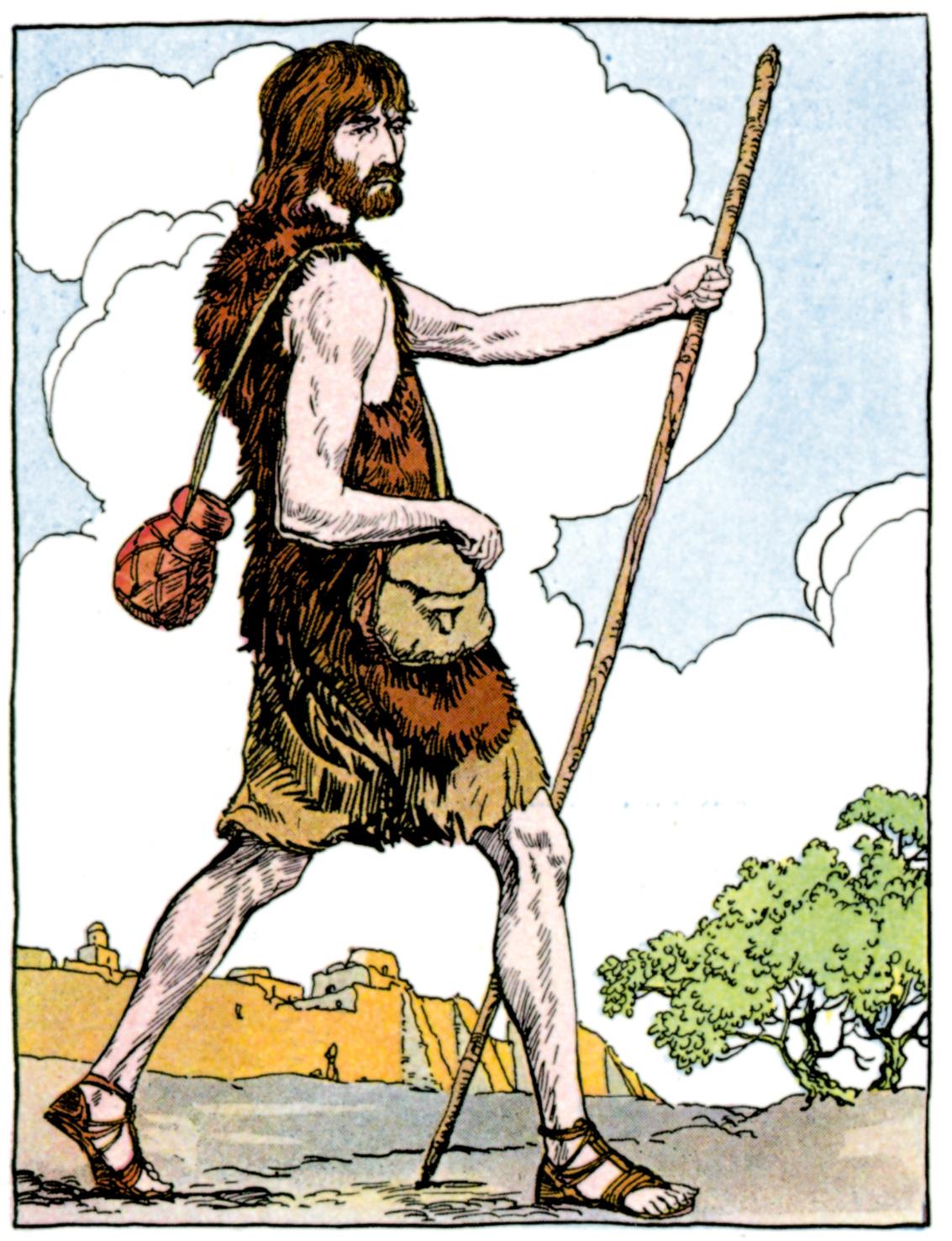
What was John the Baptist really preaching? A Lesson for Us…

John the Baptist was no politically correct, mealy-mouthed, sissified, panty-waist, Ahab-ized preacher! He grew up outside the religious system so that his perspective and preaching wouldn’t be jaded when it came to calling those inside the system to repentance. We need more preachers like him today!

Luke 3:7–17, Then he said to the multitudes. What’s really going on in this exchange between John the Baptist and the religious folks of his day? Let’s step back and look at the bigger picture.

The multitudes of Jews had to make the long, hot and arduous journey through the Judean mountains down to the Jordan River, which was the lowest spot on earth, to hear John the Baptist who was the latest fad preacher to come on the scene. However, when they arrived at his lonely wilderness pulpit, instead of stroking their egos by complimenting them for their religious zeal, he excoriates them and calls them a brood of vipers. John confronts them when he says that if they don’t repent, the fires of YHVH’s judgment will consume them (John 3:7–9). John’s preaching pierces their hearts, and lays them low spiritually, and they ask him what he expects them to do (John 3:10). John then preaches a message of social justice involving giving to the poor, being fair and honest in your business dealings, and if you’re a government worker, treating the citizens you serve with respect (John 3:11–14).

Interestingly, he doesn’t instruct these religious Jews in what many might consider to be the specificities and dos and don’ts of the Torah-law, although it could be reasoned that Continue reading →


Blind Guides: “The Law of YHVH” Vs. “the Law of Moses”

Luke 2:24, Law of the Lord/YHVH. This phrase is found only three times in the NT—here and in verses. 24 and 39. The same phrase is additionally found 18 times in the Tanakh and obviously refers to the Torah (e.g. Pss 1:1; 19:7; 119:1).

The phrase the law of Moses is found a similar number of times in the Bible: 15 times in the Tanakh and seven times in the NT. Obviously the phrases the law of YHVH and the law of Moses are synonymous terms in that they refer to the same thing: the Written Torah. From obvious meanings of these two terms, we learn that YHVH Elohim is the divine source or origination of the Torah, while Moses was the one who wrote it down and as the leader of the nation of Israel, he administered it.

It is interesting, if not ironic, how the mainstream church chronically refers to the Torah as “the law of Moses,” when Scripture refers to the it as “the Torah of YHVH” the same number of times less one. The church system’s choice of one term over the other seems to reveal, sadly, its apathy, if not, at times, its outright antipathy, toward YHVH’s Torah. This furthermore underscores the truth of Paul’s words in Rom 8:7 about the carnal mind of man being at enmity with the laws of Elohim in that it refuses to be subject to them.

Praise be to YHVH that more and more people are waking up to the truth of the Bible and breaking through the barriers that churchianity has constructed to keep men from the full counsel of YHVH’s Word!