No Ordinary Sheep!

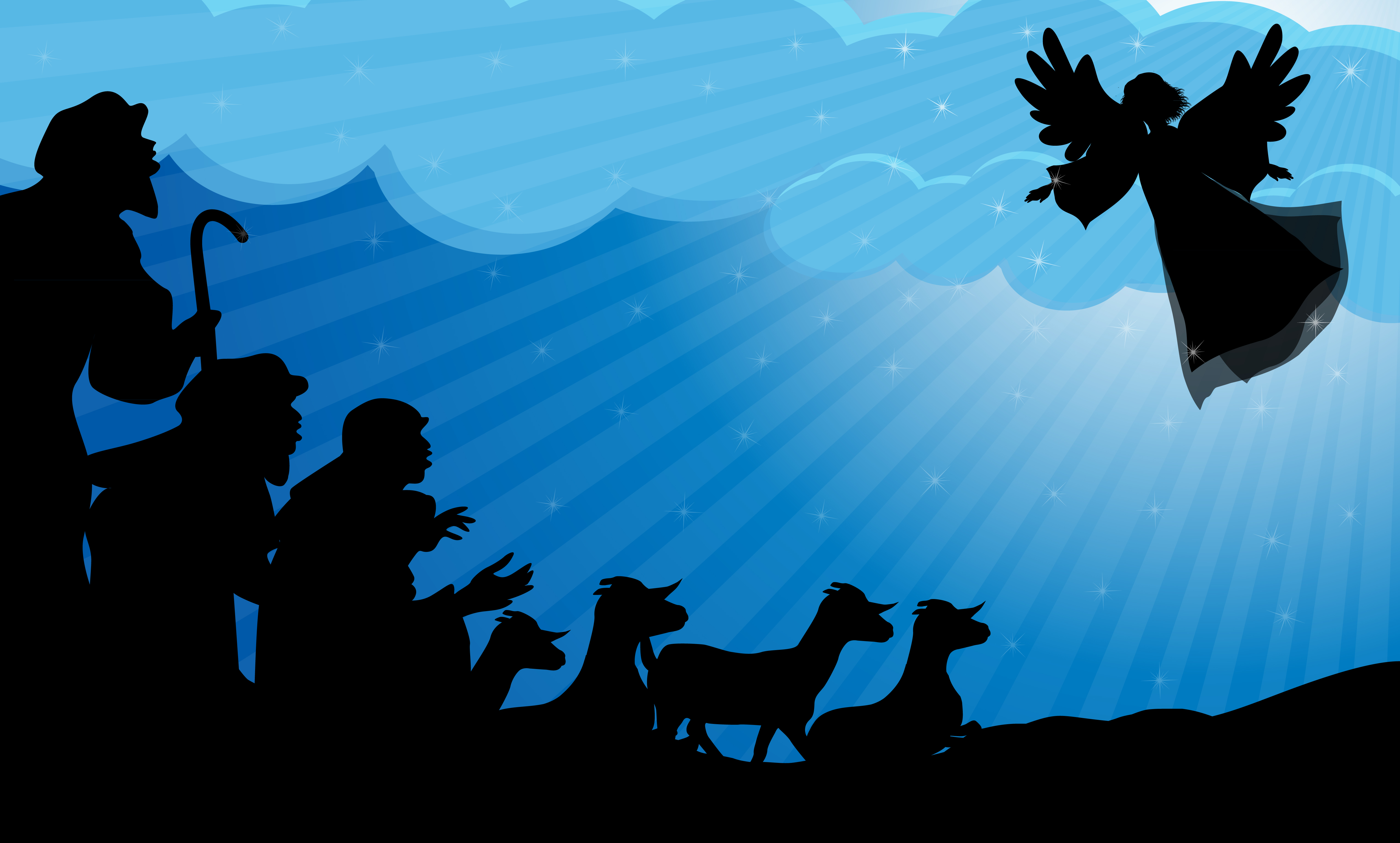
Luke 2:8, Shepherds living out in the fields. According to the Mishnah (a rabbinic Jewish legal-historical document from the end of the second century AD), these were no ordinary sheep or shepherds, but were shepherds who watched over sheep that were destined to become burnt offerings, peace offerings and the Passover offering for the temple service in Jerusalem (Mishnah Sheq 7:4; The Life and Times of Jesus the Messiah, by Alfred Edersheim, pp. 132–133).

Such sheep were kept in the environs of Jerusalem including Bethlehem which lies just five miles south of that city. These sheep were apparently kept outdoors all year round. Presumably they were carefully watched over to keep them safe from incurring any blemish that might render them unusable for the temple service.

Imagine the spiritual and prophetic significance of heaven’s angelic messenger revealing to these shepherds the birth in Bethlehem of the spotless and sin-free Lamb of Elohim who was destined to be sacrificed from the beginning of the world (Rev 13:8; John 1:29; 2 Cor 5:21; 1 Pet 2:22; 1 John 3:5).

The angel announced that this newborn child was YHVH the Messiah (Isa 53:1; Christ the Lord)—the Savior (Luke 2:8 cp. Isa 53:6, 10–11). He once and for all would take away the sins of the world (Heb 10:10, 12), thus rendering their jobs as temple shepherds unnecessary.

 

Who are the modern descendants of Ephraim and Manasseh?

One clue to answer the question: It’s not the Jews!

Genesis 46:14 and 16, Jacob’s Prophecy Over Ephraim and Manasseh

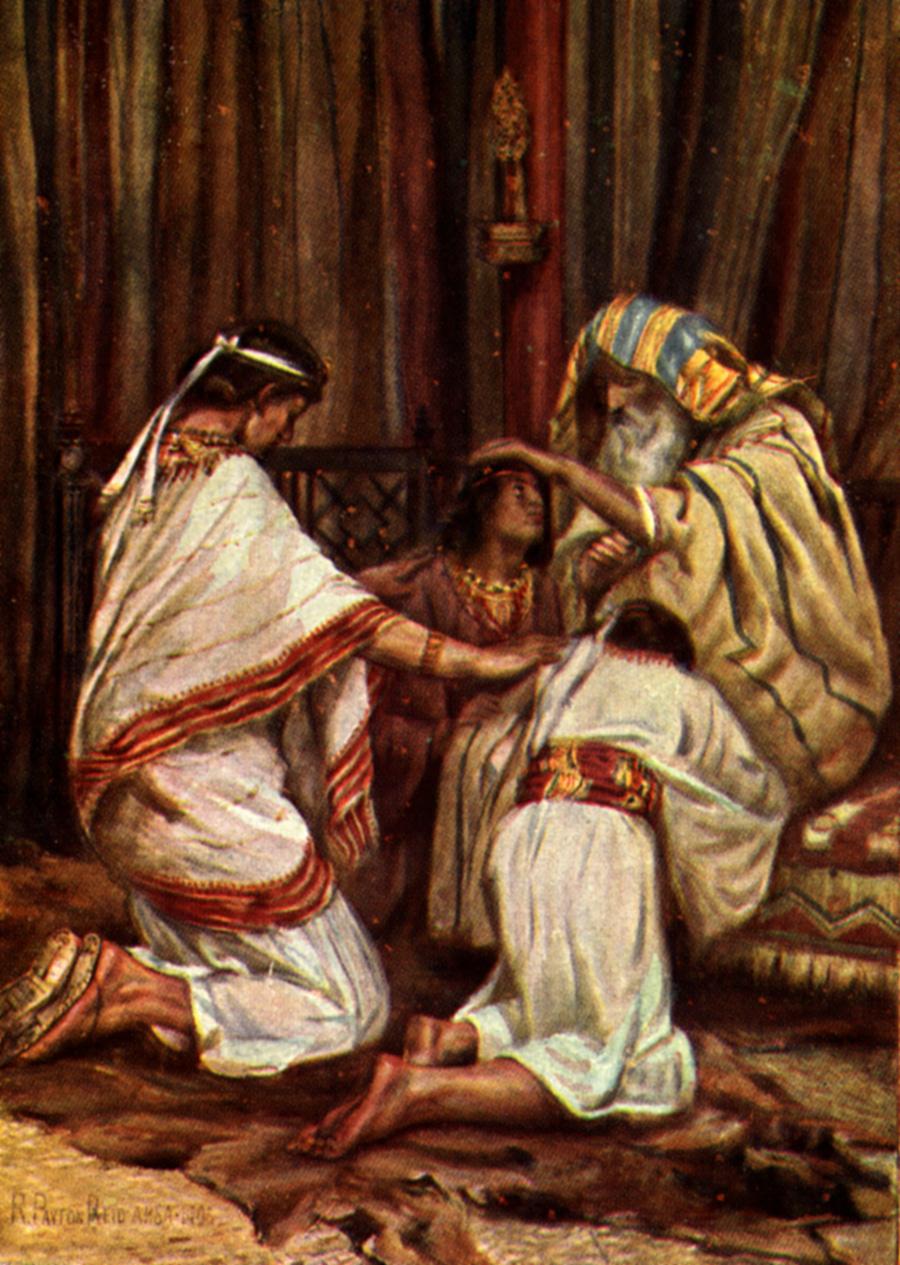
While prophesying over Joseph’s sons, Ephraim and Manasseh, Jacob crossed his hands over their heads making the symbol of the Paleo-Hebrew letter tav  (like the letter t or x in the alphabet), which resembles a cross and in that ancient Hebraic script and according to some Hebrew scholars pictographically means “sign of the covenant.” Jacob then spoke of the Heavenly Messenger (the Hebrew word malak mistranslated as “angel” in most Bibles) of YHVH (i.e. the preincarnate Yeshua) who had redeemed him from all evil (see Gen 31:11–13). Jacob then prophesied that the descendants of Ephraim and Manasseh would become like “fish in the midst of the land” (literal translation of Gen 48:14–16; see The ArtScroll Stone Edition Tanach).

In light of this prophetic symbolism, which present day religious group would qualify as having fulfilled Jacob’s prophecy as to who the descendents of Ephraim and Manasseh would be? Which religion on earth uses the fish as their symbol, speaks of a Messenger from YHVH as their Redeemer, and has the sign of the Paleo-Hebrew letter tav, which looks like a cross? The Buddhists? The Moslems? The Hindus? Even the Jews? No! Only Christianity fits this enigmatic criteria. Many Christians are without a doubt the literal descendants of Ephraim and Manasseh. Those who are not, according to the Paul the apostle, once they come to saving faith in Yeshua in some unique sense become the descendants of Abraham (e.g. Gal 3:7, 29). Many of these unsaved descendants of Abraham will recognize Yeshua their Messiah on the day that he returns to Jerusalem (e.g. Zech 12:10).

Which nation on earth is without a doubt still the greatest Christian nation? It is the United States of America. Having an understanding of how Jacob’s prophecy to Ephraim and Manasseh was fulfilled is the first piece of the puzzle in identifying America in Bible prophecy.


Blog Scripture Readings for 1-8 Through 1-14-17

Aside

THIS WEEK’S SCRIPTURE READINGS FOR STUDY AND DISCUSSION:

Parashat Vayechi — Genesis 47:28 – 50:26
Haftarah — 1 Kings 2:1-12
Prophets — 2 Samuel 3:1 – 10:19
Writings — Psalms 85:1 – 90:17
Testimony — Luke 1:67 – 4:44

Our new Scripture Reading Schedule for 2016-2017 is available to download!

Most of this week’s blog discussion points will be on these passages. If you have general comments or questions on the weekly Scripture readings not addressed in a blog post, here’s a place for you to post those. Just use the “leave a reply” link below.

The full “Read Through The Scriptures In A Year” schedule, broken down by each day, can be found on the right sidebar under “Helpful Links.” There are 4 sections of scripture to read each day. One each from the Torah, the Prophets, the Writings, and from the Testimony of Yeshua. Each week, the Torah and haftarah readings will follow the traditional one-year reading cycle.

Weekly Blog Scripture Readings for 1/8/17 through 1/14/17.


New Video: The Roots of Secular Humanism at the Tree of Knowledge


Was Yeshua of both Davidic (Jewish) and priestly lineage?

Luke 1:36, Elizabeth your relative. While Mary was of the royal lineage of David through her father, she also was a relative on her mother’s side of Elizabeth, the priest-wife of Zacharias, who was a daughter of Aaron (Luke 1:5).  In Matthew one and Luke three two different genealogies are given for Yeshua, both of which  go back to King David. One is presumed to be that of Joseph and the other is that of Mary. In this way, Yeshua was a direct descendant of David legally through Joseph, his step-father, and genetically through Mary, his mother. Does this mean that Mary was of priestly as well as Davidic lineage. Yes, but not patrilineally, only matrilineally. In the Scriptures, tribal lineage was determined through the father’s family line and not the mother’s.

In the case of Mary and Elizabeth, they would have shared common grandparents making them cousins. Their grandfather would have been a priest. In the case of Elizabeth, her father—the son of her priestly grandfather—would have carried the priestly line making her a daughter of Aaron (Luke 1:5). In the case of Mary, her mother would have been her priestly grandfather’s daughter meaning that she was of priestly lineage, but not her children, unless she married a priest.

It seems that Yeshua would have carried priestly blood in his genes, but he was legally a priest through patrilineal descent. To be sure, Yeshua was a priest, but not one of Aaronic lineage, but after the order of Melchizedek, which was the priesthood of the firstborn son passed on generationally. Yeshua was the first born son of Elohim eternally, which is why he is presently at the right hand of Elohim acting as our Great High Priest (Heb 1:3 cp. 3:1; 4:4; 8:1).

Therefore, Mary laid claim to a Davidic as well as a priestly lineage (Jesus the Messiah, by Edersheim, p. 105). This means that Yeshua was not only of direct Davidic lineage, but was of priestly lineage as well.


Cut Mark 16:9–20 out of the Bible? Really?!?

Mark 16:9–20, The Great Commission. Many modern scholars call into question the genuineness of these last twelve verses. For a discussion on whether these verses of Mark’s Gospel should be included in the Bible, see E. W. Bullinger’s (1837-1913) The Companion Bible (appendix 168).

Bullinger states that the two oldest Greek manuscripts of the Testimony of Yeshua (from the fourth century) don’t contain these verses. On the other hand, more than six hundred other Greek manuscripts do contain them as do the oldest Syriac manuscript known as the Peshitto (which Bullinger believes is from the second century) and the Curetonian Syriac (from the third century). He notes that Jerome when translating the Bible into Latin (The Vulgate, A.D. 382) had access to Greek manuscripts older than any now extant included these twelve verses in his Bible. Additionally, he notes that the Gothic Version (A.D. 350), the Coptic (fourth or fifth century), the Armenian (fifth century), Ethiopic (fourth to seventh centuries) and Georgian (sixth century) versions all contain these last twelve verses. Bullinger goes on to say that there are nearly one hundred ecclesiastical writers before the oldest extant Greek manuscripts who attest to the authenticity of these verses. Moreover, between A.D. 300 and 600 there are about two hundred more writers who do.

Bullinger gives two reasons why he believes these verses may have been omitted from several of the oldest Greek NT manuscripts. After the destruction of Jerusalem in A.D. 70 extending one hundred years there is a complete blank regarding the history of the early church and a complete silence about this era from Christian writers. Therefore, no one knows what was going on in the church during this period including whether such signs and wonders as enumerated in these last verses in Mark’s Gospel were still occurring. He speculates that when later translators came to the last twelve verses of Mark and saw no trace of these spiritual gifts currently being manifested in the church (in the fourth century), some marked them as doubtful, spurious or even omitted them altogether. This same doubt has been passed on to modern scholars.


Keep your eyes on the light at the end of the tunnel!

Genesis 45:5, 7, 8, Elohim sent me. Joseph was sold into slavery at age 17, was freed from prison and made ruler of Egypt at age 30, then seven years of plenty followed, and two years of famine had passed by the time he was reunited with is brothers.

Only after 22 years in Egypt did Joseph finally figure out Elohim’s grand and wonderful plan for his life, and how it involved the saving of his family. Had Joseph lost faith along the way, become embittered over his misfortunes, and turned from Elohim, the nation of Israel may have never been preserved.

Keeping one’s eyes on Elohim, and refusing to lose faith during the dark times can yield some amazingly triumphant outcomes, as we learn from the life of Joseph.

Keep the faith and don’t let go!