Get thee out of Babylon!

And I heard another voice from heaven saying, “Come out of her, my people, lest you share in her sins, and lest you receive of her plagues. (Rev 18:4)

Therefore “Come out from among them And be separate, says the Lord. Do not touch what is unclean, And I will receive you.” (2 Cor 67:17)

These are the ones who were not defiled with women, for they are virgins. These are the ones who follow the Lamb wherever He goes. These were redeemed from among men, being firstfruits to Elohim and to the Lamb.

Here is the patience of the saints; here are those who keep the commandments of Elohim and the faith of Yeshua.…

Here is the patience of the saints; here are those who keep the commandments of Elohim and the faith of Yeshua.

(Rev 14:4, 12)
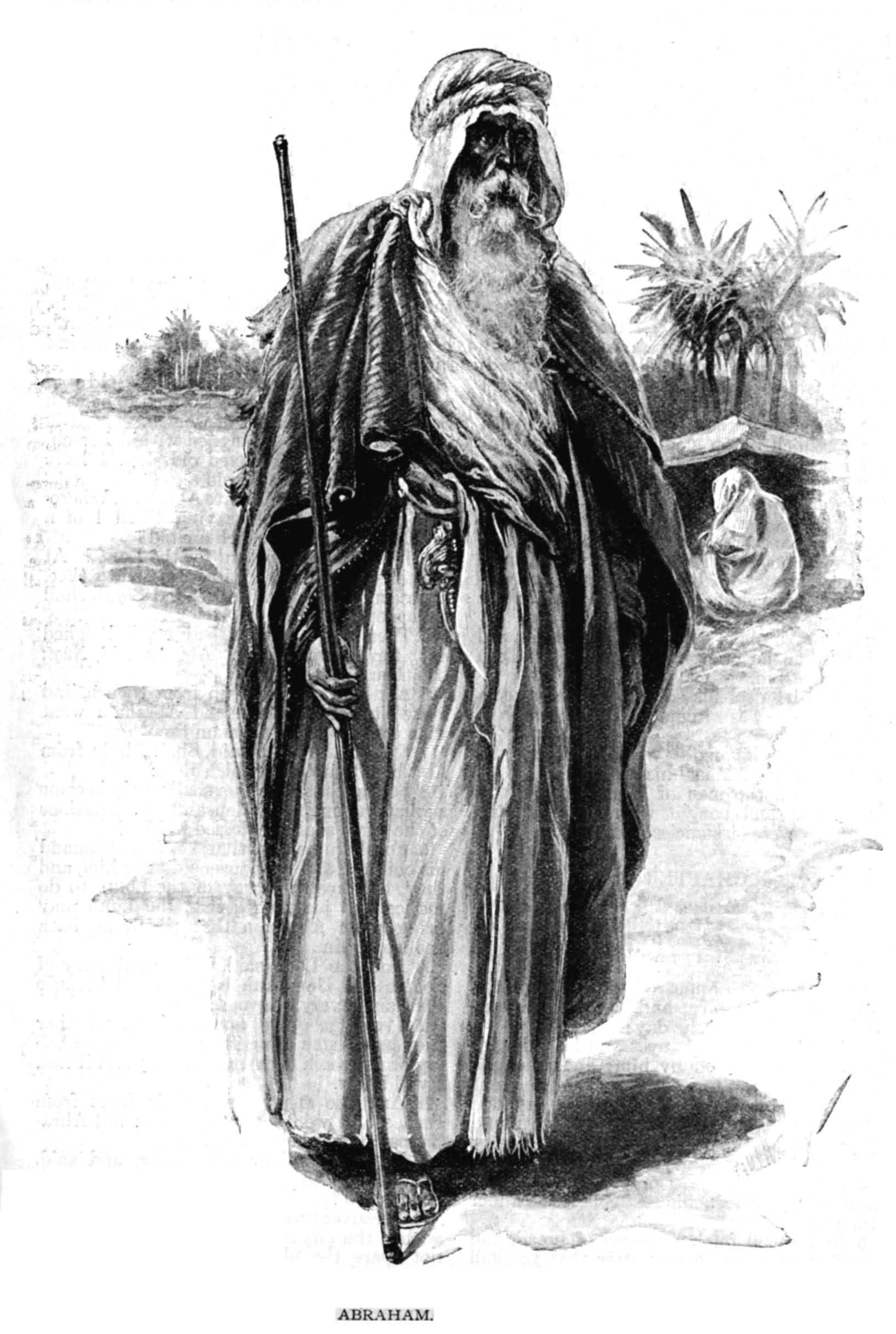
Genesis 12:1, Get thee out of thy country. Did Abram immediately leave his father’s house and go directly to the country that YHVH would show him, or did he fulfill YHVH’s will for his life in incremental steps? (Compare Gen 11:31 with 12:1.) Did Abram leave his father’s house completely, or take part of his father’s house with him including his father and nephew? Haran is located in northern Mesopotamia and is nowhere near Canaan. When Abram finally made his way to Canaan minus his father, did he still have part of his kindred with him, something YHVH instructed him to leave behind (Gen 12:1)? Did his nephew Lot prove to be a help or a hindrance to Abram in fulfilling YHVH’s mission for his life in a new land?

What lessons can we learn from this account? First, YHVH is gracious to us even when we don’t obey him completely and immediately. Scripture still refers to Abraham as the father of the faithful or faithfulness (Rom 4:12, 16). Second, Abram was a man of prominence in Babylon (or Chaldea), was recognized as a mighty prince (Gen 23:6), and was 75 years old when YHVH asked him to leave the comforts of life in Babylon to trek across the desert to the backwoods region of Canaan. No doubt, this was not an easy move for Abram for the reasons stated above.

What did Yeshua tell his disciples about the sacrifices that would need to be made to be a follower of YHVH? (Matt 10:35–39). What did Yeshua say would be the eternal rewards of those, who like our father Abraham, set out in faith for a new spiritual destiny? (Matt 19:29) What physical obstacles stand in your way of fulfilling YHVH’s spiritual calling, mission and destiny for your life?

Presently, YHVH is calling his people out of the spiritual Babylon (Rev 18:4) of man-made religious systems that, to one degree or another, have supplanted the simple truths of YHVH’s word with doctrines and traditions of men. Anything that takes precedence in the hearts and minds of men that is contrary to the Bible is, by biblical definition, an idol. End times spiritual Babylon is full of idolatry. It is a confused mixture of truth and lies. YHVH called Abram out of Babylon, and he’s calling his people out of Babylon today to worship and obey him in Spirit and truth. His end time saints will be those who follow Yeshua the Messiah unconditionally wherever he goes (Rev 14:4–6). Their chief identification mark is that they follow the Torah-commandments of Elohim and have the faith of Yeshua—their lives have been transformed by the message of the gospel (Rev 14:17; 12:14).

Let us follow the example of our father Abraham and in faith follow YHVH Elohim as he leads us onward and upward. This is our righteousness!

And he believed in YHVH, and He accounted it to him for righteousness. (Gen 15:6)


Our internet is finally repaired!

Was at Sukkot for 11 days and got home and our internet was down. Ughh! The phone company couldn’t come out for more than a week to fix it. Double ughh!

On top of that, my iMovie program kept crashing every time I opened it to work a file. That problem had been going since just before Sukkot.

So the other day, I called Apple Care and we updated some software and now that problem is fixed. And finally, yesterday, the phone company came out and fixed our fiber optics internet by giving us a new OTM and router, so the internet is up and running once again. Yay!

Now I can get active on my blog again including uploading some vids from Atonement and Sukkot.

Stay tuned…


Genesis 12:1–17:27 Parashat Lekh L’kha (A Gospel-Oriented Torah Study)


Video: Genesis 6:9 11:32 Noach (A Gospel-Oriented Torah Study)


Blog Scripture Readings for 10-22 Through 10-28-17

Aside

THIS WEEK’S SCRIPTURE READINGS FOR STUDY AND DISCUSSION:

Parashat Lekh L’kha — Genesis 12:1 – 17:27
Haftarah — Isaiah 40:27 – 41:16
Prophets — Joshua 15:1 – 21:45
Writings — Psalms 18:25 – 25:22
Testimony — Matthew 12:1 – 15:39

Our new Scripture Reading Schedule for 2017-2018 is available to download and print.

Most of this week’s blog discussion points will be on these passages. If you have general comments or questions on the weekly Scripture readings not addressed in a blog post, here’s a place for you to post those. Just use the “leave a reply” link below.

The full “Read Through The Scriptures In A Year” schedule, broken down by each day, can be found on the right sidebar under “Helpful Links.” There are 4 sections of scripture to read each day: one each from the Torah, the Prophets, the Writings, and from the Testimony of Yeshua. Each week, the Torah and haftarah readings will follow the traditional one-year reading cycle.

Weekly Blog Scripture Readings for 10/22/17 through 10/28/17.


Free Torah Portion Studies/Commentary

Some of you may not be aware of the fact that I have free published and downloadable weekly Torah study guides that are ideal for individual and group Bible studies. I have both an adult and a young person’s study guide. Both are available at https://www.hoshanarabbah.org/parshiot.html.


Who and What Are/Is the Living and Written Torah?

What Is the Purpose of the Torah?

The purpose of the Torah is to show man how to walk in right relationship (or righteousness) with his Creator. It shows us how to love YHVH with all one’s heart, soul, mind and strength (Deut 6:5; Mark 12:30) and love one’s neighbor as oneself (Lev 19:18; Mark 12:30). Once one is saved by grace through faith (see my teaching article on our web site entitled: The Abrahamic Covenant: The Covenant of Salvation), the Torah then helps show man how to walk in the straight and narrow path, which leads to blessings and life and avoidance of curses (Deut. 30:15; 32:47). The Torah shows man how to avoid sin, which is the violation of YHVH’s Torah-commandments (1 John 3:4). Sin is walking contrary to YHVH’s instructions in righteousness, which are for our blessing and benefit.

The Torah does not set an impossible standard by which to live. We must ask ourselves, would a righteous and just Creator and a loving Heavenly Father give to his chosen people a set of standards that were humanly impossible to perform, then curse them for their inability to meet these standards? Of course not. Rather, the Torah sets a standard of faith, trusting in Elohim, and of following its system of repentance and sacrifice for obtaining forgiveness from Elohim and restoring a condition of being considered righteous in his sight. After all, Moses, the human instrument through which YHVH revealed the Torah to the children of Israel, states in Deuteronomy 30:11-14:

For this [Torah] commandment which I command you this day, it is not hidden from you, neither is it far off. It is not in heaven, that thou should say, Who shall go up for us to heaven, and bring it unto us, that we may hear it, and do it? Neither is it beyond the sea, that thou should say, Who shall go over the sea for us, and bring it unto us, that we may hear it, and do it? But the word is very nigh unto you, in your mouth, and in your heart, that thou may do it.

Paul quotes this very passage in Romans 10:6-8 where he relates the written Torah to Yeshua, the Living Torah or Word of Elohim incarnate (in the flesh, see John 1:1, 14). He shows that the Torah and Yeshua are synonymous and that Messiah Yeshua came to live Continue reading →