Introduction to Biblical Aroma Therapy—Essential Oils

Exodus 30:34–38, Sweet spices. According to Jewish tradition (b. Talmud Keritot 6a), there were eleven sweet spices (Heb. ketoret bisamim) in the tabernacle incense, four of which are mentioned here. They were balsam, clove, galbanum, frankincense, myrrh, cassia, spikenard, saffron, costus, aromatic bark (a type of cinnamon), and cinnamon. Four thousands of years, ancient cultures relied on the medicinal properties of aromatic plants. Only in recent years, has the West rediscovered the salutary benefits of these plants. Listed below are the suggested healing properties of several of these herbs. In modern times, the oils from these plants are being extracted for use in various ways. (Source of information is from various online sources and Aromatherapy Workbook by Marcel Lavabre.)

  • Galbanum (Ferula gummosa or Ferula galbaniflua) is an antiseptic (prevents the growth of disease-causing microorganisms), and helps to treat asthma, acne, coughs, cramps, scar tissue, wrinkles. Apparently, the smoke from burning the resin of this plant was used in ancient times to keep flies and snakes away.
  • Onycha may by cloves, which is an antiseptic, analgesic (pain relief), carminative (for relieving flatulence) or Styrax officinalis, which is a resin from this tree and is great for kidney support (edema), bronchitis, colds, sinusitis, skin conditions, and is said to relieve stress.
  • Frankincense is a skin tonic, heals infected wounds and is an anti-inflammatory. It helps to reprogram cellular memory thus promoting permanent healing. It is used against typhoid, allergies herpes, tonsillitis, head injuries, depression, and cancer. Research shows that it will lower cortisol by 40 percent just by deep inhalation. Elevated cortisol contributes to weight problems.
  • Myrrh (stacte) is a skin tonic or conditioner, anti-inflammatory, cough expectorant, vulnerary (heals wounds), fungicide, antiseptic, astringent (causes the contraction of body tissues—notably the skin). It is especially useful for mouth ulcers and throat infections. In ancient times, pregnant mothers anointed themselves with myrrh for protection against infectious diseases, and they used myrrh during labor to stretch the perineum and on umbilical cords. Myrrh has a long history of use in skin health and hygiene products, and it prolongs the life and scent of other oils. Myrrh helps to combat wrinkles, is antiseptic, aids in balancing the thyroid, clearing athletes foot, ringworm, viral hepatitis, thrush in babies, inflammation and bronchitis.
  • Cassia (Cinnamomum cassia) is an antiseptic, antibiotic, and immune system builder.
  • Spikenard is a skin tonic or conditioner.
  • Aromatic Bark is an antiseptic (against flu and infectious disease), stimulant (circulation, nervous system).
  • Cinnamon (leaf) is an antiseptic (against infectious disease), relieves skin irritants (e.g. poison oak).
 

Blog Scripture Readings for 2-25 Through 3-3-18

Aside

THIS WEEK’S SCRIPTURE READINGS FOR STUDY AND DISCUSSION:

Parashat Ki Tisa — Exodus 30:11 – 34:35
Haftarah — 1 Kings 18:1-39
Prophets — 2 Kings 19:1 – 25:30
Writings — Proverbs 1:1 – 7:27
Testimony — John 7:1 – 9:41

Our annual Scripture Reading Schedule for 2017-2018 is available to download and print.

Most of this week’s blog discussion points will be on these passages. If you have general comments or questions on the weekly Scripture readings not addressed in a blog post, here’s a place for you to post those. Just use the “leave a reply” link below.

The full “Read Through The Scriptures In A Year” schedule, broken down by each day, can be found on the right sidebar under “Helpful Links.” There are 4 sections of scripture to read each day: one each from the Torah, the Prophets, the Writings, and from the Testimony of Yeshua. Each week, the Torah and haftarah readings will follow the traditional one-year reading cycle.

Weekly Blog Scripture Readings for 2/25/18 through 3/3/18.


Are Humans Equal in the Eyes of the Creator?

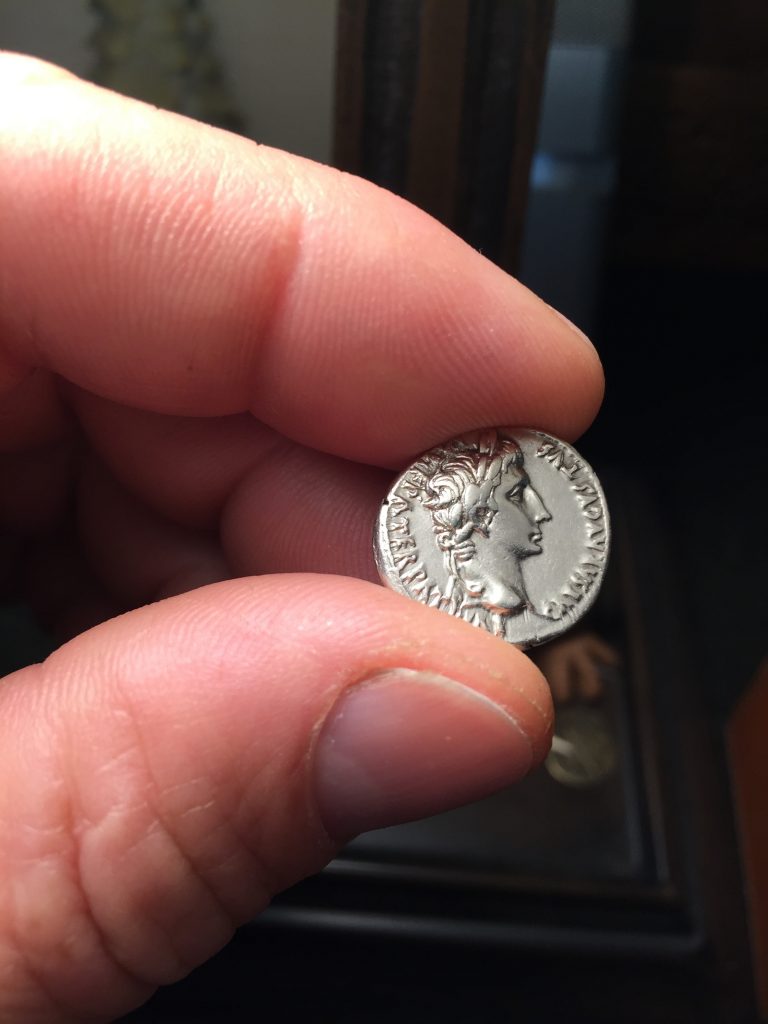
An genuine 2,000 year old holy half-shekel.

Exodus 30:15, Rich…poor. This passage teaches the equality of all believers. In YHVH’s eyes, each redeemed Israelite saints are equal. To the Creator of all things and who owns everything, no one is worth more than a half-shekel, and no one is worth less than a half shekel. The rich aren’t better than the poor and vice versa. This is also the moral of Yeshua’s Parable of Lazurus and the Rich Man (Luke 16:19–21). Contrary to what many Christians have been taught, this parable isn’t a doctrinal statement about the state of the dead and the afterlife. To many people, including the rich Scribes and Pharisees of Yeshua’s day, material success denotes superiority and even divine favor. The Bible dispels this false notion. YHVH looks at the heart and character of a person and the righteous fruits of their lives, and not at the outward, physical trappings—the proverbial cover of the book. The Scriptures address this issue in several places:

Judge not according to the appearance, but judge righteous judgment. (John 7:24)

A good tree cannot bring forth evil fruit, neither can a corrupt tree bring forth good fruit.

Every tree that bringeth not forth good fruit is hewn down, and cast into the fire. Wherefore by their fruits ye shall know them. (Matt 7:19–20)

But YHVH said unto Samuel, Look not on his countenance, or on the height of his stature; because I have refused him: for YHVH seeth not as man seeth; for man looketh on the outward appearance, but YHVH looketh on the heart. (1 Sam 16:7)

Now the Torah and the rest of the Scriptures teach that all the saints are equal. But what about the rest of humanity? Are all humans created equal?

There are many ways to look at this equality issue. But let’s see what the Bible teaches.

The Bible states in several places that all humans are created in the image of Elohim. This implies equality among all humans.

The Bible also states that all humans are sinners, that all deserve death and that none are righteous of themselves. This also implies equality.

The Bible states that Elohim so loved all the world that he sent his Son to die for all humanity. This implies equality among humans.

The Bible also state that Elohim loved us while we were still sinners. This implies equality among all humans.

Elohim desires all humans to be saved. This also implies equality among humans.

The Bible furthermore states that Elohim isn’t a respecter of persons. This implies equality among humans.

The Bible teaches that there is one Torah-law standard of righteousness for all people—Israelites and non-Israelites. This implies equality.

Moreover, the Bible states that Elohim will judge all humans by that law. All humans will come before his judgment seat. Thus all are equal before the law and before the Judge of the universe.

Conversely, there is no question that the Bible teaches that Elohim favors those who love and serve him. He favors them with a special love and enters into a personal relationship with them. He blesses then in a special way (salvation, healing, answered prayers, special protection, guidance, wisdom the Set-Apart Spirit, etc.) and eventually will reward them with eternal life, glorification and inclusion into his eternal kingdom as his adopted children. So in this sense, Elohim starts out loving and treating everyone equally, but those who choose to love and obey him he favors them and extends his grace to them. In this case, not everyone is treated equally. But this is not based on favoritism on YHVH’s part, but upon the choices that humans make with regard to his initial equal treatment of all. In the end, all humans will reap what they sow. If they obey Elohim they will be blessed with immortality. If they disobey him, with eternal death.


How do you know if you’re saved?

John 6:54, Flesh…blood. This is a Hebrew idiom for “the whole person” (see Matt 16:17; 1 Cor 15:50; Gal 1:6; Eph 6:12; Heb 2:14). This relates to Moses’ instructions that “man shall not live by bread alone…but by every word that proceeds from the mouth of YHVH” (Deut 8:3). This applies to Yeshua who was that Word of Elohim who “became flesh and dwelt among us” (John 1:1 and 14).

When one puts their faith in Yeshua (John 6:29 and 5:24), then one must also believe him—that is, not only accept him as the Son of Elohim and one’s Savior, but also follow and obey (or “eat”) him who is the Living Manna-Word of Elohim from heaven. This involves believing his words by loving him and keeping his Torah-commands (John 14:15, 23 cp. Exod 20:6), which are his literal words.

This is why YHVH instructed the Israelites to eat the whole Passover lamb, and to leave nothing left over (Exod 12:10). This teaches us that we are to “eat” all of Yeshua—his whole Person as represented by the bread and the wine at communion on Passover. We are to accept the totality of his Word, not just the parts that suit us, or fit with our conventional religious viewpoints as per the traditions of men.

Many claim to eat all of his flesh and drink all of his blood, yet through their anti-Torah theologies they rip pages out of their Bibles and toss them into the spiritual trash can claiming it is for the Jews and not for them. This is exactly what Adam and Eve did when they listened to the serpent’s lies at the tree of knowledge and rebelled against YHVH’s clear commands. The devil deceived them into take a pick-and-choose approach to the Word of Elohim. This was the first sin that humans committed.

The Bible defines sin as violating the words, commands or Torah of Elohim (1 John 3:4). It is also a sin not to believe in Yeshua (John 16:9; 3:18–19) who is the Living Torah-Word of Elohim incarnate. It is also sin to act in unrighteousness (1 John 5:17). The Bible defines unrighteousness as violating YHVH’s Torah commands (Ps 119:172), which are the words of Yeshua.

In summary, when we accept all of Yeshua by eating his flesh and drinking his blood, (i.e. partaking of the bread and wine at communion) we are confessing that we accept the totality of who he was and is. If we fail to believe and obey all of his words, then to the degree that we do so we are walking in sin, don’t love him and don’t even know him (1 John 2:3–4).

Salvation — What Is It and Do You Have It?

What is Salvation?

The dictionary defines the word salvation as “the deliverance from the power and effects of sin.” In a general sense, salvation is “preservation from harm, ruin or loss.” Relating the first definition, which is biblical in nature, to the second definition, which is generic in nature, we see that salvation is the deliverance or preservation from the power of sin, which causes harm, ruin or loss. Salvation and redemption are synonymous terms in biblical Hebraic Continue reading →


Is the oil level in your spiritual engine low or high?

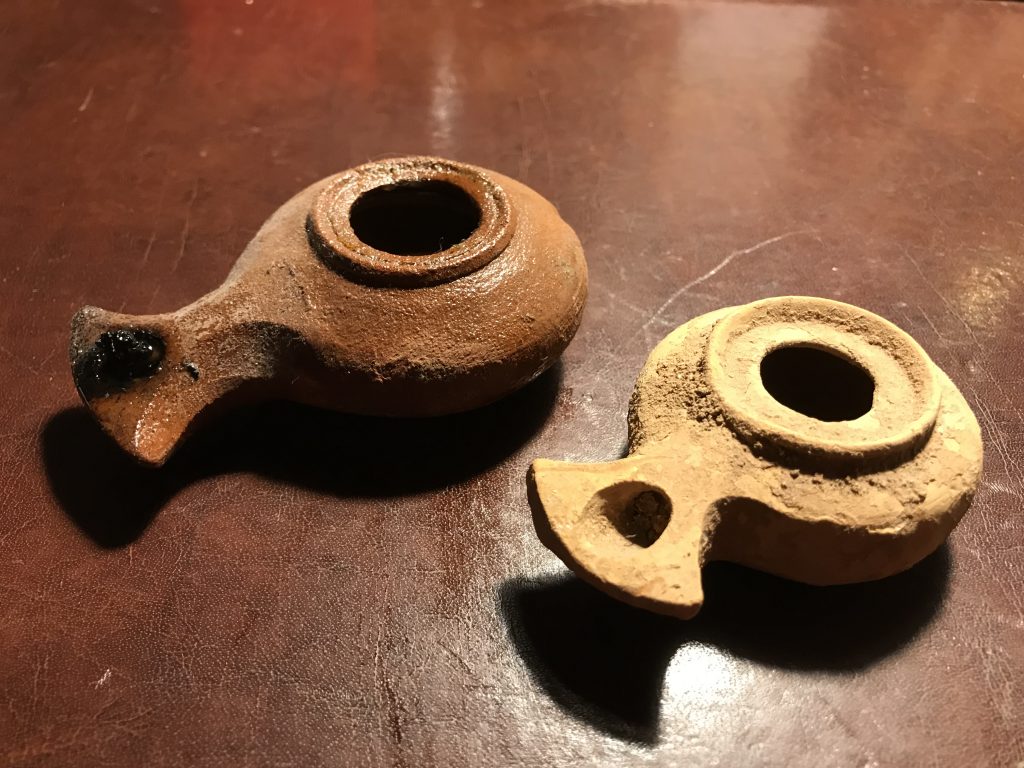
Herodian oil lamps from the first century A.D. The lamp on the left is a replica. The lamp on the right is an actual 2000 year old clay lamp from the Holy Land.

Exodus 27:20–21, They shall bring pure oil. Olives, olive oil and the olive tree are very significant biblical symbols. This oil was used for anointing and for burning in the seven-branched menorah—a picture of redeemed Israelite believers comprised of many different congregations (Rev 1:12–13). This olive oil was pure and the olives were beaten or pressed to produce oil for light (Exod 27:20). How does this relate to the believer’s life, so that he can be the light of the world Yeshua commanded him to be (see Matt 5:14–16 cp. Acts 14:22; Rom 8:17; 2 Tim 3:12; 1 Pet 4:12–14; Jas 1:2–3)?

The priests attended to the menorah to keep it burning continually from evening till morning. This reminds us of Yeshua’s Parable of the Ten Virgins (Matt 25:1–13), where Yeshua’s exhorted his disciples to be like the wise virgins who kept their lamps trimmed and full of oil as they were watching and waiting for their bridegroom to come.

In the Parable of the Ten Virgins, the level of oil in each virgin’s lamp was the factor that determined whether they would be allowed entrance into the bridegroom’s wedding or not. Therefore, what is the significance of olive oil (the fuel for the lamps) scripturally? There are several.

Olive oil was used in consecrating kings and priests for YHVH’s service (see 1 Sam 16:13; 1 Kgs 1:39; Lev 8:12).

Olive oil symbolizes YHVH’s rich blessings on one’s life, was used for consecrating the tabernacle and its contents (Lev 8:10).

Olive oil was a medicinal agent for healing (Isa 1:6; Luke 10:34).

Olive oil is also a scriptural metaphor for YHVH’s anointing on one’s life (see Ps 23:5; 133:2; Zech 4:12–14).

Olive oil is a biblical metaphor for gladness or joy (note Ps 45:7; Prov 27:9; Isa 61:3; Heb 1:9).

Olive oil speaks of healing by the laying on of hands (read Mark 6:13; Jas 5:14).

Olive oil is a symbol of prosperity (see Deut 32:24).

In Jewish thought, olive oil is also a metaphor for Torah, since it is a comfort to the head and body even as are the words of the Torah (Everyman’s Talmud, by Abraham Cohen, p. 134).

Oil in the Parable of the Ten Virgins oil is generally recognized to be a symbol of the blessing and anointing of YHVH’s Set-Apart Spirit functioning in one’s life.

Let us not forget that the same is the spiritual force that Spirit leads one into YHVH’s Torah-truth (John 15:26; 16:13). The five foolish virgins’ lack of oil speaks of their lacking YHVH’s anointing and blessing, that their lives were not fully consecrated to him, that they were deficient in YHVH’s Spirit and were not walking in the fullness of his Torah-truth. Torah teacher, Dean Wheelock characterizes the foolish virgins’ lack of oil in this way:

The foolish squander their oil, their precious oil of Torah instruction, which tells them how to live their lives in a righteous manner. Meanwhile the wise hang on to their Torah learning, and thereby save their oil for that time when it is needed. And the time when it will be most needed is when Messiah arrives to take us to the wedding. Then we will need all of the Torah oil we can muster. That is what the “foolish virgins” were missing. They did not have an adequate supply of understanding of the Torah, they were not living a Torah-centered life, they had not prepared themselves adequately to be the wife of the Messiah Yeshua, the one who as the “Living Torah” when he walked the earth some two thousand years ago. (Hebrew Roots Magazine, Sept./Oct. 1997, article entitled “Oil For Our Lamps,” by Dean Wheelock, p. 10)

In the Scriptures, how is the lamp viewed metaphorically? (Read 2 Sam 22:29; Ps 119:105; Prov 6:23.) Believers are to be leading lives reflective of YHVH’s light and are to be lamps or lights shining in the darkness of this world (note Matt 5:14; Luke 12:35; Phil 2:15). The ceramic lamps used in biblical times are an apt symbol of our physical lives, which the Scriptures describe as vessels of clay, which contain the Spirit of YHVH, for the spirit of man is the candle or lamp of YHVH burning inside of man (Prov 20:27) and, our lives are earthen vessels that contain YHVH’s spiritual light (2 Cor 4:6–7). At the same time, the pure gold menorah in the tabernacle shows us although we may now be mere vessels of clay as we walk this earth, it is our spiritual destiny, upon receiving our glorified bodies at the resurrection to be gold in that we will be like Yeshua (1 John 3:2).


Blog Scripture Readings for 2-18 Through 2-24-18

Aside

THIS WEEK’S SCRIPTURE READINGS FOR STUDY AND DISCUSSION:

Parashat Tetzaveh — Exodus 27:20 – 30:10
Haftarah — Ezekiel 43:10-27 | 1 Samuel 15:2-34**
Prophets — 2 Kings 12:1 – 18:37
Writings — Psalms 142:1 – 150:6
Testimony — John 4:1 – 6:71

Our annual Scripture Reading Schedule for 2017-2018 is available to download and print.

Most of this week’s blog discussion points will be on these passages. If you have general comments or questions on the weekly Scripture readings not addressed in a blog post, here’s a place for you to post those. Just use the “leave a reply” link below.

The full “Read Through The Scriptures In A Year” schedule, broken down by each day, can be found on the right sidebar under “Helpful Links.” There are 4 sections of scripture to read each day: one each from the Torah, the Prophets, the Writings, and from the Testimony of Yeshua. Each week, the Torah and haftarah readings will follow the traditional one-year reading cycle.

** A different Haftarah is read when it is a special sabbath in Jewish tradition. This week it is Shabbat Zachor on the traditional calendar with a special reading of 1 Samuel 15:2-34 as well as the maftir: Deuteronomy 25:17-19.

Weekly Blog Scripture Readings for 2/18/18 through 2/24/18.


The Florida School Massacre—My Response

YHVH has blessed my wife and I with four beautiful, healthy children. There’s no way for me to even remotely imagine losing a single one for any reason, much less at the hands of a deranged murderer.

“YHVH Elohim, have mercy on the parents, spouses, children, families and friends of those who were murdered. May beauty come from these ashes and out of the midst of this unspeakable tragedy, may people’s hearts be stirred to look heavenward toward you. Help them to seek and to find you, so they can experience the love, peace, joy, mercy and forgiveness that comes only from you. Instead of being angry at you, may they be angry at the sinfulness of fallen humanity that has willfully separated itself from you and now is reaping the consequences of its actions. May this reality cause many to turn to Yeshua the Messiah and to fall repentantly at the foot of his cross in search of redemption from their sins. May they find there the river of life that comes from you as they surrender themselves to your path of spiritual light and righteousness as revealed in your Word, the Bible. Amein.”

In response to the Florida school massacre, I received this note from Jennifer S.

In light of the recent violent shooting, about 20 years ago, I wrote a simple comment in our local newspaper…it was 7 words. “”God out, guns in. Think about it.”” I guess it must have been in response to the Columbine shooting. There were lots of positive comments that came in response to that brief offering. But now, it is ever more relevant today than it was then!  Now that all the so-called “experts” have spoken, this is what needs to be said: If young people were learning “thou shall not kill”, etc., and “bless those who persecute you, pray for those who despitefully use you, do good to them who hate you”, as well as, “forgive us our trespasses, as we forgive those who trespass against us”…there would not be so much extreme violence.

To the list of the reasons behind the increase in mass shooting in the U.S. I would add several other causes.

On that list would NOT be the mindless, mass hysterical response of the leftists that the government needs to confiscate and ban guns. Just ask people who have lived in countries where guns have been confiscated and banned how this has worked out for them! On the other hand, a couple of countries come to mind where the citizens either are Continue reading →