Blog Scripture Readings for 3-4 Through 3-10-18

Aside

THIS WEEK’S SCRIPTURE READINGS FOR STUDY AND DISCUSSION:

Parashat Vayakhel-Pekudei — Exodus 35:1 – 40:38
Haftarah — 1 Kings 7:51 – 8:21 | Ezekiel 36:16-38**
Prophets — Isaiah 1:1 – 8:22
Writings — Proverbs 8:1 – 14:35
Testimony — John 10:1 – 13:16

Our annual Scripture Reading Schedule for 2017-2018 is available to download and print.

Most of this week’s blog discussion points will be on these passages. If you have general comments or questions on the weekly Scripture readings not addressed in a blog post, here’s a place for you to post those. Just use the “leave a reply” link below.

The full “Read Through The Scriptures In A Year” schedule, broken down by each day, can be found on the right sidebar under “Helpful Links.” There are 4 sections of scripture to read each day: one each from the Torah, the Prophets, the Writings, and from the Testimony of Yeshua. Each week, the Torah and haftarah readings will follow the traditional one-year reading cycle.

** A different Haftarah is read when it is a special sabbath in Jewish tradition. This week it is Shabbat Parah on the traditional calendar with a special reading of Ezekiel 36:16-38 as well as the maftir: Numbers 19:1-22.

Weekly Blog Scripture Readings for 3/4/18 through 3/10/18.


22 Practical Tips to Walking in the Presence of Elohim


It’s time to extricate YHVH Elohim from our religious boxes to which we have confined him. These boxes are the times and places where we go and do our “God-thing.”  This can be church or other religious services, grace at meals, and even our personal devotional times. After having thrown a bit of religious ritualism at Elohim, too often we toss our hair back, adroitly slip him onto the back burner and then go our way as if he weren’t much of a part of our lives. In this way, we keep Elohim confined to a few small boxes that we have labeled “religion.” It ends up that we live our lives how we want to without having to think too much about him. In this way, we keep him trapped in these closet prisons of our own contrivances, when, in reality, he wants and demands to be part of every aspect of our lives. Too many of us have no problem with  Elohim being our Savior—but being the Lord and Master over every area of our lives all the time, well, that’s another thing! To experience the blessings and riches of Elohim’s river life, each of us must immerse ourselves in his river and stay in it continually. The following tips will help you to do that.

Here are 22 practical tips for bringing YHVH into every aspect of your daily life:

  1. In all thing, be thankful to YHVH (1 Thess 5:18). Throughout the day, be aware of all your blessings and thank YHVH for them. Even thank him for the trials.
  2. Pray in the Spirit (in your heavenly prayer language, 1 Cor 14:2, 15, 18).
  3. Meditate on a Bible verse (Pss 1:2; 119:78, 148).
  4. Prayerful intercede for people during the course of the day as they come to your mind.
  5. Ask YHVH questions and then wait for him to bring you the answer. He may download the answer into your mind, or it may come through someone else or in some other way.
  6. Pray for divine appoints each day and then wait for them to come and give YHVH thanks when they come. A divine appointment is a “chance” meeting of someone with whom you can share the word of Elohim or in some way be a spiritual light to them by pointing them to Elohim.
  7. Worship and praise YHVH throughout the day by singing songs to him.
  8. Pray before and after meals, or even after taking a drink of water. Before the meal, praise and worship YHVH. After the meal, thank him for the meal you’ve just had (Deut 8:10 cp. Matt 14:19; 15:36; 26:26; John 6:11; Acts 27:35).
  9. View yourself as an ambassador for the kingdom of Elohim in everything you do and say that involves others. Endeavor to be salt and light to those around you for the glory of Elohim (Matt 5:13–16; Eph 5:8; 1 Thess 5:5).
  10. Practice the 16 attributes of YHVH’s love as found in 1 Corinthians 13 — especially when you find yourself in difficult situations where being loving is hard to do.
  11. Live each moment and day as if it were your last.
  12. Express joy in the face of adversity.
  13. Endeavor to plant spiritual seeds wherever you go.
  14. When bad things happen to you, count your blessings, express joy, be thankful, bless your enemies, pray for those who despitefully use you (Matt 5:44).
  15. Always practice the golden rule (Matt 7:12).
  16. Practice being a peacemaker especially in difficult situations when you want to defend yourself, or fight back (Matt 5:9; Rom 12:18).
  17. Do something selfless or altruistic for someone each day. It’s more valuable spiritually if it cost you something and no one knows you did it.
  18. Do everything including the most minimal task for YHVH’s glory and out of love for him. Work as if you were working for YHVH, not for men.
  19. Read your Bible and pray after you get up in the morning and as you’re going to sleep each night even if it’s only for a few minutes.
  20. Put the audio Bible on your iPod, smart phone or similar electronic device and listen to it during your day.
  21. Wear biblical tzitzits or fringes on the four corners of your garments as the Torah commands to help remind you of your relationship with YHVH and to obey his commands (Num 15:37–41; Deut 22:12).
  22. Fast periodically even if it’s only for a meal or two. Among the many spiritual benefits of fasting, when you feel the hunger pangs, it will remind you to think about YHVH Elohim and the need to grow closer to him by controlling and sublimating the carnal appetites.
 

The Real Meaning of “You shall know the truth…it’ll set you free.”

John 8:32, Know the truth. “The truth shall set you free” is an often-quoted axiom, but few understand its deeper biblical implications.

We violate the sanctity of Scripture if we impose on it our own meanings. This is a cavalier and presumptuous approach to understanding the Bible and can hardly be called “rightly dividing the word of Elohim” (1 Tim 2:15).This practice often occurs with this verse. To do so is to twist the meaning of the Scriptures to fit our own human vicissitudes, agendas and biases. This is humanism and insults the mind, will and sovereignty of the Almighty as divinely revealed in his Holy Word.

To properly understand this verse, we must look solely to the Bible for the keys to understanding it. We can start this process by first asking the question, what is truth?

The Bible defines its own terms when it calls the Torah truth (Ps 119:142 and 151). The truth of Torah (i.e. the law of Moses) will set a person free, for when one hears and obeys the Torah, one ceases sinning (i.e. violating YHVH’s Torah-law; 1 John 3:4), and therefore doesn’t come under the penalty of the Torah-law’s judgment for breaking it, which the Bible calls sin and which leads (ultimately) to eternal death (Ezek 18:4; Rom 6:23). When one is not under the judgment of sin, one is free. With freedom comes life.

Yeshua the Messiah himself is also the truth (John 14:6), for he is the Living Torah-Word of Elohim (John 1:1, 14). When we place our trusting faith in Yeshua and follow him, his spiritual life in the form of his Set-Apart Spirit will then flow through us and empower us to walk away from sin and follow the spiritual light of his Torah, which will keep us sin-free. This is the path that leads us toward the ultimate freedom from eternal death resulting in everlasting life (John 8:52). As such, sin will no longer have any legal claim on us, and thus we will not come into condemnation, but will pass from death into everlasting life (John 5:24). This is possible because Yeshua has taken upon himself our past sins (Rom 3:25), paid the legal penalty of them, and wiped our spiritual slate clean and has given us a fresh start in life (Gal 2:20; 1 Cor 5:17) to walk sin-free (in accordance with his standards of righteousness, which is the Torah). This is the result of knowing the truth and experiencing the freedom that comes therefrom.

It’s astounding how so many people have been taught to believe the exact opposite of the truth—that the laws of Elohim will place you under bondage instead of setting you free!

Now that you have been set free from the traditions of men, which make of none effect the word of Elohim, you now have the freedom to understand the fuller, biblical meaning of Yeshua’s statement, “And you shall know the truth and it shall make you free.”


To Whom Do the Biblical Feasts Belong: YHVH or the Jews?

John 7:2, The Jews’ Feast of Tabernacles. A casual reading of this verse (and other similar references in the Gospels to the “Jewish festivals”) may lead one to believe that the biblical feasts are of Jewish origination and thus for the Jews only. This is a prevalent notion in the mainstream church. However, understanding the Gospel writer’s comment in the cultural and spiritual context in which it was written will shatter this erroneous concept.

A study of the Bible will first reveal that the biblical feasts were given not only to the Jews, but to all the tribes of Israel by YHVH himself when he gave them the Torah after the children of Israel left Egypt.

Second, in the first century, different religious sects had different calendars so that they observed the biblical feasts at different times. For example, the Samaritans had their own calendar that differed from that of the mainstream Jews. Moreover, the Dead Sea scrolls reveal that the Essenes toyed around with several calendars. Within mainstream Judaism, there was even a difference of opinion (between the Sadducees/Boethusians and Pharisees), for example, as to when to celebrate the Feast of Pentecost.

So when John uses the term, “the Jews’ Feast of Tabernacles” he’s not indicating that the feasts were of Jewish origination and thus belonged exclusively to the Jews, but rather which calendar he’s referring to or on which days certain feasts were to be observed.


Dates and Calendars for the the Springs Biblical Feasts 2018

The spring biblical feasts are fast approaching. Here are some resources that Sandi Lawrence (my wife and ministry partner) of Hoshana Rabbah Biblical Discipleship Resources has put together for you, so that you can plan to celebrate the biblical feasts of Elohim.


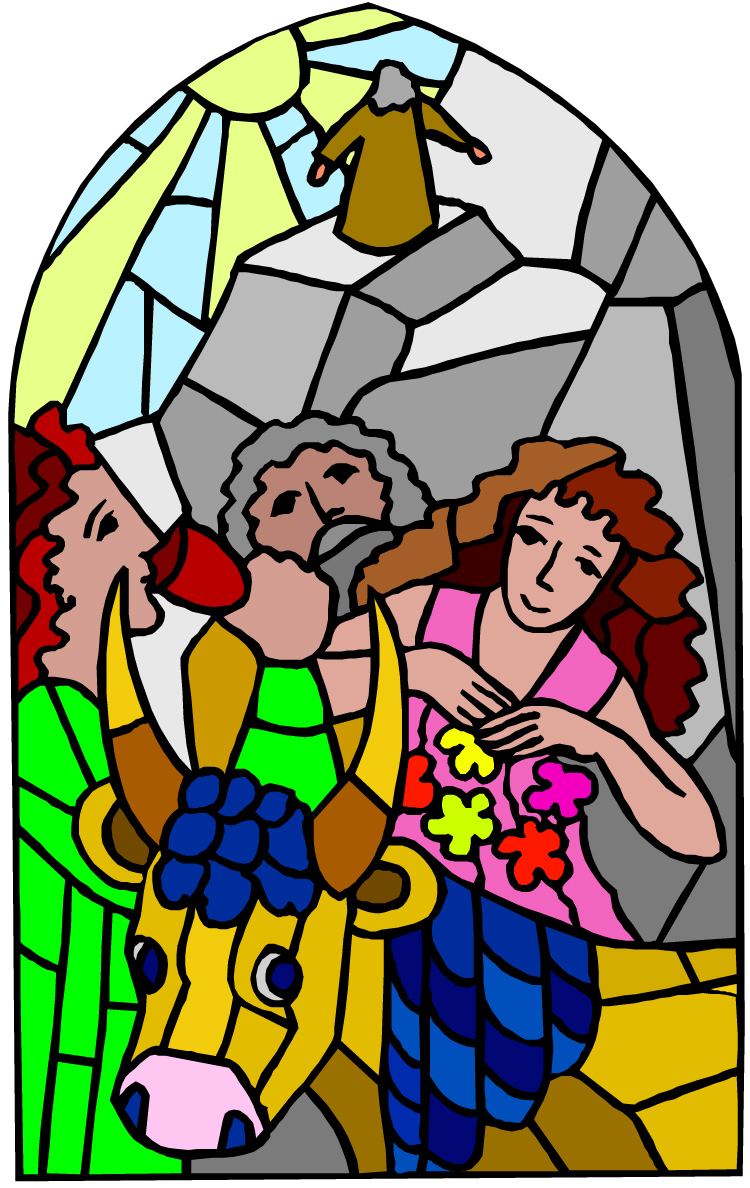
Golden Calf Worship Among YHVH’s People Today

Are YHVH’s people still prone to golden calf worship today?

Some things never change, since human nature is still the same today as it was thousands of years ago when the children off Israel worshipped the golden calf.

So let’s explore this question.

Let’s look at the series of events that occurred as the children of Israel were leaving Egypt, which have major relevance to what is occurring in mainstream Christianity in our day. If we fail to learn the lessons of history, we’ll likely repeat the mistakes of history. It has to do with golden calf worship.

YHVH redeemed the children of Israel out of Egypt and set the slaves free. He blessed them not only by giving them their freedom, but by giving them the wealth (gold and silver) of Egypt as well. We read that the Israelites exited of Egypt with a high hand. They were victorious, free and wealthy.

YHVH led them into the wilderness en route to the Promised Land—normally an eleven day journey. They had some difficulties: Pharaoh tried to kill them at the Red Sea, they lacked clean drinking water, and they had food issues, but YHVH provided them deliverance from Pharaoh, gave them clean water, manna and meat, and they overcame these trials.

Next, YHVH led the Israelites to the foot of Mount Sinai, and on Shavuot he made a covenantal agreement with them and gave them his Torah as their national constitution. They agreed to obey him and to keep his commandments. He promised to bless them if they remained faithful to him.

Moses went up to Mount Sinai to receive the Torah-covenant on two tablets of stone. While he was gone for 40 days, the people grew worried and anxious and become weary of waiting for Moses to return.  This was a test they had to pass of their faithfulness. Would they be faithful to YHVH and keep his commandments, or would they stray spiritually from the path of righteousness YHVH had given them and they had agreed to follow?

The Israelites got tired of waiting, and took the gold from Egypt and turned it into a golden calf, and then they rose up to play (to party). They even called their revelry a feast to YHVH! They used religious verbiage like “YHVH” and “feast” to add legitimacy to their Continue reading →


The Sabbath/s of Elohim—An Identifying Sign Forever

Verily my sabbaths ye shall keep: for it is a sign between me and you throughout your generations; that ye may know that I am YHVH that doth sanctify you. (Exod 31:13)

There remaineth therefore a rest/Sabbath [Greek: sabbatismos or keeping of the Sabbath]  to the people of Elohim. (Heb 4:9)

Exodus 31:13–17, My Sabbaths you shall keep. Note that Sabbaths is plural. This is a reference not only to the weekly Sabbath, but to the feast day Sabbaths as well. However, the seventh day Sabbath remains central to YHVH’s spiritual economy for his people. Why did YHVH designate it as a sign (“signal, distinguishing mark, banner,” Exod 31:12) between him and Israel? As YHVH’s set-apart people, Israel was distinguishing itself from the surrounding nations who did not keep the Sabbath. What distinguishes the saints today as YHVH’s set-apart people from the non-believing heathen around them? Certainly our love for one another is a distinguishing mark, according to Yeshua (John 13:35). Yeshua also said that if we love him we will keep his Torah commandments (of which the Sabbath is the fourth of the ten commandments, John 14:15; Exod 20:8). John was inspired to write that those who say they know Elohim and don’t keep his Torah-commandments (of which the Sabbath is a foundation stone) are liars and the truth is not in them (1 John 2:3–6). And finally, Yeshua told those who were Torahless (i.e. workers of iniquity or lawlessness) to depart from him, that he didn’t know them even though they claimed to be his followers and had done many religious works in his name (Matt 7:21–23). Although the Sabbath and the biblical feasts may not be the exact sign of the Renewed Covenant, Elohim’s Sabbaths are foundation stones of the Torah, and the keeping of them remains to this day for the saints of Elohim (Heb 4:9).

The ArtScroll Stone Edition Tanach translates verse 15 as follows:

For six days work may be done and the seventh day is a day of complete rest, it is sacred to [YHVH] … (emphasis added)

What is complete rest? What is the connection between “complete rest” and the idea of sacredness or being set-apartness or kadosh? The people of YHVH are called to separate the kodesh from the common or profane:

Her priests have violated my Torah, and have profaned my set-apart/kodesh things: they have put no difference between the kodesh and profane [common, polluted] neither have they showed difference between the unclean and the clean, and have hid their eyes from my Sabbaths, and I am profaned among them. (Ezek 22:26)

And [the priests] shall teach my people the difference between the kodesh and profane, and cause them to discern between the unclean and the clean. (Ezek 44:23)

What is common or profane is that which is commonly done on the other six days of the week.

Exodus 31:14, Sabbath…profanes it. Profaning or polluting the Sabbath with secular activities is a sin. Sabbath desecration is as much a capital offence in YHVH’s eyes now as it was then. The wages of sin is still death (Ezek 18:4; Rom 6:23).

Exodus 31:18, Written with the finger. The Sabbath was ordained by Elohim and written by his finger. How dare men subsequently declare that the Sabbath was changed and that what YHVH wrote with his finger in tablets of stone is now irrelevant or passé! What hubris and arrogance on men’s part to counter the will and laws of Elohim with silly, specious and vacuous justifications for man-made and unbiblical teachings. Such edicts of men will not stand, but will blow away like dust in the wind, will be burned to ashes in the fiery judgment of Elohim, and will fall by the wayside like all the other traditions of men, which have dared to make the word of Elohim of no effect!