The Menorah—The Tree of Life and Yeshua

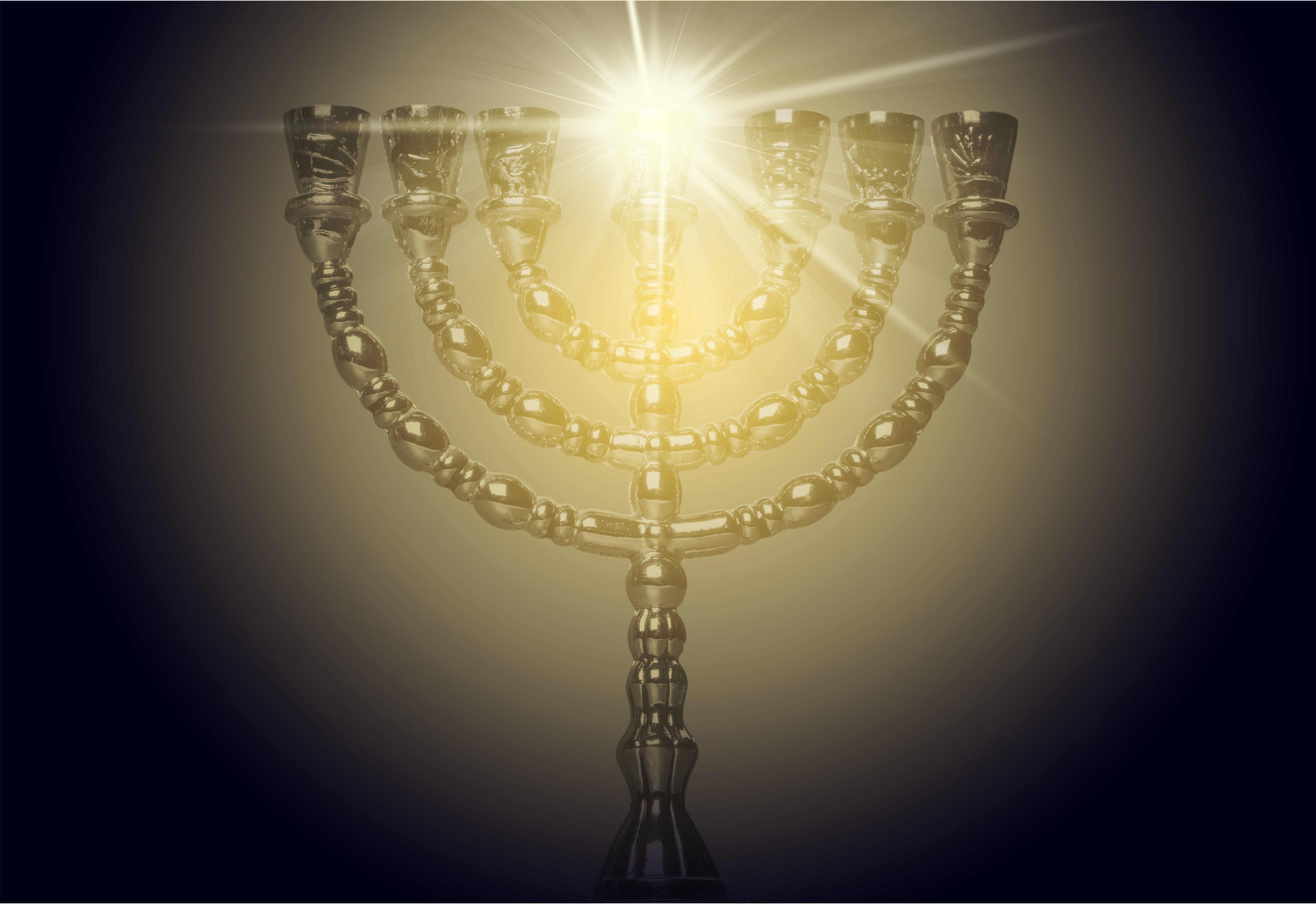
Exodus 25:31–39, Menorah of pure gold. The menorah was beaten out of a solid ingot of pure gold and stood on the left side of the holy place inside the tabernacle. It was the only light in the holy place. The menorah had seven branches with three on either side of a central stem. Each branch had three decorative cups, a knob and a flower resembling that of an almond flower. The cups were called lamps and each was filled with the purest olive oil and contained a wick that was lit. The menorah was lit each day, and each of the six outer lamps were designed so that when lit its flame pointed toward the central stem. The menorah had tools—tongs and spoons—to tend the wick. These implements were used to clean and to prepare the lamps and to remove the previous day’s ashes.

The menorah is a picture of Yeshua, the Tree of Life, who likened himself to a vine and his followers to branches” (John 15:1–7). It also pictures the idea that the saints are members of the body of Yeshua (1 Cor 12:12) and are established in him (2 Cor 1:21). His followers are connected to him, draw sustenance from him, and the spiritual light of their lives point toward him in all that they do. Believers are to be “on fire” for doing the work of Yeshua. The Spirit of Elohim directed by the Torah—both pictured by the olive oil—fuels that fire. On the Day of Pentecost, the believers in the upper room received fire of YHVH’s Spirit and had his Torah-law written in their hearts. Through the empowerment of the Spirit—both the fruits and the gifts—the saints were able take the light of the gospel out to the world. The Continue reading →


The Table of Showbread—The 12 Tribes in Unity Before Elohim

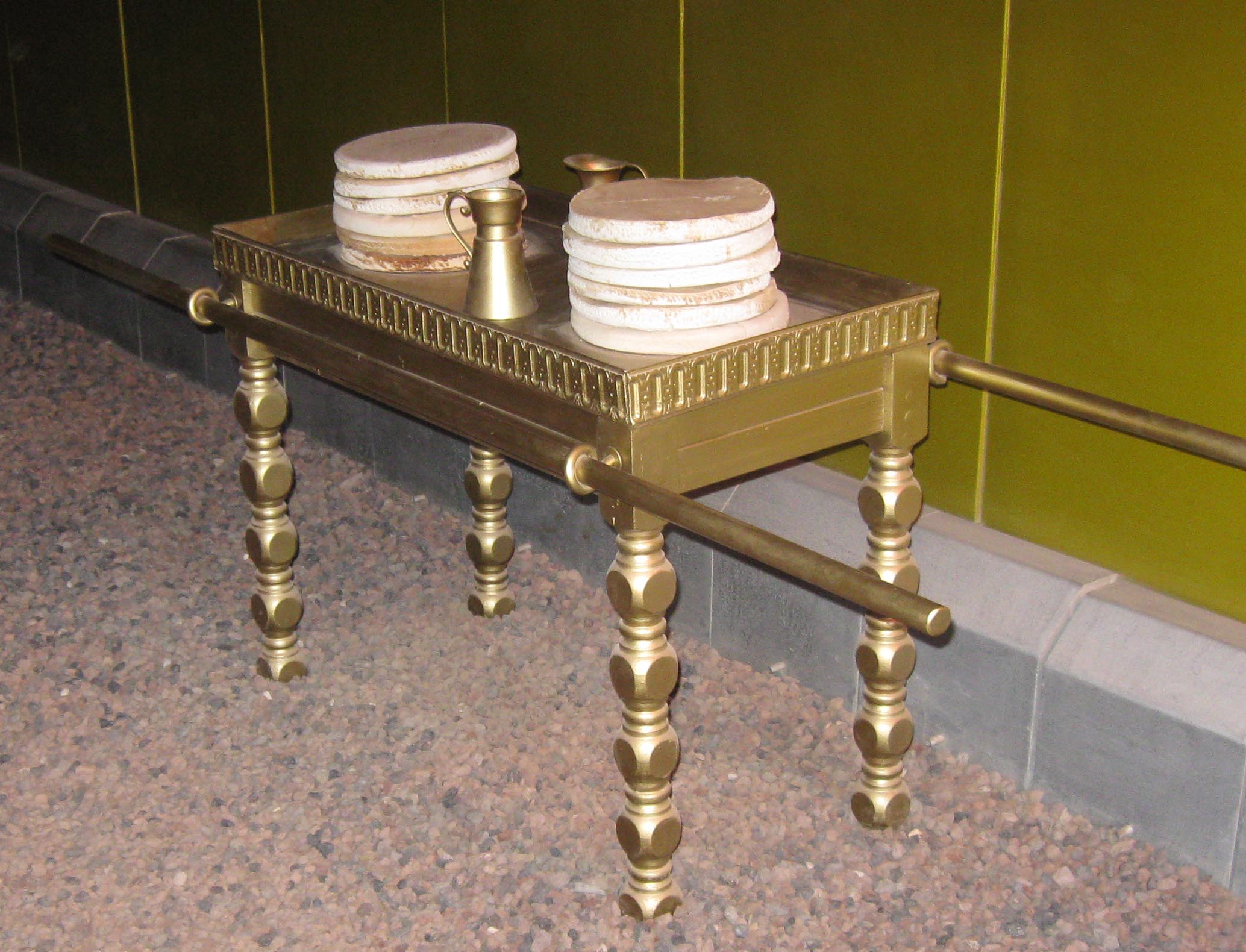
Exodus 25:23, Table. On the right side of the tabernacle opposite the menorah was the table of showbread. It was constructed of acacia wood overlaid in gold, which speaks of the two-fold nature of Messiah—both human and divine, with a crown of gold, which pictures Yeshua’s being the head of the body of believers. On the table were placed twelve loaves of bread representing the twelve tribes of Israel in communion with each other and YHVH. These loaves were replaced with fresh loaves every Sabbath (Lev 25:5–9). These loaves represent the whole house of Israel fellowshipping around Yeshua, the Bread of Life. The showbread is also called the bread of presence, for the term showbread in the Hebrew literally means the bread that is “in front of, before or in the face of” Elohim.

The Table of Showbread in More Detail

A golden table with 12 loaves of unleavened bread in two-stacks baked fresh weekly and replaced on the Sabbath represents the whole house of Israel in fellowship or communion with one another and their Creator. Yeshua is the bread of life that all must eat to have relationship with him (John 6:32–35, 53–58). This is a prophetic picture of Yom Teruah (the Continue reading →


The Ark of the Covenant—Heaven on Earth and Elohim’s Throne Room

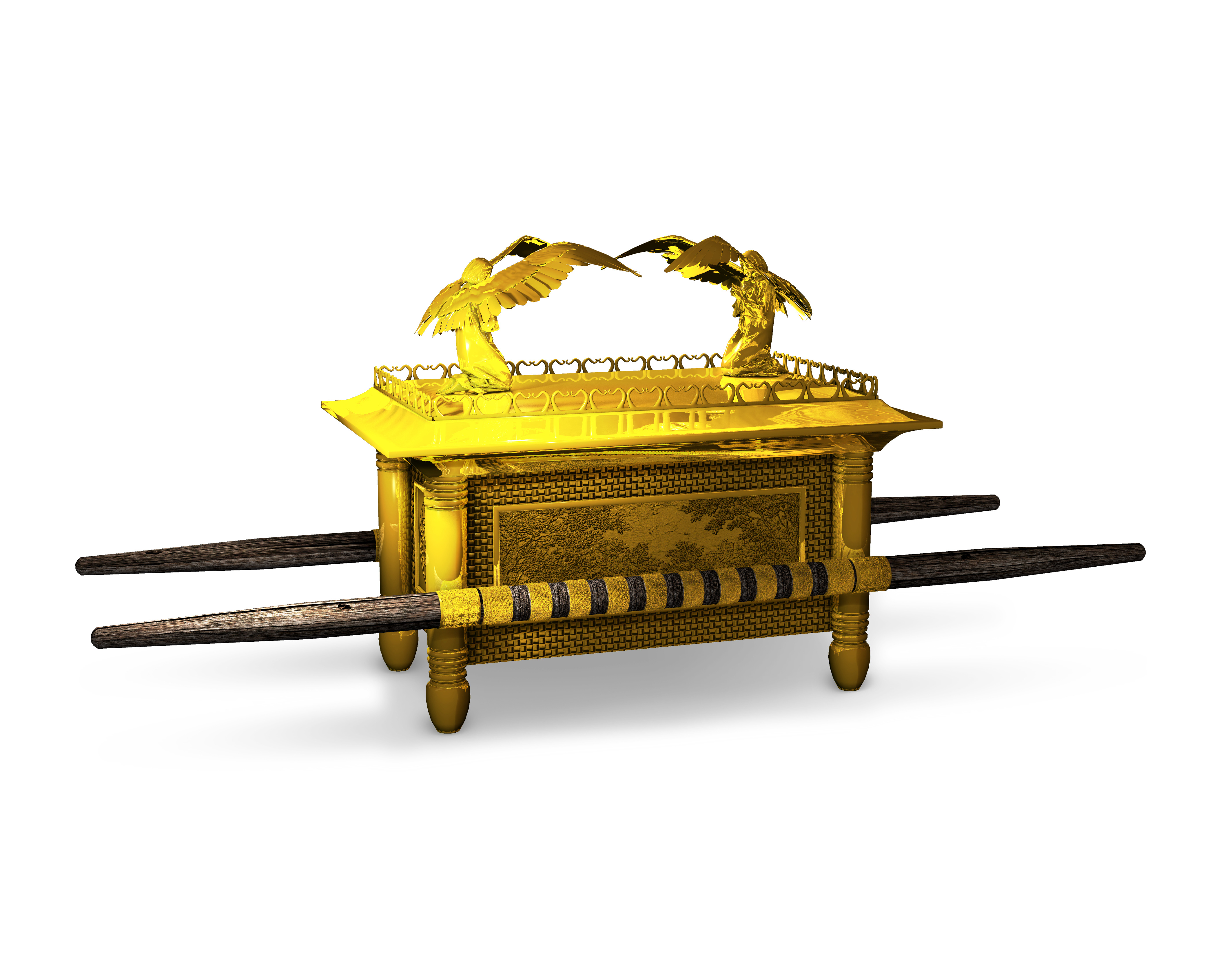
Exodus 25:10–22, Ark. The ark of the covenant was a small box of acacia wood overlaid in gold, which contained the golden pot of manna, Aaron’s rod that budded and the two tablets of stone containing the ten statements of Elohim—commonly called the Ten Commandments. Against the ark was leaned a scroll of the complete Torah (Deut 31:26).

Covering the ark was a golden cap called the mercy seat or kapporet and is related to the word kippur as in Yom Kippur, the Day of Atonement. Both share a common Hebrew root, which is the word kapar, which according to The Theological Wordbook of the Old Testament (TWOT) means “to make an atonement, make reconciliation, purge”) and the mercy seat—the golden “lid” covering the ark of the covenant located in the D’veer (i.e. the inner shrine of the Tabernacle of Moses)­—which in Hebrew is the word kapporet was “the place of atonement or the place where atonement was made.” The TWOT defines what happened at the kapporet as follows:

“It was from the … mercy seat that [YHVH] promised to meet with the men [of Israel] (Num 7:89). The word, however, is not related to mercy and of course was not a seat. The word is derived from the root ‘to atone.’ The Greek equivalent in the LXX is usually hilasterion, “place or object of propitiation,” a word which is applied to [Messiah] in Rom 3:25. The translation ‘mercy seat’ does not sufficiently express the fact that the lid of the ark was the place where the blood was sprinkled on the day of atonement. ‘Place of atonement’ would perhaps be more expressive.”

The mercy seat covering the ark that contained the Torah is a vivid symbolic picture of YHVH’s mercy triumphing over his judgment (Jas 2:13). We all deserve death for violating Continue reading →


The Tabernacle of Moses—An Overview

Exodus 25:8–9, A sanctuary … tabernacle. 

If you were the Creator of the universe, what means would you use to communicate with those that you had created through love in your likeness and image? In a remote way, it’s like a human standing over an anthill trying to communicate with the ants. How do you do it? Similarly, how does an all powerful, Spirit Being, loving Father in heaven relate to his mortal children who are but mere specks of dust without vaporizing them with his raw power? The difficulty is compounded when fearful humans don’t want to hear the voice of Elohim, which is what happened when YHVH Elohim’s voice thundered from Mount Sinai. The children of Israel begged him not to talk to them, lest they die. They asked the Almighty One to speak to them instead through Moses (Exod 20:19). 

When man sinned at the tree of knowledge, and YHVH kicked them out of the Garden of Eden, direct communications between man and his Maker were hampered, if not all but cut off. However, Elohim had a plan to restore the loving relationship he had with man before the rebellion. But if men refuse to hear you when you speak, what are you do?

For certain, the Almighty doesn’t lack for ways to communicate with men. Man is without excuse when it comes to hearing Elohim, for even the heaven’s declare the glory of the Creator and the plans he has for mankind. The visible things of this creation shout loudly about the spiritual mysteries heaven desires to reveal to its earthly subjects. Furthermore, from time to time over the millennia, Elohim has chosen to speak directly to some select servants through dreams, visions, signs, wonders, angels, and even once through a donkey! But how does he speak to a whole nation, if that nation is plugging its ears and refusing to hear its Master’s voice?

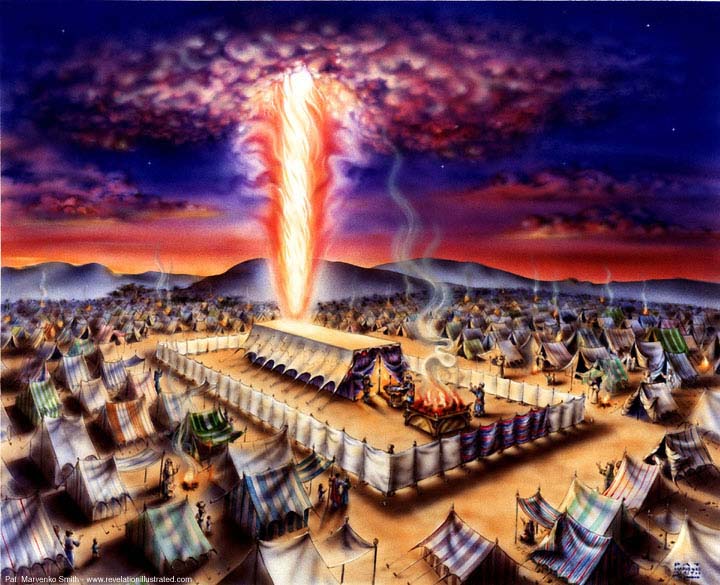
Enter into the picture the Tabernacle of Moses, which was literally a three-dimensional gospel message tract. It is the visual demonstration of the whole salvation message of the Bible in a building—the blueprint of the plan of redemption of wayward, sinful man. It was a functioning masterpiece of artwork demonstrating the Father’s love for his people, and of his desire to commune and to communicate with Israel—his treasured possession, those he had hand picked and called out from the 70 nations of the world. Not only did the tabernacle involve the sense of sight, but the other four senses as well: sound, smell, touch, and taste. It also engaged and even challenged the heart, emotions, mind and spirit of man to focus on his need to be spiritually reconciled to his Creator. The Tabernacle of Moses was a vehicle for the Creator of the universe to communicate with man using a panoply of communication devices all of which pointed to the coming Messiah, the Redeemer of mankind who would die for the sins of the world to restore man into a loving relationship with his ever-loving, gracious, and longsuffering Father in heaven.

This is the story of the tabernacle, which, in every way, resembles a theatrical play, even a pageant, containing costumed actors each performing his carefully choreographed role on cue. Even a child can comprehend the message of this play, yet it contains mysteries and truths so deep that only in eternity itself will they be revealed to those who have been initiated into higher spiritual levels through the tabernacle’s spiritual paradigms of which its rites and ceremonies were mere prophetic shadows of things to come. To understand it, is to understand the message of the whole Bible from Genesis to Revelation.

Let’s now enter into the world of the Tabernacle of Moses. Welcome! (Please note, over the next several parshiot, we will be discussing the tabernacle in great detail. Later, when we get into Leviticus, we will explore the sacrificial system as well as the other tabernacle rites and ceremonies, and we will learn how they all pointed to Yeshua and how it relates to us.)

Why Study the Tabernacle (or Temple)?

Elohim commanded his people to study it. In Ezekiel 43:10–11, YHVH tells Ezekiel to explain to his people the layout of the temple “that they may be ashamed of their iniquities [Torahlessness]” and presumably repent or return to a spiritual relationship with him.

Elohim commanded his people to build the tabernacle (and latter the temples, see Exod 25:8; 29:43; 1 Chron 17:11–15); therefore, it must be important, and we should study it to understand its significance. After all, one-half of the Torah and one-third of the 613 Torah commandments deal with the temple, so it behooves us to understand it’s spiritual significance.

Elohim’s name resided in the tabernacle (and temple, Deut 12:5–6), and it’s where he chose to abide with man on the earth (Exod 25:8).

Both the tabernacle and first and second temples in Jerusalem were the spiritual centers for the nation of Israel. Elohim’s manifest presence was found within the Tabernacle of Moses and Solomon’s Temple, and this phenomenon powerfully unified the 12 tribes of Israel making them feel as though they were one nation under YHVH’s divine protection Continue reading →

 

Mexico’s West Coast—Enjoying the Exquisite Beauty of YHVH’s Creation

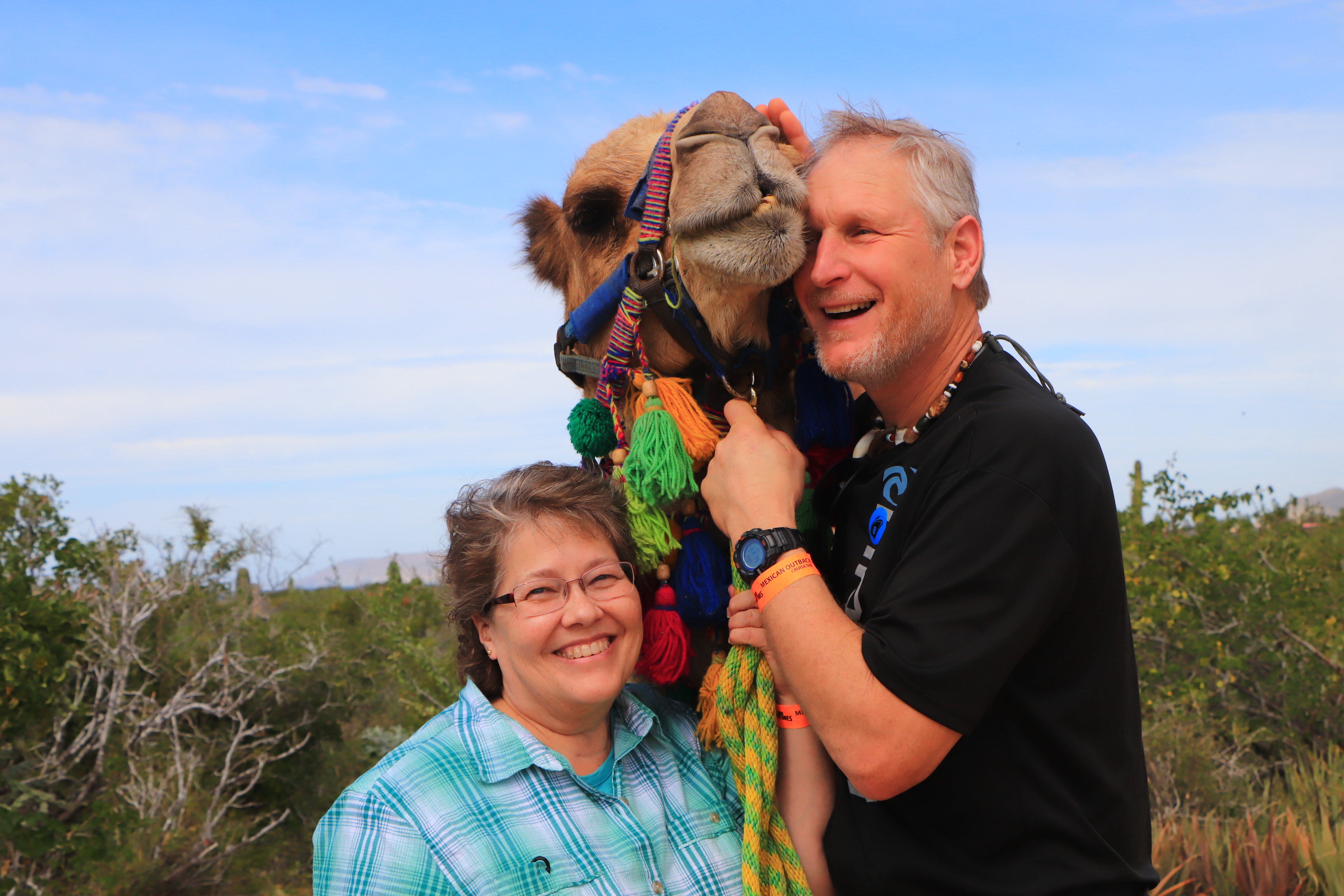
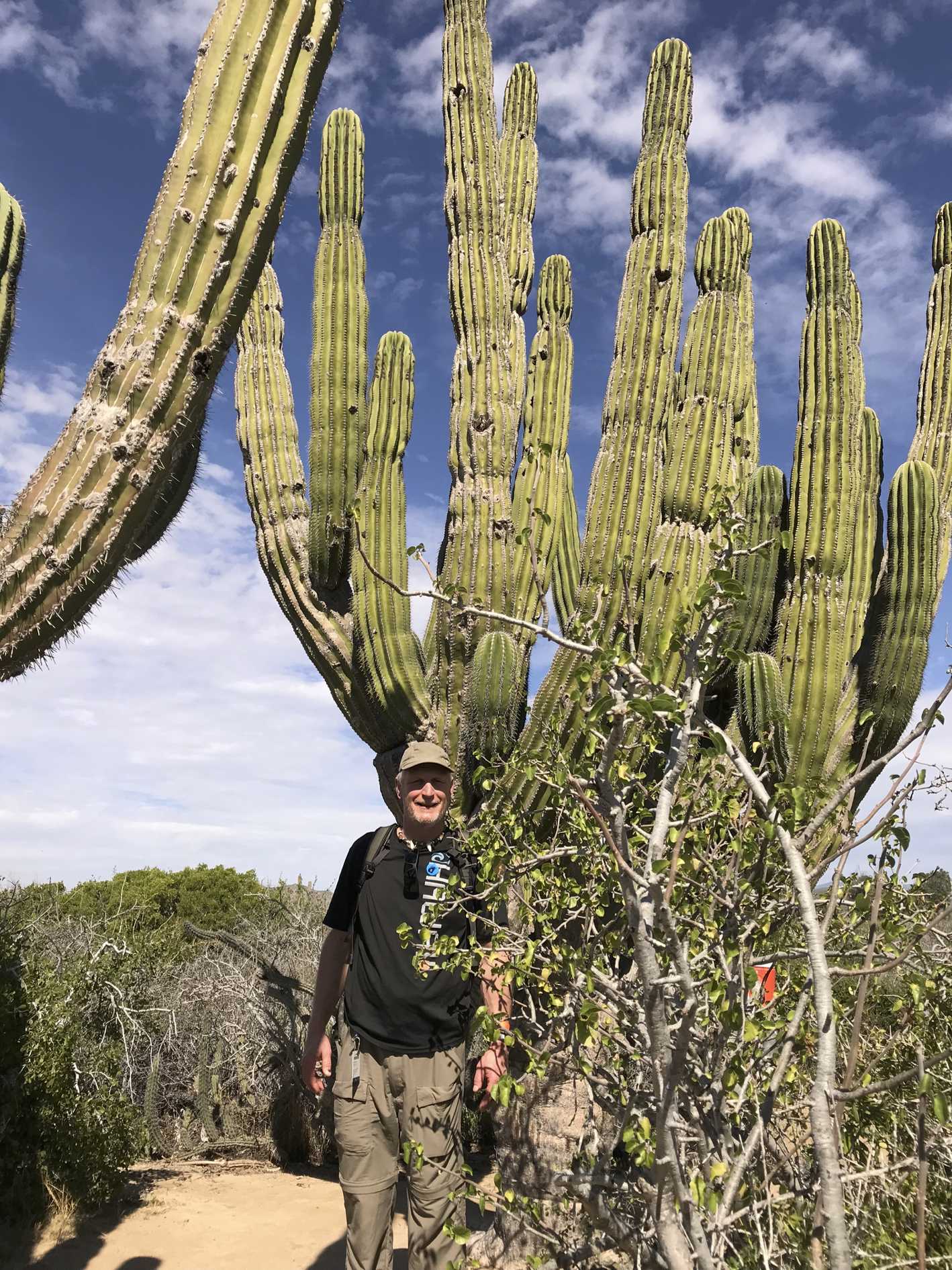
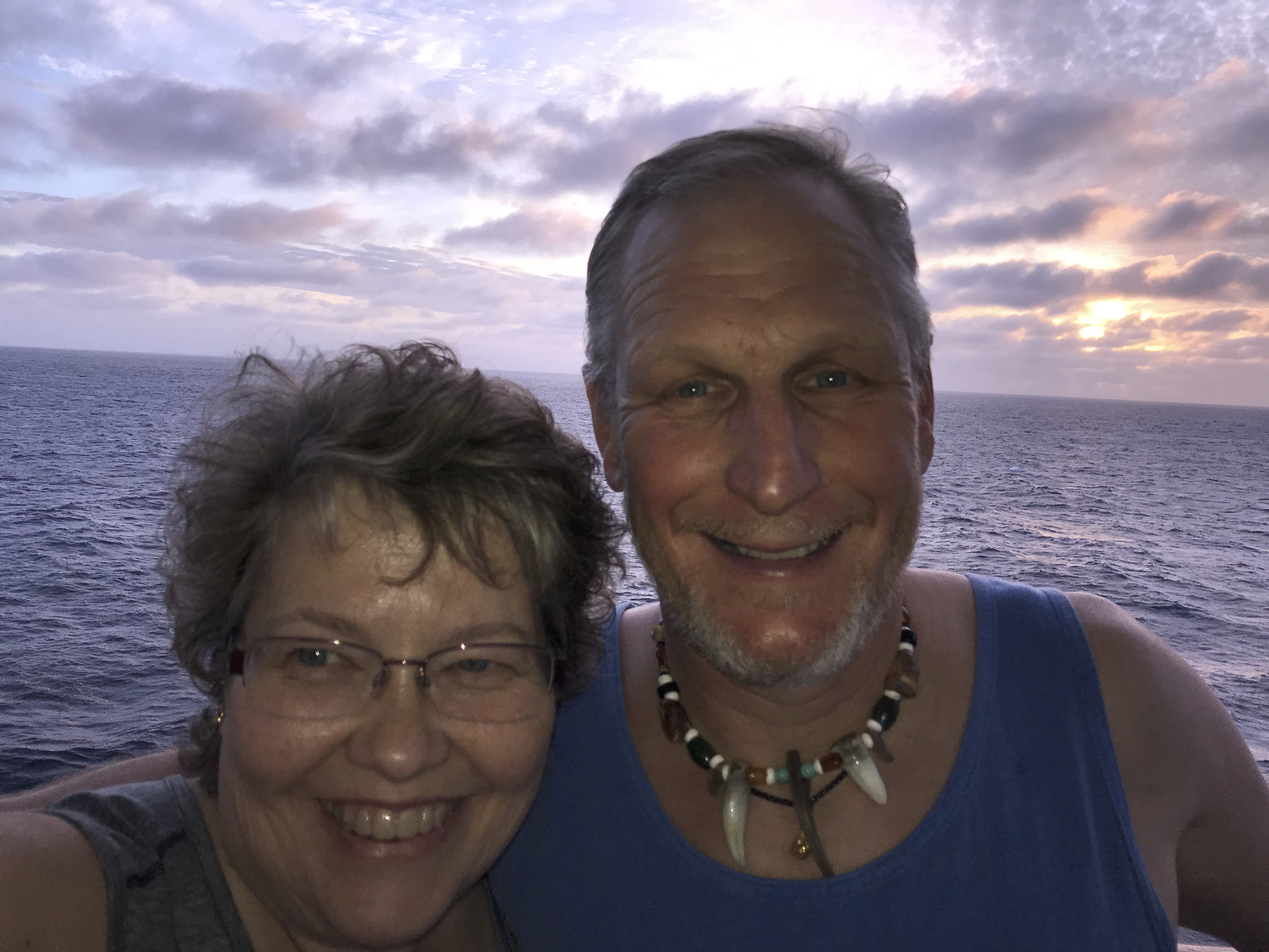
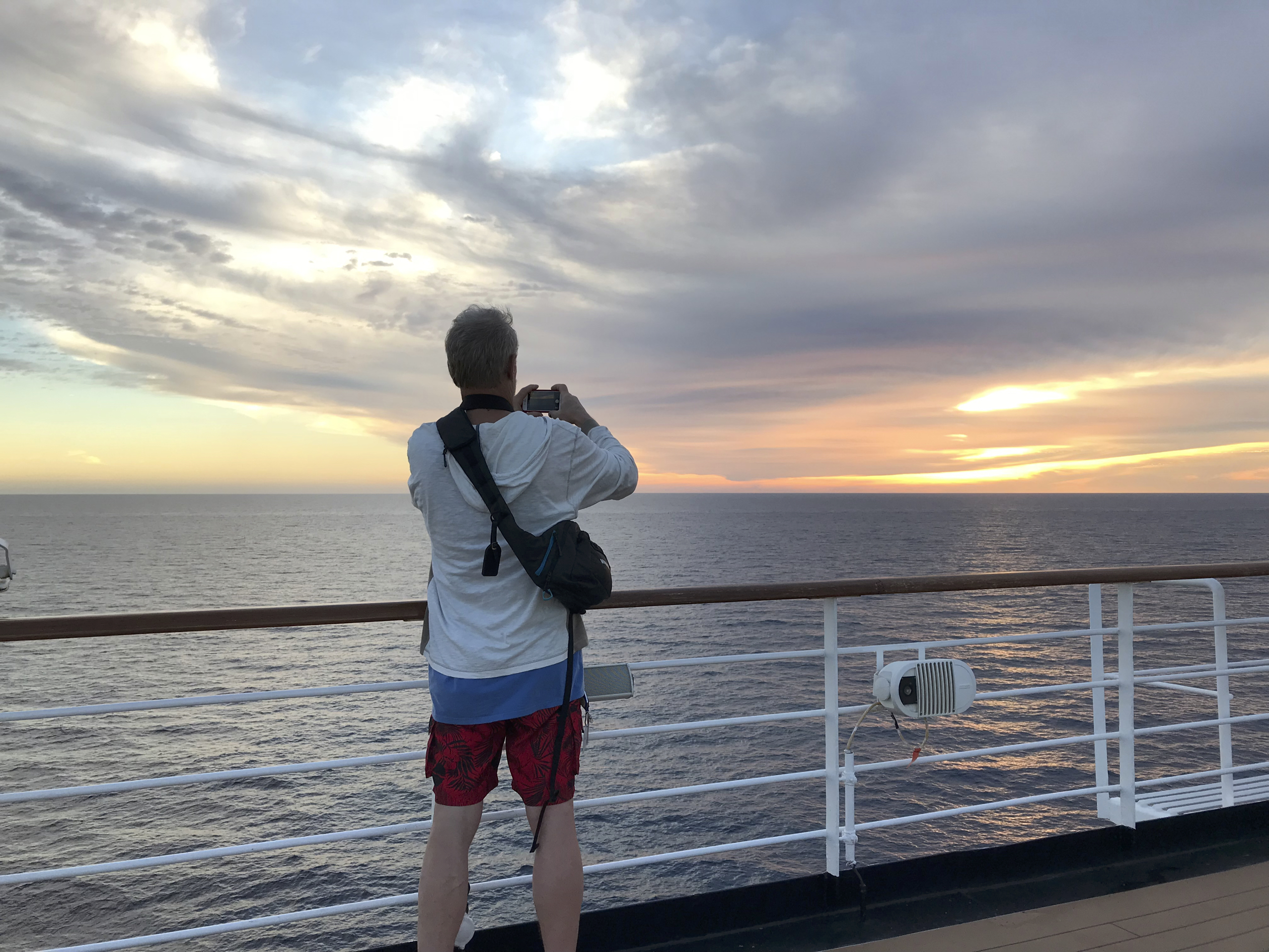
Here are several more photos from Natan and Sandi’s recent anniversary trip to western Mexico.

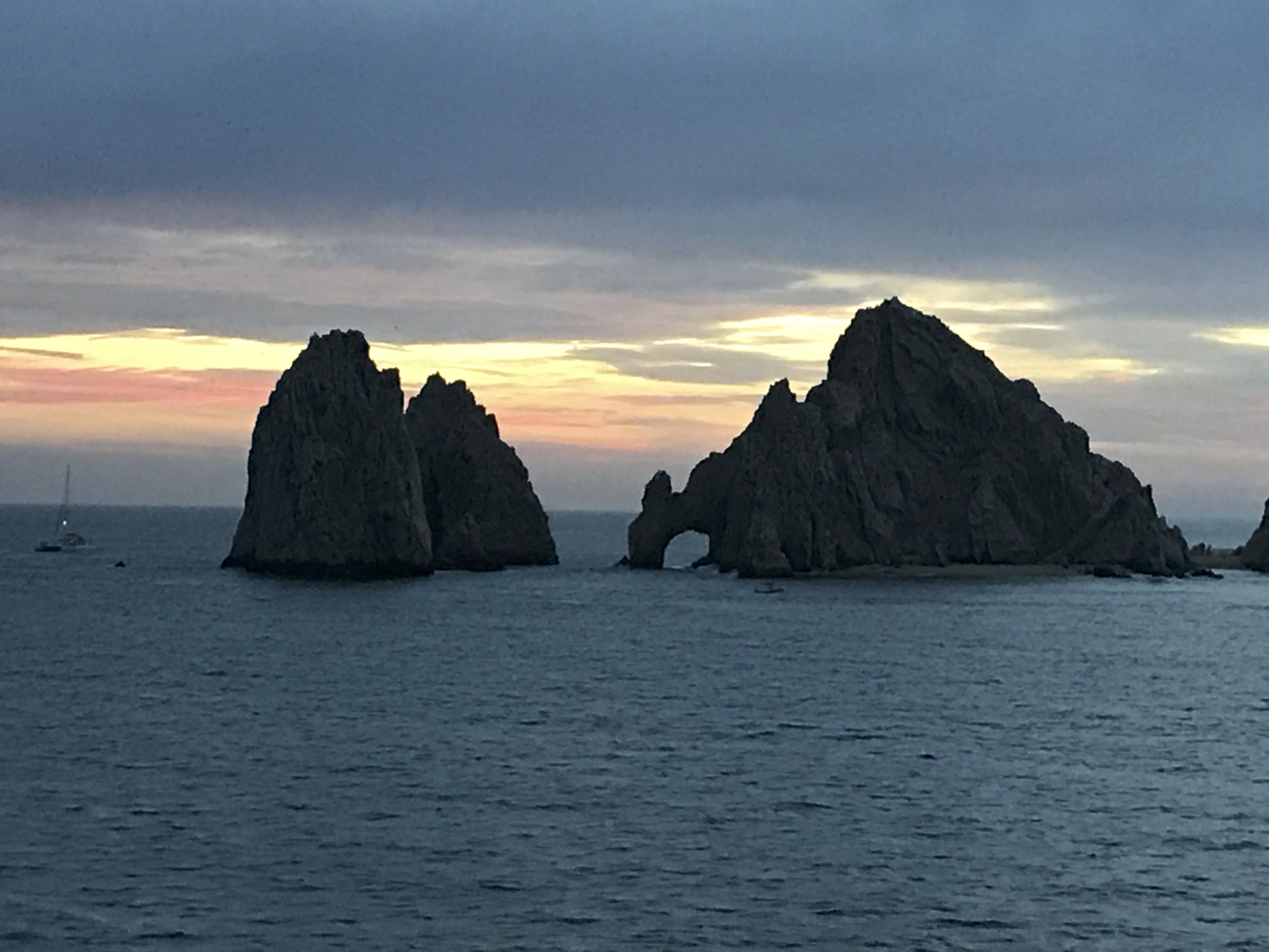
The famous arch of Cabo San Lucas

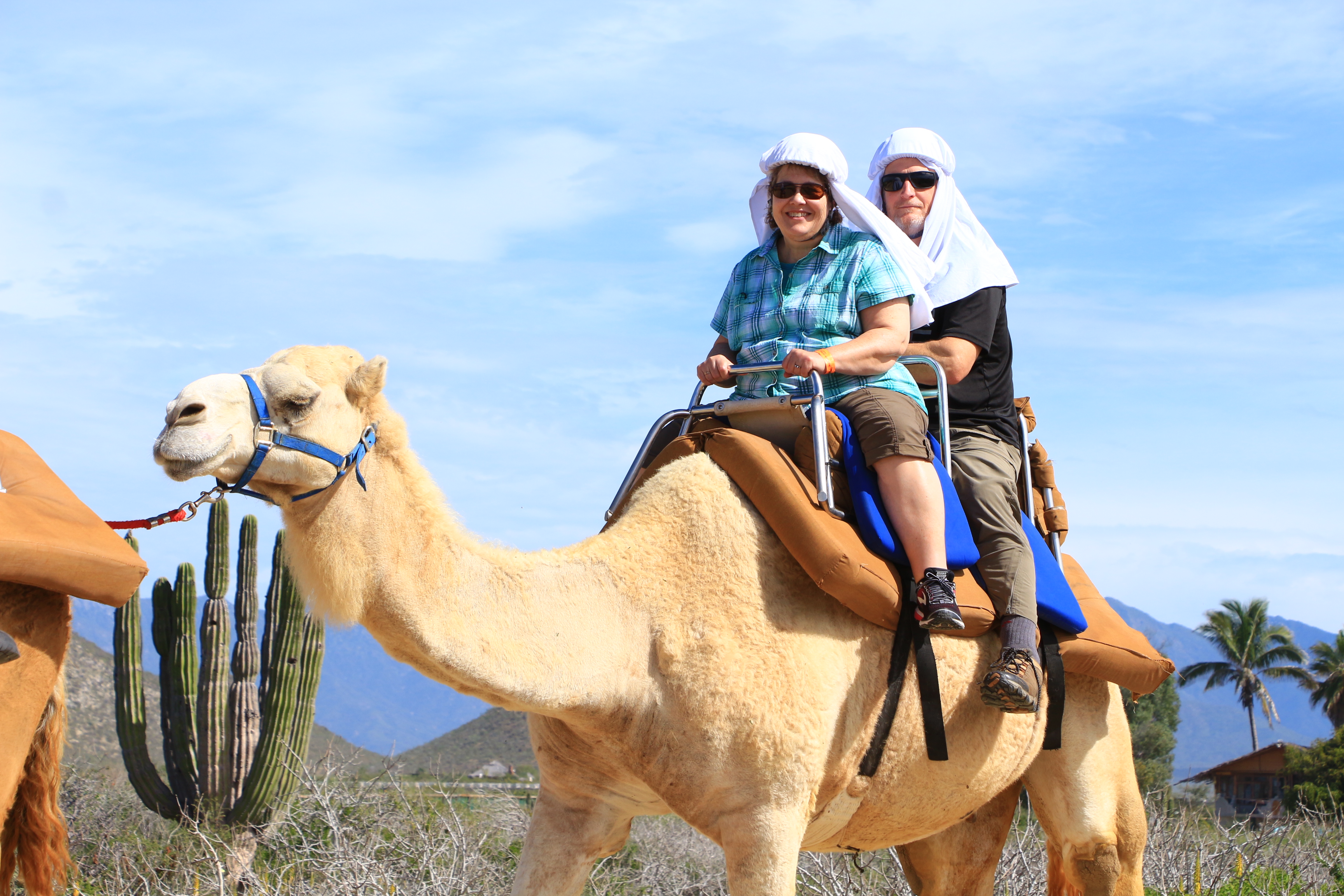
Riding camels in Mexico. Imagine that!

Natan grew up on a farm with many types of animals. He still has a soft place in his heart for our furry earthly coinhabitants.

In Baja California Sur, one finds the largest species of cactus on earth—the cardon or elephant cactus that can grow over 60 feet tall and more than three feet in diameter. Natan, a tree lover, exulted at hanging out briefly with these exotic, ancient giants.

Sunrises and sunsets at sea are incredibly inspiring. Natan and Sandi would rather spend their time relishing the brush strokes of heaven’s 3-D artistic masterpieces than just about any other activity a cruise ship has to offer.

On several occasions, Natan rose early in the morning to greet the sunrise with praise to and worship of our Father in heaven. Sunrise at sea makes you feel so minuscule and YHVH so awesomely great that it’s difficult to explain.

Enjoying the beach walk at Puerto Vallarta. After a short while, the street vendors, like mosquitos looking for a meal, were plaguing us so badly that we fled back to the peaceful refuge of our ship’s stateroom cabin.

Another glorious sunset at sea, and another end to a day of life that YHVH Elohim has given to each of us his heavenly gift to his human children. Yah, help us to thankfully and profitably use each day for your glory and for the expansion of your heavenly kingdom. Amein.


Blog Scripture Readings for 2-3 Through 2-9-19

Aside

THIS WEEK’S SCRIPTURE READINGS FOR STUDY AND DISCUSSION:

Parashat Terumah — Exodus 25:1 – 27:19
Haftarah — 1 Kings 5:26 – 6:13
Prophets — 2 Kings 3:1 – 9:37
Writings — Psalms 119:17 – 119:128
Testimony — Luke 20:1 – 22:53

Most of this week’s blog discussion points will be on these passages. If you have general comments or questions on the weekly Scripture readings not addressed in a blog post, here’s a place for you to post those. Just use the “leave a reply” link below.

The full “Read Through The Scriptures In A Year” schedule, broken down by each day, can be found on the right sidebar under “Helpful Links.” There are 4 sections of scripture to read each day: one each from the Torah, the Prophets, the Writings, and from the Testimony of Yeshua. Each week, the Torah and haftarah readings will follow the traditional one-year reading cycle.

Weekly Blog Scripture Readings for 2/3/19 through 2/9/19.


What to Pray For…

The eyes of YHVH are upon the righteous, and his ears are open unto their cry. (Psalm 34:15)

The effectual fervent prayer of a righteous man availeth much. (James 5:16)

  1. Pray for President Trump…for protection and good health for him and his family, for wisdom, knowledge, discernment, self control, courage, strength to lead our nation in spite of the opposition against truth and righteousness.
  2. Pray for the spiritual and political opposition…that their eyes would be open to Truth that they might turn to Father and follow His ways.
  3. Pray for the general population… that Father would pour His conviction out upon all and that we would all turn to Him in confession of sin, repentance, and obedience to Elohim.
  4. Pray that the conservatives of America would have the courage and strength to stand up and be active to the goal of protecting our southern border.
  5. Pray for the people who have so far been unable or unwilling to understand the sanctity of life from conception, so that they would reverse their thinking and remove unrighteous laws from the books that allow the murder of innocent babies.
  6. Pray for the people who honestly NEED asylum in America…that they would be shown proper channels, so that our nation could be a help to those truly in need.
  7. Pray for those in charge of voter registration to accomplish a purge of illegal voters, so that our elections would be AMERICAN elections.
  8. Pray for victims of human trafficking…that they would be found and returned and that this practice would be stopped.
  9. Pray for the leaders of “the church” who are whitewashing the Truth and deceiving their congregants.
  10. Pray that our Father’s will be accomplished in all things and that Yeshua would come soon.

More prayer points will be coming that will not only include those in America, but people of other nations as well.

If you have suggestions for additions to this prayer list, please post them in the comments section.

Thank you for praying!