The first sliver of the crescent new moon for the 1st month of the biblical new year was seen by multiple witnesses in the land of Israel the evening of March 25, 2020. This new moon begins a new year as the barley was found to be aviv/abib in sufficient quantities (i.e. not a single stalk here and a single stalk over there).
Aviv barley has been found in the land of Israel as well, so in less than two weeks, the saints of the Most High El (Elyon), Yehovah Elohim, who are the Israel of Elohim (Gal 6:16), and those who keep the commandments of Elohim, and who have the testimony or faith of Yeshua (Rev 12:17; 14:12), and who love Yeshua and keep his (Torah) commandments (John 14:15), will be celebrating the Passover (Pesach) and the subsequent Feast of Unleavened Bread (Chag HaMatzot). To help you do celebrate YHVH’s feasts at the appointed times, we have available for you free, printable calendars. Here are are April’s and May’s calendar: https://www.hoshanarabbah.org/calendars.html#apr20.
If you’re new to the biblical feasts and would like to learn about the biblical calendar, here are articles that I have written that explains all of this: https://www.hoshanarabbah.org/teaching.html#feast.
How to Create Your Own “God” Bubble to Deal With Life’s Attacks
May everyone reading this take careful note and pay close attention to the following: Creating a “God”-space bubble around you is a biblical strategy to protect yourself from the attacks of our spiritual enemy. Without it, you may not survive theses attacks.
Who is the enemy of our soul that is hell-bent on turning each of us into a spiritual casualty and a notch in his gun belt? Who is the one who is inexorably determined to pull you off the straight and narrow path that leads to Yeshua and his eternal kingdom? Who works tirelessly to pull your spiritual focus off Yeshua and his Word? Actually, the Bible reveals that the disciple of Yeshua the Messiah has three such enemies: the world, the flesh and the devil.
How do we deal with such rabidly determined enemies? There is the natural way and the supernatural way.
Most people choose the natural way to deal with adversity. It’s the default mode that, because of man’s fallen sin nature, one automatically and involuntarily chooses. It’s the way of self and flesh. The natural reactive tendency of humans when attacked is to create around themselves a fortress of pride, self-justification, self-righteousness where they blame others and seek pity as a form of defensive protection. The focus of this self-defensive strategy is on self and simply yields to path of least resistance dictated by one’s sinful nature. It is merely a natural, automatic and thoughtless default response of man’s fallen sin nature. If we don’t catch ourselves, we will automatically find ourselves doing this.
When attacked, instead of creating a defensive fortification where a focus on self forms the foundation stones in our defensive fortress wall, we need to run to the Rock of our Salvation who is our High Tower in times of trouble. David, a man after Elohium’s heart, writes about this many times in his psalms. David shows us to make YHVH and not self the focus when our enemies attack us, and how to find refuge in our personal “God” bubble. A bubble seems a fragile, an almost invisible thing with a very thin wall—something that pops easily. So get that image out of your mind. Instead, think of an invisible force-field that can easily repel any incoming projectile no matter its size, speed or destructive capabilities.
Such a bubble or spiritual force field will shield and protect us from any of our enemy’s attacks. It will insure that we weather the ferocious storms of life that blow against us. In that place, we are relying on the unlimited power and wisdom of YHVH to aid us in our time of need instead of the weak, faulty and deceptive arm of the flesh. The former leads to light and life; the latter leads to darkness and death. The former brings healing and strength; the latter glosses over pain and is merely weakness feigning as strength.
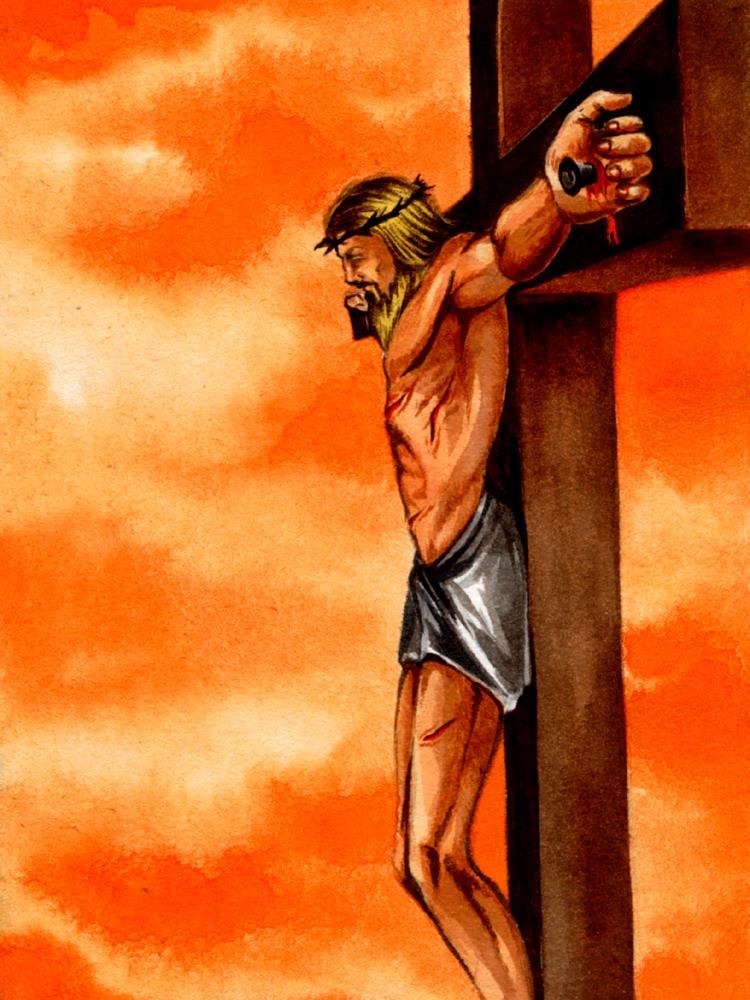
Since each person is different, each one will furnish their “God” bubble differently depending their spiritual orientation and makeup, tastes and interests. In my times of trouble, and most of other times as well, I maintain a spiritual force field around me by which I’m able to repeal spiritual attacks. When attacks happen, I then take refuge in my own personal spiritual bubble. This involves turning to the Scriptures for guidance, wisdom and encouragement. Prayer—talking to Elohim—is a vital component of my spiritual bubble or force field. Often I visualize myself either at the foot of Yeshua’ cross or before the throne of my Heavenly Father. Often I will myself involve hard physical work (to settle my emotions and to help clear my mind, which helps to me to destress and get my mind off the problem, so I can think and pray clearly). Many times, I listen to beautiful and spiritually uplifting music, which again helps me to elevate my spiritual focus. Often I find my own Garden of Eden in nature where I can imbibe in the beauty of Elohim’s creation. There I can talk with the Creator and find healing. To accomplish this, often I will work in my garden. Sometimes I write Elohim-centered psalms and poetry. David wrote many of his psalms in times of distress—even when his life was in danger. This helped him to get his mind off of his circumstances and onto YHVH, who was is salvation and deliverer. Whatever I do, in all cases, I try to get my mind off myself and onto Elohim who is my source of wisdom, hope and guidance, and my ultimate Savior and Deliverer. Often, I imagine myself falling down at the foot of the cross where I find my strength at the feet of Yeshua. I tell myself that if he endured that for me, then I can endure this for him.
For other people, their “God bubble” might be spending time with cherished and caring family members and friends, their spouse, their spiritual family, at church or during the Sabbath and biblical festivals.
This is what my “God” bubble looks like and what helps me to deal with spiritual attacks. What does your “God” bubble look like?
If you don’t have your own “God” bubble, how about making one to help you deal with the pain, stressors and attacks of life?
24 Practical Tips to Walking in the Presence of Elohim
Although Jewish and Christian scholars disagree about whether the sacrifices were to cease after the coming of the Messiah, as Edersheim points out, all agree that the object of a sacrifice was substitution for the offender (The Temple – Its Ministry and Service, p. 90). He also notes that the Jewish fathers along with the Scriptures that all these substitutionary sacrifices pointed to none other than the Messiah. This understanding is especially expressed in the proto-rabbinic biblical Aramaic commentaries or Targumim (e.g. Tarum Jonathan and the Jerusalem Targum; ibid., p. 92). Later rabbinic sages, in light of the rise of Christianity, were loath to accept this interpretation and, to this day, pretend it was never the belief of their ancient predecessors.
As the Tanakh progresses, the concept of the substitutionary sacrifice as it relates to the sinner and to the Messiah expands and unfolds. The unity of the Tanakh in this regard and its progression of revelation on this subject must be taken into consideration when studying the sacrifices listed in Leviticus and the rest of the Torah if we are to understand completely the biblical concept of substitutionary sacrifice as well as the Messianic prophecies. The concept of sacrifice in the Tanakh point us prophetically in progressive stages to the sin atoning death of the Messiah on behalf of sinners. Such passages in the Tanakh as Pss 2, 22, 35, 69, 72, 89, 110, 118 along with Isa 52:13–53:12 (many other scriptural passages could be cited here as well) point undeniably to the Person and work of Yeshua the Messiah including his suffering and glorification. The apostolic writers understood these prophecies and how Yeshua fulfilled them perfectly (e.g. Isa 52:13–53:12 cp. Heb 9:11–15; 10:4–7, 1; etc.), and this understanding forms the basis for the New Testament, which the authors thereof refer to as The Testimony of Yeshua (Rev 1:9; 6:2; etc.).
Brief Overview: Six Types of Offerings (Heb. korban) Offered on the Altar (Lev 1-7)
Burnt or Elevation (Heb. Olah) Offering(Lev 1:3–17)
The olah or ascending offering signified the offerer giving himself up totally, wholly ascending or complete surrender to Elohim. The priests offered up this sacrifice up twice daily—the morning and evening (Exod 29:38–42; Num 28:1–8). This offering was always a male animal whose blood was to be sprinkled around the altar. The offerer was to lay his hands on the head of the animal before it was slaughtered symbolizing substitutionary atonement for sins. The offering would be accepted as a sweet aroma by Elohim.
At the end of his ministry, Yeshua promised his disciples to send them his Holy Spirit or Comforter after he had left earth (John 14:16). He declares that his Holy Spirit would dwell in them (John 14:17), would testify of him (John 15:26), would convict the world of sin (or Torahlessess, John 16:8), would guide them into all truth (i.e. Torah, see Ps 119:142,151), would tell them things to come (John 16:13), and would glorify the Son and speak to them on behalf of the Son (John 16:14).
How, therefore, does the Spirit of Elohim interact with man? Man is a three-part being: body, soul and spirit (1 Thess 5:23). The body is the physical part of man, the soul is the personality or beingness of man (his mind, will and emotions), and his spirit is the part of man that points him God-ward, and that, once spiritually regenerated and enlightened by the Spirit of Elohim, connects us to Elohim. Man must come to the Father by way of his spirit (John 4:23–24). The Father reveals his spiritual mysteries to man by his Holy Spirit to the spiritually regenerated spirit in man (2 Cor 2:6–16).
There are numerous scriptures that attest to the fact that at the time of our spiritual rebirth (a.k.a. conversion, regeneration, redemption or salvation), YHVH activates our spirit with his Spirit, thus allowing us to enter into a spiritual relationship or communion with him. This is important to know, since man can’t properly obey Elohim out of his soul (the mind, the will and the emotions) alone without the leading of his spirit. Taken to the next step, man can’t have faith in or properly love Elohim without the leading of the Spirit of Elohim as it empowers and directs man. I will discuss this more later. Here are some scriptures that show how the spirit of man is activated by the Spirit of Elohim at the time of the new birth:
Even the Spirit of truth; whom the world cannot receive, because it seeth him not, neither knoweth him: but ye know him; for he dwelleth with you, and shall be in you. (John 14:17)
But there is a spirit in man, and the inspiration of the Almighty giveth them understanding. (Job 32:8)
The spirit of man is the candle of YHVH, searching all the inward parts of the belly. (Prov 20:27)
The Spirit itself beareth witness with our spirit, that we are the children of Elohim. (Rom 8:16)
That he would grant you, according to the riches of his glory, to be strengthened with might by his Spirit in the inner man. (Eph 3:16)
But ye have an unction from the Holy One, and ye know all things.…But the anointing which ye have received of him abideth in you, and ye need not that any man teach you: but as the same anointing teacheth you of all things, and is truth, and is no lie, and even as it hath taught you, ye shall abide in him. (1 John 2:20, 27)
But Elohim hath revealed them unto us by his Spirit: for the Spirit searcheth all things, yea, the deep things of Elohim. For what man knoweth the things of a man, save the spirit of man which is in him? even so the things of Elohim knoweth no man, but the Spirit of Elohim. Now we have received, not the spirit of the world, but the spirit which is of Elohim; that we might know the things that are freely given to us of Elohim. Which things also we speak, not in the words which man’s wisdom teacheth, but which the Holy Spirit teacheth; comparing spiritual things with spiritual. But the natural man receiveth not the things of the Spirit of Elohim: for they are foolishness unto him: neither can he know them, because they are spiritually discerned. (1 Cor 2:10-14, emphasis added on all)
We learned above that the Holy Spirit that Yeshua promised to send would guide his disciples into all truth (John 16:13), and that by biblical definition, the Torah of Elohim is truth (Ps 119:142,151). Yeshua, as the Living Word or Living Torah of Elohim made flesh is also the truth (John 14:6). The Written and Living Torah are indivisible and are two sides of the same coin. The Spirit of Elohim came to reveal to man the truth of both the Written and the Living Torah-Word of Elohim.
That same Holy Spirit is at the center of one of the greatest prophecies of the Bible. The writer of Hebrews quoting from the prophet Jeremiah declares,
Behold, the days come, saith YHVH, when I will make a new covenant with the house of Israel and with the house of Judah…For this is the covenant that I will make with the house of Israel after those days, saith YHVH; I will put my laws into their mind, and write them in their hearts: and I will be to them an Elohim, and they shall be to me a people: and they shall not teach every man his neighbour, and every man his brother, saying, Know YHVH: for all shall know me, from the least to the greatest. (see Heb 8:8–11 quoting Jer 31:31–34).
Here, we clearly see that the Holy Spirit will be an internal aid to the people of Elohim helping them to keep his Torah. This a beautiful picture of a tender-hearted Father aiding along his struggling children to walk in love and harmony with him in accordance with his instructions in righteousness—the Torah.
John 14:12, Greater works. Works is the Greek word ergon, and is the generic word meaning “deeds, acts, business, employment, or occupation,” and isn’t confined to just miraculous deeds. Throughout his ministry, Yeshua did many great works. He occupied each of the five-fold ministry offices (apostle, prophet, evangelist, shepherd and teacher, Eph 4:11), and performed all nine gifts of the Set-Apart Spirit (wisdom, knowledge faith, healing, miracles, prophecy, discerning of spirits, tongues and interpretation of tongues) were at his disposal if and when he needed them.
What are the greater works that his disciples and those who would follow in their footsteps down through the ages would do?
Yeshua has now distributed his ministry offices and the gifts of the Spirit throughout his entire spiritual body (1 Cor 12:7–11; Eph 4:7–11) to be used as the Set-Apart Spirit leads. Collectively, down through the ages, the saints have done theses same works—both miraculous and non-miraculous—that he did and greater. Yeshua made this promise to his disciples collectively, and that includes you and me. Moreover, this promise of Yeshua gives no indication that only one person would do all the mighty spiritual works that he did. He is unique in that he performed all them.
Also consider this. What were the greatest works Yeshua did during his earthly ministry? When answering this question, many people would instinctively and immediately think of the many miracles Yeshua performed. But these were not his greatest works. He declared that an evil and adulterous generation focuses on miracles (Matt 12:39). His mission was to call the lost sheep of the house of Israel to repentance from sin and to bring them into the kingdom of his Father in heaven (Matt 15:10; 4:17). When a sinner repents heaven rejoices (Luke 15:7). This is not said of miracles being performed on earth by the hands of YHVH’s servants. Therefore, it seems that the greatest work (or miracle) Yeshua did was to bring sinners to repentance. If Yeshua’s disciples are doing this, these are the greater works that he spoke of that would be done.
Leviticus is divided into to several main parts. Chapters one to 16 deal with laws of sacrifice and purification. In the second section (chapters 17–25), Elohim sets forth his demands for holy living that his people might maintain a right relationship with him. Chapter 26 lays out the blessings and curses for obedience to YHVH’s commands. The final chapter of the book ends with some miscellaneous laws. The following is an overview of Leviticus chapter-by-chapter.
The five main offerings (Lev 1–7)
The ordination of priests (Lev 6:8–7:38)
Laws of cleanliness (food, childbirth, diseases, etc.) (Lev 11–15)
Day of Atonement (Lev 16–17)
Moral laws regulating relationships between humans (Lev 18–20)
Regulations for priests, the offerings of the annual feasts (Lev 21:1–24:9)
Punishment for blasphemy, murder, etc. (Lev 24:10–23)
The Sabbatical year, Jubilee, land laws, slavery (Lev 25)
Blessings and curses (Lev 26)
Regulations pertaining to vows made to YHVH (Lev 27)
Themes and Main Points of Leviticus
Leviticus stands at the center of the Torah, and there’s a reason for this, since it shows man how to come into relationship with Elohim by addressing the sin issue and showing man the upward path of holiness and righteousness.
Holiness (or being set-apart) is the key theme of Leviticus. This includes the set-apartness of YHVH and the need for man to become set-apart as well if he is to come into a relationship with the Almighty (Heb. kadosh, Lev 11:44). Leviticus lays out the terms are laid out by which an unholy, profane, polluted or sinful people can come into a spiritual and even contractual and marital relationship with their holy, morally pure and sinless Creator. It also delineates the terms of the contract including penalties for its violation and blessings for adherence to it.
Leviticus carries on to completion the giving of the Torah-law, which started in Exodus 20, and which firmly established the Torah as Israel’s binding covenant with Elohim and the legally binding document that would govern that nation. The Torah literally became the nation of Israel’s constitution.
This book, for the first time in detail, shows man the way of expiation (or atonement) and forgiveness of sin, thus prophetically pointing the way in major detail to Yeshua the Messiah, the Lamb of Elohim, who was yet to come and who would ultimately take away men’s sin once and for all (without the continual need of animal sacrifices) by his sacrificial death on the cross.
The narrative of Leviticus covered probably only a month.
Leviticus is the first book of Torah that rabbinic Jews start teaching their young children, since they believe that those who are pure in heart (i.e. children) should be engaged in the study of purity (i.e. the laws of purification and atonement, which is the central themes of Leviticus).
Even today, Leviticus remains the foundation for Jewish life, since it includes the laws pertaining to diet, the biblical feasts, sex, marriage, family purity, and our relationship with our fellow man.
The emphasis the modern rabbinic Jews place on Leviticus is evidenced by the fact that the tabernacle service found in this book is at the heart of the modern Jewish synagogue prayer service, and forms the basis for their daily devotions. Jewish liturgical prayer is largely based on the tabernacle sacrificial system as outlined in Leviticus.
The offerings and other ceremonies revealed in Leviticus serve to show the holiness of YHVH.
Leviticus teaches us that YHVH can only be approached through proper and prescribed protocols.
In Leviticus, spiritual set-apartness (holiness) is symbolized by physical perfection. All blemishes or defects symbolize man’s spiritual defects, which break his spiritual wholeness. Therefore, the religious system in Leviticus required:
Perfect animals for sacrifices (Lev 1–7).
Priests without physical deformity (Lev 8–10).
A woman to be ritually purified from hemorrhaging after childbirth (Lev 12).
Ritual purification from sores, burns, baldness (Lev 13–14).
Ritual purification from a man’s bodily discharges (Lev 15:1–18).
Ritual purification after a woman’s menstrual cycle (Lev 15:19–33).
All of these ritualistic requirements point to one thing: the holiness of Elohim and man’s need to put off sin and the defilement of the flesh, which causes pollution and profaneness, thus separating us from a set-apart, pure and perfect Elohim. This teaches man to strive to reach higher spiritual levels and not to be content with the mundane, fleshly, earthly level of his own human existence, but to reach for the heavens where Elohim abides.
Leviticus reveals that those with certain diseases or ailments had to leave the camp (symbolic of leaving YHVH’s Presence—like Adam and Eve leaving the Garden of Eden after they had sinned). Israelites could be readmitted to the camp (symbolic of returning to YHVH’s Presence) only after certain protocols had been performed and the person had been pronounced whole by the priests.
In Exodus 19:6, YHVH’s call for Israel to become a kingdom of priests. As such, they were to be a light to the nations and, in a sense, to evangelize the world by showing Elohim’s glory to those nations around them (Deut 4:4–8). Israel was to be YHVH earthly representation of YHVH’s kingdom on earth. Leviticus showed Israel how to walk in a set-apart (kadosh or holy) manner before YHVH and the world—how to be in the world, though not of the world, as Yeshua taught his disciples in John 17:11, 14.
All Was Overseen by the Priests
The priests oversaw and controlled the sacrifices, rituals, ceremonies, the rest of the tabernacle service as well as the day-to-day life of the Israelites.
It was their job to establish Israel as a kadosh nation, and to instruct Israel in spiritual cleanliness and set-apartness (holiness), to preserve them spiritually, and to present them to YHVH as a pure and righteous people. YHVH has given the same responsibility to the five-fold ministry that he has raised up to operate within the spiritual body of redeemed believers today (Eph 4:11–16). This new, royal priesthood (1 Pet 2:9) is comprised of apostles, prophets, evangelists, pastors and teachers who have the purpose of “equipping of the saints for the work of ministry, for the edifying of the body of Messiah, till we all come to the unity of the faith and of the knowledge of the Son of Elohim, to a perfect man, to the measure of the stature of the fullness of Messiah” (Eph 4:12–13).
Holiness—The Dominant Theme of Leviticus and the Bible
But as many as received Him, to them He gave the right to become children of Elohim, to those who believe in His name… (John 1:12)
Behold what manner of love the Father has bestowed on us, that we should be called children of Elohim! Therefore the world does not know us, because it did not know Him. Beloved, now we are children of Elohim; and it has not yet been revealed what we shall be, but we know that when He is revealed, we shall be like Him, for we shall see Him as He is. (1 John 3:1–2)
Passover is just around the corner. It is the first step in YHVH Elohim’s plan of salvation or redemption of sinful humans to reconcile fallen man back to him. Did you ever wonder how this process really works?
Let’s now look at this miraculous process of how to overcome sin in more detail through a spiritual magnifying glass. How do we go from being a lost sinner—the walking damned or the living dead—to becoming the glorified and immortalized children of Elohim?
It works like this: When we confess and repent of our sins, Yeshua will pass over or forgive us of our past sins (Rom 3:25); Ps 103:8–12). From this point onward, we must embrace a new mindset and a new spiritual identity and reality; that is, we must reckon our old sinful man as being crucified with Yeshua, in that we are now dead to sin, no longer slaves to sin, freed from the power of sin, and alive to Elohim in Yeshua our Lord (Rom 6:7–11). Yeshua is the one who victoriously defeated the power or sting of sin, which is death, hell and the grave at the cross and through his resurrection (1 Cor 15:56–57; Col 2:13–15). Through our faith in him and our legal identification with his death, burial and resurrection through the metaphorical ritual of baptism, his victory is legally applied to us by the courts of heaven, which is how he has made us more than conquerors over sin and death (Rom 8:37; 6:1–14) such that the power of sin and death will no longer have dominion over us (Rom 6:12–14). He now gives us strength through his enabling and empowering grace to resist and overcome sin, that is, to not let sin control us any longer (Rom 6:12). He promises to give us a new, circumcised heart as he writes his laws or commandments on our hearts, so that we will be supernaturally inclined to love him by keeping his commandments (Jer 31:33; 24:7; Heb 8:10; 10:16; Ezek 36:25–27; Isa 51:7; Ps 40:8; 37:31; Deut 30:6; John 14:12 cp. Rom 7:22). What is that supernatural power that works in us to help keep us from sinning? It the Spirit of Elohim or the Comforter that Yeshua promised would come along side of us to aid us in the process of overcoming sin (John 14:16–18, 25–26; 15:26–27; 16:7–14).
To summarize, this whole supernatural and miraculous process of being victorious over sin is activated when we first acknowledge our sin, confess our sin, repent of our sin and then place our faith in Yeshua’s death and burial. This occurs when we appropriate or reckon, by faith, our old sinful man to have been crucified with Yeshua, and then been resurrected in the newness of spiritual life with him. We now embrace the new identity that he has given us—a spiritual reality that he has imparted to us and has been legally recorded in heaven (Col 2:14)—that we are a new creation and are victorious over sin (Gal 2:20; 2 Cor 5:17), and have become Spirit-begotten sons of Elohim. This whole process is summarized from beginning to end in Romans chapters six through eight. The end result, if we continue in a right spiritual relationship with Yeshua the Messiah for the rest of our lives, is that our names will be recorded in Elohim’s Book of Life, and our physical bodies will be glorified—we will be given immortality—at the resurrection, which occurs at the second coming of Yeshua.
This whole process or chain of events that transforms sinful humans into glorified and immortal children of Elohim begins at Passover which symbolizes the first steps a person takes when he comes to faith in Yeshua the Messiah.