This chapter contains the regulations for the conduct of priests. YHVH’s standards are high, and a priest could easily be disqualified from service for failing to measure up. YHVH demands higher standards of righteousness, obedience and holiness for those in leadership over his people.
The higher up in leadership one desires to go, the more one’s walk must characterize service, sacrifice, self-deprecation and holiness (see 1 Tim 3:1–13; Tit 1:5–9). The standards of holiness rise as one seeks to attain a deeper and more intimate relationship with YHVH, for as he entrusts a person with greater spiritual responsibility he gives a greater level of anointing commensurate with the responsibilities of the ministerial office. Spiritual responsibility and divine anointing aren’t things to be trifled with or taken for granted.
Yeshua condemned the religious leaders of his day for not practicing what they preached (i.e. hypocrisy), for living lives of pretense and show (he called such ones “whited sepulchers full of dead man’s bones”), and for greediness and pride.
Check your walk in these areas. Do you want to “go places” with YHVH in service to him and his people? Are you willing to pay the price of self-sacrifice and self-deprecation? The sacrifices necessary to be Yeshua’s bondservant comes at a high price (especially for the flesh), but the spiritual rewards are priceless!
Leviticus 10:17–23, Physical defects on the priests.The priests who ministered before YHVH Elohim in the tabernacle were to be completely without physical defect. Why? Because they were a prophetic foreshadow of Yeshua the Messiah who is our perfect and Great High Priest.
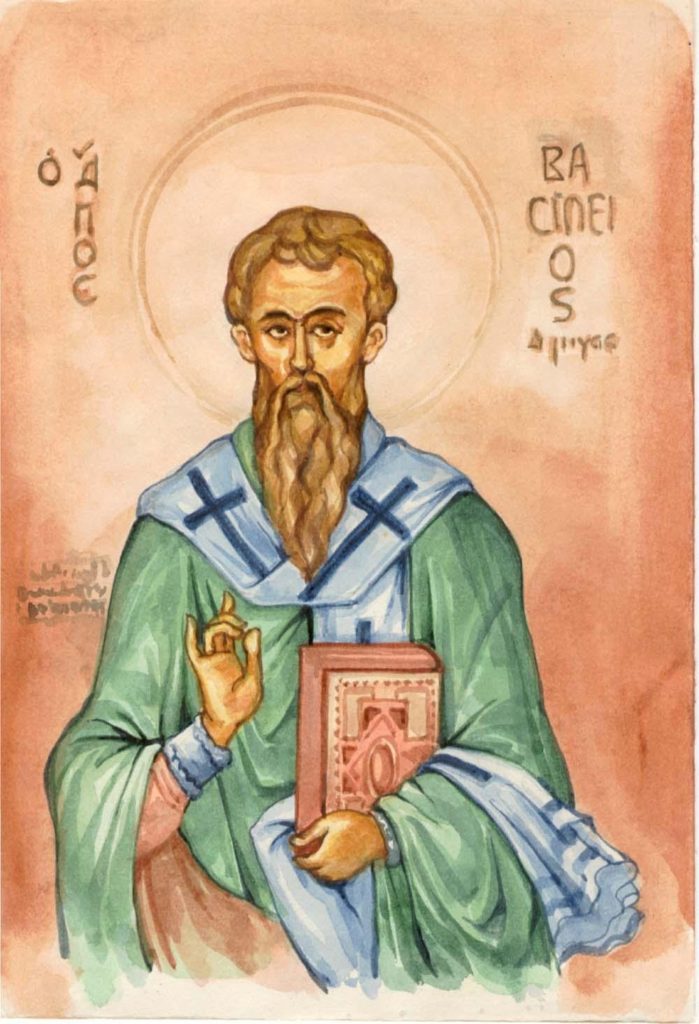
The word bishop is the Greek word ἐπίσκοπος (pronounced episkopos) and means “an overseer, patron, one who watches or protects, one who cares for others, a man charged with the duty of seeing that things to be done by others are done rightly, any curator, guardian or superintendent; the superintendent, elder, or overseer of a Christian church” (TDNT, vol. 2, p. 608). This word or related cognates occur only several times in the NT (Luke 19:44; Acts 1:20; 1 Tim 3:1, 2; 2 Tim 4:22; Tit 1:7; 3:15; 1 Pet 2:12, 25).
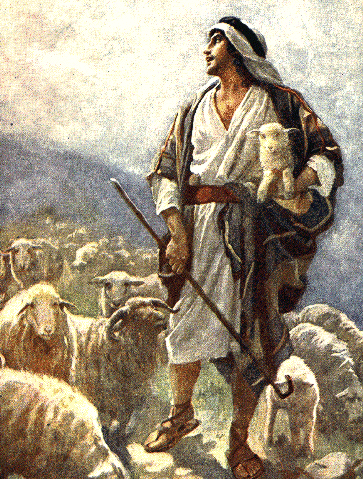
Yeshua is the Chief Shepherd and Bishop over his people (1 Pet 2:25), with those holding those earthly offices under his authority.
The TDNT notes that the role of the episkopos is to strengthen that of the pastor in watching over the flock (e.g. Acts 20:28; 1 Pet 5:2). The NT with regard to the congregation in Ephesus seems to equates the episkopos with the presbuteros (or elders-leaders of a congregation, see Acts 20:28) indicating that there is more than one leader or overseer over a congregation—literally, a group of leader-elders. Elders (presbuteros), pastors (poimen) and bishops (episkopos) are again viewed as equivalent in regards to local leadership in 1 Peter 5:1 and 2. In this passage, the leadership terms are in the plural, thus not indicating a central lead figure per se although it is the scriptural norm from the time of the patriarchs, through the priesthood, judges and kings of Israel to have a human who exercises ultimate authority. Such leaders can be elected (Acts 1:21ff; 6:3ff) or be appointed by an apostle (Acts 14:23; ibid., p. 615f).
Read Isaiah 60. How many of the prophecies contained in this chapter have been fulfilled? Can you think of any time in Israel’s troubled history when the blessed promises of Isaiah 60 had been fulfilled in any kind of a meaningful way? The answer to all of these questions is obviously, no! If YHVH’s Word is true, then a time is yet to come when these prophecies will become a reality. These prophecies will be fulfilled during the Millennium and in the New Heaven and the New Earth when the New Jerusalem comes down from heaven (or “heaven on earth,” see Rev 21 and 22).
What Scripture Says About the Messianic Era or Millennium
The Millennium or Messianic Era lasts for a 1000 years. (Rev 20:2–7)
The regathering back into the land of Israel (the Promised Land) of Israelites who have been scattered throughout the earth in fulfillment of YHVH’s promises to Abraham is to occur. (Jer 32:36–38; Isa 14:1–2; Isa 60: 4, 9)
Ancient Israel entering the Promised Land is a type of believers entering into the Millennium. (Heb 3–4)
During the Millennium the following is to occur:
Elohim will live with his people. (Ezek 37:26–28)
David will rule as King over Israel. (Ezek 37:24–25)
YHVH’s annual feasts will be kept by all people. (Ezek 46:3–6; cf Col 2,16–17)
YHVH’s government will be established on Mount Zion in Jerusalem. Torah will go forth from Mount Zion and the nations will go up to Mount Zion to worship YHVH in the house (temple) of YHVH. (Mic 4:1–2)
A highway of YHVH, or a highway of holiness will lead to Zion. (Isa 35:8–10)
Whether literal or spiritual, living waters will flow from Jerusalem and Yeshua’s throne. In Ezekiel’s vision, water was flowing from under the threshold of the temple toward the east. (Ezek 47:1; also Zech 14:8)
On the banks of this river, there were very many trees on each side. (Ezek. 47:6–9)
People will live to a very old age. (Isa 65:20)
Crowds of people will flock to Jerusalem. (Zech 2:1–4; Isa 49:14)
The temple in Jerusalem will be rebuilt. (Zech 6:15; 14:20–21; Hag 2:6–9)
The Messiah will be king over the whole world. (Zech 6:9–13; Isa 11:1–5; Rev 20:6; 5:9–10)
The nations that do not want to serve and obey YHVH will be destroyed. (Isa 60:12; Zech 14:16–19; Isa 9:5–7)
The Millennium is the fulfillment of many glorious prophetic promises YHVH has made concerning his people of Israel (including Christians). Many Christians see the Millennium as the place where the righteous Israelites (i.e. Jews) will reign with Messiah, while the Christians will be reigning spiritually in heaven. In other words, the Jews have a physical inheritance or kingdom on this earth, while the Christians have a spiritual inheritance and kingdom in heaven. For those who believe this way, the Millennium is a symbolic metaphor for heaven.
For those who believe that the Millennium is merely a symbolic metaphor, the 70 or so scriptures in the Tanakh dealing with the Messianic Age are assigned to the “church.” To interpret Scripture in this manner is a form of spiritualization of the peshat or plain meaning of these prophecies and a form of replacement theology where the church as replaced the Jewish people. Much of this confusion stems from not knowing who Israel is as opposed to the Jews (descended primarily from the tribe of Judah, which is only one of the twelve tribes of Israel).
In my understanding of the Millennium, we take literally the words of Yeshua when he said that the meek would inherit the earth (Matt 5:5), not heaven. For us, this means that YHVH’s people, the saints, made up of both the Jews and those of the nations who combine in Yeshua to become the one new man and nation of Israel (Eph 2:11–19) and part of the olive tree of Israel (Rom 11:17ff), and are the seed of Abraham (Rom 4:16; 9:8–11; Gal 3:7, 8, 14, 28–29). These people will rule with Yeshua as kings and priests in his kingdom on earth for a thousand years during his millennial kingdom on earth (Rev 1:6; 5:10).
Our new annual Scripture Reading Schedule for 2019-2020 with daily readings is available to download and print. If you are still working through 2018-2019’s Scripture Reading Schedule, the link will still be available on the right sidebar under “Helpful Links”. If you are using a mobile device or tablet, the link may be below, meaning you’ll need to scroll down instead.
Most of this week’s blog discussion points will be on these passages. If you have general comments or questions on the weekly Scripture readings not addressed in a blog post, here’s a place for you to post those. Just use the “leave a reply” link or the “share your thoughts” box below.
The full “Read Through The Scriptures In A Year” schedule, broken down by each day, can be found on the right sidebar under “Helpful Links.” There are 4 sections of scripture to read each day: one each from the Torah, the Prophets, the Writings, and from the Testimony of Yeshua. Each week, the Torah and haftarah readings will follow the traditional one-year reading cycle.
Weekly Blog Scripture Readings for 5/3 through 5/9/2020.
Leviticus 19:27,You shall not shave around the sides of your beard.
Some Torah scholars say that there is no place in the Torah, or anywhere else in the Scriptures, that explicitly commands men to wear beards. Others who are of the opinion that men should wear beards agree that while there may be no direct command to wear a beard, the Scriptures give an implied or indirect command to do so. In other words, it’s assumed that men will have a beard. I am of the latter opinion.
Some will point to Leviticus 19:27 and 21:5 in attempts to prove that men are to wear beards — that they are not to shave their beards. In reality, this command related specifically to shaving the beard in honor of the dead according to some ritual the ancient pagans practiced. In other words, YHVH is telling the Israelite men not to shave their beards as the pagans did in honor of the dead. What exactly that pagan practice was, we don’t know for sure.
Can these two verses be taken as a prohibition against a man shaving his beard? Those who say no will say that there is no direct command in the Bible to have a beard, but if you do have one, don’t shave it in honor of the dead as the pagans did. Those who say yes will say that these two verses imply a command for men to have a beard; that is, how can you cut something that you don’t already have? There are well-meaning people on both sides of this debate.
These things we know for sure. Aaron the high priest had a beard (Ps 133:2). Yeshua had a beard or else Isaiah 50:6 was a false prophecy. Ezekiel had a beard (Ezek 5:1), Ezra had a beard (Ezra 9:3); David had a beard (1 Sam 21:13); and many Israelite men wore beards (2 Sam 10:4-5; 1 Chr 19:5; Jer 41:5). It is also a religious Jewish tradition to this day for men to have beards, and we know that this tradition is rooted in antiquity.
One could also ask the question why would YHVH create men with facial hair if only for the purpose of shaving it off?
Leviticus 19:19, Livestock breed with another kind…sow your field with mixed seed.
What does the Torah have to say about genetically modified organisms (GMOs) or foods? This verse addresses the issue. The type of genetic modification of plants and animals that we’re concerned about is that of forcing the DNA of one species into that of another. In reality, it’s a form of man-induced macro-evolution where one species takes on the characteristics of another species. Micro-evolution is a natural phenomenon that occurs between like plant and animal species (e.g. diverse kinds of cats, apples, palm trees, etc.).This can occur naturally (called adaptation) and through the human-induced processes of hybridization. This isn’t a bad thing, in most cases. However, there are no examples of macro-evolution in the creation despite evolutionists’ best efforts to prove otherwise. Evolutionists have failed to find the missing links between monkeys and men, or lizards and birds, or slime and amphibians—at least not until genetic engineering came along. Now through genetic engineering they can create the missing link. This is not only an affront to the Creator, and goes contrary to the Bible, but it’s the opening of a Pandora’s box of all sorts of unintended evil consequences where man is playing God, while not knowing what the consequences will be.
The ancient biblical writings are amazingly prescient on this issue when the Torah forbids the mixing of dissimilar species (such as seeds and animal species), which were separated in the creation by Elohim, and which he established to reproduce after their own kind.
The Creator simply commands men not to mix diverse kinds (species) without giving the reasons. We are to assume that he knows best whether we understand the technical reasons or not.
Since the recent emergence of the science of genetic engineering and the negative consequences of some aspects of it, perhaps the Creator’s prohibitions against mixing dissimilar species now makes more sense.
Here are the scriptural prohibitions:
Ye shall keep my statutes. Thou shalt not let thy cattle gender with a diverse kind: thou shalt not sow thy field with mingled seed: neither shall a garment mingled of linen and woollen come upon thee. (Lev 19:19)
Thou shalt not sow thy vineyard with divers seeds: lest the fruit of thy seed which thou hast sown, and the fruit of thy vineyard, be defiled. (Deut 22:9)
Here are some excerpts from some Bible commentaries on Leviticus 19:19 pertaining to this subject:
These practices might have been considered as altering the original constitution of God in creation; and this is the view which the Jews, and also Josephus and Philo, take of the subject. (The Treasury of Scripture Knowledge on Lev 19:19)
God in the beginning made the cattle after their kind (Gen 1:25), and we must acquiesce in the order of nature God hath established, believing that is best and sufficient, and not covet monsters. Add thou not unto his works, lest he reprove thee; for it is the excellency of the work of God that nothing can, without making it worse, be either put to it or taken from it, Eccl 3:14. As what God has joined we must not separate, so what he has separated we must not join. (Matthew Henry’s Commentary on Lev 19:19)
By these laws the observance of the natural order and separation of things is made a duty binding on the Israelites…as a divine ordinance founded in the creation itself (Gen 1:11, 12, 21, 24, 25). All symbolic, mystical, moral, and utilitarian reasons that have been supposed to lie at the foundation of these commands, are foreign to the spirit of the law. (Keil and DelitzschCommentary on the OT on Lev 19:19).
God created the world with certain distinct species, and His wisdom decreed that these species remain intact and unadulterated. For man to take it upon himself to alter the order of Creation suggest a lack of faith in God’s plan. Moreover, each species on earth is directed by a Heavenly force, so that the earthly species represents profound spiritual forces. To tamper with them is to cause harm that earth-bound man cannot fathom. (The ArtScroll Stone Edition Chumash on Lev 19:19)
…God’s Creation should be permitted to function according to the laws of nature that He instituted, without tampering by man. It should be noted that these laws of mixture are limited to specific matters [i.e. cross-mixing of species], and do not limit the infinite number of alloys or combinations that are so much a part of modern life. To the contrary, man is duty bound to improve the world and, in a sense, “complete” the work of the Creation. (The ArtScroll Tanach Series Levticus Commentary on Lev 19:19)
With regard to GMO foods, there is also the issue of what is biblically kosher or not. If foods are genetically altered, who knows if what one thinks he is eating actually is totally that. Within the milk you’re drinking or the steak that you’re eating, for example, there may be genes from an unkosher animal.
The KJV and NKJV translations of this verse are difficult to understand. What is this verse really telling us?
Various Bibles translate this verse differently.
The NIV reads, “Do not hate your brother in your heart. Rebuke your neighbor frankly so you will not share in his guilt.”
The NAS has, “You shall not hate your fellow-countryman in your heart; you may surely reprove your neighbor, but shall not incur sin because of him.”
Finally, the ASET reads, “You shall not hate your brother in your heart; you shall reprove your fellow and do not bear a sin because of him.”
What we learn from these various translations is that when your brother treats you improperly, honestly confront him, or as Yeshua said, “If your brother sins against you, go and tell him his fault between you and him alone” (Matt 18:15). However, if he ignores you and is still prone to vengeance or bearing a grudge against you, don’t become like him and retaliate against him (Lev 19:18). Instead, love him as yourself, or treat him with love as you wish to be treated (ibid.), or else you will incur his sin by becoming like him (v. 17).
Yeshua summed up this godly principle of not giving in to vengeance and retaliation when wronged this way, “But I say unto you, That ye resist not evil: but whosoever shall smite thee on thy right cheek, turn to him the other also” (Matt 5:39). This is loving one’s neighbor as oneself and is the summation of the second half of the Torah (Mark 12:29–31) as summed up by the last six of the ten commandments (Exod 20:12–17).
The bottom line is that exhibiting vengeance, retribution, vindictiveness or bearing a grudge against one’s neighbor demonstrates a lack of self control, is a result of anger and is a form of hatred, which are all works of the flesh resulting in contentions between people (Gal 5:20). These are sinful behaviors and are the opposite of the fruit of the Spirit (Gal 5:22–24), and people who habitually practice these sins along with the other works of the flesh are in danger of not being in the kingdom of Elohim (Gal 5:21).