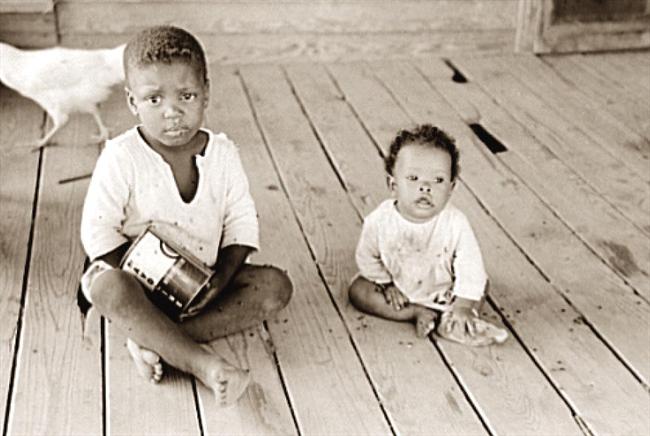
Leviticus 19:9, Corners of your field.Leaving the corners of the fields unharvested, and leaving the gleanings in one’s field for the poor was a wonderful way to help the impoverished and disadvantaged. There was no welfare system in the Torah for those who were able to work. The Bible teaches that if a man doesn’t work, neither should he eat (2 Thess 3:10), and that a righteous man provides for his household (1 Tim 5:8). At the same time, Yeshua said that there will be poor people (John 12:8). Helping the poor is a timeless principle of how YHVH expects his people to show love for others. The Torah here as understood by the Jewish sages teaches that we are first obligated to help the needy of our spiritual family, immediate physical family, extended family, and then any poor in general (Deut 15:7–8 cp. Deut 14:28–29 and 26:12–13). What do you do to help the poor? When was the last time you extended your hand of love to a person in need? (Let’s not forget what Yeshua teaches us in Matt 25:31–46. Also note Jas 1:27; John 3:16.)
Leviticus 19:6–7,It shall be eaten. The terms first, second and third day are often significant prophetically (e.g. Hos 6:2; Gen 22:4; Luke 13:32; Exod 19:11, 15) referring to the salvific work of Messiah Yeshua that occurred at his first coming, and which will occur in the first, second and third millennia after his first coming. Day three would correspond with the beginning of year 7000—a date we must be very near.
If Torah reveals that the peace offering was not accepted on the third day, what is this prophetically telling us? Leviticus 7:17–18 says of the same offering that the portion of the sacrifice which remains until the third day shall be burnt with fire, while 19:6–8 says that the person who eats the peace offering on the third day will “bear his iniquity” and “will be cut off from his people.” That is, the peace offering will be of no avail to that person and they will not have peace with their Redeemer.
Is a day coming when the door of opportunity for salvation will be shut (as was the case when the door of Noah’s ark was shut before Elohim brought judgment upon the earth by the flood, Gen 7:16), the period of grace that we are now in will end when the wrath of Elohim will be poured out upon the unregenerate (Rev 15–16) just prior to the return of Yeshua? Are you saved by the blood of Yeshua, the Lamb of YHVH? Have you repented of your sins (violation of YHVH’s Torah-laws [1 John 3:4]), and are you walking in a righteous and obedient relationship with your Heavenly Father through Yeshua the Messiah by the power of the Ruach Kodesh (Set-Apart Spirit)?
For he says, “I have heard you in a time accepted, and in the day of salvation have I succoured you: behold, now is the accepted time; behold, now is the day of salvation.” (2 Cor 6:2)
Leviticus 18:22, You shall not lie with mankind.(Also Lev 20:13) Some modern proponents of homosexuality claim that this verse, which has traditionally been taken to mean that the Bible prohibits homosexuality actually is speaking of cultic prostitution. The LXX clears up this misinterpretation when it describes the sin in question by saying, literally: as a man having sex with a man as he would a woman (kos an koimethe meta arsenos koithen gnaikos).
Today I looked at the headlines of a number of major internet news sources (as I do every day). These included both conservative and liberal news outlets as well the major mainstream media outlets along with some smaller, yet respectable news networks. I was amazed at how many headlined stories relating to “gay” issues I found. Some news sites actually had several stories on their front pages on the subject. This phenomenon is no longer a unique occurrence.
The fact is that even though homosexuals make up a tiny minority of the population, they get a disproportionate amount of news coverage. Whether the “gay” agenda is being pushed on the majority of Americans who are heterosexual or not by a vocal and powerful minority isn’t the issue. Rather, it’s that “gay rights” is a front and center issue in America’s culture war pitting the clash of traditional Christian values with the post-Christian, more morally loose, modern generation.
It’s obvious to see that government at all levels along with the public educational system, the major media and the entertainment industry are actively forcing homosexuality as a normative and acceptable behavior on the American people. Those trumpeting the homosexual cause have as their weapons punitive so-called antidiscriminatory laws, the threat of lawsuits as well as boycotts and other means of exerting social pressure. In their cross hairs are any who oppose them including organizations, businesses, churches, schools, or individuals who dare oppose them. Already, the Girl Scouts and Boy Scouts have caved in to the pressure. The traditional family is being redefined by homosexual activists, as well as the concepts of “male” and “female.” Restrooms and locker rooms are now the new battlefield for those wanting to erase the lines between the sexes. Regardless of one’s stand on homosexuality, we have to deal with it. Ignoring this issue isn’t an option!
With the current lay of the cultural landscape in mind, I would now like to express my views on the subject of homosexuality from a loving, yet solid biblical position.
What the Bible Says About Homosexuality
It was the opinion of the early apostles at the first Jerusalem council to establish minimal requirements for those being given the right hand of church fellowship. Those who failed to meet those basic standards were excluded from participation in church life. This was the case with those living in all sexual sin including homosexuality (Acts 15:20).
Exclusion may not be a popular notion in our day where “inclusiveness” as part of the political and social atmosphere demands — even at times under the threat of punitive legal action — that Bible believers not only love the sinner, but unquestioningly accept the sin as well whether they want to or not.
Such isn’t the biblical norm. The Bible calls homosexuality a perversion and an abomination (Lev 18:22–23). YHVH’s people aren’t to involve themselves in the perverse practices of the nations such as homosexuality (Lev 18:24). Sexual perversion of any kind defiles a nation (Lev 18:24–25) and brings YHVH’s judgments against it (Lev 18:25, 28; Rom 1:18–27). Such people are to be cut off from the nation of Israel (Lev 18:29), and from entrance into the kingdom of Elohim (1 Cor 6:9–10). In modern times, cut off simply means exclusion from church fellowship, which is exactly how the Jerusalem council ruled.
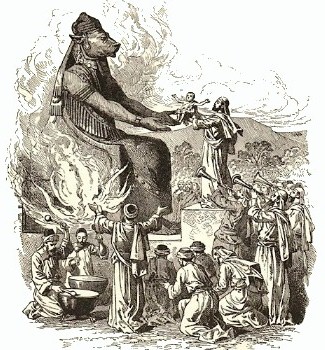
Leviticus 18:21, Pass through the fire.In the juxtapositioning of this passage directly after the Torah’s prohibition of illicit sex, it would appear that YHVH is broadcasting a clear message to his people. Extra-marital sex often results in unwanted babies. In our day, many choose to murder their unwanted offspring through abortion. In ancient times, some of these undesired children were likely sacrificed to the pagan Canaanite god Moloch by being burned alive. That is certainly the implication in this passage. Whatever the case, YHVH hates the murder of children for any reason!
This passage (along with Exod 21:22) is one of the strongest pro-life, anti-infanticide verses in the Scriptures. The penalty for those who sacrificed their children to Molech (or Moloch) was that the land of Israel would vomit the people out of it (vv. 25 and 28.) Could any clearer statement be made about how the Creator feels about the sanctity of life?
The murder of the innocent children is perhaps the greatest sin that a nation can commit. Abortion is a form of child sacrifice, which is something many ancient cultures practiced (the Aztecs, Incas, Phoenicians, pre-Islamic Arabs, and the biblical Canaanites). In the Bible, YHVH condemns the practice of heathens and apostate Israelites who made their children pass through the fire in worship of the demon-god Moloch (See Lev 18:21; 20:2–5; Deut 12:30–31; 18:10.) What judgment did YHVH place on the Jewish nation for sacrificing its children to Moloch? (See Jer 7:30–34; 32:35–36.)
The Bible, both the Tanakh (OT) and the Testimony of Yeshua (NT), promote male leadership, eldership and priesthood as normative. However, there have been times when men were not available to fulfill the plans and purposes of Elohim, so he used woman. A most notable example was Deborah who was both a prophetess and a judge in Israel (although she was most likely the wife of Barak who was a military leader in Israel, which would have made her the co-leader of Israel with her husband). Huldah was a prophetess, a judge and a counselor to kings.
The Testimony of Yeshua carries the idea of male leader into the church. In the apostolic era, the Head Leader, of course, was Yeshua himself, then there were his twelve male apostles, and then there were male elders over each congregation (1 Tim 3:1–7; Tit 1:5–9), and the head over each family was the husband and father (Eph 5:22–33).
The apostolic writings also promote the idea of the priesthood of all believers (e.g. 1 Pet 2:9; Rev 1:6). When it comes to salvation and spiritual equality, in YHVH’s eyes there is neither male or female, Jew or Gentile. All are equal and one in Messiah (Rom 10:12; Gal 3:28; Col 3:11).
However, the New Testament Scriptures record that the church was still led by male elders. Nevertheless, there are examples of husband and wife ministry teams. In Romans we see the husband and wife apostolic team of Andronicus and Junia (Rom 16:7). Another example of such a evangelistic-pastoral team was Aquila and Priscilla. They worked so closely together that sometimes Scripture mentions wife first, and sometimes the husband (Acts 18:2, 8, 26. Rom 16:3; 1 Cor 16:19; 2 Tim 4:19).
One example of a likely woman pastor is Lydia who, apparently, led a church in her home (Acts 16:40). The Bible reveals that if there is no man to do fulfill YHVH purposes, he will raise up a woman to do it. The only caveat is that to follow a biblical authority structure, she needs to be under the authority of or accountable to a male elder in some way. Lydia would have been under the eldership of Paul who led her to Yeshua and baptized her (Acts 16:14).
If a woman is leading a congregation and she is married, she should be doing so in conjunction with her husband, with his blessing. If she is not, then she is out of order spiritually. If she’s not married, then she needs to be working in conjunction with male eldership.
Leviticus 17:7, Sacrifices to demons. Sa’ar, the Hebrew word for goat, refers to the Egyptian goat gods, or goat demons that were believed to inhabit the wilderness (The ArtScroll Tanach Series Vayikra Leviticus Commentary, p. 313; Keil and Delitzsch, p. 593). In several places, the KJV and NAS translate this word as satyr (e.g. Isa 13:21; 34:14), which, in Greek and Roman mythology was associated with Pan, the half goat and half man-like creature. These demonic forces were believed to be destructive causing fear and turbulence, murder and mayhem (ibid. The ArtScroll Tanach Series Vayikra).
Interestingly, sa’ar and Se’ir as in Mount Seir, the home of Edom (Num 24:18), share the same Hebrew consonants and derive from the same root word. From this, the Jewish sages deduce that Edom, the descendents of Esau—Israel’s perpetual enemies down through the ages (even to the last days)—was the embodiment of evil (ibid.). Additionally, in occult lore, there exists a creature called Baphomet, which is represented by a horned goat’s head inside of an inverted star or pentagram. There is an ongoing debate whether this symbol goes back to the satyr or is of more recent origination. However, it is well-documented that the use of blood (in sacrificial and cannibalistic rites) and its veneration is an important aspect of Satanic rituals even into modern times. This is one reason why YHVH forbad the Israelites from eating animal blood (verse 10).
From this passage in Leviticus (and the surrounding verses), it should be clear that YHVH not only expected the Israelites to respect blood (see verse 11), but to properly dispose of it in a way that would preclude them from being tempted to engage in idolatrous and demonic rituals. In our notes under verse 11, we will see why YHVH valued the blood so highly.
Additionally, this passage teaches us several things. First, the blood carries the life force of a living being and, as such, represents life. Second, blood must be shed to atone for sin, which shows us the gravity of sin. The Bible elsewhere declares that the wages of sin is death (Rom 6:23), and the soul that sins shall die (Ezek 18:4).
Leviticus 17:10, Eats any blood.This prohibition is so serious that the Torah repeats it three other places (Lev 3:17; 7:26; 17:14), and the apostles make it one of the four requirements imposed on new Gentile converts before allowed into the fellowship of believers (Acts 15:29). This law was so serious that not only was it imposed on the children of Israel, but upon the strangers that sojourned with them as well (Lev 17:10). The penalty for doing so was basically capital punishment—to be cut off from Israel (vv. 9, 14).Why is the eating of blood so onerous in the eyes of Elohim? The context of this verse involves prohibitions against the demonic practices of the neighboring Baal-worshiping heathens. Eating and then the letting of blood was something that figured prominently in the demonic religious rituals of the heathens and is something YHVH wanted to keep his people from practicing. (For a further discussion of this, see notes on Lev 17:1–14.) In YHVH’s spiritual economy, blood was to be reserved exclusively for the atonement of sin and was to be respected as such.
The word gospel is one of the most common words in all Christendom. But what does it mean, and where does the concept originate? Most Christian believers would doubtless assume that the concept of the gospel is a New Testament one? As we shall soon see below, the term gospel (Old English for good news) originates in the Tanakh (Old Testament or OT) in the writings of the prophet Isaiah.
The word gospel itself is easily enough defined, but what about the concept behind the word? This will take us into another, deeper dimension of understanding this concept. Gospel or its synonyms are used 132 times in the Testimony of Yeshua (New Testament or NT). The word gospel literally means “good news or glad tidings.” Two Greek words (euaggellion and euaggelizo) are translated into English in the Authorized Version (KJV) via the following words: as a noun, gospel and as a verb, preach, bring good tidings, show glad tidings, declare, and declare glad tidings. As we can see, the word gospel is easily enough defined, but what really is the good news? Let us begin to answer this by seeing how the apostolic authors of the Testimony of Yeshua used this term:
Gospel of the kingdom or of Elohim (used five times, see Matt 4:23; 9:35; 24:14; Mark 1:14)
Gospel of Yeshua the Messiah or Yeshua (used 15 times, see Mark 1:1; Rom 1:16; 15:19; 1 Cor 9:12; Gal 1:7; Phil 1:27; 1 Thess 3:2)
Gospel of the grace of Elohim (Acts 20:24)
Gospel of Elohim (used five times, see Rom 1:1; 15:16; 2 Cor 11:7; 1 Thess 2:2,8,9)
Gospel of peace (Rom 10:15; Eph 6:15)
Besides these noun phrases just listed, in the majority of cases, the word gospel as found in the Testimony of Yeshua stands alone in its noun form as simply the gospel without any adjectival modifiers.
But again, what is the good news? One cannot read the Testimony of Yeshua without seeing that Yeshua the Messiah is at the center of this good news message. Thankfully, this same good news (or gospel) of “Jesus” has been at the center of the Christian message for two thousand years. This likely doesn’t comes as a new revelation to the reader. The famous passage of John 3:16 sums up this blessed message perhaps better than any other: “For Elohim so loved the world, that he gave his only begotten Son, that whosoever believes in him should not perish, but have everlasting life.” In brief, this good news of the Messiah (Acts 5:42; 1 Cor 1:23; 2:2; 2 Cor 2:12) involves understanding the spiritual significance of his death, burial and resurrection and how that relates to the redemption, reconciliation and salvation of sinful man through Yeshua’s shed blood at the cross of Golgatha. But is there more to the basic message of the good news that most have missed? There is more, much more as we are about to find out. Hopefully, this new understanding will activate and deepen your live for Yeshua the Messiah and for you Father in heaven who sent him to be a river of life to all those who will put their faith and trust in him!