Last January Sandi and I visited Phoenix, Arizona for some r and r. They say that if you try to chase and catch a butterfly, it’ll always elude you, but sit and wait patiently, it’ll land on our hand. Well, the same thing kind of happened to me with regard to a Phoenix roadrunner bird. Beep beep! Enjoy…
What Does It Really Mean to Be a “Fool” for Yeshua?
When it comes to being a “fool” for Yeshua, we need to ask ourselves some questions to more fully understand what’s behind such a radical concept. These questions included: Why were you born? What is you purpose in life? Why did YHVH Elohim, the Creator of all things, make you in his image? These are serious questions that few people pause long enough from the frenetic lives to which they are enslaved to ponder. Most people are so occupied living their daily routines, pursuing their dreams or just trying to survive that they never take the logical next step—a giant leap for many folks—and ask themselves these hard questions. The biblical answers to these questions is simple. You were created with in divine destiny. That is to replicate Elohim on this earth and to help expand his kingdom here below. Do you have an inner sense of this divine mission deep in your heart and mind? Sadly, most people do not. Acquiring this understanding, no, this passion, is a key to confronting the tidal wave of evil that is presently enveloping the globe as it endeavors to snuff out the last vestiges of light and Truth.
A Historical Overview
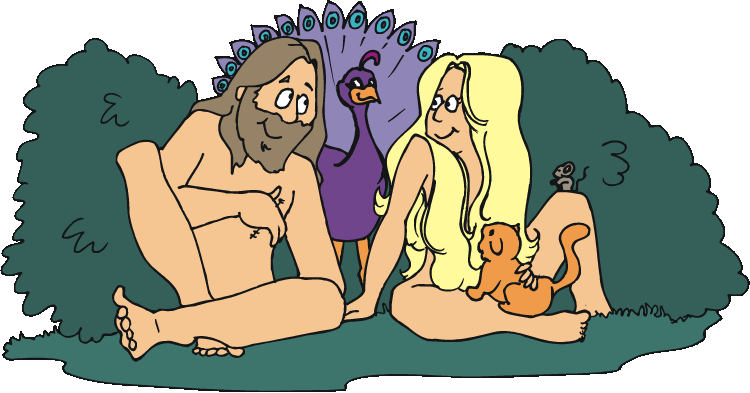
Back at the beginning in the book of Genesis in the garden, YHVH gave the first humans some marching orders which were instrumental in expanding his kingdom on earth. Critical to establishing the kingdom of Elohim was his command for man to get married and to procreate—to replicate himself (Gen 1:28; 2:24). Marriage and family is an essential building block of YHVH’s kingdom and to expanding it. Next, Elohim instructed the first man to make a home for his family and to have pets, that is, to tend and keep the garden and to take care of the animals in it (Gen 1:28; 2:15, 19). After that, YHVH instructed man to walk in his paths of righteousness by not eating the fruit of the tree of knowledge and by communing with his Creator on a personal level (Gen 2:17; 3:8). The weekly seventh day Sabbath, a day of physical rest, spiritual regeneration and relationship building, was instrumental in YHVH’s kingdom building plans as well (Gen 2:1–3). All of these instructions are fundamental to YHVH replicating his kingdom and government on this earth. But there’s more.
Not all families would teach their children and grandchildren the ways of Elohim. Down through the ages, many humans would be born into spiritual darkness and raise their children in it as well. This is because YHVH created humans to have the freedom to choose to follow him or not. Most have chosen the latter.
To remedy this problem YHVH plucked a man called Abraham out of the spiritual darkness of ancient Babylonia and gave him the light of his Truth. He then gave Abraham many righteous offspring who were commissioned to take the light of that Truth to the nations of the world (Deut 4:5–8; Isa 49:6 cp. 60:1–3). This nation was called Israel, and YHVH placed that nation smack dab in the land of Canaan,which is geographically and strategically located where the trading routes of three continents all meet—Africa, Europe and Asia. Sadly, the nation of Israel failed in their divine-mandated evangelistic mission to spread the good news of the kingdom of Elohim to the surrounding nations. Elohim knew this would happen because he knows that humans are weak and sinful, so now he fell back on his main plan to evangelize the world—to send his only begotten Son to complete the mission.
Because humans failed in their mission to spread the good news of Elohim’s kingdom to their children, friends and neighbors and to the world, out of deep love for humanity, Elohim sent his only Son, Yeshua the Messiah, to raise up followers who, with the inner dynamo of his Set-Apart Spirit, would fulfill the mission that Adam and the descendants of Abraham failed to do.
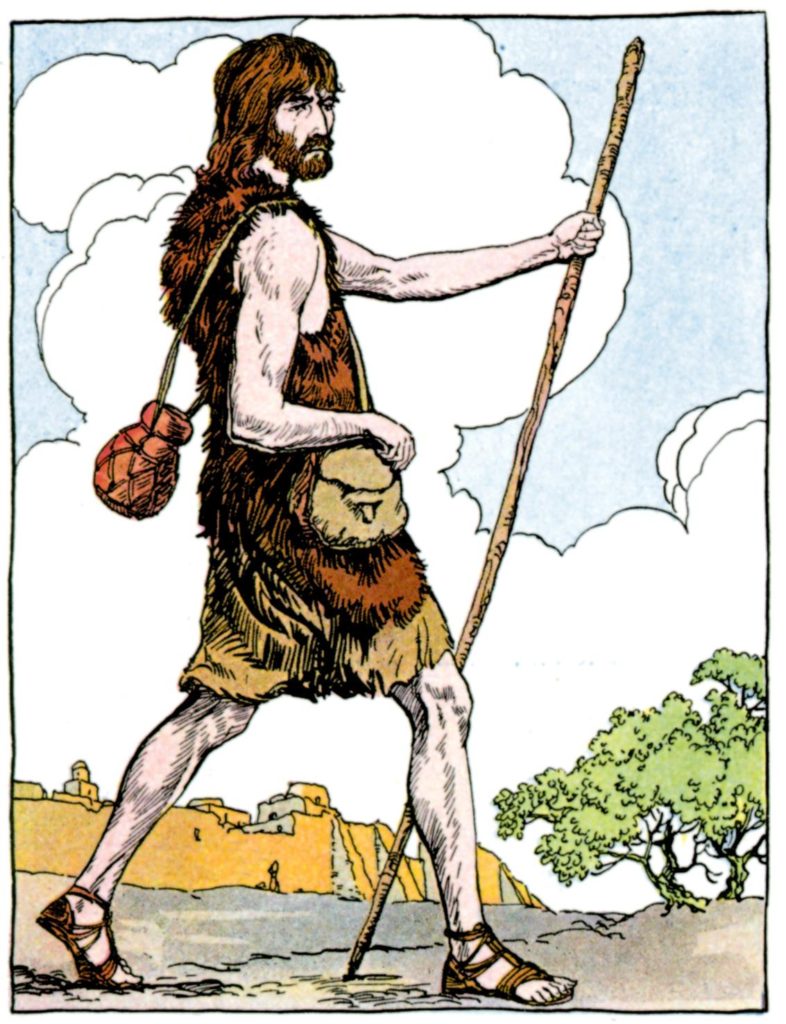
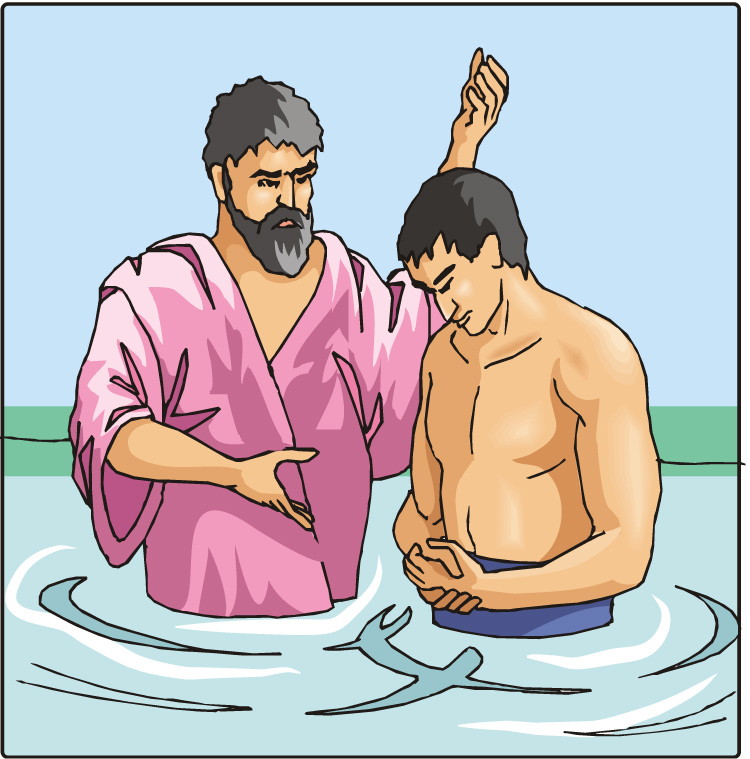
In preparation for the advent of the Messiah, YHVH sent John the Immerser to preach the message of “Repent [from sin] for the kingdom of Elohim is at hand” (Matt 3:2). This gospel of the repenting of sin or lawlessness (i.e. Torahlessness, see 1 John 3:4) and coming under the rule of the kingdom of Elohim is the same message that Yeshua the Messiah preached (Matt 4:17, 23; Mark 1:15), and that he commissioned his disciples (then and now) to preach as well (Matt 10:7). This message of the kingdom of Elohim is the essence of Yeshua’s Great Commission command to his disciples to preach the gospel to all nations (Matt 28:18–20; Mark 16:15–18). To fulfill this commission was Yeshua’s last command to his disciples before he ascended to heaven (Acts 1:8), and that command still stands to this day and applies to all disciples of Yeshua including you and me. These were last marching orders of the saints’ Commander and Chief, the Captain of Our Salvation before he left this earth, and these orders still stand!
At the same time, the demonic spirit of Antichrist is in direct opposition to the advancement of the YHVH’s kingdom on this earth. Satan the opposer and adversary to Elohim and his kingdom has been at his game from the beginning, since he manifested himself as a snake in a tree in the garden to oppose the will and commands of the Creator. This is why these evil forces are so opposed to marriage, family, the people of Israel, Yeshua the Messiah and the Bible and its followers. This is because Satan is the god of this world, and he is the ruler of all of its kingdoms. He knows that his time is short, that his gig as the ruler of this world is almost up, and that Yeshua the Messiah is about to return to destroy his kingdom—called Babylon the Great—and to capture and imprison him for eternity. Until then, Satan is pulling out all of the stops to prevent the kingdom of Elohim and its King—Yeshua the Messiah and his followers—from replacing him.
Enter the Great Commission
So where does that leave you and me in this cosmic struggle between good and evil, between the kingdom of Elohim and the kingdom of Satan? What is our divine mandate as obedient disciples of Yeshua?
On the table before us is the last set of orders that Yeshua, or Commander and Chief, the Captain of our salvation handed down to us.
Our new annual Scripture Reading Schedule for 2020-2021 with daily readings that began on 10/11/20 is now available to download and print. The link to the previous 2019-2020’s Scripture Reading Schedule will still be available on the right sidebar under “Helpful Links” into next year. If you are using a mobile device or tablet, the link may be below, meaning you’ll need to scroll down instead.
Most of this week’s blog discussion points will be on these passages. If you have general comments or questions on the weekly Scripture readings not addressed in a blog post, here’s a place for you to post those. Just use the “leave a reply” link or the “share your thoughts” box below.
The full “Read Through The Scriptures In A Year” schedule, broken down by each day, can be found on the right sidebar under “Helpful Links.” There are 4 sections of scripture to read each day: one each from the Torah, the Prophets, the Writings, and from the Testimony of Yeshua. Each week, the Torah and haftarah readings will follow the traditional one-year reading cycle.
Weekly Blog Scripture Readings for 10/25 through 10/31/2020.
Recently, I have been asking myself what can I personally do to fight the forces of evil that are taking over this earth unlike anything we have ever seen before. I am a nobody. I have no power or influence in worldly terms. I have little if any financial or material resources. I have little or no platform from which to speak and be heard. I am backed by no organization. So what can I do?
I have determined, by the grace and power of YHVH, to become a one man spiritual revivalist starting with the people one-by-one that I meet every day in the normal course of my life. This is not easy for me to do; it doesn’t come naturally. It takes love, boldness and faith. I have to stretch myself way past my comfort zone to do so. I HAVE TO BECOME A “FOOL” FOR YESHUA like Paul the apostle was… Here’s how:
The Spirit of Antichrist Is Rising Up and Taking Over
Can’t you see it? Can you hear it? The dust clouds and the sound of marching feet from Satan’s foot soldiers who are driven by the spirit of Antichrist intent of conquering the earth. These determined warriors are on a murderous warpath and in the crosshairs of their weapons of mass destruction are the saints of the Most High Elohim. What are the saints supposed to do about this?
The pounding of jackboots of Satan’s fascistic thugs can be heard everywhere as they advance relentless across the face of the earth. They have a thousand faces and numerous front organizations carrying their banner and supporting their nefarious cause. In their wake is death, darkness and the destruction of everything that is good, honorable, decent and righteous: the family, marriage, godliness, law and order, civility, honor and respect for others, love of truth, and the fear of Elohim and his ways. Usurping its place is atheism, secularism, leftism, deprivation of civil liberties, extreme hedonism, lawlessness, licentiousness, anarchy, chaos and death. The driving force behind it all is a rabid hatred of Elohim, Yeshua the Messiah, the Bible and anyone who is remotely associated with these. And no surprise. Yeshua and his apostles prophesied that this would occur in the last days just prior to his return. We can read these prophecies in Matthew chapter 24, the book of Revelation, in John’s first epistle and elsewhere. Moreover, these satanic armies are empowered and financed by the most powerful and seemingly unstoppable forces that control this planet. So is there anything that the true followers of Yeshua can do about this? If so, what should our response be?
In the Face of Evil and Death, What Did the Biblical Saints Do?
The Bible is full of stories of YHVH’s people facing overwhelming odds in the face of their enemies. For example, think of the Israelites against the Pharaoh and his armies, or confronting the Canaanites guarding the Promised Land, or Gideon against the Midianites, Samson against the Philistines, David against Goliath and the list goes on. But let’s be honest. To most of us, the biblical record of the valiant heroism and victories of YHVH’s saints over their enemies are nothing more than wonderful stories from dim antiquity and have little or no relevance to us today in our present situation. However, if we scroll forward in history closer to our time, we might find some biblical scenarios that are more analogous to the times in which we are now living. For example, in the book of Acts, when the Jewish murderers of Yeshua were on a rampage against the disciples of Yeshua, what was the saints’ response? Run and hide cowering in a corner? No. We read,
Now, Lord, look on their threats, and grant to Your servants that with all boldness they may speak Your word, by stretching out Your hand to heal, and that signs and wonders may be done through the name of Your holy Servant Yeshua.” And when they had prayed, the place where they were assembled together was shaken; and they were all filled with the Holy Spirit, and they spoke the word of Elohim with boldness. (Acts 4:29—31)
Their prayerful plea to heaven wasn’t, “O Lord protect us from our enemies.” Rather, it was, “O Lord, grant us boldness to preach the gospel with signs and wonders following as Yeshua commanded us to do in Mark 16:15–18 and Matthew 28:19–20.”
The “Foolishness” of Preaching the Gospel
Preaching the gospel seems like a bizarre and foolish if not an insane response to those who are intent on depriving us of our God-given or “inalienable rights… [of] life, liberty and the pursuit of happiness” to quote the Declaration of Independence of the United States of America. This is because:
[T]he natural man does not receive the things of the Spirit of Elohim, for they are foolishness to him; nor can he know them, because they are spiritually discerned. (1 Cor 2:14)
It is also because the ways of Elohim are not the ways of men.
For My thoughts are not your thoughts, nor are your ways My ways,” says YHVH. For as the heavens are higher than the earth, so are My ways higher than your ways, and My thoughts than your thoughts. (Isa 55:8–9)
And as Paul stated,
Because the foolishness of Elohim is wiser than men, and the weakness of Elohim is stronger than men. (1 Cor 1:25)
For YHVH has chosen the “foolish” method (in the eyes of the world) of gospel preaching to advance his kingdom and to confuse the world.
For the message of the cross is foolishness to those who are perishing, but to us who are being saved it is the power of Elohim. For it is written: “I WILL DESTROY THE WISDOM OF THE WISE, AND BRING TO NOTHING THE UNDERSTANDING OF THE PRUDENT.” Where is the wise? Where is the scribe? Where is the disputer of this age? Has not Elohim made foolish the wisdom of this world? For since, in the wisdom of Elohim, the world through wisdom did not know Elohim, it pleased Elohim through the foolishness of the message preached to save those who believe. (1 Cor 1:18–21)
Moreover, not only has YHVH chosen the seemingly “foolish” method of preaching the gospel to expose the genuine foolishness of this world’s “wisdom,” but he has chosen the “foolish” people (in the world’s eyes) to do the preaching.
For you see your calling, brethren, that not many wise according to the flesh, not many mighty, not many noble, are called. But Elohim has chosen the foolish things of the world to put to shame the wise, and Elohim has chosen the weak things of the world to put to shame the things which are mighty; and the base things of the world and the things which are despised Elohim has chosen, and the things which are not, to bring to nothing the things that are, that no flesh should glory in His presence. (1 Cor 1:26–29)
Are You Willing to Be a “Fool” for Yeshua Like Paul?
So are you willing to be a “fool” for Yeshua? Paul, the great apostle who help to turn the world upside down for Yeshua the Messiah (Acts 17:6), considered this label to be a compliment.
We are fools for the Messiah’s sake, but you are wise in the Messiah! We are weak, but you are strong! You are distinguished, but we are dishonored! (1 Cor 4:10)
One verse earlier, Paul declared that in preaching the gospel “we have been made a spectacle [literally, a public spectacle as in a theatrical performance] to the world, both to angels and to men” (1 Cor 4:9).
This is a pretty heavy duty thing for most people to consider doing. You may be thinking,“What will people think if I become a fool for Yeshua like Paul?” Or, “I’m not cut out for this. This isn’t my calling.” Or, “I don’t have the personality for preaching the gospel to others.” Well, frankly, there’s no end to the excuses that people can invent NOT to do what Yeshua has called and commissioned his disciples to do! Go ahead and rip that page out of your Bible and ignore Yeshua’s command to “Go ye therefore into all the world and preach the gospel.” If you do, you do NOT have a Holy Bible, but a Holey Bible, the Swiss Cheese Version—one with holes in it with pages that you have ripped out of it. Moreover, what did Yeshua say? “If you [really] love me, keep my commandments…He who has My commandments and keeps them, it is he who loves Me. And he who loves Me will be loved by My Father, and I will love him and manifest Myself to him” (John 14:15, 21). One of his commandments was to preach the gospel to the whole world. The whole world starts just outside your doorstep…
How to Overcome the Evil One
Some of you will stop reading right here, and that’s your choice to dismiss truth that challenges you out of our disobedient and lukewarm complacency. You might be saying, “He has gone too far this time.” Well, your argument is not with me but with the Word of YHVH Elohim and Yeshua the Messiah. He may be your Savior, but his he your Lord and Master? Are you doing what he told you to do, or only those things that suit YOUR fancy? For those of you who are serious about your spiritual walk and about serving Yeshua your Master who bought and paid for you with his blood, read on. Remember, we are discussing how to confront the spirit of this age—the demonic spirit of Antichrist that is sweeping relentlessly across the globe a tsunami. What are you going to do about it? Cower in the corner or run and hide, or occupy until Yeshua until he comes not living your life unto death? Or are you going to confront this evil spirit with the most powerful and life-changing weapon that has the full force and power of the Most High Elohim, the sovereign and all powerful Creator and Ruler of the universe behind it? This is what John wrote of those end time saints who deigned to stand up against Satan and his henchmen:
So the great dragon was cast out, that serpent of old, called the Devil and Satan, who deceives the whole world; he was cast to the earth, and his angels were cast out with him. Then I heard a loud voice saying in heaven, “Now salvation, and strength, and the kingdom of our Elohim, and the power of His Messiah have come, for the accuser of our brethren, who accused them before our Elohim day and night, has been cast down. And they overcame him by the blood of the Lamb and by the word of their testimony, and they did not love their lives to the death. (Rev 12:9–11, emphasis added)
A major aspect of overcoming the evil one and his minions in the last days involves “the word of our testimony.” A word is something that is spoken to others and involves sharing the gospel message with others including your personal testimony of what Yeshua has done for you. This may mean that you have to put yourself out there past your comfort zone and even do what doesn’t come naturally to you. In this regard, what has YHVH promised to do for those who step out in faith and obedience trusting him as they share the gospel with others?
Open your mouth wide, and I will fill it. (Ps 81:10)
Also I say to you, whoever confesses Me before men, him the Son of Man also will confess before the angels of Elohim. But he who denies Me before men will be denied before the angels of Elohim.…Now when they bring you to the synagogues and magistrates and authorities, do not worry about how or what you should answer, or what you should say. For the Holy Spirit will teach you in that very hour what you ought to say. (Luke 12:8–9, 11–12)
And He said to me, “My grace is sufficient for you, for My strength is made perfect in weakness.” Therefore most gladly I will rather boast in my infirmities, that the power of the Messiah may rest upon me. (1 Cor 12:9)
“This is the word of YHVH to Zerubbabel: ‘Not by might nor by power, but by My Spirit,’ Says YHVH of hosts.…For who has despised the day of small things? (Zech 4:6, 10)
John 1:28, Bethabara beyond the Jordan. John’s discussion with these Jewish leaders occurred “beyond the Jordan” or on the east side of the Jordan River. Bethabara in Hebrew means “house or place of the crossing over” and contains the same three letter root (עבר) as the name Eber, who was the grandfather of Abraham from which the name Hebrews drives.
John baptizing in the Jordan River was spiritually symbolic of one making the choice, as did Abraham, the father of the Hebrews and the saints’ spiritual father of faith (Gal 3:29), and the one to whom YHVH initially showed the path or pattern of salvation (Romans chapter 4), to cross over from the world (or “Babylon”) and to become a Hebrew. A Hebrew or Ivrit is one who has crossed over by faith from the world and its religious systems into the Promised Land of one’s spiritual inheritance.
In the case of John, the priest or cohen, he was baptizing those who were crossing over from a manmade or worldly religious system that had largely become disconnected from the essentials of its Hebraic roots and had become a confused (or Babylonian) mixture of good and evil (as in the tree by that name that was located in the garden) and was no longer a tree of life.
Baptism was a symbolic act of dying to the world, the flesh and devil by coming out of false religious systems of men and crossing over into deeper, purer and anointed spiritual relationship or walk with Elohim through Yeshua the Mashiach (or anointed one) just as Abraham had done two millennia previously.
Presently, YHVH is calling all of this people to come out of spiritual Babylonian religious harlot systems that are fornicating with the world by becoming like or syncretizing with the it (Rev 18:4) and to cross over into a more Hebraic spiritual orientation in their walk with him. This act along with one’s faith in Yeshua the Hebrew Messiah (John 1:1–18, 29) is a pre-requisite for becoming a child of Elohim (John 1:12).
Our new annual Scripture Reading Schedule for 2020-2021 with daily readings that began on 10/11/20 is now available to download and print. The link to the previous 2019-2020’s Scripture Reading Schedule will still be available on the right sidebar under “Helpful Links” into next year. If you are using a mobile device or tablet, the link may be below, meaning you’ll need to scroll down instead.
Most of this week’s blog discussion points will be on these passages. If you have general comments or questions on the weekly Scripture readings not addressed in a blog post, here’s a place for you to post those. Just use the “leave a reply” link or the “share your thoughts” box below.
The full “Read Through The Scriptures In A Year” schedule, broken down by each day, can be found on the right sidebar under “Helpful Links.” There are 4 sections of scripture to read each day: one each from the Torah, the Prophets, the Writings, and from the Testimony of Yeshua. Each week, the Torah and haftarah readings will follow the traditional one-year reading cycle.
Weekly Blog Scripture Readings for 10/18 through 10/24/2020.