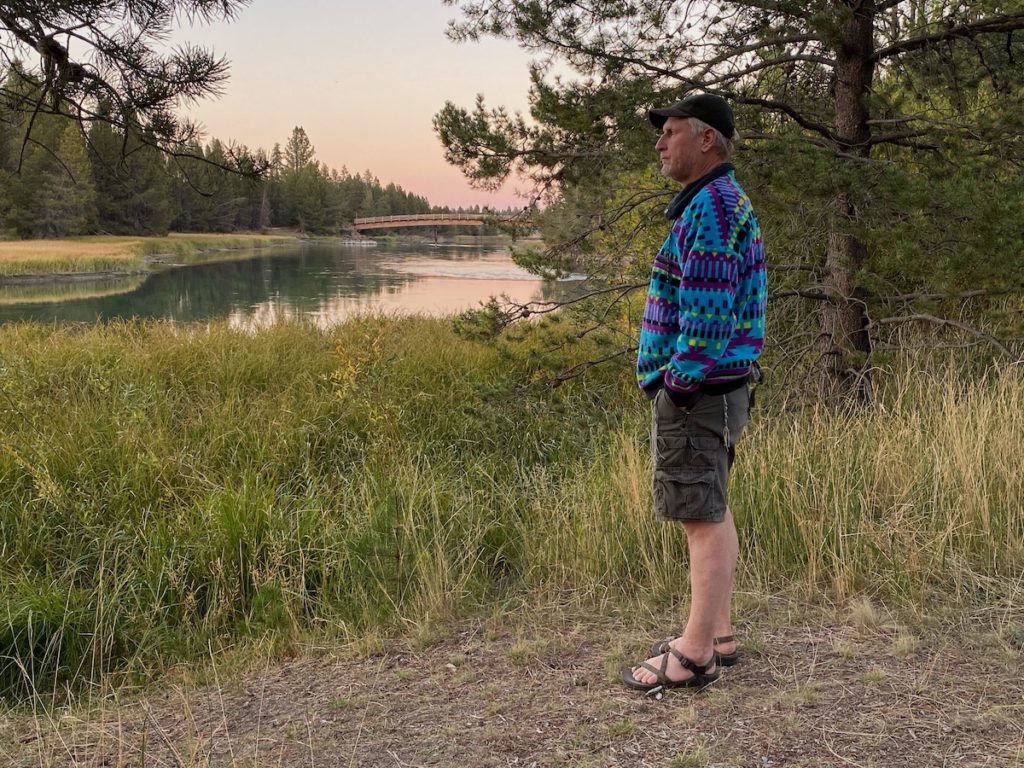
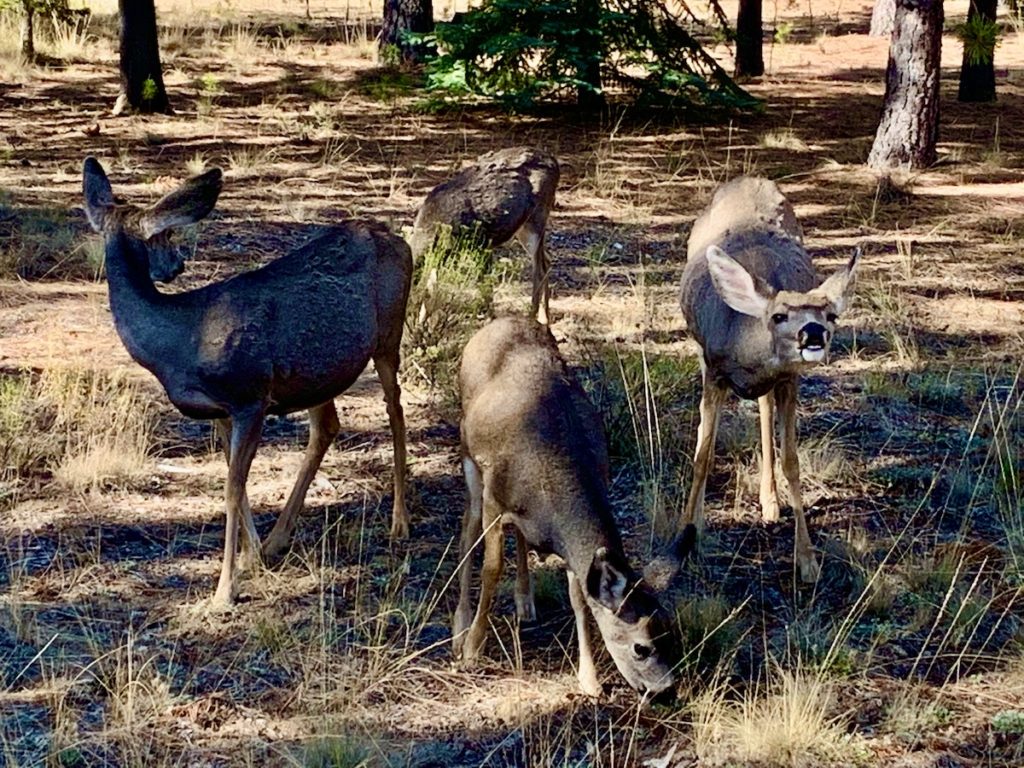
So far, Sandi and I have been enjoying a joyously restful Sukkot in Sunriver, Oregon with the snow-covered Cascade points to the west and the pine, juniper and sagebrush high desert to the east.
Our days have been filled with resting, relaxing with three of our four children and the spouses of two of them. On the first high holy day Shabbat, we had a Bible study and our daughter and her husband in another state joined us via FaceTime through a laptop computer. We prayed, waved our lulavim and sounded the shofar. We will do the same thing on the last high day Shabbat along with singing songs accompanied by our son who plays guitar. At our home, we’re having a little Sukkot-oriented Bible study each day to help us to keep our upward focus on YHVH. For myself, I start out each with prayer—often a walk or bike ride by the river along with a Bible study. Of our course, I’m privilege to interact with some of you through this blog as well and to hear how your are doing at this season of our joy. I’ve also had the privilege of speaking with some scattered Feast-keeping friends in different states via phone. The rest of the time, we are filling our days with feasting on good food, and fun indoor and outdoor activities with our family.
Along the way, we’ve had the chance to visit with several of my less Hebraic-minded cousins who are also celebrating the Feast here. At one time many decades ago, four generations of our family (more than 30 of us) would celebrate Sukkot together when we were all in the same church. Over the years, after church splits, and churches coming and going, many of my family members have either died, abandoned their faith, or are now in different churches or none at all (like Sandi and me). After all of this, a few of us who are left have kind of gotten together when we can to socialize a bit. Tonight we’ll host a couple of our cousins over for a barbecue dinner, and on Friday I’ll be going to lunch with two of my older guy cousins who I grew up with and who now are grandfathers.
Wow, it’s hard to imagine how much water has flowed under the bridge over past 60 years of my life. We all have our own stories to tell of the good, the bad and ugly, so to speak. My head spins in amazement of all that I have seen in this time. But through it all, I give praise and thanksgiving to YHVH Elohim who, for some reason, has kept me on his straight and narrow path, and kept me seeking him. To be sure, I am an and inexorable “God-chaser!!! I just can’t help myself, for it has been my destiny since I was a child. To YHVH be all the glory.
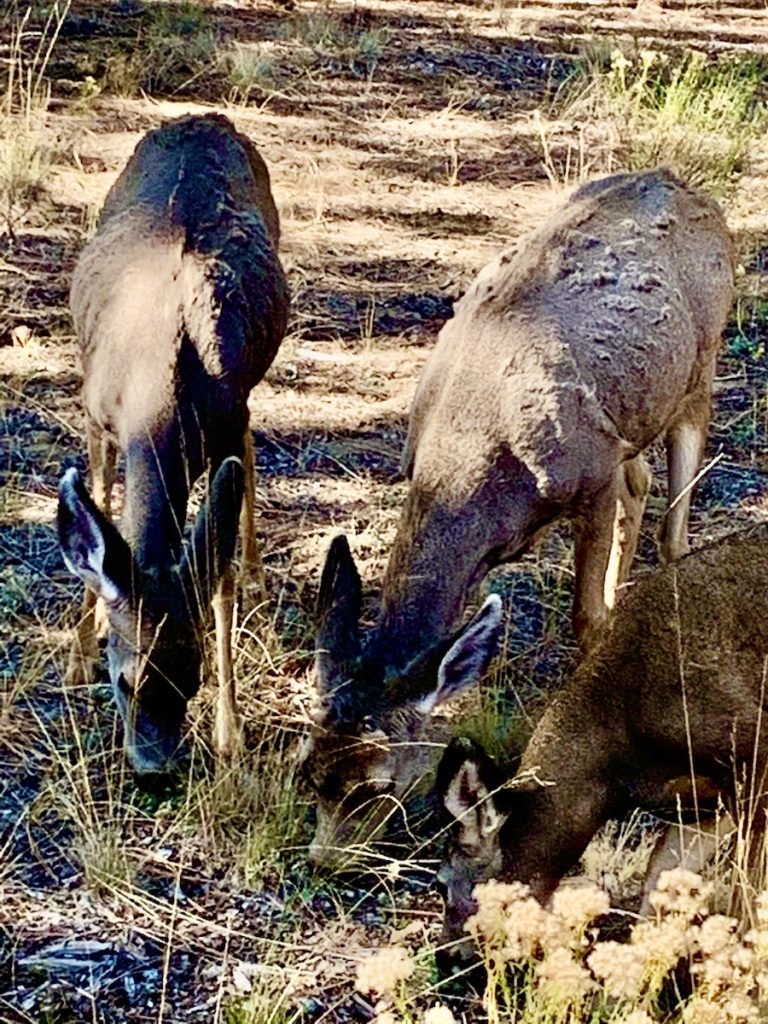
Nathan and Sandi enjoying a walk along the river.A quiet moment of reflection in YHVH’s outdoors.Deer regularly stroll past our backdoor.
There comes a time in the chronology of end times events that accompany the return of Yeshua when YHVH will pour out his wrath upon rebellious men. The Bible refers to this as “the day of YHVH” or “the day of his wrath” — a phrase which occurs more than two dozen times in prophetic writings of Isaiah, Ezekiel, Joel, Amos, Obadiah, Zephaniah, Zechariah and Malachi. What is this day?
Is the “day of YHVH’s wrath” a literal day, or a time period, since the Hebrew word for day (Heb. yom)can mean both? The prophet Isaiah may give us a clue. In several places, he mentions “the day of YHVH’s vengeance” (or words to this effect). This is the time period when YHVH will judge the nations including Babylon the Great, which is in existence at Yeshua’s second coming (see Rev 17, 18 and 19). In three places, Isaiah indicates that the day of YHVH will last for one year (Isa 34:8; 61:2 and 63:4). Interestingly, in Isaiah 63:4, the prophet couples the idea of the day of YHVH’s vengeance being a year long with the jubilee year — “the year of my redeemed has come.” This occurs as the Messiah (the subject of Isa 63:1–6) judges the enemies of Israel (notably Edom) as he is at the same time about to redeem (i.e. regather and return scattered Israel to its Promised Land inheritance.) It appears that while Yeshua is judging Israel’s enemies at his second coming, he will at the same time begin regathering the lost and scattered 12 tribes of Israel in a major way. Yeshua seems to allude to this in Matthew 24:31
What Is the Wrath of YHVH/Elohim?
In the Book of Revelation, the term wrath of God/Elohim or similar language is found ten times in reference to YHVH’s fierce judgments against unrepentant and rebellious sinners. It is my belief that these judgments are yet to occur and are connected with the end times just prior to the return of Yeshua the Messiah.
But in the context of the full counsel of YHVH’s Word, what specifically is the wrath of Elohim/YHVH?
The term “the wrath of Elohim” or similar language is used in numerous places in the Scriptures, and refers to YHVH’s bringing severe judgments against men for their wickedness. Listed below are all the instances in the Scriptures where the phrase “the wrath of Elohim” or similar language is found.
The wrath of Elohim came upon the children of Israel when they rebelled against YHVH (Ps 78:31).
All those who are ungodly will experience the wrath of Elohim eventually (John 3:36; Eph 5:6; Rom 1:18; 2:5–8; Col 3:6).
YHVH’s wrath was evidenced at various times against the ancient Israelites (2 Chron 24:18; 29:10; 2 Chron 30:8; 2 Chron 36:16; Ezra 5:12; Ezek 5:13; 7:19; 8:18).
Elohim’s wrath came against the nations at various times for their wickedness (Jer 10:10; Nah 1:2; Jer 25:15; Mic 5:15; 2 Pet 2:9).
YHVH’s wrath was expressed against Jerusalem at its fall (Isa 51:17, 20).
YHVH’s wrath was expressed against Edom (Isa 63:3, 5, 6; Ezek 36:5–6).
YHVH’s wrath was expressed against the nations for their wickedness toward Israel (Deut 32: 41,42; Mic 5:15; Zec 8:2).
YHVH’s wrath will be poured out in end times against his enemies (Isa 66:15).
The seven trumpets of the Book of Revelation are the wrath of Elohim (Rev 6:16–17).
The seven bowl judgments of the Book of Revelation are the wrath of Elohim (Rev 11:18; 14:10; 15:1, 7; 16:1,19).
As we can see from the evidence, the Bible records numerous “wrath of Elohim” events at various times throughout the long time span of biblical history. Whenever YHVH intervenes in the affairs of men and brings judgment against the wicked, this is the wrath of Elohim. In this study, we are dealing with the wrath of Elohim in the last days prior to the return of Yeshua as prophesied in the Book of Revelation.
When Does the Period of YHVH’s Wrath — the “Day” of YHVH Begin?
As noted earlier in this study, the end times wrath of Elohim occurs after the great tribulation. This we know from Matthew 24:29 where Yeshua describes events that will occur “immediately after the tribulation.” These events (the sun be darkened, the moon not giving its light, the stars falling from heaven, and the powers of heaven being shaken) occur at the sixth seal, which describes identical cosmic disturbances (Rev 6:12), and this event is described as the beginning of the day of YHVH’s wrath (verse 16).
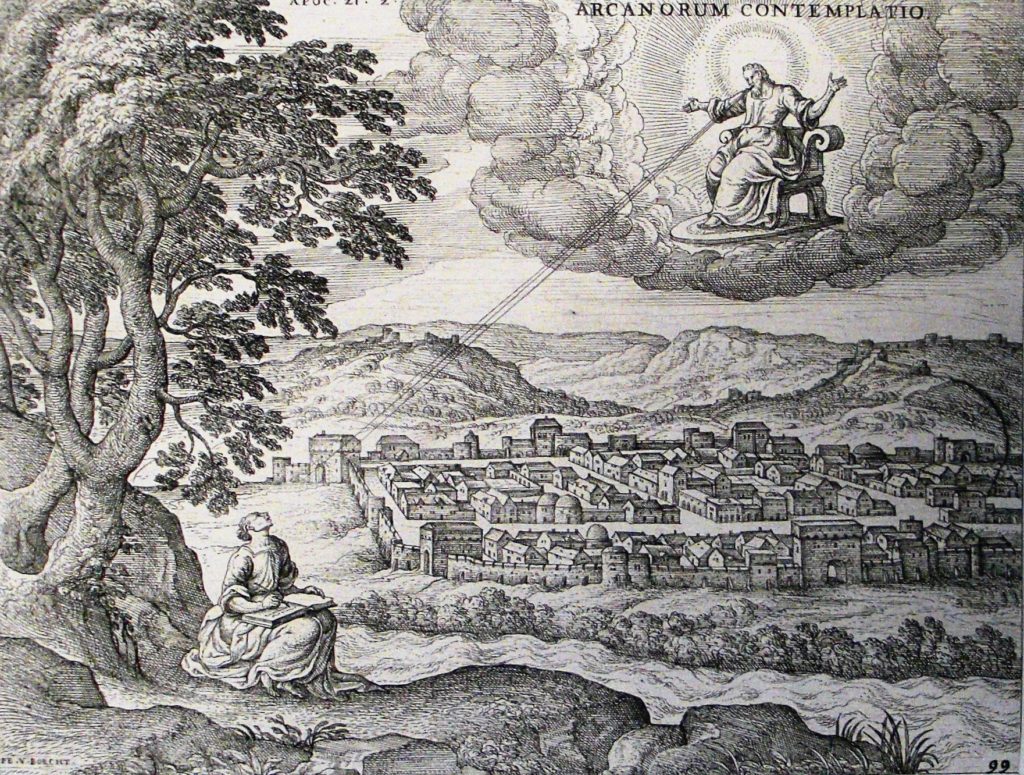
At this time, Yeshua will be coming in the clouds of heaven (Matt 24:30) in the midsts of great heavenly signs and wonders (verse 29; Rev 6:12–14), and he will gather his elect from the four corners of the earth (verse 31; Rev 7:1–16). But the Scriptures still don’t say that he has “touched down” on earth yet. All eyes will see him in the earth’s atmosphere (Matt 24:30). They shall all see “the face of him who sits on the throne” and will know that the time of “the wrath of the Lamb” has come (Rev 6:16). Where else do we see the throne of Elohim and the Lamb together? The Book of Revelation records several instances where this occurs (Rev 5:1, 6, 13; 7:10,17; cp. 21:23; 22:3). Revelation 21:23 and 22:3 tie the throne of Elohim, the Lamb (Yeshua), the temple of Elohim with the New Jerusalem. They are together. What can we make of this? Fasten your seat belts! The answer may surprise you. It is very likely that when Yeshua appears in the clouds, he will be accompanied by the New Jerusalem, the heavenly temple and the throne of Elohim. In other words, in a certain sense, heaven will “descend” into the earth’s atmosphere, and will come into view just after the great tribulation and at the sixth seal. It seems very possible, if my analysis is correct, that the New Jerusalem may be hovering in the earth’s atmosphere (where the clouds are) for all humans to see with their natural eyes!
John the apostle in the book of Revelation (Rev 19:7) says that the wife of Yeshua has made herself ready for him. Who will be the bride or wife of Yeshua the Messiah?
In a general sense, all redeemed believers are the bride of Yeshua—or more correctly, have the potential to be the bride of Yeshua. Paul assumed this (2 Cor 11:2–3). All redeemed believers are presently betrothed to Yeshua. Yet not all believers will become the wife of Yeshua (Matt 25, the Parable of the 10 Virgins). Some will remain pure and undefiled by being faithful to YHVH’s Torah Word, and others will fornicate with the world by being faithful to some of YHVH’s Torah, but by also following foreign or pagan gods and lovers. Only virgins who have not defiled themselves with “men” (a biblical metaphor for spiritual fornication with the world) will be eligible to be the bride of Yeshua. These are the 144,000 mentioned in the Book of Revelation (Rev 14:4). These are the true saints—the set-apart or holy ones, who adhere to the Torah and to Yeshua the Messiah (Rev 14:12). The church of Yeshua is currently being tested or refined and the wheat and tares are being separated. Yeshua wants a pure bride. Judgment begins first at the “house” of Elohim (1 Pet 4:17).
Like the law of the jealous husband who suspects his wife of adultery discussed in the Torah (Num 5:11–31), the faithfulness of all believers will be tested. In the end times, all the saints will go through tribulation and the great tribulation, but only the betrothed bride who is guilty of adultery will go through the wrath of Elohim. Those saints who refuse to walk in Torah and who are guilty of Torahlessness will be rejected of Yeshua because they didn’t know him intimately (Matt 7:21–23). We know YHVH intimately by keeping his Torah-commands (1 John 2:6–7). The wrath of Elohim are the bitter waters that the adulterous bride of YHVH will have to swallow (cp. Num 5:11–31). Like the wife suspected of adultery, all who will follow Yeshua must eat the words of Torah. For those who have been faithful to Torah, which is their marriage vows, Torah is sweet like honey. To those who have not been faithful, the judgments Torah spells out for those not being faithful to the curses for Torah-disobedience will be like bitter waters in their belly. In Revelation 10 (cp. Ezek 2:8–10; 3:1–3), John eats a little book. Is this Torah, which specifies curses that come upon all those who sin by violating it (1 John 3:4)? When we love Yeshua by obeying YHVH’s (John 14:15), they will be sweet like honey to us (Ps 119:103), since we don’t come under the curses they specify for disobedience. Torah-obedience brings blessings in this life and the next life; Torah is life (Deut 30:19), and Yeshua is the Living Torah incarnate (1 John 1:1, 14) and he is life (John 14:6).
In conjunction with the end times wrath of Elohim that will come upon this world due to Toralessness are the Elohim’s seven thunders judgments (Rev 10:3–4), which are possibly YHVH’s wrath upon a Torahless bride and world. Leviticus speaks of four sets of seven judgments that would come upon YHVH’s people who turned away from Torah (Lev 26:14ff). Similarly, the book of Revelation reveals that in the end days four series of judgments that will come upon the world. They are the seven seals, the seven trumpets, the seven thunders, and the seven bowl judgments.
At the same time in the last days, there will be a remnant on earth who have heeded the call of Elohim to remember the good ancient paths of Torah (Jer 6:16), and whose hearts have turned back to the fathers of their faith in the end days before the day of YHVH’s wrath and who are remembering Torah (Mal 4:3–6).
Those people who are heeding the call of Elohim through his Spirit to return to the ancient paths are those who have turned back to the biblical Hebraic faith and have reconnected to spiritual root of Israel—to the spiritual fathers of their faith. They’ve rediscovered their tribal and spiritual identity as grafted in (Rom 11:11–32), as redeemed, one new man and non-Gentile Israelites (Eph 2:11–19)—as the Israel of Elohim (Gal 6:16). These saints have chosen to begin living like Israelites. They understand the Jewishness of Yeshua and want to be Jewish like him and pleasing to him (John 14:15). They want to know YHVH more deeply by keeping his commandments (1 John 2:3–6), and they are putting on robes of righteousness, which is Torah-obedience (Rev 19:6–7)
These end time saints are part of the John the Baptist, Elijah forerunner generation of royal Melchizedek priests under Yeshua (1 Pet 2:9; Heb 7), and kings in training who are helping to prepare the way for Yeshua.
They saints are the wise virgins who have awakened with oil in their lamps. Oil represents Torah and the anointing of YHVH’s Spirit. Without the Torah and the anointing of YHVH’s Spirit in our lives, there will be no Torah-light.
These called out ones have left off their lukewarm, deaf, naked and blind ways of a Torahless and Laodicean lukewarm church and have opened the door to the real Jewish Yeshua to come into their lives; they have exchanged a paganized, Greco-Roman Jesus for their the real Hebraic Yeshua. To be the bride of Yeshua, you must truly know him, not merely know about him through the eyes of a cultural Christianity, Christo-pagan paradigm.
The bride of Yeshua will fit the definition of the end time saints: They will be Torah observant and have the faith of Yeshua (Rev 12:17; 14:12).
Scripture likens redeemed believers to a virgin (2 Cor 11:2). Some believers are wise virgins, and some are foolish virgins (Matt 25:1–13). There will be different levels of rewards in the kingdom of Elohim; some of the virgins will be least in the kingdom and some will be the greatest in the kingdom depending on their Torah-obedience level (Matt 5:19). Which one are you?
Now is the time to ask yourself this questions—are you a wise or a foolish virgin? Do you want to be the least or the greatest in the kingdom of Elohim under King Yeshua the Messiah? Now is the time for each person to judge himself or herself before the refining fires of YHVH’s judgment forcefully reveal the building materials of each person’s spiritual house whether it be wood, hay and stubble, or gold, silver and precious stones (1 Cor 3:12–13).
The Preaching of the Kingdom of Elohim Was Fundamental to the Ministry of Yeshua
During Yeshua’s earthly ministry as recorded in the Gospels, which subjects did he teach about the most? Curiously, sadly and for the most part, it wasn’t what most churches in maintstream Christianity are preaching from their pulpits and media platforms today.
So what did Yeshua preach mostly about? The facts speak for themselves. In an analysis I made a few years ago of the Gospels books of Matthew and John I categorized and referenced all the words and actions of Yeshua. The subject Yeshua devoted the most time to was himself and his mission (316 references), followed by revealing his Heavenly Father to his followers (184), followed by his commentary and denunciation of the hypocritical religionists of his day (177 references). The fourth subject to which he devoted the most amount of time was thekingdom of Elohim (144 references). After that, in numerical order was his death, burial and resurrection, followed by YHVH’s judgment, obedience and faithfulness to YHVH’s commandments, spiritual rewards, healing, worldliness, persecution and trials, faith and belief, followed by faithlessness and unbelief. As we can see, the preaching and revelation of the kingdom of Elohim received a high priority in Yeshua’s ministry. This reality is consistent with how the gospel writers distill down the main message of Yeshua’s ministry in the following phrase: “Repent, for the kingdom of Elohim is at hand” (Matt. 3:2; 4:17, 23; 10:7).
During Yeshua’s earthly ministry as recorded in the Gospels, which subjects did he teach about the most? Curiously, sadly and for the most part, it wasn’t what most churches in maintstream Christianity are preaching from their pulpits and media platforms today.
On the focus of Yeshua’s preaching ministry, Hebraic Christian scholar, Marvin Wilson, notes an important facrt. “[Yeshua] came to this earth on a rescue mission, but not to help people escape this world. Instead, he came to free them from the clutches of sin, self, sickness, and oppression that they might be prepared for the olam ha-ba, the “age to come” (Our Father Abraham—the Jewish Roots of the Christian Faith, p. 182).
The gospel message involves repentance from sin (i.e. lawlessness or Torahlessness), so that one can enter into the kingdom of Elohim, which is from heaven (Matt 3:2; 4:17). In the modern mainstream church, neither of these subjects is preached much about. Instead, Christianity tells us that the law of Moses (i.e. the Torah), has been done away with, and we are also told that when you die you go to heaven and that’s that. Since the church hardly speaks about repentance from Torahlessness or about the kingdom of Elohim—things that according to the apostolic writers—formed the basis for the gospel message, one can’t help but wonder how many people even know what the true gospel message is. In this teaching, we want to discuss the kingdom of Elohim aspect of the gospel message as it relates to the millennial reign of Yeshua after his return. This is the ultimate hope of the redeemed believer, and thus it is something that we need to understand.
Brad Young, another Hebraic Christian scholar, in his book,Jesus the Jewish Theologian,describes the first century view of the concept of the kingdom of Elohim as follows: “The twin parables of the Mustard Seed and the Leaven [Matt. 13:31-33; Luke 13:18-21; Mark 4:30-32] illustrate the basis for [Yeshua’s] teaching concerning the kingdom of heaven. They illustrate the progressive growth of the kingdom.… From the start, the supernatural aspect of this parable should not be overlooked. That a tiny seed can progressively grow into a tree was viewed as nothing less than miraculous. The same must have been true for the action of the leaven in the dough. Growth — this amazing, steady, continuous process — would have been viewed as a true wonder in the eyes of the people. The major theme of these illustrations is this miraculous growth. The idea of a sudden, total reversal of the present situation is not congruous with these parables of progressive growth” (ibid. pp. 77–78). That is to say, the kingdom of Elohim would not suddenly appear upon the scene with sudden transformation of the surrounding world, but that it would start small and slowly, gradually, yet powerfully, increase until it was of great consequence.
Don’t you feel like you’re living in a spiritual wilderness? That’s because you are living in a wilderness—not a literal wilderness with cactus, sage brush and jackrabbits, but a “wilderness of the peoples” about which Ezekiel prophesied (Ezek 20:35). Is it possible to walk out the commandments of Elohim in this desolate and often lonely place, and if so, how?
In this wilderness YHVH’s spiritual sheep are scattered hither and yon like flecks of gold among the sands of the seas of Gentile nations of the world. During this time, YHVH is testing his people to determine if they will remain faithful to him or not, to determine if they will make a suitable bride for Yeshua his Son. He that has an ear to hear and a heart to receive, let him hear.
Like a shepherd counting and sorting his sheep, YHVH is currently making his people “to pass under the rod” (Ezek 20:37). Those who passionately love and seek him and his ways of righteousness, whose love neither waned nor waxed cold” (Matt 24:12), will be allowed to enter into his spiritual rest (Heb 4:1–16), which is the promised land of our spiritual inheritance and is also known biblically as “the kingdom of Elohim.” Those who make it to this point by overcoming the downward pulls of the world, the flesh and devil will become the resurrected, glorified and immortalized children of Elohim.
He came to His own, and His own did not receive Him. But as many as received Him, to them He gave the right to become children of Elohim, to those who believe in His name: who were born, not of blood, nor of the will of the flesh, nor of the will of man, but of Elohim. (John 1:11–13)
Behold what manner of love the Father has bestowed on us, that we should be called children of Elohim! Therefore the world does not know us, because it did not know Him. Beloved, now we are children of Elohim; and it has not yet been revealed what we shall be, but we know that when He is revealed, we shall be like Him, for we shall see Him as He is. And everyone who has this hope in Him purifies himself, just as He is pure. (1 John 3:1–2)
He who overcomes shall inherit all things, and I will be his Elohim and he shall be My son. But the cowardly, unbelieving, abominable, murderers, sexually immoral, sorcerers, idolaters, and all liars shall have their part in the lake which burns with fire and brimstone, which is the second death.” (Rev 21:7–8)
I don’t know about you, but I’m a “God chaser”—one who desires to passionately and wholehearted love YHVH Elohim by keeping his Torah-commandments (John 14:15, 21; 1 John 2:3–6). Are you one also or do you still have a divided heart with affections for both this world and for Yeshua? Endeavoring to live a righteous life in the wilderness of this world where perfect obedience can sometimes be difficult if not impossible is a challenge, to be sure. Despite this, each of us has to decide whether we’re going to faithfully follow Yeshua the Lamb of Elohim wherever he may lead you (Rev 14:4).
These are they which were not defiled with women; for they are virgins. These are they which follow the Lamb whithersoever he goeth. These were redeemed from among men, being the firstfruits unto Elohim and to the Lamb. (Rev 14:4)
Is Yeshua knocking on the door of your heart and calling you to come out of spiritual Babylonian (Rev 18:4) Laodiceanism and lukewarmness (Rev 3:14–21) and challenging you to turn up the heat of your passion for him and to come to a higher spiritual level in your walk?
As many as I love, I rebuke and chasten: be zealous therefore, and repent. Behold, I stand at the door, and knock: if any man hear my voice, and open the door, I will come in to him, and will sup with him, and he with me. To him that overcometh will I grant to sit with me in my throne, even as I also overcame, and am set down with my Father in his throne. (Rev 3:19–21)
If you’re reading this and be challenged to go deeper and higher in our spiritual upward trek, then you may be wondering how is it possible to celebrate the Feast of Tabernacles or Sukkot (its biblical Hebrew name) in the spiritual wilderness of the peoples especially if you’re by yourself. Regularly for years I talk to people from all over the world who are alone and without a local fellowship or congregation. Many times I am asked how it is possible celebrate the biblical feasts when alone and disconnected from the greater body of Messiah. Here are some suggestions on how to celebrate the upcoming Feast of Tabernacles if you are alone or are only a part of a small group of people.
The first things to keep in mind is that YHVH expected and still expects his people to keep (or celebrate) the biblical feasts forever wherever their dwelling place happened to be whether inside or outside of the physical land of Israel. I have given ample proof of this from Scripture in more details elsewhere, but below are a few Bible verses that state this truth succinctly.
The weekly Sabbath and the seven biblical feasts are for YHVH’s people to celebrate forever and wherever they may be living whether in our out of the land of Israel. The Torah instructs the saints to celebrate the feasts in you dwelling places (d) forever (f)
The seventh-day Sabbath (Exod 31:17f; Lev 23:3d)
Passover (Exod 12:24 f)
Feast of Unleavened Bread (Exod 12:17f, 20d)
Feast of Week/Pentecost (Lev 23:21df)
Atonement (Lev 16:29f; 23:31, df)
Feast of Tabernacles (Lev 23:41f)
Here are the biblical commands relating to Sukkot and how you can fulfil them even if you are by yourself or with just a small group of people.
Live in a temporary dwelling for eight days (Lev 23:42). Some people live in a literal sukkah made of tree branches. This is may not always be practical for people living in colder climates. In the past during Sukkot, I have lived in a tent, a tent trailer, a rented vacation house and a motel room. For the past several years, my wife and I have lived in our travel trailer during Sukkot.
You shall celebrate and rejoice before YHVH Elohim (Lev 23:41; Deut 16:14). How do we celebrate? This can done wherever you may be through music, singing, dancing, praise and worship. Even if you’re not musical, we conveniently and readily have praise and worship music available to us through our numerous electronic devices.
Wave lulavim (Lev 23:40). Every year, my wife and I purchase a four-species lulavim from Israel consisting of an etrog (or a citron, which is lemon-like fruit), a willow branch, a palm branch and a myrtle branch. You can make your own lulavim by taking some tree branches and fruit from your local area. These can be waved wile praising and worshiping YHVH through music.
Keep the High Sabbaths by ceasing your occupational work and focusing on YHVH (Lev 23:35, 36).
Drink wine and strong drink (Deut 14:26). The Bible abundantly that YHVH gave his people alcoholic beverages to joyfully enliven our lives especially during times of celebration. Drunkenness, however, is a sin, and drunkards will not inherit the kingdom of Elohim (1 Cor 6:9–10).
Use your feast tithe to buy whatever your heart desires (Deut 14:22–27). Your feast tithe is your Torah-mandated vacation fund to be used while celebrating YHVH’s feasts, so “shop till you drop!”
Meet together and fellowship with others on the first day of Sukkot and on the Eighth Day (Lev 23:35, 36)via phone, Skype, Facetime or social media.
Give a feast offering to those who minister the word of Elohim to you (Deut 16:16–17).
Read the Torah (Deut 31:9–13).
Sound the shofar (Ps 81:3).
Whether you are able to come together with others or you are by yourself, we are to read and study the Bible, pray, fellowship with others as we are able, eat good food, praise and praise and worship YHVH Elohim (Acts 2:42, 47; 1 Tim 4:13; Col 3:16; Eph 5:18–19), and allow the gifts of the Spirit to flow (1 Cor 14:26).
Beyond this, make up your own traditions on ways to celebrate and rejoice during this special time when YHVH Elohim desires to meet with his people.
Additionally here are some free Hoshana Rabbah resources to help you to celebrate the Feast of Tabernacles (or Sukkot):
Teaching articles on Sukkot: https://www.hoshanarabbah.org/teaching.html#feast
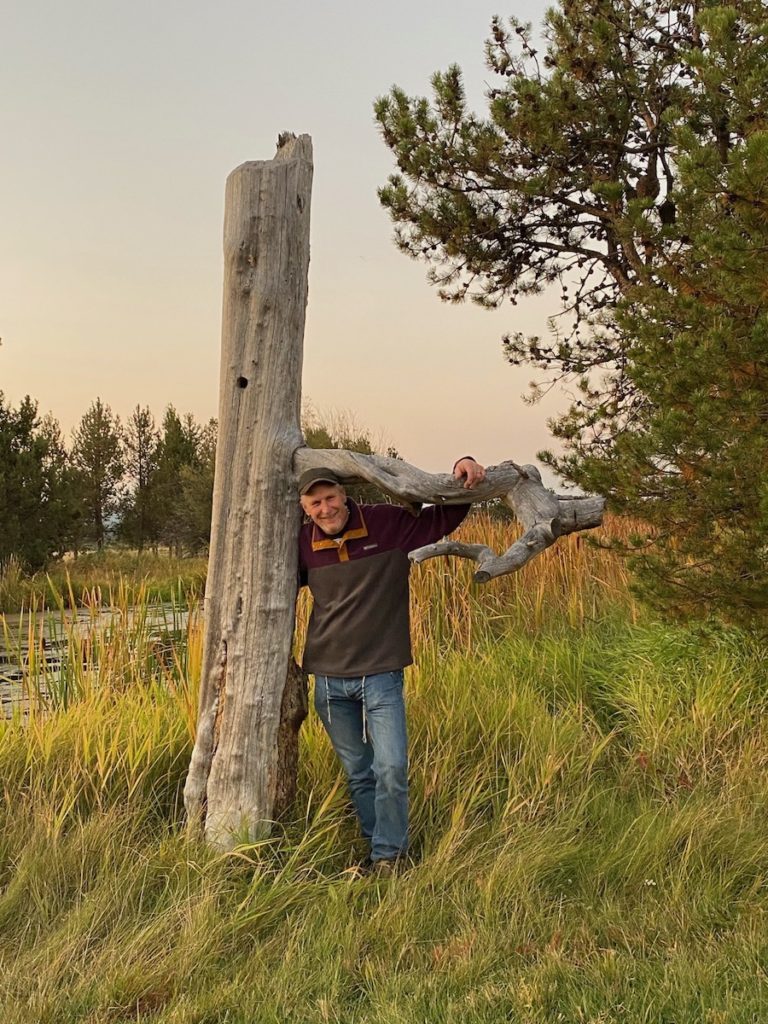
Celebrating Sukkot. Natan the tree hugger receiving a hug back from an old snag during a walk in the wilderness with Sandi and some of his children on the first day of Sukkot.
Our new annual Scripture Reading Schedule for 2020-2021 with daily readings that begins next week on 10/11/20 is now available to download and print. The link to the current 2019-2020’s Scripture Reading Schedule will still be available on the right sidebar under “Helpful Links” into next year. If you are using a mobile device or tablet, the link may be below, meaning you’ll need to scroll down instead.
Most of this week’s blog discussion points will be on these passages. If you have general comments or questions on the weekly Scripture readings not addressed in a blog post, here’s a place for you to post those. Just use the “leave a reply” link or the “share your thoughts” box below.
The full “Read Through The Scriptures In A Year” schedule, broken down by each day, can be found on the right sidebar under “Helpful Links.” There are 4 sections of scripture to read each day: one each from the Torah, the Prophets, the Writings, and from the Testimony of Yeshua. Each week, the Torah and haftarah readings will follow the traditional one-year reading cycle.
Weekly Blog Scripture Readings for 10/4 through 10/10/2020.
Joshua 1:7-9 Only be strong and very courageous, that you may observe to do according to all the law which Moses My servant commanded you; do not turn from it to the right hand or to the left, that you may prosper wherever you go. This Book of the Law shall not depart from your mouth, but you shall meditate in it day and night, that you may observe to do according to all that is written in it. For then you will make your way prosperous, and then you will have good success. Have I not commanded you? Be strong and of good courage; do not be afraid, nor be dismayed, for YHVH Elohim is with you wherever you go.”
Chazak, chazak, v’nitchazek. Be strong, be strong, and may you be strengthened!
Hello everyone around the world as we join the called out heir-apparent children the El Elyon and Kadosh YHVH Elohim (the Most Highand Holy YHVH Elohim) to celebrate the biblical Feast of Tabernacles. A most joyous Sukkot/Feast of Tabernacles from my family to yours!
This year Sukkot starts on the evening of Friday, October 2 and continues for seven days until Friday, October 9. Immediately on Saturday/Sabbath the next day (October 10), we will celebrate Shemini Atzeret or the Eighth Day (see Lev 23:33–43).
It is 6:42 AM Friday morning as my wife, Sandi, and I make the final preparations to vacate our home in Western, Oregon and leave for the high desert mountain region of Central Oregon to celebrate Sukkot 2020. Our little Subaru Forester (yes, this tree guy—in the business world, I’m known as “The Treevangelist”—has a Forester! Trees and the Bible are my two main passions in life besides my wife and family.) For Sukkot, we load up our sukkah on wheels (our travel trailer) and head for a state campground. However, due to all of the ravaging and destructive forest fires in Oregon this year and due to the fact that this is the opening weekend for deer and elk hunting season in our state, most of the State campgrounds are either closes or full. Therefore, our sukkah for this year will be a rented vacation home near a mountain river in a beautiful resort area in the mountains. There, three of our four children will be joining us along with a son-in-law. Our daughter and third child will be celebrating Sukkot with her husband in another state about 1,500 miles away from us. During Sukkot, I will also have the privilege of hangin out with several cousins along with their children and grandchildren. This will be the first time that nearly all of the cousins have been together for the Feast since 1974! Needless to say, I’m quite excited about this.
To help you celebrate Sukkot whether you are doing so with others or are by yourself, here is my Sukkot gift to you—some resources that will help you to have a more meaningful Sukkot. Yes, Sukkot is a time to have fun with family and friends, but most importantly, it is a time to draw closer to YHVH Elohim and to Yeshua our beloved Messiah. It is a time to celebrate and memorialize a soon coming future time when our King Yeshua will be ruling over this earth in truth and righteousness, when the Torah-Word of Elohim will go forth from Jerusalem like a river of life to the whole world, and when the glory of the YHVH Elohim will cover the earth as the waters cover the sea, and the bride-saints of Yeshua will be reigning over the world with their Heavenly King. Remember this: while the outlook around you in light of world conditions may be sick and disheartening, the upload is always glories!
Stay tuned for more timely information to follow on Sukkot. Unlike previous years, I will have wifi where I will be staying, so I will be making regular updates to this blog along with teaching articles and photos. See you around…
To help you to celebrate the biblical festival of Sukkot with understanding, please check out the following Hoshana Rabbah resources.
Regularly for years I talk to people from all over the world who are alone and without a local fellowship or congregation. Many times I am asked how it is possible celebrate the biblical feasts when alone and disconnected from the greater body of Messiah. Here are some suggestions on how to celebrate the upcoming Feast of Tabernacles (or Sukkot) if you are alone or are only a part of a small group of people.
The first things to keep in mind is that YHVH expected his people to keep the biblical feasts forever wherever their dwelling place happened to be whether inside or outside of the physical land of Israel. I have given proof of this in more details elsewhere, but below are a few Bible verses that state this truth succinctly.
The weekly Sabbath and the seven biblical feasts are for YHVH’s people to celebrate forever and wherever they may be living whether in our out of the land of Israel. The Torah instructs the saints to celebrate the feasts in you dwelling places (d) forever (f)
Here are the biblical commands relating to Sukkot and how you can fulfil them if you are by yourself or with just a small group of people.
Live in a temporary dwelling for eight days (Lev 23:42). Some people live in a literal sukkah made of tree branches. This is may not always be practical for people living in colder climates. In the past during Sukkot, I have lived in a tent, a tent trailer, a rented house and a motel room. For the past several years, my wife and I have lived in our travel trailer during Sukkot. We will do so again this year in a campground in the mountains.
Wave lulavim (Lev 23:40). Every year, my wife and I purchase a four-species lulavim from Israel consisting of an etrog (or a citron, which is lemon-like fruit), a willow branch, a palm branch and a myrtle branch. You can make your own lulavim by taking some tree branches and fruit from your local area.
Keep the High Sabbaths by ceasing your occupational work (Lev 23:35, 36).
Beyond that, when the saints come together, or you are by yourself, we are to read and study the Bible, pray, fellowship with others as we are able, eat good food, praise and praise and worship YHVH Elohim (Acts 2:42, 47; 1 Tim 4:13; Col 3:16; Eph 5:18–19), and allow the gifts of the Spirit to flow (1 Cor 14:26).