More Tools for Coping With the Craziness of the World Around Us—Meditations on Psalms 26 and 27

Psalm 26

Psalm 26:4–5, I have not sat. We must be careful about building friendship relationships with idolators (those who don’t put Elohim first in their lives) or hypocrites (those who claim to put Elohim first, but their actions speak otherwise), for in reality, they’re both idolators. Why must we carefully choose who our friends are? Because “evil company corrupts good habits” (1 Cor 15:33). The world doesn’t understand why the righteous want nothing to do with the wicked. As Scripture says, “In regard to these, they [the heathen] think it strange that you do not run with them in the same flood of dissipation, speaking evil of you”(1 Pet 4:4).

In the Bible and in reality, there are only two groups of people on earth: those who are part of the Israel of Elohim (Gsl 6:16) or the commonwealth or nation of redeemed Israel (Eph 2:11–19), and those who are Gentiles or heathens. This fact translates into two realities on the ground for the saint: those around us who are in a relationship with Yeshua the Messiah are our brethren and members of our spiritual, forever family, and those who are not. With regard to the latter group, those therein are part of the saints’ mission field, and it is our responsibility to share the gospel with them in hopes of bringing them into a relationship with Yeshua. In reality, they are not our spiritual family and therefore cannot be part of our inner circle of friends, otherwise, they will drag us down spiritually as 1 Corinthians 15:33 warns us against. James and John address this issue directly and succinctly:

Adulterers and adulteresses! Do you not know that friendship with the world is enmity with Elohim? Whoever therefore wants to be a friend of the world makes himself an enemy of Elohim. (Jas 4:4)

Do not love the world or the things in the world. If anyone loves the world, the love of the Father is not in him. (1 John 2:15)

Psalm 27

Psalm 27:1–14, The Jews traditionally read this psalm during the month of Elul (the sixth month) just before the fall biblical feasts of the seventh month, since they are eluded to therein. These elusions include

Verse 5: pavillion is suk, the root word for sukkah (relating to Sukkot or the Feast of Tabernacles).

Verse 5: ohel means “tabernacle” (also relating to Sukkot or the Feast of Tabernacles).

Verse 6: sacrifice [of joy]. Sacrifices of joy are the thanksgiving, love and peace offerings made to YHVH during the biblical pilgrimage feasts to the tabernacle of Elohim (ohel, v. 5; (this refers to all the fall feast of Atonement, Trumpets, Tabernacles and the Eighth Day).

Verse 6: joy is teruah (this directly refers to Yom Teruah or the Day of Trumpets and indirectly to the other fall feasts).

Psalm 27:1, My light…salvation…fear…strength of my life. What more does a person need? The saint has the light of Yeshua and the Word of Elohim (these are synonymous) to guide him in the gross or thick spiritual darkness of this world. He also has the divine promise of salvation or deliverance from any and every enemy that would come against him to kill, steal and destroy including death, which is the ultimate enemy. Finally he has the divine strength or power of the Creator at work in his life through the indwelling presence of the Spirit of Elohim in all areas of his life. Beyond this, there is nothing to fear in this life. In fact, many times I have quoted this verse and applied it to a particular part of my body that needed healing, and I have received divine healing. For example, as I was writing this, I humbly, yet boldly declared this promise over a pain in my back, and I was instantly healed. I now don’t have to go to the chiropractor. HalleluYah!

Psalm 27:2, Enemies…foes. Too often when reading scriptures that contains these words, we assign a person or name them. But consider this: Our foe or enemy may be a situation or condition (e.g. a health condition, emotional distress, financial problems, difficult life circumstances [e.g. flood, fire, drought, weather conditions]), or a demonic spirit entity that is behind a person or situation that is our enemy. Moreover, our enemy may be our own sinful condition or wrong attitudes, and we are now reaping the deleterious consequences thereof. So before automatically blaming someone else for our problems and the consequences thereof in our lives, let’s rethink who are what our enemies may really be.
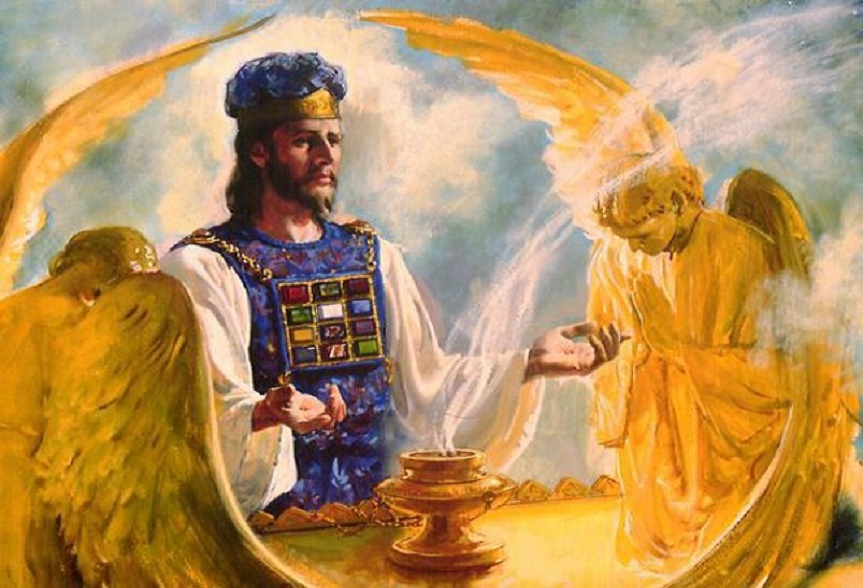
Psalm 27:4, Dwell in the house of YHVH. How does one dwell in the house of YHVH all the days of one’s life? Is this merely hyperbolic, fanciful thinking and rhetoric on the part of the psalmist, or is it actually possible to do? Obviously as physical humans, we are confined to life on this earth while living in the earth suite of  our physical bodies. At the same time, we are seated with Yeshua in heavenly places (Eph 2:6), and our affections are on heavenly things (Col 3:2); therefore, we exist in two realities or dimensions at the same time: an earthly physical dimension and a heavenly or spiritual dimension. How? Simply this: We are a tripartite being of spirit, soul and body (1 Thess 5:23). Though the body part of is confined to this earth, our soul (mind, will and emotions) and spirit can operate from and in the spiritual dimension of heaven through our relationship with Elohim through Yeshua and through the power of his word and Spirit. We can allow the Spirit to operate through us and direct and guide everything that we do, say and think, and in so doing, we are dwelling in the house or family (Heb. bayith) of YHVH, while, in a sense, temporarily living abroad on this earth away from the real home of our Father’s heavenly house, which in due time at the end of this age is coming to this earth. Amein and halleluYah!

To behold. Literally to see as a seer in an ecstatic state, to perceive by experience or with intelligence. (See also Ps 63:12.) There is more than one way to come into contact with the beauty, favor, delightfulness or pleasantries of YHVH. 

To inquire in his temple. The psalmist talks about going into the tabernacle to encounter YHVH. Since there is no longer a physical tabernacle in which the saints can go to seek YHVH, where do they now go? 

The saint is the tabernacle or temple of the Spirit of Elohim (1 Cor 3:16; 2 Cor 6:16), and the Spirit dwells in one’s personal spirit. This means that one must go inside himself to seek and behold beauty of YHVH. Perhaps this is “the secret [or the covered, private, hidden or protected] place” to which the writer makes reference in v. 5.

Psalm 27:5, In the time of trouble. The house of YHVH (as discussed in my commentary on the previous verse) is the place where YHVH will hide his saints in the time of trouble. If one fails to make the house of YHVH a place of refuge during trouble-free times, how can expect to know anything about this secret place of YHVH much less go there or rely on it during troublesome times?

Set me high upon a rock. In the secret place of YHVH (which in other places I refer to as my “God-bubble” or “the spiritual force field” that surrounds me, or which the psalmist elsewhere refers to as taking refuge under the wings of the Almighty), we will find a mighty and solid rock on which to stand during times of trouble. That Rock is Yeshua our Savior, the Written and Living Word of Elohim.

Psalm 27:4, 8, Inquire…seek. Literally “look for, consider or reflect.” Such an effort takes time and energy to do, and to accomplish, one must quiet down the rambunctiousness of the soul (the mind, will and emotions), so that one’s inner man or personal spirit can rise up and speak as it is informed and directed by the Spirit of Elohim.

 

Blog Scripture Readings for 11-22 Through 11-28-20

Aside

Parashat Vayetzei — Genesis 28:10 – 32:3 (2)*
Haftarah — Hosea 12:13 (12) – 14:10 (9)*
Prophets — Judges 19:1 – 21:25; 1 Samuel 1:1 – 4:22
Writings — Psalms 50:1 – 57:11
Testimony — Matthew 28; Mark 1:1 – 4:19

Our new annual Scripture Reading Schedule for 2020-2021 with daily readings that began on 10/11/20 is now available to download and print. The link to the previous 2019-2020’s Scripture Reading Schedule will still be available on the right sidebar under “Helpful Links” into next year. If you are using a mobile device or tablet, the link may be below, meaning you’ll need to scroll down instead.

Most of this week’s blog discussion points will be on these passages. If you have general comments or questions on the weekly Scripture readings not addressed in a blog post, here’s a place for you to post those. Just use the “leave a reply” link or the “share your thoughts” box below.

The full “Read Through The Scriptures In A Year” schedule, broken down by each day, can be found on the right sidebar under “Helpful Links.” There are 4 sections of scripture to read each day: one each from the Torah, the Prophets, the Writings, and from the Testimony of Yeshua. Each week, the Torah and haftarah readings will follow the traditional one-year reading cycle.

* Verse numbers in parenthesis refer to the verse number in Christian English Bibles when they differ from Hebrew Bibles or the Tanakh.

Weekly Blog Scripture Readings for 11/22 through 11/28/2020.


The Faith of the Saint and the Protective Faithfulness of Elohim—Meditations on Psalm 17

Psalm 17:3, In the night. That is, in times of trials, afflictions and difficulties. During times of adversity, YHVH tests us by viewing our reactions to this difficulties, and to determine the true state and contents of our heart. The true mettle of a person, that is, the contents of their heart is revealed only during times of duress and when things are not going well. The question is this: when tested, will we walk in the Spirit and manifest the fruit of the Spirit or react carnally and manifest the works of the flesh (Gal 5:16–26)? These times of darkness and testing that befall each of us from time to time is often referred to as “the dark night of the soul”; they either make or break us. Jacob encountered such a time when he wrestled with the Messenger of Elohim in Genesis 32 and came out a changed man with a new spiritual identity. Yeshua went through a similar experience in the Garden of Gethsemane just prior to his crucifixion. 

Psalm 17:4, The destroyer. This can be taken as a reference to Satan who comes to kill, steal and destroy. The Hebrew word for destroyer is pereets and taken in context with its verbal root means “one who destroys by dividing violently and then robbing, that is, one who divides and conquers.” The tactics of this enemy and his human minions have never changed from then until now.

Psalm 17:8, Apple of your eye. In Hebrew, this verse literally reads “Guard [Heb. shamar] me like the little man or the pupil daughter [Heb. bat] of the eye.” Apple is the Hebrew word ‘ıyshôn literally meaning “little man of the eye [according to Gesenius and The Artscroll Tanach Series Tehilim/Psalms Commentary] or pupil.” This is because when one looks at another person, the image of a little person is visible on the pupil like a reflection in a mirror. Eye is the generic Hebrew word ayin. The idea of the little man in the eye is beautiful and poetic imagery that captures the desires of the psalmist that the Creator would keep his image in his eye (i.e. the Big “Man” or Elohim is keeping the little man or the saint in is eyesight) continually or that Elohim would guard him as he goes through life as a father does his own daughter. 

The expression “the apple of his eye” is now an English idiom meaning “to view a person favorably, to care deeply for them and to cherish them in one’s heart.” 

This same expression is also found in Deuteronomy 32:10 where YHVH views the people of Israel as the apple of his eye. Although Elohim loves the whole world in a generic sense (John 3:16), and desires that every person be saved (1 Tim 2:4; 2 Pet 3:9), he refers to no other people but Israel as the apple of his eye. 

It can also be presumed (as Matthew Henry notes) that Elohim will tenderly keep or protect those as the apple of his eye who keep or guard his commandments as the apple of their eye (Prov 7:2). That is to say, when we obey YHVH’s commandments, we automatically put ourselves under his protection or under the shadow of his wings as Psalm 17:8 suggests (see also Ps 91:4 and Matt 23:37).

Psalm 17:14–15, Men of the world…When I awake. Here the psalmist juxtaposes those who make material achievements their chief goal in life as opposed to those who seek first the kingdom of Elohim and his righteousness. The former have their reward in the physical life, while the latter have a greater reward to come in the next life when they awaken from death in the likeness of Elohim as possessors of immortality.

Belly…hidden treasure. The belly here is a reference to the womb, and hidden treasure literally means “that which is hidden, covered over or protected.” This is a clear reference to babies in the womb, which are a treasured gift that heaven gives to both the wicked and to the righteous alike. Those who murder their children through abortion or neglect or abandon these little divinely granted treasures are literally spurning or rejecting Elohim’s gift to them—a grave affront to the Almighty and his generosity to be sure!

Psalm 17:15, When I awake. This is one of the most notable passages in the Tanakh proving the validity of the concept of the resurrection of the righteous dead. Here David expresses his faith in the hope of the dead saints to eternal glory in the Presence of YHVH’s in his eternal kingdom. Corollary scriptures to this include Ps 16:10–11 and 1 John 3:1–3.

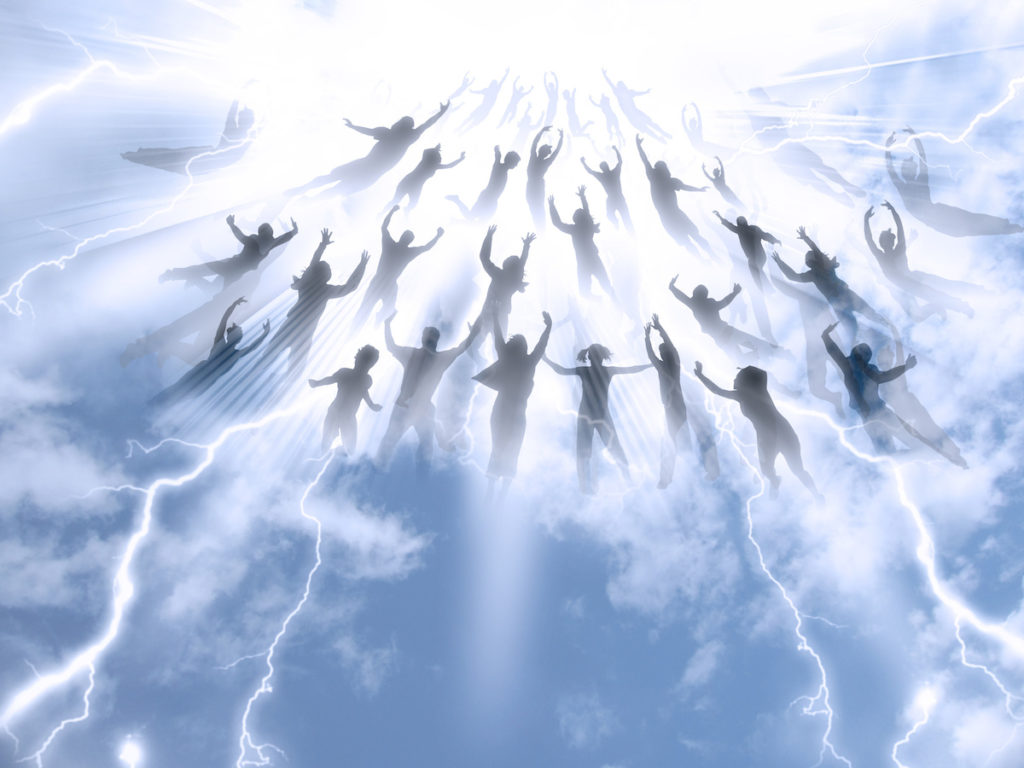
The Rapture of People out of the world
 

The Song of a Weary Warrior—Meditations on Psalm 88

Psalm 88:1–18. This psalm is a heart cry of a righteous person who is weary of the struggles that life in this mortal existence throws him. 

Assuredly, the author of this psalm is a righteous person. This is evident because he knows that Elohim is his salvation (v. 1), and attests to the fact that he is in a faithful, prayerful and faith-driven spiritual relationship with his Creator, even as he cries out to heaven night and day (vv. 1–2, 9, 13), and even while complaining about his plight as a human who is struggle with his faith. To the super-spiritual saint, the writer of this psalm may seem like a spiritual wimp—a melting snowflake or a pansy wilting under the noonday sun. Yet the transparent and honest saint will humbly admit that from time to time they find themselves in a similar place of weariness, or even in a waste-howling wilderness of doubts and despair, in a miry pit of self-pity. David records being in this psycho-emotional state himself several times in various psalms. Even Elijah, the mighty prophet of Elohim, depressed and somewhat despondent, found himself fleeing for his life from the murderous claws of the demonic Jezebel. He finally escaped to the mountain of Elohim weary, discouraged and alone complaining to his Maker about his seemingly hapless plight. 

As weary warriors traversing this life, passing our time as a pilgrim en route to the spiritual Promised Land of the eternal kingdom of Elohim, often we feel adrift in our flimsy dinghies on the seas of humanity struggling to row against the countervailing tides and currents of the surrounding hordes of heathen, who are, in reality, in their unsaved state as good as physically dead (v. 5). This earth is a dark and lonely place for the saint. How can he relate to the walking damned around him, who are like zombies in a catatonic stupor refusing to wake up to reality, and to see, hear or consider the deeper issues of life and to acknowledge the Creator and his Messiah Savior (v. 1)? To them, the saints are a mere fools (1 Cor 4:10), and the Bible is a collection of pointless and foolish fairy tales and legends (1 Cor 1:18, 27).

Yes, the saint sometime feels as if he has been condemned to spend his or her life in the foreign land of this world as a sojourner or pilgrim merely passing through en route to something better out there somewhere that never seems to arrive at their doorstep. Although we’re en route to a better place, nonetheless, along the way we find ourselves passing much time in the Valley of Baca or weeping (Ps 84:6), which is a place that is rife with trouble and discouragement, for many times we feel as if the resting place of the grave would be an improvement to our present lot (vv. 3–4). However, consider this: What would our life be like without Elohim who is our salvation (v. 1) and who, along with his Word and Spirit, guides and walks besides us en route to the better place that is beyond this present life? His help and guidance and what lies beyond is our light and hope in the present darkness of this world. This is the substance of the saint’s faith (see Heb 11:1) is it not?

Continue reading
 

Blog Scripture Readings for 11-15 Through 11-21-20

Aside

Parashat Toldot — Genesis 25:19 – 28:9
Haftarah — Malachi 1:1 – 2:7
Prophets — Judges 12:1 – 18:31
Writings — Psalms 42:1 – 49:20
Testimony — Matthew 25:1 – 27:66

Our new annual Scripture Reading Schedule for 2020-2021 with daily readings that began on 10/11/20 is now available to download and print. The link to the previous 2019-2020’s Scripture Reading Schedule will still be available on the right sidebar under “Helpful Links” into next year. If you are using a mobile device or tablet, the link may be below, meaning you’ll need to scroll down instead.

Most of this week’s blog discussion points will be on these passages. If you have general comments or questions on the weekly Scripture readings not addressed in a blog post, here’s a place for you to post those. Just use the “leave a reply” link or the “share your thoughts” box below.

The full “Read Through The Scriptures In A Year” schedule, broken down by each day, can be found on the right sidebar under “Helpful Links.” There are 4 sections of scripture to read each day: one each from the Torah, the Prophets, the Writings, and from the Testimony of Yeshua. Each week, the Torah and haftarah readings will follow the traditional one-year reading cycle.

Weekly Blog Scripture Readings for 11/15 through 11/21/2020.


Will you pass the test of life?

Will you make the grade and pass the test of life????

Life is a series of tests. We either pass or fail them. YHVH is the school teacher who determines whether we will pass or fail, not us. His Word is our text book that tells us how to pass. If we learn the lessons and put to practice the things we have learned, we will pass. If not, we will fail. 

The problem is that we’re not just in a regular school classroom where if we fail, it’s really not a big deal in the bigger scope of life. Our classroom is this life. Whether we pass or fail will determine not only whether we will obtain eternal life or eternal damnation, but if we pass, the grade we get will determine our level of rewards in YHVH’s eternal kingdom. There are a couple of things going on here.

When YHVH calls us with his holy calling and we respond, we have a choice. The choice we make will determine whether we will be the least or the greatest in his kingdom (Matt 5:19). If we choose to obey him a little, we will be least in his kingdom. If we choose to obey him all the way, we will be the greatest in his kingdom. Our level of obedience to his commandments determines our level of rewards in his kingdom.

If we give him our all, like Ruth did when she chose to forsake the world and follow Naomi, we can become the bride of Yeshua. Ruth is a prophetic picture of Yeshua’s bride. The heart-attitude of the bride is: your people will be my people, your Elohim will be mine, and where you go, I will go.

Yeshua refers to his bride in the book of Revelation. She is unreservedly faithful to him. Yeshua’s bride is comprised of those who are follow the Lamb of Elohim wherever he goes; they don’t just follow him only when it’s convenient!

And I looked, and, lo, a Lamb stood on the mount Sion, and with him an hundred forty and four thousand, having his Father’s name written in their foreheads. And I heard a voice from heaven, as the voice of many waters, and as the voice of a great thunder: and I heard the voice of harpers harping with their harps: and they sung as it were a new song before the throne, and before the four beasts, and the elders: and no man could learn that song but the hundred and forty and four thousand, which were redeemed from the earth. These are they which were not defiled with women; for they are virgins. These are they which follow the Lamb whithersoever he goeth. These were redeemed from among men, being the firstfruits unto Elohim and to the Lamb. And in their mouth was found no guile: for they are without fault before the throne of Elohim. (Rev 14:1–5)

Continue reading
 

Hold on to Yeshua—He Will Guide and Protect You Through the Wilderness of Life

Steps In a Redeemed Believer’s Walk

In this study, we will examine the spiritual stages of growth and development that a redeemed believer goes through while crossing the wilderness of life en route to our spiritual promised land—the kingdom of Elohim. We will see how the Torah (YHVH’s instructions in righteousness) plays a pivotal role in the believer’s life that keeps us on the straight and narrow path, and that will eventually bring us safely to our spiritual destination, which is YHVH’s kingdom of heaven. In view will be the oft-quoted verse from Proverbs 29:18 which says, “Where there is no vision [or prophetic revelation], the people perish [i.e. cast off restraint, become lawless, unloosened, and unbridled], but he that keeps [or hedges about, guards, protects] the Torah, happy is he.” Many Bible students are familiar with the first part of this verse, but not its second part, where we see that Torah plays a vital role in guiding us to our spiritual or prophetic and eternal destiny. 

From the beginning to the end of the Bible, Elohim is directing his people into the path of Torah righteousness, and he is continually exposing us to the greater message of the everlasting gospel message (Rev 14:6), which involves salvation through faith in the shed blood of the Lamb of Elohim at the cross. 

What’s more, Yeshua, the Living Torah-Word of YHVH incarnate (or in flesh form, John 1:1–4, 14), was the one who, as the arm of YHVH (Isa 53:1), delivered the Israelites from Egypt. He was also the one who, as the Angel (or Messenger) of YHVH, led the ancient Israelites in the pillar of fire, who spoke to them from Mount Sinai and gave them his Torah-instructions. Yeshua also was the rock that gave them water, and was the bread of life to them. Yeshua himself (as well as the apostolic writers) tells us that he was the “God” of the Old Testament, who was with the Israelites throughout their tenure in the wilderness (John 8:58 cp Exod 3:14; John 6:32–58; Acts 7:35–39; 1 Cor 10:4). The point is this: Yeshua is still leading his saints as he was then. He is the one who revealed his Torah-law to them then, and his standards of righteousness have not changed from then until now, for he is the same yesterday, today and forever and he does not change (Heb 13:8; Mal 3:6)! What does this mean for you and me today? Don’t stop reading unless knowing the truth of the Word of Elohim scares and intimidates you, and unless you love spiritual darkness more than light. In what follows, we will let the Word of Elohim speak to us, even if it is different than what you have learned in your man-made church systems.

As you read this study, note how little-by-little, like a parent training his child, Elohim was training his people to walk in his Torah commandments, all the while revealing to them the truth of the redemptive work of Yeshua. Please note that obedience to the Torah and belief in Yeshua go hand-in-hand. The two are completely compatible and indivisible. One cannot believe in, love, and even know Yeshua without obeying his commands (John 14:15, 21; 1 John 2:3–6). Belief in Yeshua and walking in his waysYeshua are two sides of the same coin.

 Interestingly, this message of the gospel (that is, walking in YHVH’s Torah-law, the Written Word of Elohim, and having faith in Yeshua, the Living Torah-Word of Elohim) has never changed. How do we know this? The last book of the Bible which predicts conditions on earth just prior to Yeshua’s second coming identifies the end time saints of Elohim as keeping his Torah-commandments as well as embracing the testimony, faith or gospel of Yeshua (Rev 12:17; 14:12 cp. 22:14). These are the words of Elohim, and not men’s words or traditions!

One’s Pre-Redemption (pre-Salvation) State

We will now identify the steps or stages of spiritual growth and development through which YHVH leads his people as they trek through the bleak wilderness of this physical life en route to glories of immortal life in the promised inheritance of Elohim’s eternal kingdom. Keeping this prophetic vision in view will insure that one does not perish in this life before reaching the end goal. Remember,

Where there is no prophetic revelation [or vision], the people cast off restraint [or perish]; but happy is he who keeps the Torah-law. (Prov 29:18)

1— Slavery to Sin: Israel, while in Egypt, was in bondage, slavery or servitude to the world, flesh and the devil. The Hebrew word Egypt, Mitzraim, is related to matzowr meaning “something hemming in, distress, besieged, bulwark and defense.” Matzowr is from the Hebrew word tzur meaningto cramp, confine, beset, besiege, bind up, enclose and lay siege.”Do these words not describe the state of one’s pre-redemption state or one’s spiritual enslavement to the world, the flesh and the devil before being saved? As a slave to sin and living under the penalty of death and burdened with guilt and shame, how does this make one feel? If Mitzraim doesn’t express one’s spiritual condition, then what does?

2— Despair: While enslaved in Egypt, the Israelites cried out to YHVH in anguish from under the burden of their bondage. YHVH heard their cries and stretched out his strong arm and delivered them with a mighty hand. Their world shook and literally fell apart as he dislodged them from those things that confined them as helpless and enslaved captives in their place of distress, confinement and besiegement. The Egyptian world around them was judged, and Israel experienced some of these judgments, as well, (to arouse their attention, to shake them out of their sinful comfort zones and to awaken them to look heavenward), although YHVH graciously spared them from the most severe judgments that would have otherwise destroyed them. Before you were saved, did YHVH have to do something similar in your life to dislodge you from your enslavement to a life of sin and idolatry, and to awaken you to your spiritual state? Does he not still have to do this from time to time in our spiritual walk to move us to a higher level of spiritual maturity, so that we become more like him and become a more qualified and efficacious worker in his kingdom? Even at this moment, YHVH is urging his people, the saints, to come to a higher level in their spiritual walk by exiting the confused mixture of good and evil that exists in the spiritual Babylon of the world’s religious systems and churches (Rev 18:4).

Redemption

Continue reading