How to Conduct a Communion Service the Way Yeshua Instructed

Communion or the Lord’s Supper Explained in Its Hebraic Context

The Importance of Memorials and Symbols

Obedient and truth-seeking disciples of Yeshua will want to love him by keeping his commandments (John 14:12), and by teaching and doing everything he commanded (Matt 28:20). They will be following Paul’s example to imitate Yeshua the Messiah (1 Cor 11:1) as well heeding John’s admonition “to walk just as [Yeshua] walked” (1 John 2:6). This applies to the important biblical ritual of communion as well. How can we celebrate communion just as Yeshua did it? How closely is your typical mainstream Christian church following Yeshua’s commandments when it conducts a communion or the Lord’s supper? We shall discover the answer below.

With regard to obeying YHVH’s commands, symbols and memorializations figure prominently in YHVH Elohim’s spiritual economy. Why is this? They are teaching aids. Physical humans need physical things to help them to comprehend spiritual truths and ideals. Using symbols, commemorations and memorializations is a method of teaching and relates to pedagogy, which is “the method and practice of teaching, especially as an academic subject or theoretical concept.” A effective teacher endeavors to build bridges of understanding between what the student knows and what the teacher wants to teach the student— between the known and the unknown, between what the student understands now and what the teacher wants his students to learn. A successful teacher learns the skill of building bridges of understanding with his students to bring them to a higher level of understanding. The same is true of YHVH Elohim as we works with humans to teach them about spiritual things.

On a spiritual level, YHVH Elohim, our Heavenly Teacher, employes similar pedagogic or teaching techniques as he endeavors to bring men to a higher level of understanding heaven’s spiritual truths and realities. The use of symbols and memorials as teaching tools is essential to this process of teaching and learning.

The Bible is full of symbols and memorials that represent or point to something else and act as teaching aids to assist humans in learning about Elohim and what he requires of us. For example, the very name of the Creator, YHVH (Yehovah), is a memorial, symbol or remembrance (Heb. zeker from zakar) of who Elohim really is (Exod 3:15). His name is a way for humans to connect with him. The same is true of each of our names. Our name is a label, a pointer, a symbol of who we are, but it’s not really us. Similarly, eating unleavened bread during the Feast of Unleavened Bread is a memorial (Heb. zikrown from zakar) of coming out of Egypt and putting sin out of one’s life (Exod 13:9). The twelve stones on the high priest’s breastplate were memorials (Heb. zikrown from zakar) of the twelve tribes of Israel (Exod 28:12). The grain offering that was made on the altar of sacrifice in the Tabernacle of Moses was a memorial (Heb. azkarah from zakar) or remembrance that prophetically pointed to Yeshua the Messiah’s death on the cross and the fact that he is the bread of life (Lev 2:2). Blowing shofars on the Day of Trumpets is a memorial (Heb. zikrown from zakar) of many things past, present and prophetically including the second coming of Yeshua and the firstfruits resurrection (Lev 23:24). In fact, the whole Tabernacle of Moses, the Levitical priesthood, the sacrificial system, the Sabbath and biblical feasts is a complex system of memorials, remembrances and symbols to point humanity to the higher, upward spiritual path, which eventually brings him to Yeshua the Messiah. This is so abundantly clear in the Bible. Why don’t more people see this? Why do so many Christians and their leaders have such an apathy, even antipathy for these things? It’s mind boggling, especially in view of the fact that these teaching aid memorial and symbols were ordained of Elohim himself!

The overarching purpose and meaning of the Hebrew word zakar and its derivatives is something that “gets men to think about something, to meditate upon something, to pay attention to something, to remember something, to mention something, to declare or proclaim something or to commemorate something” (see The TWOT on the meaning of zakar). 

Why do people need to remember something or to stop and think about something? Simply this. In the busyness of life, people forget a lot of things that they should remember, meditate on, ponder, be thankful for and learn from. The fact that people tend to forget important things is the whole reason we have national holidays, statues, gravestones, war medals, a national flag and anthem, birthdays and anniversaries, photo albums and other manmade traditions. Biblically, the same can be said of a Torah scroll, the Bible itself, the Sabbath, the biblical feasts, the cross as a symbol of something, the ritual of baptism and Passover, which had embedded in its observance the Lord’s supper (1 Cor 11:20), communion (1 Cor 10:16) or the Lord’s table (1 Cor 10:21). All of these remembrances or memorials are designed to cause us to pause and stop and to reflect on something that is beyond us (in the past or future) or above us. The memorialization of past events should cause us to better appreciate those who have gone before us and be thankful for our present blessings.  Such reflections can help us not to repeat the mistakes of past generations and at the same time learn from their wisdom. Simultaneously, things that memorialize future events (like the Sabbath and the biblical feasts) should encourage us onward and upward in our spiritual journey. They strengthen our faith and give us hope for tomorrow. Symbolic rituals like baptism and communion can help us to connect to present realities that relate to our upward spiritual walk and our relationship to Yeshua the Messiah—our Master and Savior.

What Does Communion Memorialize?

So what does the Christian sacrament of communion or the Lord’s supper memorialize? To its credit, the mainstream Christian church understands the basic meaning of communion quite well. But let’s review this basic understanding, while, at the same time, adding some Hebraic or whole Bible background information. This will hopefully help us to appreciate more fully this glorious sacrament, which, sadly, due to its frequent occurrence in many churches, can become banal ritual that is easily taken for granted.

Continue reading →
 

Blog Scripture Readings for 3-28 Through 4-3-21

Aside

Parasha — No Parasha This Week
Haftarah —
Prophets — Isaiah 29:1 – 37:38
Writings — Job 1:1 – 7:21
Testimony — Acts 4:23 – 8:25

Our annual Scripture Reading Schedule for 2020-2021 with daily readings that began on 10/11/20 is available to download and print. The link to the previous 2019-2020’s Scripture Reading Schedule will still be available on the right sidebar under “Helpful Links” into next year. If you are using a mobile device or tablet, the link may be below, meaning you’ll need to scroll down instead.

Most of this week’s blog discussion points will be on these passages. If you have general comments or questions on the weekly Scripture readings not addressed in a blog post, here’s a place for you to post those. Just use the “leave a reply” link or the “share your thoughts” box below.

The full “Read Through The Scriptures In A Year” schedule, broken down by each day, can be found on the right sidebar under “Helpful Links.” There are 4 sections of scripture to read each day: one each from the Torah, the Prophets, the Writings, and from the Testimony of Yeshua. Each week, the Torah and haftarah readings will follow the traditional one-year reading cycle.

Weekly Blog Scripture Readings for 3/28 through 4/3/2021.


Free Passover Resources from Hoshana Rabbah


How the Church Divorced Itself From Its Book of Acts Roots

From A.D. 70 to A.D. 135 — How the Church Became Divorced From Its Hebraic Roots

What is called Christianity today in many ways is very dissimilar, and in many respects, outright antagonistic to the religion of the first-century, book of Acts believers. How did this come to be?

Many modern Christian churches prides themselves on being “a New Testament church,” yet what they practice and believe is often very different from and even opposed to the teaching and practices of the apostles and primitive, first century church. For example, life for the apostolic believers in Jerusalem revolved around the temple (Acts 2:46; 3:1; 5:19-21; 5:42; Acts 21:26; 22:17; 24:18; 25:8; 26:21), and for those outside of the land of Israel, on most Sabbaths, they attended the local synagogue (Acts 13:14; 14:1; 17:1–2; 18:4, 7, 8, 19, 26; 19:8). Not only did the first apostles and early believers notcelebrate any pagan influenced holidays such as Easter, Christmas, Halloween, Lent, and the rest, but they adhered to the Torah or law of Moses (see references below). The Book of Acts record is also clear that early believers kept the Bible festivals (as outlined in Lev 23; Acts 2:1; 18:21; Acts 27:9; 1 Cor 5:8; Jude 12) of Passover, Unleavened Bread, Pentecost, Day of Trumpets, Day of Atonement, Feast of Tabernacles, and the Eighth Day.

What’s more, the book of Acts records that both Stephen and Paul were falsely accused of teaching that the laws and customs of Moses were nullified, and, as a result of this false accusation, both lost their lives defending Torah-obedience. 

A hundred other examples could easily be given showing how the Christian church has veered away from the Hebrew or Jewish roots of its faith, but hopefully, the reader gets the point.

So what happened to cause Christianity to veer so widely from the Hebrew or Jewish roots of its faith and to arrive at the place where it hardly resembles that religious faith from which it sprang? This is not an easy question to answer since one must look back nearly 2000 years and attempt to reconstruct the times in which our spiritual forefathers lived. Moreover, we must understand what was transpiring politically, religiously, and socially at the time to answer this question properly. It is also imperative that we understand the contextual social and linguistic fabric, the backdrop of history, and the parade of political and economic events which happened one after another between the years of A.D. 70 and A.D. 135. Then and only then can we understand how the church became divorced from its Hebraic roots and became Greco-Roman and Western in nature and combined itself with an admixture of with pagan and antibiblical doctrines along with pagan practices, traditions and beliefs.

Now, let us go back nearly 2000 years for a short lesson in history. The early church was Jewish and much of what they did centered around the synagogue and the temple. As already noted, references are made 25 times in the Book of Acts to the Jerusalem temple and 19 references to various local synagogues.

The Apostles Were Pro-Torah

Before commencing our trip back in his… (To continue reading this, go to https://www.hoshanarabbah.org/pdfs/ad70ad135.pdf)


Update on the Corona/Covid-19 Virus—Please watch and pray

https://brandnewtube.com/embed/GcjtJu9dY1RcSNh

Are the following Scriptures prophetic references to the current “pandemic” or something similar? Watch and pray…

For nation will rise against nation, and kingdom against kingdom. And there will be famines, pestilences [Greek: plagues], and earthquakes in various places. (Matt 24:7)

Compare Matthew 24:7 to Revelation 6:7.

So I looked, and behold, a pale horse. And the name of him who sat on it was Death, and Hades [i.e. spiritual and physical death] followed with him. And power was given to them over a fourth of the earth, to kill with sword, with hunger, with death, and by the beasts of the earth [or “beasts of the field,” which is an Old Testament Hebraism referring “to evil men”]. (Rev 6:7)


Leviticus Chapter Seven—Natan’s Commentary Notes

Leviticus 7:6, Every male…may eat it. 

The Torah Origins of the Communion Ritual and the Priesthood of All Believers

Why were the priests allowed to eat some of the offerings? What’s this all about? Let’s answer this question with a question. Why do believers in Yeshua eat the communion elements, and what do they represent? Is there a connection between the Levitical priests eating of the sacrifice and the saints eating the communion elements? Now let’s explore this idea. 

In Leviticus 6:26 and 29, only the male priests were allowed to eat of the sin offering. Likewise, YHVH commanded the male priests to eat the baked unleavened bread of the minchah offering (Lev 6:16, 18). Yeshua himself not only continued this Levitical practice, but expanded and elevated it to a higher level at his last supper. 

When Yeshua initiated communion among his disciples, what in essence was he saying? Simply this. His disciples were all now his holy or set-apart priests. This is the origination of the concept of the priesthood of all believers, or the royal priesthood as Peter terms it (1 Pet 2:9), or a kingdom of priests John calls it who will rule with King Yeshua in his millennial kingdom (Rev 1:6; 5:10; 20:6). 

It was YHVH’s desire that the children of Israel would become such a priesthood even before he called the Levites to be his set-apart priests (Exod 19:6). However, they failed in this mission when they chose to worship the golden calf instead of YHVH (Exod 32). At that time, YHVH chose the faithful Levites to be his priests instead of the firstborn male leaders from all the tribes of Israel (Exod 32:26, 29; Num 3:11–13, 44). 

Moreover, Isaiah prophesied about the priesthood of all believers—a priesthood that would extend beyond the confines of the Aaronic priesthood (Isa 66:21 cp. Dan 7:18). This higher level priesthood would extend beyond the patriarchal male leaders, who were the original priests in Israel (Exod 19:22, 24), to include all the Israelites, both male and female (Exod 19:6), as well as Gentiles who have been grafted into Israel through Yeshua the Messiah (Gal 3:28–29; Eph 2:11–19; Rom 11:11–32), which Paul refers to as the Israel of Elohim (Gal 6:16).

Being a kingdom of priests who will teach the inhabitants of planet earth the ways of Elohim is the role and destiny of all the modern day saints of Elohim who have been washed of their sins (i.e. Torahlessness, 1 John 3:4) in the blood of Yeshua (Rev 1:6), for they will reign with Yeshua on this earth (Rev 5:10) for a thousand years as Elohim’s resurrected and glorified adopted sons and daughters (Rev 20:6; John 1:12 cp. Rom 8:14–15, 23; 9:4; 2 Cor 6:18; Gal 4:5–6; Eph 1:5; 1 Jhn 3:1–2; Rev 21:7). 

So saints of the YHVH Elohim, encourage yourself with these immutable promises from the Word of Elohim! Are you presently preparing yourselves now for auspicious and lofty role?

Leviticus 7:13, Leavened bread. The Torah prohibited the offering of leavened bread on the altar (Lev 2:11). There are only two instances where leavening in bread was permitted in the tabernacle service. In this verse, leavened bread was offered in conjunction with the peace offering (Lev 2:13), where it was eaten as part of the sacrificial meal. This was not a sin offering, but the peace offering. Therefore the bread of this offering didn’t represent the body of Yeshua. It was merely part of the fellowship meal representing a peaceful and loving relationship between the offerer and the Creator, and was similar to a family picnic, dinner or barbecue. But it wasn’t placed on the altar, nor was it a part of the sacrifice, therefore, it wasn’t a prophetic picture of the sinless Yeshua dying on the cross.

The second instance of leavened bread being offered in a tabernacle service occurred when the Torah instructs the priests to wave two loaves of leavened bread on Shavuot or Pentecost before YHVH (Lev 23:17). These two loaves prophetic and symbolic metaphors for the two houses of Israel (the northern kingdom and southern kingdom)—a spiritual picture of Jews and Christians. In this ceremony, the gracious and merciful Creator was demonstrating his acceptance of his people despite their sin.

Leviticus 7:23, Not eat any fat. All the organ fat of the ox, sheep and goats was used as part of the sacrificial service (Lev 7:30–31).The organ fat was given to YHVH as part of the burnt offering (Lev 1:3), the peace offering (Lev 3:3–4), the sin offering (Lev 4:8–10, 19). Fat is the Hebrew word cheleb/CKJ meaning “fat of humans or animals” or metaphorically, “the choicest, best part, or abundance of the land.” Therefore, the fat as one of the choicest parts of the animal was reserved for sacrifice to YHVH on the altar. But not eating fat, the Israelites in their minds preserved a reverence for YHVH’s altar upon which the fat or the best part was offered to YHVH. To eat the fat was to show irreverence for that best part that belonged to Elohim, which is why the offender was cut off from the nation of Israel. As living sacrifices who have been redeemed or bought with the blood of Yeshua, are we giving YHVH the best part of our lives? After all, he so loved us that he gave us Yeshua, which was the best he had to offer.

Leviticus 7:26, Not eat any blood. 

The Supreme Significance of Blood

YHVH revealed in the Torah that the life of flesh is in the blood (Lev 17:11). Therefore, the blood symbolizes the whole life of the living being. This is why the blood being poured upon the altar made atonement for the souls of men (Lev 17:11–12), since it represented and pointed to the shedding of Yeshua’s blood when he sacrificed his life on the cross in atoning for men’s sins. Respecting the blood is necessary not only because it symbolizes the sanctity of the life of man who was made in the Creator’s image (Gen 1:26 cp. 9:6), but more importantly, because of the blood of Elohim’s Son that was shed for man’s redemption (Lev 17:11). For one to eat the blood showed disdain for what the blood typifies. In times past, this was so important to YHVH that a violation of this prohibition resulted in banishment from the nation of Israel.

The blood was to be reserved for the sacrificial service, where it was used symbolically to represent Yeshua’s shedding his blood on the cross. The blood of a lamb was put on the door posts to protect men from YHVH’s judgment against sin (Exod 12:7, 13). Moses sprinkled the blood of oxen on the people symbolizing their coming into covenantal relationship with YHVH (Exod 24:5–8). Additionally, the blood of sacrificed animals was sprinkled throughout the tabernacle, on Aaron and his sons, and all around the altar to sanctify it. All these acts and uses of the blood were illustrative of the unrestricted cleansing power of the blood of Yeshua (Rev 1:5; 7:14; 12:11; 1 Pet 1:2, 19; Heb 9:12; 10:19–22; 12:24; 1 John 1:7; Matt 26:28), which is why YHVH expected his people to treat the blood with a reverence. Those who didn’t evidenced a heart of indifference for the set-apart or kadosh things of Elohim—an intolerable offence in the Creator’s eyes.

On the dark and satanic side, the blood of humans and animals is profaned through demonic rituals involving drinking it and even cannibalism. This is an abominable perversion of holy communion and was an aspect of ancient heathen religions (Ps 16:4; Ezek 39:17, 19 cp. Num 13:32), and is a practice in which the end time antichrist heathens of the Babylonian whore system will engage (Rev 17:6; 18:13, 24).


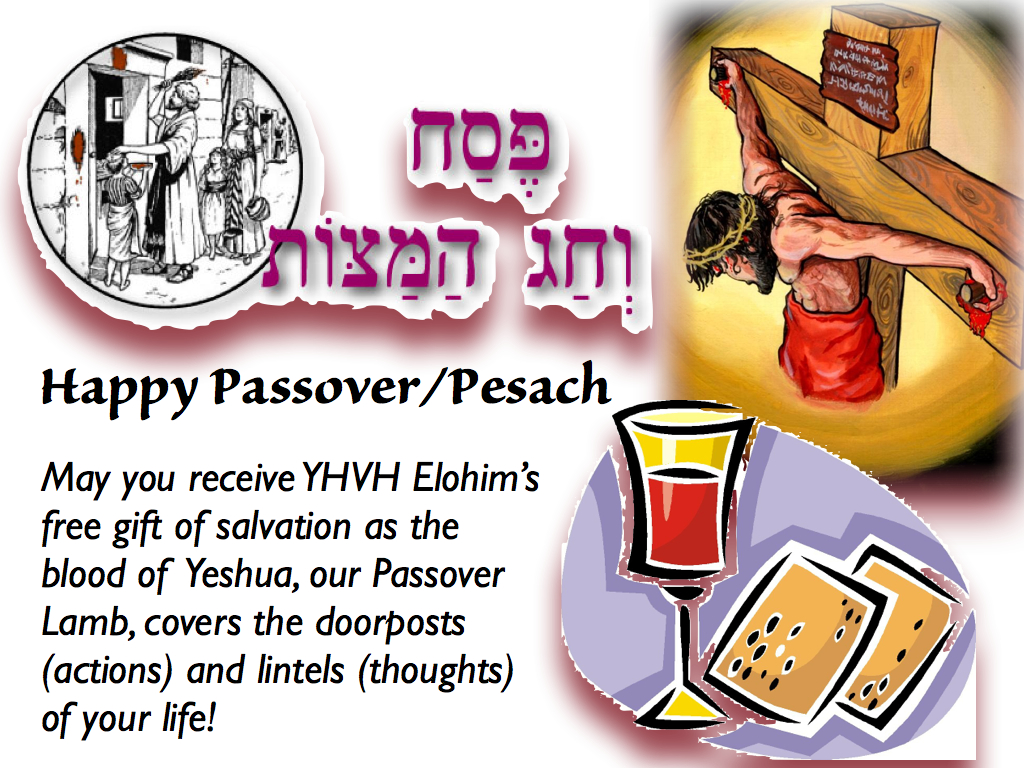
Why Celebrate the Passover?

Isn’t your life already busy enough? Who has time for a six-hour Passover Seder commemorating something that happened thousands of years ago? What could this possibly have to do with my life here and now, you may ask? How can a 3500-year-old Biblical ritual in any way relate to those living in the age of the laser, satellites, the worldwide web and computers? Well, let’s see!

The Preacher said in Ecclesiastes 3:15, “That which is has been already and that which will be has already been.…” Life is full of paradoxes. Do advancements in technology, science, economics, medicine, religion, and world government really promise to give men the rest for their weary souls for which they long?

How about a different approach to the questions and problems facing modern man? Is it possible to go forward by going backwards? This is a thesis that the ancient prophet Yermeyahu (Jeremiah) proffered to those who had ears to hear. He said, “Thus says YHVH, ‘Stand by the ways and see and ask for the ancient paths, where the good way is, and walk in it; and you will find rest for your souls. But they said, we will not walk in it’” (Jer 6:16). What were those ancient paths to which this white-haired Jewish prophet referred? This question is answered three verses later: “Because they have not listened to My words, and as for My Torah, they have rejected it also” (verse 19). YHVH through his prophets has been showing men the way of rest for their souls for thousands of years, yet men consistently refuse to listen. They always have a better way, so it seems!

The festival of Passover is one of the most ancient paths to be found in all of the Scriptures. In it are contained clues that will help the partakers of it to understand the past, present and the future. 

A God-hater, Karl Marx, the father of modern communism, said that religion is the opiate of the masses. Yes, this can be said of dead, truthless and spiritless religion. But how about that religion which gives definition, purpose, meaning, hope and destiny to a man’s life? How could anything that comes directly from the Loving Father who created you and me in his own image be detrimental to us?

It has been said that the religion of the Bible tells a person where he has come from, where he is at and where he is going. Could it not be said that a man who knows the answers to these questions possesses true wisdom and wealth, and has indeed found rest for his troubled soul?

One of the most important scriptures in the Jewish faith is the famous shema passage of Deuteronomy 6:4–9. This passage, which is like a “pledge of allegiance” for the Jews, starts out by saying, “Hear [shema], O Israel …” The word shema literally means “to hear and to do.” Later, in verse five, the shema continues, “And you shall love YHVH your Elohim with all your heart, and with all your soul and with all your might.” Loving our Heavenly Creator is not just a mind-thing, but also an action and a doing thing. It is something we act out and participate in. This is the Hebrew way … the ancient paths! As a path is for the purpose of walking down, even so, Passover is meant to be celebrated. This is how YHVH’s people showed their love and devotion to him. Yeshua, the Jewish Messiah, reiterated this when he said, “If you love me, keep my commandments [or Torah mitzvot]” (John 14:15). 

This is what the Passover Seder is all about. We, as humans, learn by doing. We learn obedience by obeying. We learn to love by loving. We learn about heavenly and spiritual mysteries by walking out the types and shadows found in Scripture (of which Passover is but one) that point to the heavenly and spiritual domain or dimension of YHVH himself. The French have a saying: L’appétit vient en mangeant. Translated this means: Appetite comes while eating. Or we could say that the more one eats (delicious food) the more one wants. David said in Psalm 34:8, “O taste and see that YHVH is good: blessed is the man that trusts in him.” The more we walk out the commandments of our Heavenly Father, the more of his goodness we behold, the more of his blessings we receive, the more our soul finds rest, the more we want to walk out his commandments, the more we behold his goodness, and so on goes this wonderful spiritual growth-cycle.

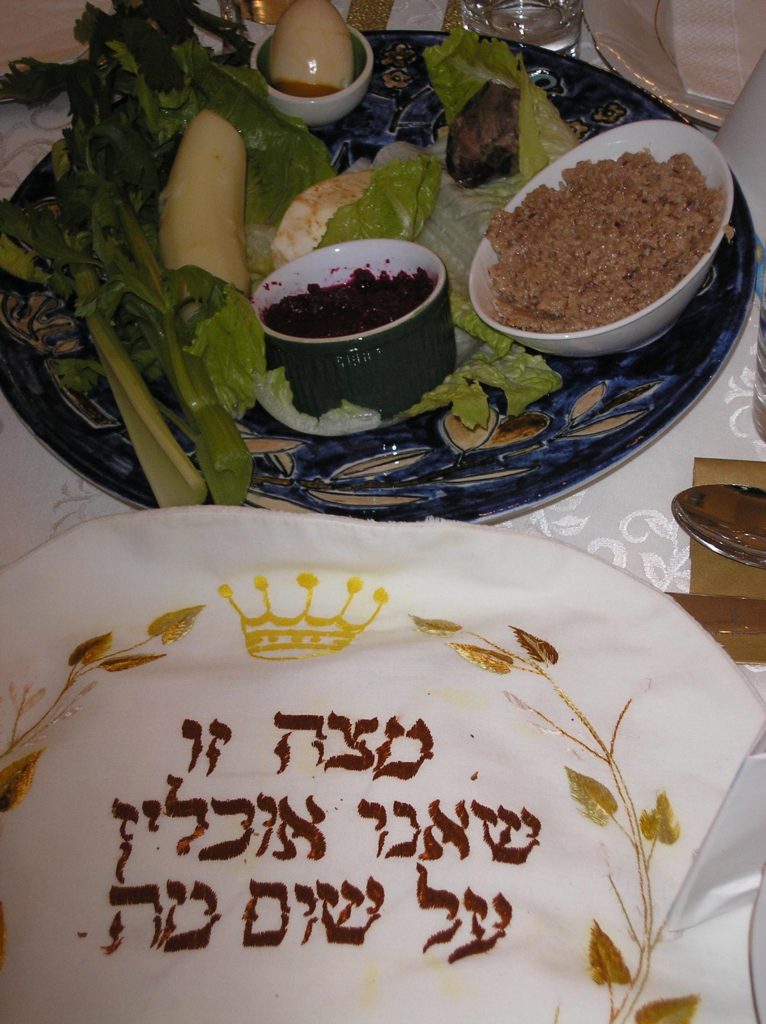
So why do we go to the trouble, expense and time to celebrate a Passover Seder? First, it helps us to fulfill the commands YHVH gave to us to do at Passover, such as eating lamb, unleavened bread and bitter herbs; telling our children the story of the Passover; holding a “set apart convocation” and so on (Exod 12:14–20, 43–49; Lev 23:4–5; Num 9:2–3; 28:16; Deut 16:1–3). But again we ask, what is the significance and relevance to us of this celebration? 

Passover is but the first piece of a panoramic puzzle or the first thread in a rich tapestry of YHVH’s plan of redemption of mankind. Though the children of Israel kept the first Passover 3500 years ago in the land of Egypt, this ancient celebration is not only a memorial of what occurred then, but is of utmost significance to the spiritual life of the Believer today. It has future or prophetic implications, as well. Passover is the first step of a spiritual journey that, if one continues in it faithfully to the end, will lead one into the very presence of YHVH Elohim, our Heavenly Father, himself. What a journey! Let’s look at it.

Continue reading →