Exploring the Tabernacle of Moses Continued

Exodus 27:1–8, An altar. As we continue our tour of the Tabernacle of Moses, the Torah takes us next to the bronze altar of sacrifice just inside the tabernacle’s door. Everything occurring in the tabernacle revolved around this altar—EVERYTHING! This fact is highly significant, since this altar points to the “altar” of the cross on which Yeshua the Messiah died for our sins. This is one truth that the mainstream church has gotten wonderfully right: the cross and what happened there is the central point of the gospel message. One cannot read the writings of the apostles and fail to see this unless one is sadly spiritually naive and spiritually blind! 

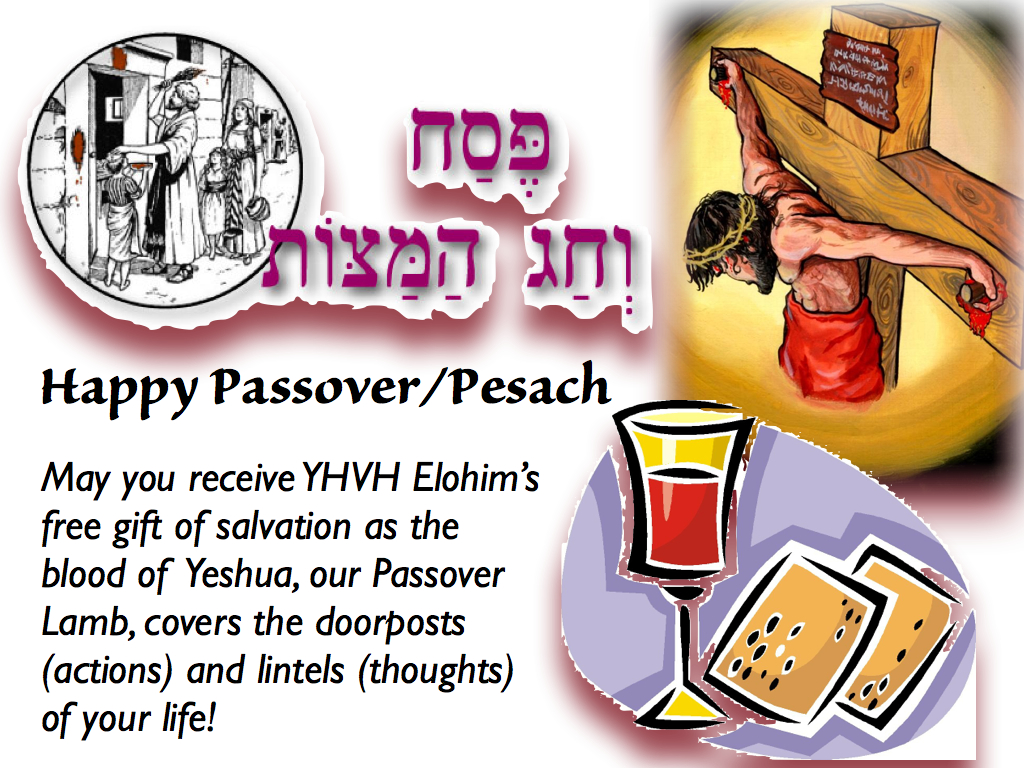
Just inside the door of the tabernacle was the altar of sacrifice. It was made of acacia wood overlaid with bronze, which is a prophetic picture of Yeshua the Messiah bearing the judgment for men’s sins on the cross. The blood of the sacrifice was poured out on the ground at the base of the altar symbolically picturing Yeshua shedding his blood at the cross. Two lambs were offered at the altar morning and evening (Exod 29:38–42). This pictures our need to come humbly before our Father in heaven morning and evening in prayerful devotion as living sacrifices to confess our sins, to praise and thank him for saving us from the penalty of our sins, which is death (Ps 51:16–17; Heb 13:15; 1 John 1:7–9; Rom 6:23).

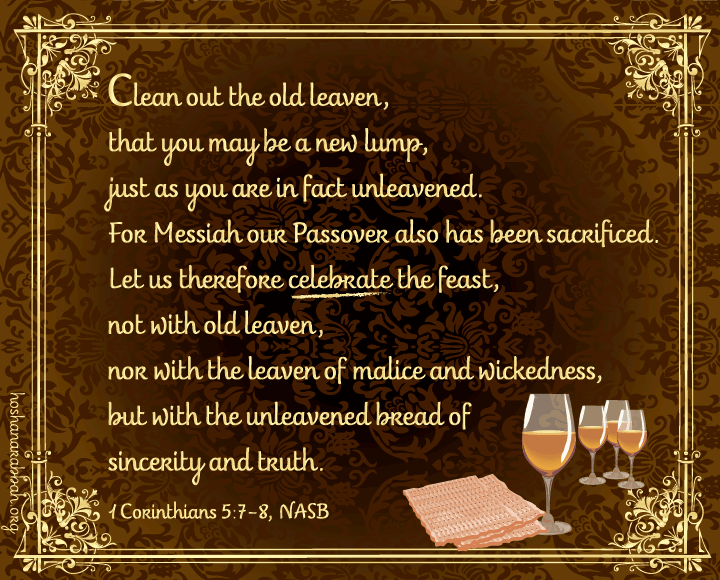
The Altar of Sacrifice in More Details. Upon understanding that the Person and work of Yeshua is the way into spiritual life, light and truth, one must also recognize that one’s sin liability keeps one from a having personal relationship with one’s Creator. The broken fellowship with our Father in heaven due to our uncleanness because of our sin is the reason for this. For one to have a relationship with a sinless, perfect, totally set-apart or holy Elohim,the sin problem has to be dealt with. Sin must be atoned for along with the resulting guilt, shame and penalty (i.e. death) that sin brings. In the Tabernacle of Moses, the liability and effect of sin is dealt with at the altar of the red heifer outside the gate of the tabernacle, which represents the work of Yeshua at the cross (Heb 13:10–13). There one was purified and made ready to come into the actual tabernacle. Upon doing so, the first thing one encountered when entering the tabernacle was the altar of sacrifice where both kosher animals and unleavened bread (made of the finest flour and the purest olive oil) were offered, and a wine libation was poured out twice daily (morning and afternoon, Num 28:1–8). These all picture the body of Yeshua being broken and slain for sinful man and our need to “eat” his body and “drink” his blood in a spiritual sense to which the communion elements of the Lord’s supper taken on the Passover during the seder meal symbolically point (John 6:35–58). 

The fire on the altar was to be kept burning at all times; it was never to go out (Lev 6:13). Additionally, before ministering at the altar, a priest was to always wash his hands and feet at the bronze laver (Exod 30:17–21), and to put on the priestly robes (Lev 6:10). These activities are prophetic shadows that point to the ministry of Yeshua before the throne of the Father in heaven. There, as our heavenly high priest, he, in an ultimate state of purity and perfection is ever making intercession for his saints and reconciling us to the Father (Eph 2:18; 1 Tim 2:5; Heb 7:25–26; 8:1–2, 5–6; 9:11–22; 10:19–22; 1 John 2:1).

At the twice daily offering (the morning shacharit and the afternoon minchah), a yearling lamb was sacrificed on the north side of the altar, or its left side as viewed from the holy of holies, which represents the throne of Elohim. (Furthermore, north is significant since Scripture seems to indicate that the third heaven where Elohim dwells is in the northern region of the sky [Isa 14:13].) The lamb’s blood was then sprinkled round about the altar as an atonement for sin, while a wine libation was poured out onto the altar, and unleavened bread was cooked and offered at the same time on the altar (Num 28:1–8; Lev 1:11). The fact that the lamb was killed on the north or left side of the altar is prophetically significant, since it points to Yeshua’s first coming as the Suffering Servant Messiah, the Lamb of Elohim. The left side is significant, since the left hand (usually the weaker hand), in Jewish thought, represents grace and mercy, while the right hand (usually the stronger hand) represents strength, power and judgment. At his first coming, Yeshua was like a lamb led to the slaughter (Isa 52:13–53:12, especially note 53:7), as he spilled his blood as an atonement for men’s sins (Isa 53:5–6,10). Upon his death and glorious resurrection, he returned to heaven where he took his rightful place as the right arm of YHVH Elohim (Acts 7:55–56; Rom 8:34). At Yeshua’s second coming, he will come, this time not as a lamb led to the slaughter, but in power and glory as a regnal warrior on a white stallion to judge the wicked and to reward the righteous. After that, he will assume his rightful position as King of kings and Lord of lords over the earth during the Millennium as revealed in the Book of Revelation.

Continue reading
 

Salvation—What Is It and Do You Have It? (explained simply as YOU have never heard it before)

YOU need to read this article to understand what the Bible really says about salvation in it full Hebraic context. This will insure that YOU are truly saved and not just an unsaved false convert or a spiritual tare that will end up being cast into the lake of fire on Judgment Day.

The following information will also insure that you do not make false converts as you share the gospel messages with others.

This information is important to know because many Christian churches DO NOT preach the full Truth about salvation, but teach the unbiblical traditions of men, thus making millions if not billions of false converts who think they are saved but who are not saved according to biblical standards.


What is Salvation?

The dictionary defines the word salvation as “the deliverance from the power and effects of sin.” In a generic sense, salvation is “the preservation from harm, ruin or loss.” Relating the first definition, which is biblical in nature, to the second definition, which is generic in nature, we see that salvation is the deliverance or preservation from the power of sin, which causes harm, ruin or loss. Salvation and redemption are synonymous terms in biblical Hebraic thought. We will discuss the idea of redemption below. In the mean time, let us explore the ramifications and implications of salvation as it relates to the deliverance from the power of sin in a person’s life and how this relates to you.

So what is sin that it causes harm, ruin or loss, and what is being harmed or being lost such that each person needs deliverance? Very simply, Scripture (the Bible) defines sin as the violation of YHVH Elohim’s (the LORD God’s) commandments or his Torah-laws (1 John 3:4). What is YHVH Elohim’s Torah-law? Specifically it is the instructions, precepts or teaching of YHVH as found in the first five books of the Bible, which can then be expanded to include the entire Bible or Word of YHVH from Genesis to Revelation. The Word of Elohim commands all humans to live by every word that proceeds from the mouth of the Creator as found in Scripture (Deut 8:3; Matt 4:4). Man is to hear and do the Words of YHVH (Deut 6:4), place YHVH’s words in his heart (Deut 6:6), teach them to his children (Deut 6:7), and to make them the basis for all that he does and thinks (Deut 6:8). The words or laws of YHVH Elohim can be summed up as loving YHVH and loving one’s neighbor (Deut 6:5; Lev 19:18; Mark 12:30; John 14:15). Love is the fulfilling of YHVH’s commandments or laws (Rom 12:8–10). The cornerstone of all of YHVH’s laws is the famous ten commandments as found in Exodus 20. They are:

  • I am YHVH your Elohim.
  • You shall have no other gods before me and you shall not worship idols.
  • You shall not take my name in vain.
  • Remember the Sabbath day to keep it set-apart or holy. 
  • Honor you father and mother.
  • You shall not murder.
  • You shall not commit adultery
  • You shall not steal.
  • You shall not lie.
  • You shall not covet your that which belongs to your neighbor.

The first five statements constitute loving YHVH Elohim, while the last five constitute loving one’s fellow man. These ten statements are but the beginning of YHVH’s laws as outlined in Scripture, which if man break, man is guilty of sin (1 John 3:4). There are 613 such laws in the Tanakh (Old Testament) and more than 1050 in the Testimony of Yeshua (New Testament). This may seem like a lot of laws for man to have to follow, but in reality, it is a small number of laws compared to the hundreds of law books that constitute the laws of most nations on earth. Whole law libraries are established to contain the laws of men!

Law and order or the rule of law form the basis of all areas of authority in the cosmos. There are five such realms of authority as outlined in Paul’s Epistle to the Ephesians. They are: divine, family or parental, church, civil or governmental and that of employers. As civil governments have established laws to maintain order among the inhabitants of a society, and as all societies impose penalties upon its citizens for breaking those laws, the same is true of YHVH’s divine laws. The violation of all laws brings a consequence or penalty of one sort or another. Some penalties are serious than others. The punishment should fit the crime. If one violates the law of gravity, for example, and jumps off a cliff, the result is death. If one drinks poison or has an unhealthy lifestyle, the result will be sickness or a premature death. If one violates a speeding law, the penalty may be a fine. If an employee violates a company policy, he may get fired from his job. If child disobeys a parent, the child will be disciplined. If one mistreats one’s fellow man, there are negative relational consequences. If one murders someone, imprisonment or the death penalty will occur. Similarly, Scripture teaches that if one violates divine law (i.e. sin) the penalty is death (Ezek 18:4; Rom 6:23). 

The Bible also teaches that all humans have sinned (Rom 3:23). YHVH has imposed a death sentence upon everyone because sin results in harm, ruin or loss in one way or another. As a result, all humans need deliverance, redemption or salvation from the consequences of their sin. The Bible teaches that salvation is deliverance from that death, and that those who are saved will be granted eternal life or immortality because the death penalty has been lifted from them. Therefore, those who are saved from death, the result of sin, will be given immortality (Rom 6:23).

How can each person receive salvation from the wages or penalty of their own sin, which is death? Let’s now explore this concept.

Steps to Salvation

The Bible states that man has a sin problem (read Romans chapters 1 through 3), and that each person must take certain spiritual steps to rectify this problem. We  will now explore these steps.

One can have their past sins forgiven by placing their faith in the death, burial and resurrection of Yeshua the Messiah (Jesus Christ), the son of Elohim who took man’s sins upon himself and died in each person’s place to satisfy the divine and legal judgment against each person because of sin (i.e. the violation of the Creator’s laws), so that man could pass from death to life (John 3:16). What is sin? We sin when we break YHVH’s commandments as revealed in the Bible, the Word of Elohim (1 John 3:4; Rom 3:20). When a person turns away from committing sin and places their faith in Yeshua, Scripture promises that the person will experience forgiveness resulting in a glorious spiritual relationship with our Father in heaven leading to eternal or everlasting life (Rom 3:21–5; 6:23). 

Continue reading
 

John Chapter 1–3: Natan’s Commentary Notes

John 1

John 1:1, The Word was Elohim.Is Yeshua or the Father the God (Elohim) of the Old Testament (Tanakh)? For many believers in Yeshua, there is confusion as to who it was in the Godhead who interacted with the Israelites in the Tankah. Was it the Father or the Son? In the minds of the apostolic writers, there was no confusion about this. Yeshua, in his preincarnate state, was the One that YHVH Elohim the Father used to both create (John 1:3; Col 1:16; Heb 11:3), and then to interact with mankind. He was the Word of YHVH Elohim, the Father, who become flesh and dwelt among men (verse 14). This truth is easily confirmed in several passages in the Testimony of Yeshua (New Testament).

First, Yeshua himself claims to be YHVH or the I Am of the burning bush (see John 8:58 cp. Exod 3:14). The Jews viewed Yeshua’s claim to be deity as blasphemous, which is why they picked up stones to kill him (John 8:59). Next, Yeshua in declaring to the Jewish religious leaders that “I send you prophets, wise men and scribes: some you will kill…” (Matt 23:34), he is claiming the rights and prerogatives of YHVH — a right and role that solely belonged to YHVH in the Tanakh.

Yeshua also declared that no man has seen the face of Elohim the Father (John 5:37). Yet in the Torah, we have several instances of men seeing YHVH (e.g. Gen 17:1; 18:1; 26:2; 48:3). If we are to take what these scriptures say literally, then it could not have been YHVH the Father these individuals saw, but rather YHVH the Son who later become Yeshua. Not only that, Yeshua even goes so far as to say that the Israelites of old not only never saw the Father’s face, but neither at anytime even saw his form nor heard his voice (John 5:37). Therefore, it becomes evident that while on Mount Sinai, Moses didn’t see the backside of the Father, but rather that of the pre-incarnate Yeshua (Exod 33:18–23).

What’s more, in John 14:15, Yeshua, speaking to his disciples, declares, “If you love me, keep my commandments.” When Yeshua says commandments here, we know from Luke 18:20 that he has the Torah in mind. In this statement, Yeshua is actually quoting himself when he made the same statement to the children of Israel while he was delivering to them the Oracles or Torah of Elohim at Mount Sinai (Exod 20:6; Deut 11:1).

Stephen, in agreement with John, clearly demonstrates that Yeshua was the prophesied “prophet like Moses” who was to come (see Deut 18:15), and who was the Angel, or more correctly, the Divine Messenger from Elohim, who gave the Torah to the Israelites (Acts 7:37–38). Paul goes on to say in enigmatic terms that Yeshua was the spiritual rock from which the Israelites drank and that followed them (1 Cor 10:4). And finally, Paul equates Yeshua, “the Word of Elohim made flesh and that dwelt among us” (John 1:14) with the Written Torah which YHVH gave through Moses to the Israelites. This he does when he quotes Deuteronomy 30:11–14 and substitutes the word Torah for Yeshua (see Rom 10:5–13). In Paul’s mind, Yeshua was not only synonymous with the Torah, but he was very much present with the children of Israel.

The Word was Elohim. Numerous scriptures in the Testimony of Yeshua clearly show that the apostolic writers believed in the deity of Yeshua (see Matt 1:23; Luke 24:52; John 5:18; 8:58–59; 9:38; 10:33; 19:7; 20:28; Phil 2:6; Col 2:9; 1 Tim 3:16; Tit 2:13; Rev 21:3, 6, 23; 22:1–5). Amazingly, even James (Heb. Ya’acov), the writer of the epistle that bears his name and believed to be the biological half brother of Yeshua equates Yeshua with YHVH of the Tanakh (Jas 5:7, 8, 10, 11 cp. 1:1). This is evident in his usage of the word “Lord” where he equates the Lord Yeshua (verses 8 and 10) with the LORD (or YHVH) of the Tanakh (verses 10 and 11).

The Word was Elohim.The Greek grammar of this statement is very specific. It says, “and the Word was God/Elohim.” It doesn’t say, “And the Word was the God,” which is Sabellianism or modalism, which is the belief that the Heavenly Father, Resurrected Son and Holy Spirit are different modes or aspects of one monadic Elohim. It also doesn’t say, “and the Word was a god,” which is Arianism, which is the belief that Yeshua the Son of God did not always exist, but was created by and is therefore distinct from and inferior to Elohim the Father (Basics of Biblical Greek, pp. 27–28, by William Mounce).

All things were made through him.Yeshua is the Creator. (See also Col 1:16; Heb 11:3.)

What Is the Word/word of Elohim from a Hebraic Perspective?

Continue reading
 

A Tabernacle Tour—The Gospel Message Acted Out

Exodus 25

Exodus 25:10–22, Ark. The ark of the covenant was a small box of acacia wood overlaid in gold, which contained the golden pot of manna, Aaron’s rod that budded and the two tablets of stone containing the ten statements of Elohim—commonly called the Ten Commandments. Against the ark was leaned a scroll of the complete Torah (Deut 31:26).

Covering the ark was a golden cap called the mercy seat or kapporet and is related to the word kippur as in Yom Kippur, the Day of Atonement. Both share a common Hebrew root, which is the word kapar, which according to The Theological Wordbook of the Old Testament (TWOT) means “to make an atonement, make reconciliation, purge”) and the mercy seat—the golden “lid” covering the ark of the covenant located in the D’veer (i.e. the inner shrine of the Tabernacle of Moses)­—which in Hebrew is the word kapporet was “the place of atonement or the place where atonement was made.” The TWOT defines what happened at the kapporet as follows:

“It was from the … mercy seat that [YHVH] promised to meet with the men [of Israel] (Num 7:89). The word, however, is not related to mercy and of course was not a seat. The word is derived from the root ‘to atone.’ The Greek equivalent in the LXX is usually hilasterion, “place or object of propitiation,” a word which is applied to [Messiah] in Rom 3:25. The translation ‘mercy seat’ does not sufficiently express the fact that the lid of the ark was the place where the blood was sprinkled on the day of atonement. ‘Place of atonement’ would perhaps be more expressive.”

The mercy seat covering the ark that contained the Torah is a vivid symbolic picture of YHVH’s mercy triumphing over his judgment (Jas 2:13). We all deserve death for violating his commandments, for the wages of sin is death (Rom 6:23) and sin is the violation of YHVH’s Torah commands (1 John 3:4). However. Yet when we repent of our sins and place our faith in Yeshua’s atoning death on the cross as payment for those sins, YHVH forgives us and grants us his merciful grace.

Everything in, on and around the ark pointed to Yeshua. Inside the ark was the golden pot of manna, which points to Yeshua who the bread of life—the Word of Elohim made flesh. Aaron’s rod that budded speaks of Yeshua’s role as the ultimate high priest due to his atoning and life-giving work at the cross. The two stone tablets and the Torah scroll speak of the Yeshua who was the Word of Elohim from the foundation of the world (John 1:1,14), and whose words or instructions in righteousness the saints are instructed to follow (John 14:15; 1 John 2:3–6; Rev 12:17; 14:12).

Overshadowing the mercy seat were two golden cherubim with outstretched wings. This is a picture of YHVH’s throne in heaven, which is surrounded by cherubim and other living creatures that sing his praises and minister to him (Rev 4).

The Ark of the Covenant in More Detail

The ark of the covenant is the gold-covered acacia wood box with the pure gold crown or mercy seat upon which are the two gold cherubim that represented the very throne and glorious Presence of YHVH himself. Inside the box were the tables of the Torah, Aaron’s rod that budded (Num 16) and the golden pot of manna (Exod 16:32–34). Against the ark was leaned a scroll of the complete Torah (Deut 31:26).

Once a year, on the Day of Atonement, the high priest entered this part of the tabernacle to make atonement for his sins and those of the nation of Israel (Exod 16:14–19). The most set-apart place was also called the oracle (D’veer), for it was here that YHVH often met with and talked to Moses giving him instructions on how to govern the Israelites (Exod 25:21–22).

The gold-covered wooden box pictures resurrected and glorified humanity raised to that place by the work of Yeshua and the mercy of YHVH. Two realities identify the bride of Yeshua: Spirit and truth (John 4:23); namely, the truth of Torah of the Written Torah (the box contained the two stone tablets) and that of the Living Torah who is the Manna or Bread of Life. In addition, Aaron’s rod that budded (also in the box) pictures the authority and fruitfulness of the priesthood of believers (2 Pet 2:5-9) through the work of Yeshua on the cross (see also Rev 11:17; 12:14). Additionally, the Torah scroll leaning up against the ark illustrates to us that without total dependence on Yeshua (his work at the cross and partaking of the spiritual manna of Yeshua’s broken body we cannot properly keep the Torah. Only with Yeshua living in the heart of a regenerated believer by the power of his Spirit can one keep the Torah. Without the Torah leaning on Yeshua, the Torah becomes the dead letter of the law (2 Cor 3:6)!

As the high priest sprinkled the mercy seat with blood seven times on Yom Kippur so Yeshua bled seven times: at Gethsemane, from the scourging, the crown of thorns, nail in the left hand, nail in the right hand, nail in the feet and the spear in his side.

Exodus 25:21, The testimony. This is the Torah in codified form or what became known as the law of Moses. Prior to this, the Torah was YHVH’s oral instructions to men passed on down generationally from teacher to student, from father to son. Moses, under instructions from Elohim, wrote this oral Torah down as it was transcribed to him on Mount Sinai (Exod 24:12) and to which additions were made on an as-need basis as YHVH subsequently spoke to Moses from his earthly throne of the tabernacle (Exod 25:22).

Continue reading
 

May the Force Be With YOU in 33 Ways!

Yeshua told his disciples in Luke 24:49—

Behold, I send the Promise of My Father upon you; but tarry in the city of Jerusalem until you are endued with power from on high.”

Luke 24:49, Endued with power from on high. 

What is the most powerful Force in the Universe? It is Holy Spirit of YHVH Elohim—the Almighty Creator God of the Bible! 

By the force of Spirit and Word of Elohim, the universe and earth were created. With his hands, Elohim shaped man out of earth and by the Force of the breath of his Spirit, he breathed life into that lump of earth and man became a living being. That same spiritual Force impregnated the womb of the virgin Mary and Yeshua the Messiah, the Son of Elohim, was clothed in humanity and became the Elohim-Man and Savior and Redeemer of humanity. 

Yeshua the Messiah promised to send that same Force of the Spirit of Elohim to live inside of all those who seek him and put their trusting faith in him and choose to follow and obey him as he leads them on the path of righteous living leading to a life of immortality in Elohim’s kingdom of heaven on earth. This same Force has the power to resurrect the dead from their graves. So how can this Force help you? 

Here’s are 33 ways the Force, which is the of the Spirit of Elohim, can empower you:

  • The Force of Elohim is a free gift to those who ask for it (Luke 11:13).
  • The Force of Elohim will lead you where to go and what to do (Matt 4:1; Mark 13:11).
  • The Force of Elohim will speak through you, that is, put words in your mouth and tell you what to say when you’re in a difficult, potentially life-threatening, situation (Matt 10:20; Luke 12:12).
  • The Force of Elohim will give you power over the evil forces of Satan the devil (Matt 12:28). 
  • The Force of Elohim will reveal to you things that are to come in the future (Luke 2:25–27; John 16:13).
  • The Force of Elohim will give you supernatural and miraculous powers (Luke 24:49; Acts 1:8; Rom 15:19; Heb 2:4).
  • The Force of Elohim will bring spiritual and immortal life (John 6:63; Gal 6:8; 1 Pet 3:18).
  • The Force of Elohim will fill you up and make a river of life to flow from you (John 7:38–39).
  • The Force of Elohim will live inside of you (John 14:17; 1 Cor 3:16).
  • The Force of Elohim will teach you about all divine things and help you to remember things (John 14:26).
  • The Force of Elohim will point you to Yeshua the Messiah, the Savior of the world (John 15:26).
  • The Force of Elohim will convict you of sin and help bring you to righteousness (John 16:8).
  • The Force of Elohim will bring judgment against the world because of sin (John 16:8).
  • The Force of Elohim will bring judgment against Satan the devil who is the evil ruler of this world (John 16:11).
  • The Force of Elohim will guide you into all truth (John 16:13).
  • The Force of Elohim will reveal spiritual mysteries to you (John 16:14).
  • The Force of Elohim will give you boldness in difficult situations (Acts 4:31).
  • The Force of Elohim will bring comfort to your life (Acts 9:31).
  • The Force of Elohim will impart many supernatural gifts and abilities to you (1 Cor 12:3–11).
  • The Force of Elohim will fill you with joy (Acts 13:52; Rom 14:17).
  • The Force of Elohim will raise the righteous dead from their graves (Rom 8:11; 1 Pet 3:18).
  • The Force of Elohim in you confirms that you are a child of Elohim (Rom 8:14–17).
  • The Force of Elohim helps you in your times of weakness (Rom 8:26).
  • The Force of Elohim will give you hope (Rom 15:13).
  • The Force of Elohim will produce wonderful fruits of love in your life (Gal 5:22–25).
  • The Force of Elohim will give you wisdom and revelation in the knowledge of Elohim (Eph 2:12–14).
  • The Force of Elohim will give you a great inner strength (Eph 3:16).
  • The Force of Elohim will protect you from your enemies (Isa 59:19).
  • The Force of Elohim will anoint you to preach the gospel (Isa 61:1; Luke 4:16–18).
  • The Force of Elohim will help you to walk in Elohim’s paths of righteousness (Ezek 36:27).
  • The Force of Elohim will cause you to have dreams, visions and to prophesy (Joel 2:28–29).
  • The Force of Elohim will help you to do mighty things for Elohim (Zech 4:6).
  • The Force of Elohim will write the Torah-laws of Elohim on your heart (Jer 31:33; Heb 8:10; 10:15–16).
 

What does the Tabernacle of Moses have to do with YOU?

Exodus 25

Exodus 25:1–7, An offering is collected for the tabernacle. All Israel contributed to the building of the tabernacle (Exod 25:1–7), yet YHVH chose only two Israelite artisans, Bezalel and Aholiab (Exod 31:1–6), filled them with the Spirit of Elohim “in wisdom, understanding, knowledge an in all manner of workmanship …” to oversee the building of the tabernacle. This teaches us that the work of YHVH is a joint effort of the every member of the body of YHVH-Yeshua, but that YHVH will endow certain individuals with unique gifts of the Spirit in order to accomplish his specific plans and purposes (Eph 2:22; 4:11; Rom 12:4–8; 1 Cor 12 and 14).

Exodus 25:2, That they may bring me an offering.Interestingly, this is the only place in the Scriptures where an offering was taken of YHVH’s people to support the work of the ministry. In one other place in the Bible, a collection was taken, but what was its purpose and who was it for? (See 1 Cor 16:1–3 and Acts 11:27–30.) This is not to say that the saints should not give of their substance to help support their spiritual leaders. What did Paul teach about the saints supporting the work of the ministry—especially those who are spiritually feed them? (Read 1 Cor 9:1–18; 1 Tim 5:17–18; Gal 6:6–9.) The main point we wish to make here is that the taking of offerings or the passing of the plate isn’t a biblical norm. People were expected to give, but of their own freewill and without pressure or coercion from their spiritual leaders. What did Yeshua say about giving? (Note Acts 20:35; Luke 6:38.) What did Paul say to those who do not share their substance with (or sow sparingly to) those who teach them? (Look at 2 Cor 9:6.) What should be our heart attitude when giving to the ministry of Elohim? (See 2 Cor 9:7.) What are the blessings from Elohim that one can expect from giving cheerfully? (Read 2 Cor 9:8–11.)

Exodus 25:8–9, A sanctuary…tabernacle

The Tabernacle of Moses

If you were the Creator of the universe, what means would you use to communicate with those that you had created through love in your likeness and image? In a remote way, it’s like a human standing over an anthill trying to communicate with the ants. How do you do it? Similarly, how does an all powerful, Spirit Being, loving Father in heaven relate to his mortal children who are but mere specks of dust without vaporizing them with his raw power? The difficulty is compounded when fearful humans don’t want to hear the voice of Elohim, which is what happened when YHVH Elohim’s voice thundered from Mount Sinai. The children of Israel begged him not to talk to them, lest they die. They asked the Almighty One to speak to them instead through Moses (Exod 20:19). 

Continue reading
 

Responding to the “Rabbi’s” Daughter Again…

I found another terse comment from the so-called “Rabbi’s” daughter. Here is what she said followed by my comments:

The messiah is not Hashem the Father


Here is my comment:

You are correct. Yeshua is NOT HaShem because HaShem is a non-existent entity and a silly made up name by the rabbinic Jews as a result of a false, pagan doctrine they plagiarized from the Babylonians called the ineffable name doctrine. Scripture reveals nearly 7,000 times in the Tanakh that the name of the Elohim the Father is YHVH or Yehovah. Scripture also reveals that the name of Elohim the Son or Yeshua the Messiah is also YHVH. This is Bible 101.

Moreover, Scripture reveals that the Father is Elohim and that Yeshua is also Elohim. Elohim is a compound unity (the Hebrew word for this, in case you didn’t learn this in schul is echad) comprised of the Father, the Son and Holy Spirit.

The sephirotic “tree of life” in rabinic Jewish mysticism.

Doesn’t the sephirotic tree as your own “rabbis” teach define Elohim not just as being three entities but as being, what, ten entities of which the Father, Son and Ruach are only three? Do you deign to toy with me thinking that I don’t know these things that you rabbinic Jewish folks keep so well hidden from the Christians? The Trinity doctrine has nothing on you guys! You teach that the Godhead is ten!!!

Yes, Yeshua is not the Father, yet he and the Father are one. He said if you’ve seen him, you’ve seen the Father. Make of this what you will. Neither your brain nor mine is capable of comprehending the exact nature of the “Godhead,” so let us leave it there before we get into water that’s way over both of our collective heads.

Besides why to you care who Yeshua is? You don’t believe that he’s the Messiah anyway, so take a hike and stop trolling this blog. The gate here is now shut to you unless you show a genuine change of heart. Be blessed…