Dr. Peter McCullough: ‘whistleblowers’ inside CDC claim injections have already killed 50,000 Americans

From: https://hoshanarabbah.org/blog/wp-admin/post.php?post=19180&action=edit

ALGORA BLOG11 COMMENTS

‘Good doctors are doing unthinkable things’ …They ‘appear to be under a spell’

Dr. Peter McCullough

The most highly cited physician on the early treatment of COVID-19 has come out with an explosive new video that blows the lid off the medical establishment’s complicity in the unnecessary deaths of tens of thousands of Americans.

Dr. Peter McCullough said these deaths have been facilitated by a false narrative bent on pushing an all-new, unproven vaccine for a disease that was highly treatable.

He said COVID was a bioweapon and the vaccines represent “phase two” of that bioweapon.

“As this, in a sense, bioterrorism phase one was rolled out, it was really all about keeping the population in fear and in isolation and preparing them to accept the vaccine, which appears to be phase two of a bioterrorism operation,” McCullough said in a June 11 webinar with German attorney Reiner Fuellmich and several other doctors.

He noted:

“Both the respiratory virus and the vaccine delivered to the human body the spike protein, the gain of function target of this bioterrorism research.”

Most of McCullough’s comments come in the first 10 minutes of the below video.

[To watch the video, go here: https://www.youtube.com/results?search_query=Dr.+Peter+McCullough%3A+‘whistleblowers’]

He did not hold back in his criticism of his colleagues in the medical community.

“And doctors, good doctors, are doing unthinkable things, like injecting biologically active messenger RNA that produces this pathological spike protein into pregnant women. I think when the doctors wake up from their trance they’re going to be shocked to think what they’ve done to people.”

McCullough is professor of medicine and vice chief of internal medicine at Baylor University and also teaches at Texas A&M University. He is an epidemiologist, cardiologist and internist and has testified before the Texas State Senate related to COVID-19 treatments. He holds the distinction of being the most widely cited physician in the treatment of COVID-19 with more than 600 citations in the National Library of Medicine.

In the video, recorded by Oval Media, McCullough said:

“The first wave of the bioterrorism is a respiratory virus that spread across the world, and affected relatively few people—about one percent of many populations—but generated great fear.”

He said the virus targeted primarily people over 50 with multiple medical conditions. It poses almost no risk to children.

He said 85 percent of the more than 600,000 U.S. deaths could have been prevented with a multi-drug treatment given in the early to mid-point of the disease.

Instead, people were told to stay home and not return to the hospital unless their symptoms got worse, such as severe breathing problems. By then it was too late for many. They were placed on ventilators and died.

The vast majority of doctors jumped in lockstep to follow these erroneous “guidelines” handed down by the World Health Organization and the U.S. Centers for Disease Control. Those guidelines neglected to place any focus on the treatment of sick patients and, from the beginning, as early as April 2020, started emphasizing the need for a vaccine as the only real hope of beating back the virus.

The federal Vaccine Adverse Event Reporting System [VAERS] logged 5,993 reports of deaths of people injected with the COVID vaccine between Dec. 14, 2020, and June 11, 2021. That’s more than all the deaths reported to VAERS from all other vaccines combined over the last 22 years.

But these numbers, as shocking as they are, don’t scratch the surface of the actual number of dead Americans, said McCullough.

“We have now a whistleblower inside the CMS, and we have two whistleblowers in the CDC. We think we have 50,000 dead Americans. Fifty thousand deaths. So we actually have more deaths due to the vaccine per day than certainly the viral illness by far. It’s basically propagandized bioterrorism by injection.”

McCullough added that “every single thing that was done in public health in response to the pandemic made it worse.”

He said the suppression of early COVID treatments, such as hydroxychloroquine and especially Ivermectin, “was tightly linked to the development of a vaccine.”

Without the suppression of the already-available treatments, the government would not have been able to legally grant Emergency Use Authorization to the three vaccines rushed to market by Moderna, Pfizer and Johnson and Johnson.

In the case of Moderna, the U.S. government is co-patent holder through the National Institutes of Health, a clear conflict of interest.

“I published basically the only two papers that teach doctors how to treat COVID-19 at home to prevent hospitalization and death…If treated early, it results in an 85 percent reduction in hospitalizations and death,” McCullough said.

So not only were the vaccines rolled out unnecessarily by suppressing already available, effective treatments, but the FDA and CDC are now covering up tragic numbers of deaths caused by their experimental mRNA injections.

McCullough said he has organized groups around the world that emphasize early treatment.

“Governments have actually tried to block early treatment of COVID patients, so we created a home patient guide,” he said.

“We broke through to the people, and the people who got sick with COVID called in to get medications from mail-order distribution pharmacies. So without the government even knowing what went on, we crushed the epidemic here in the United States towards the end of December and January. We basically took care of the pandemic with about 500 doctors and telemedicine services. And to this day we treat about 25 percent of the US COVID-19 population that actually are at high risk, over age 50 with medical problems or present with severe symptoms. And we basically handled the pandemic, and at the same time we’ve tried to keep ourselves above the political fray.”

McCullough said his focus has recently turned to the unnecessary and dangerous injections.

“We are working to change the public view of the vaccine. The public initially accepted the vaccine and we had to kind of slowly turn the ship. Now, in the U.S. the rates of vaccination have been dropping since April 8. Most of the vaccination centers are empty.”

“We have a lot going on in the United States. We are engaging more and more attorneys.”


Nuggets from Deuteronomy 1 and 2

Deuteronomy 1

Deuteronomy 1:1, Words.The Hebrew word is devarim, which is the plural of the generic Hebrew word for word, which is devar/debar,and is the Hebrew name for the last book of the Torah. Devar is related to several other well-known Hebrew words such as midbar/wilderness (Exod 7:16; Num 1:1; 14:33; Deut 1:1,31; 2:7; 8:2,16), b’midbar/in the wilderness (Num 1:1),and deveer/oracle, sanctuary, holy of holies (1 Kgs 6:16; 2 Chr 5:7,9; Ps 28:2). Look up these words in your Bible to see how they are used. How are they related to each other with respect to hearing or being led by the Word of Elohim?

Deuteronomy 1:1, Wilderness…plain…Red Sea…Paran…Tophel and Laban…Hazeroth…Dizahab. Seven names are mentioned here, which are code words for major sins that Israel committed against YHVH while wandering in the wilderness. The younger generation may have been too young to remember what happened at those places, but Moses was giving them a history lesson, so they wouldn’t repeat the mistakes of their forefathers as they were about to enter the Promised Land. (See below for a discussion of the sin that each of these names represents.) If one were to quickly read over these words and fail to realize that they are code words or Hebraisms representing historical events, one would pass over some rich Torah treasure. For Americans, words like 911, Ground Zero, Katrina, Pearl Harbor, Christmas, D-Day, JFK and FDR conjure up all sorts of images and emotions. This was true of the Israelites when they heard the names in verse one.

Deuteronomy 1:2, Eleven days. Horeb (Mount Sinai) was only an 11 days’ journey to the edge of the Promised Land (Kadesh Barnea), yet because of Israel’s bad conduct (disobedience to YHVH’s commands, lack of trust and faith in YHVH’s Word evidenced by complaining, murmuring and even outright rebellion) they were made to wander in the wilderness for 40 years. What is holding you back from going forward in your spiritual walk? What sin, what fear, what wrong beliefs or false religious concepts are you refusing to let go that are hindering you? If you are serious about serving YHVH, it is time to repent and go onward and upward in Yeshua!

Deuteronomy 1:5, Moses began to declare this law (KJV). This is a poor translation of the Hebrew. A better translation would be: “Moses began to explain this law [Torah]…” (NKJV), or “Moses undertook to expound this law [Torah] … “ (NAS), or “Moses began explaining the Torah …” (ASET). To whom was Moses explaining the Torah? (Read verse 39 and cp. with Deut 6:7). Moses was the dutiful parent faithfully teaching Torah to the younger generation about to enter the Promised Land. How are you preparing the young people in your life to enter into the Promised Land of YHVH’s eternal kingdom?

Deuteronomy 1:11, Add to you a thousand times yourselves. If the children of Israel numbered between several million (there were approximately 600,000 men of fighting age numbered among the Israelites), then when was this prophetic promise of YHVH ever fulfilled in Israel’s history? Where are the several billion Israelites (1000 times two to three million) today? (See Gen 26:4; 32:12; Exod 32:13 cp. Hos 7:8; 8:8; Eph 2:11–19.)

Deuteronomy 1:12–13, Choose…men. Choosing leaders to help govern Israel and to maintain the peace was of first priority because the people were prone to strife and complaining. Without a dispute and conflict resolution plan in place, the nation of Israel would have been one of total anarchy, strife and confusion.

Deuteronomy 1:13 and 15, Provide for yourselves distinguished men, who are wise, understanding, and well known … so I took … of your tribes distinguished men, who were wise and well known. Compare the two lists. What character trait is not listed in the second list? Why? The word understanding (biyn, Strong’s H995/TWOT 239) means “discerning, perceptive, discreet, intelligent, observant and prudent.” Why did Moses have such a difficult time finding understanding men to be leaders in Israel? Are people any different today? Only two men out of hundreds of thousands had understanding: Caleb and Joshua.

Deuteronomy 1:26–28, Moving forward in the face of obstacles. Many times in our spiritual walk we are just at the point of spiritual breakthrough, but we receive an evil report about some spiritual giants that is blocking our forward movement and our resolve to advance melts. It seems sometimes that if we could just see what the future holds for us that it would be much easier for us to go forward! Yet Yeshua said, Blessed are those who haven’t seen, yet still believe in YHVH’s promises (John 20:29). Do you have what it takes to go on without being deterred by the world, the flesh and the devil? How can one go forward in faith if one cannot see where one is going? It gets down to personal and intimate relationship with your Heavenly Father, through Yeshua. He directs us through his Spirit. Can you hear his voice with your spirit when he tells you, “This is the way, walk you in it,” (Isa 30:21)?

Continue reading →
 

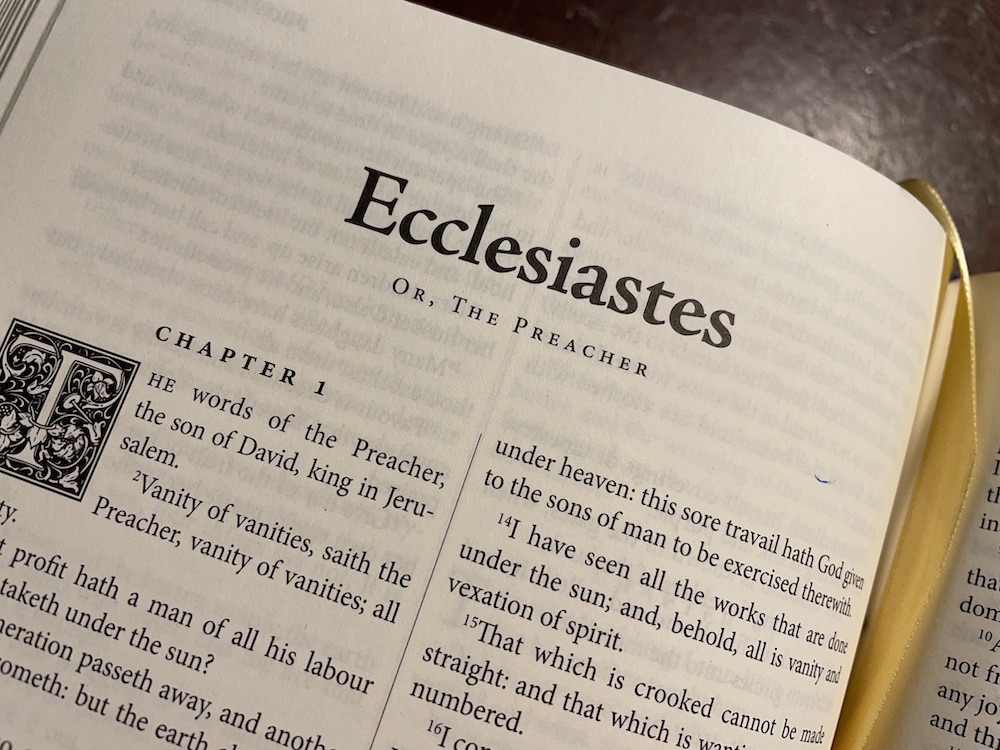
Ecclesiastes 1—Deep Insights on Life from the Wise Preacher

As I rapidly move through my sixth decade of life, I have watched many people come and go, rise and fall, live and die. I have travelled to more than 20 countries on four continents, 25 U.S. states, lived in Europe, started businesses and ministries, been married for decades, raised four children, pastored a church for years, and written and published many writings. I have traversed, climbed and skied the mountains, hung from dizzying heights on ropes, swam in rivers, lakes and oceans, climbed 15 to 20 thousand trees, encountered demons, stared death in the face too many times to remember, and even been sprayed by a skunk. I have been loved as well as hated by those I thought were my friends. Much water has passed under the bridge called life, and now it is time to ponder it all.

Each of us has a story to tell, and as we grow older, we feel the need to share it, but why bother? Who will listen to it anyway? Most people are too wrapped in their own lives to care. Nevertheless, this all causes us to keep searching for meaning and purpose for our existence. And this compels me to return again and again to the Rock of Ages—the Bible, the Word of Elohim and to the source of the Truth that is above and way beyond each of us, for understanding and wisdom in order that I may more fully comprehend the complexities, that is, the whys and wherefores of life.

This all brings me to the book of Ecclesiastes (in Hebrew Kohelet meaning “the Preacher”) to hear from a wise man who had done it all. Here are my recent reflections on the wisdom found in this often overlooked and forgotten book of the Bible. Please enjoy and maybe something said will resonate and bless the reader. —Natan

Ecclesiastes 1

The Preacher (Heb. Kohelet)

Ecclesiastes 1:2, Vanity of vanities. This phrase is repeated twice in this book: once here at the beginning and once at the end (12:8). The word vanity is a theme that runs through this book occurring 32 times and every chapter at least once except chapter 10. In the course of his varied life, the Preacher discovers that the soft and ugly underbelly and the raison d’etre of nearly every human endeavor that one can imagine is vanity and pride. Vanity is the Hebrew word hebel meaning “vapor, breath, wind” or figuratively, as the author of this book often uses it, “worthless, senseless, empty, futile or vacuous.” The root of the word hebel is the verb “to act emptily.” Thus, as this book reveals, the vast majority of human activities can be summed up as nothing more than being emptiness, meaningless and senseless. 

The words vanity (Heb. hebel) and pride (Heb. room), as used in Scripture are different heads of the same evil monster of meaningless emptiness masquerading through the magician’s clever sleight of hand with the aid of smoke and mirrors as human exaltation. The former, as already noted, connotes “emptiness or meaninglessness,” while the latter means “to be high, rise up, extol, lift up, promote and to be haughty.” 

Pride is one of the so-called seven deadly sins that YHVH hates and calls an abomination (Prov 6:16–17). Therefore, Scripture reveals that vanity and pride in all of their manifestations are black and detestable in the eyes of Elohim and is not to be found on the paint palette that composes the character portrait of the saint or his life’s activities. On the contrary, Yeshua declares in his famous beatitudes statement that “blessed are the poor [literally, crippled, helpless, down and out] in spirit, for theirs is the kingdom of heaven” (Matt 5:3). In fact, YHVH looks with great favor on those who have “a poor and contrite spirit” and who “tremble at my word” (Isa 66:2). Therefore, it should not be hard to see that vanity and pride are the antithetical character traits of those who are poor or helpless in spirit, and that Elohim disdains and hates the one and highly regards the other showering upon the latter priceless gifts including inclusion in his heavenly kingdom.

Ecclesiastes 1:4, One generation passes away…the earth abides forever. Man is a microscopic drop of water in a vast ocean of time, space and material existence.

Ecclesiastes 1:5–7, The sun rises…and …goes down. The physical creation consists of an endless series of cycles involving time and natural forces. It is akin to a monstrous clock with myriads of integrated gears and wheels of many sizes all clicking along in sync with each other, while man is trapped in the middle of it with no way to escape. He is like a hamster in a cage mindlessly burning enormous amounts of energy running on an exercise wheel yet going nowhere.

Ecclesiastes 1:8, Full of labor. Energy and labor keep this giant cosmic machine going round and round endlessly with man in the middle of it all. Despite the vastness, complexity, wonder of this giant machine called this physical existence, the human eyegate and eargate are never satisfied. Man perpetually yearns for something more, some new thrill, a new achievement, or a new “high” to satiate some deep, longing to be fulfilled, unsated craving deep in his soul, yet to no avail. The relentless craving persists unabated.

Ecclesiastes 1:9–10, That which has been will be. As this giant set of cosmic gears grinds inexorably on with miniscule man at its center, the cycles continue to repeat themselves endlessly. It is true that the actors, costumes, stage venue may change over the millennia, but the quintessential plot remains ever the same. When boiled down to its essential ingredients,reduced to its lowest common denominator, nothing has changed; therefore, there is nothing new under the sun. The nature of man is the same, the plot is the same. Life is still a burdensome task or a sore travail that can be summed up as vanity of vanities leading to emptiness and nothingness. (Actually there is a point to it all, and a way of escape, but that comes later in the book and that is the message of the rest of the Bible!)

Ecclesiastes 1:11, No remembrance. All is soon forgotten. The ripples made by the pebble dropped into the pond of life soon subside and are remembered no more as the pond to as it was before. Therefore, we are back where we started from—vanity, meaninglessness and nothingness.

Ecclesiastes 1:13, Burdensome task [sore travail, KJV]. Everything is a burdensome task or sore travail—an escapable hard labor prison camp of time and space and endless cycles to which man has been inextricably confined since the fall. (So what is the point of it all? The rest of the Bible contains the message of hope for the hopeless.)

Ecclesiastes 1:14, Vanity. Eventually, all of man’s works will come to nothing, nothingness is the definition of hebel, the Hebrew word for vanity. Everything that man does will come to nothing. All houses, buildings and monuments eventually deteriorate and become overrun with weeds and return to dirt from whence it came. Riches come and go, and no one can take it with them when they die. Memories of great people, events and ideas eventually fade away. Nothing physical is permanent.

Grasping for the wind [or vexation of spirit, KJV]. The physical pursuits, pleasures and acquisitions of man do not satiate the inner longings of the spirit of man that is connected to Elohim and to eternity—the spiritual and eternal realm. It is all grasping for the wind—elusive and unattainable.

Ecclesiastes 1:15, Crooked. Man is incurably crooked and Elohim is unwaveringly and immutably straight. The heart of man is especially crooked and cannot be made straight, for as Jeremiah declares, “The heart is deceitful above all things, and desperately wicked [i.e. incurable and sick]; who can know it?” (Jer 17:9). Each person has a giant log of pride wedged into his eye, and he views everyone and everything through the lens of his own strongholds of pride and his past hurts that involve fear, bitterness and unforgivingness. Dislodging that beam takes an act of God! This is because the disease called sin is incurable and terminal and everyone was born with it, and no one can cure himself because sin has too strong of a hold on each person’s heart and mind. Due to his sinful condition, man’s spiritual lack is incalculable.

Ecclesiastes 1:16–17, Look. When all is said and done, man’s condition and the life that he lives still remains the same: a grasping for the wind or seeking that which is unattainable.

When man walked away from Elohim in the garden by partaking of the forbidden fruit in his quest for forbidden knowledge, he bit the big one, so to speak, biting off way more than he could chew. What appeared to be appealing to the eyes, touch and taste quickly turned bitter in his gut, when the reality of the consequences of his actions punched him full force in the face. It was at this time that he had to go to work scraping out a living from the unforgiving weed and briar infested earth. Man was condemned to the hard labor penal colony of this earth to run endless circles on the hamster wheel of making a living day after tedious day before collapsing exhausted at the end of life. When the foolishness naivete of childhood and youth give way to the burdensome and demanding responsibilities of adulthood, only then do a few enlightened souls awaken to the brutal reality of this physical existence. The rest of humanity is too occupied attempting to self-medicate (via drugs, booze, sensual pleasure and entertainment, the acquisition of material good, the seeking of power and fame, etc.) against the pain and reality of a lifetime spent grasping for the wind to wake up to the truth that they need help from above if they are to break free from his life sentence due to his sin. (There is only one way of escape and Jacob dreamed of it when he saw the vision of the ladder to heaven in Genesis 28 and Yeshua interpreted the vision for us in John 1:51.)

Ecclesiastes 1:18, Much wisdom…much grief. It almost sounds as if the Preacher is affirming the idea that ignorance is bliss. In reality, ignorance is not bliss; it is still ignorance. Yet, sometimes two seemingly opposite propositions can be true at the same time. That is to say that too much wisdom and knowledge can lead to frustration, weariness and sorrow; therefore, it is perhaps advisable to know just enough to keep oneself on the straight path, but not so much that such knowledge ruins the little enjoyment that one can squeeze out of this prison camp called life.

My commentary on Ecclesiastes chapter two is coming soon…so stay tuned.


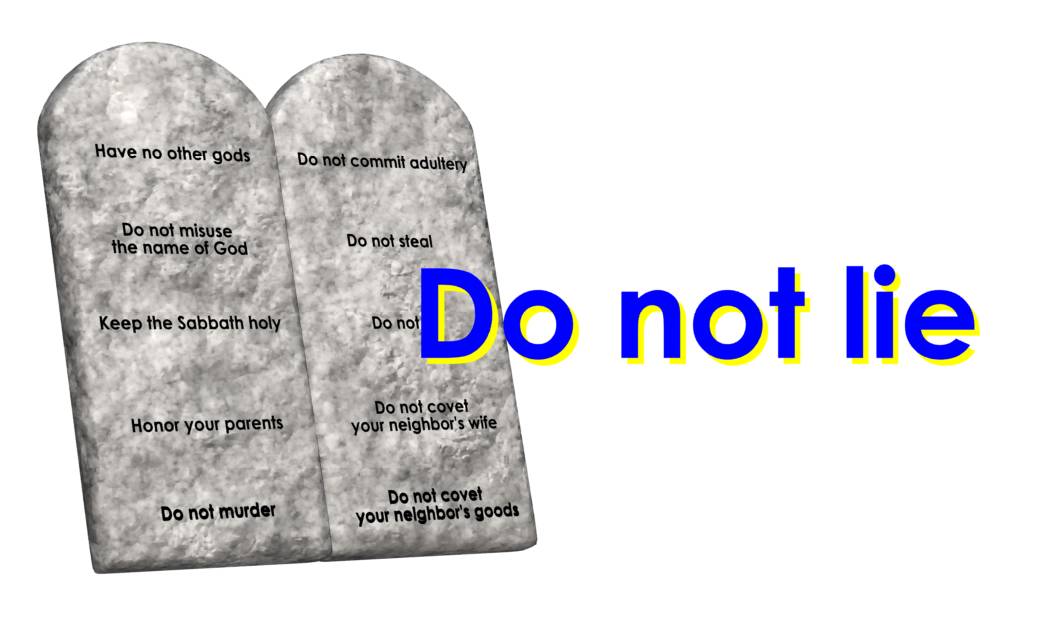
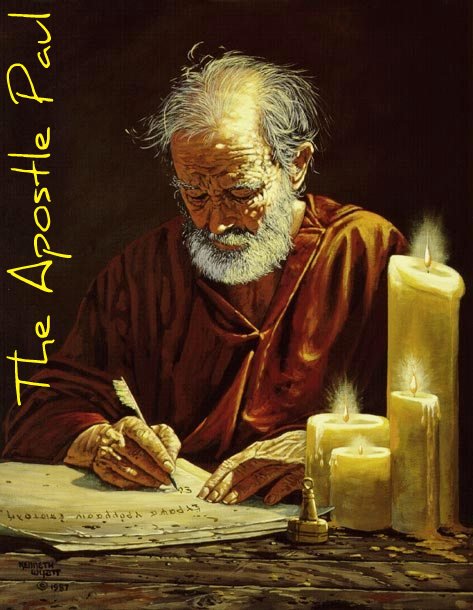
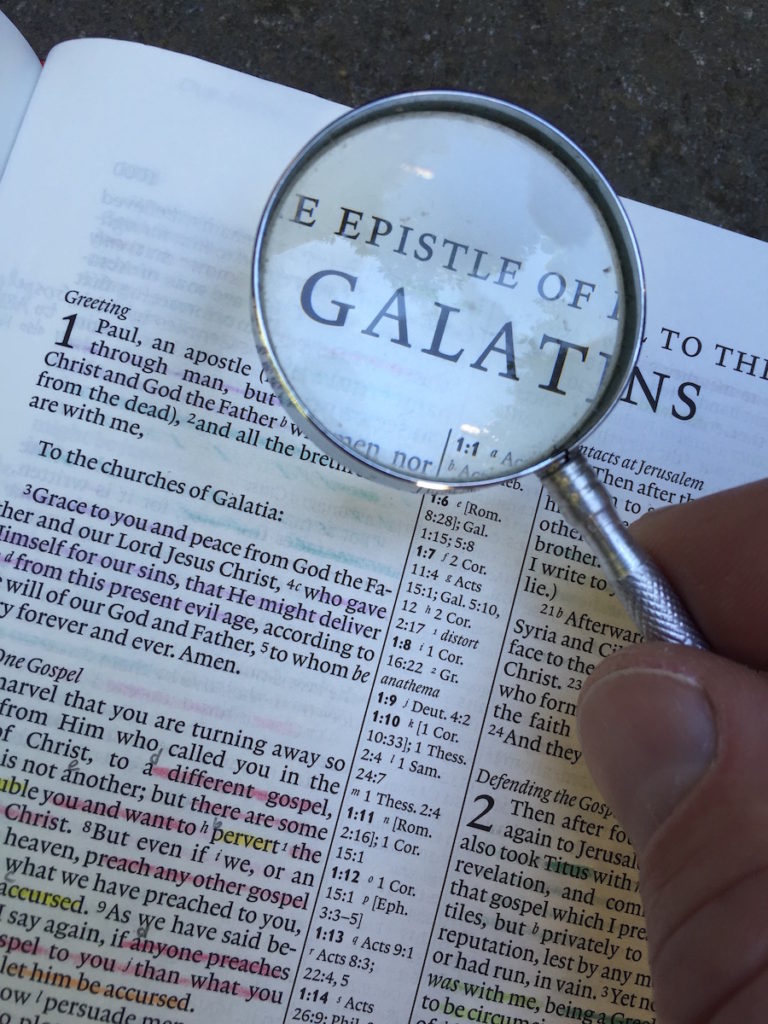
Confronting the Lies About Paul—Galatians Explained from a Hebraic Perspective

The church has lied to YOU about Paul and his epistle to the Galatians!  NOW learn the truth…

An Important Question

When addressing the lies that the mainstream church has been dishing out like a load of dung against Paul and the Word of Elohim (i.e. Yeshua the Messiah, the Word of Elohim) since the time of the early church fathers, let us first ask an important question that has far-reaching implication including whether you can trust the Bible and whether you are saved or not. In the Epistle to the Galatians. It is this: Is Paul advocating the abrogation of the Torah-law as mainstream Christianity teaches or not?

This is the lens through which most Christians view Galatians. For example, the chapter subheadings in my NKJV Bible reveal the antitorah bias of mainstream Christianity. The heading above Galatians 2:11 reads, “No Return to the Law,” and the heading over Gal 3:10 reads, “ The Law Brings a Curse.” When Christians study their Bibles and encounter these subheadings that are written by men and not inspired by the Spirit, what are they to think? Most don’t questions the scholars who translate the Bible or the publishers sell the Bibles. Most readers will automatically thinks to themselves, “After all, these translators and publishers are Bible experts, they know more than I do, so who am I to question them?”

Interestingly, the same author of Galatians elsewhere admonishes us to, “Prove/test all things; hold fast to that which is good” (1 Thess 5:21). This is the responsibility of each saint as he studies the word of Elohim. Therefore, it behooves us to have a touch of intellectual scepticism when studying the Scriptures to insure that we’re not unwittingly putting our faith in the traditions and doctrines of men by which the word of Elohim has been made of none-effect (Mark 7:9, 13), and that we haven’t inherited lies that have been passed on down to us from our spiritual fathers (Jer 16:19). Let us instead be like the righteous Bereans who “searched the Scriptures daily to find out whether these things were so” (Acts 17:11).

Instead of looking at Galatians as a stand-alone book, let’s view it in the broader context of all the New Testament writers’ and Yeshua’s view of the Torah. After all, the Scriptures cannot contradict themselves. The Bible doesn’t lie, Elohim doesn’t change, and Yeshua declared that the Scriptures can’t be broken (or loosened, untied, dissolved, annulled, John 10:35).

In 1 Cor 11:1, Paul instructed us to imitate him as he imitated Messiah. So let’s follow Paul’s advice.

What did Yeshua teach and do vis-à-vis the Torah? 

He never violated the Torah (or sinned), or else he couldn’t have been our sin-free Savior and taken upon himself the consequences or penalty of our sins, which is death.

Yeshua advocated Torah-obedience for his followers (Matt 5:17–19; John 14:15).

Paul goes on to tell us to imitate him as he imitates Yeshua. This includes obedience to the Torah.

Elsewhere, in many places, Paul advocates Torah obedience as we will see next.

How Did Paul View the Torah (“Law”)?

In answering this question, let us allow Paul to speak for himself in order to establish his predisposition with regard to the Torah-law. Was he a proponent or opponent of it? Several Scriptural quotations from his own pen should suffice in answering this question:

Wherefore the law [Torah] is holy, and the commandment holy, and just, and good. (Rom 7:12)

For we know that the law [Torah] is spiritual: but I am carnal, sold under sin. (Rom 7:14)

For I delight in the law [Torah] of Elohim after the inward man… (Rom 7:22)

What shall we say then? Shall we continue in sin [i.e. violation of the laws/Torah of YHVH, see 1 John 3:4], that grace may abound? Elohim forbid. How shall we, that are dead to sin, live any longer therein? (Rom 6:1–2)

Do we then make void the law through faith? Elohim forbid: yea, we establish the law. (Rom 3:31, Romans was written in about A.D. 56)

But we know that the law [Torah] is good, if a man use it lawfully…(1 Tim 1:8, First Timothy was written just before Paul’s martyrdom in about A.D. 66)

But if, while we seek to be justified by Messiah, we ourselves also are found sinners [i.e. violators of the law/Torah], is therefore Messiah the minister of sin [lawlessness/Torahlessness]? Elohim forbid. (Gal 2:17, Galatians was written between A.D. 55 to 56)

Toward the end of Paul’s life and ministry when, according to many Christian theologians, Paul was supposed to have already liberated the first-century believers from the “shackles and bondage” of the Torah-law, yet in the Book of Acts we read the following:

And when they heard it, they glorified YHVH, and said unto him, Thou seest, brother, how many thousands of Jews there are which believe [in Yeshua the Messiah]; and they are all zealous of the law [Torah]: And they are informed of thee, that thou teachest all the Jews which are among the Gentiles to forsake Moses, saying that they ought not to circumcise their children, neither to walk after the customs. What is it therefore? The multitude must needs come together: for they will hear that thou art come. Do therefore this that we say to thee: We have four men which have a vow on them; them take, and purify thyself with them, and be at charges with them, that they may shave their heads: and all may know that those things, whereof they were informed concerning thee, are nothing; but that thou thyself also walkest orderly, and keepest the law [Torah]. (Acts 20:20–24, written in about A.D. 58 to 60)

While he answered for himself, Neither against the law [Torah] of the Jews, neither against the temple, nor yet against Caesar, have I offended any thing at all. (Acts 25:8; Paul made this statement in a court of law about A.D. 62.)

And it came to pass, that after three days Paul called the chief of the Jews together: and when they were come together, he said unto them, Men and brethren, though I have committed nothing against the people, or customs of our fathers, [i.e. the Torah] yet was I delivered prisoner from Jerusalem into the hands of the Romans. (Acts 28:17, written about A.D. 63)

Viewing Galatians Through a Different Lens

In view of the fact that Paul instructed us to imitate him as imitated Yeshua, who was Torah observant, and in light of the fact in numerous places in Paul’s own writings and in the Book of Acts we see that Paul was Torah observant to the end of his life, what conclusion can we come to in light of these facts? Either the Bible is consistent, and the Torah is for all people for all time, or Paul was an inconsistent liar in telling us, on the one hand, to follow the Torah, and on the other hand, telling us not to obey it. Which is it? If Paul is inconsistent, then the truth of the Bible is inconsistent, the Scripture is broken, Yeshua is a liar and the Bible is a lie. Which one is it?

There is another answer to this dilemma. Perhaps the mainstream church has misinterpreted Paul in the Book of Galatians and has come to a skewed view in believing that Paul abrogates the Torah in Galatians. We take the position of the inerrancy of Scripture, that it can’t be broken, that Elohim and Yeshua don’t lie, and that Paul wasn’t a duplicitous schizophrenic. Instead of viewing Galatians as an antitorah tirade courtesy of Paul, maybe there is something else going on here that needs to be discovered—the real message of Galatians that in no way contradicts the rest of the Bible.

Galatians Explained

Continue reading →
 

Welcome to Galatians—A Fun, Though Controversial Book!

I love the book of Galatians! Why? One reason is this: The more difficult and controversial a biblical book, chapter or passage is, once understood by the light of YHVH’s Spirit, the greater the opportunity for the light of YHVH’s truth to shine through and illuminate the darkness of men’s understanding for His glory! Besides that, I like challenges and understanding the Epistle to the Galatians provides a challenge.

A Quick Overview of the Book of Galatians

Below is a quick overview of the book of Galatians. My explanatory comments are in brackets. 

The main theme of the book of Galatians is that one is saved by the grace of Elohim through faith in Yeshua the Messiah, not by the works of the Torah-law. Here, it’s not Paul’s point to discuss the validity of the Torah in a believer’s life. This he does, for example, in the book of Romans. Rather, in Galatians, he discusses how one is saved: Is it by works (i.e. obedience to the Torah and men’s non-biblical religious doctrines), or by the grace of Elohim?

In chapter one, Paul warns against accepting a “different gospel” and shares his personal testimony.

Chapter two describes Paul’s confrontation with Peter about not having to adhere to Jewish (non-Torah) traditions. He then begins to define what the gospel is by asserting that men are justified (made righteous) before Elohim not by the works of the law, but by faith in Yeshua. [This is because a man can never keep the laws of Elohim well enough to measure up to his high standard of righteousness or perfection. This in no way gives man a pass to violate the laws of Elohim — only that man can’t be saved by the good works of Torah-obedience.] Once a man is saved, Yeshua now lives his righteousness through the man [through the help of the Holy Spirit].

In chapter three, Paul further explains the concept of justification by faith stating that this method of salvation goes back to Abraham who trusted Elohim, and because of that faith YHVH accounted him as righteous. At the same time, if one attempts to be justified by the works of the law, because he can’t keep the whole law perfectly, he will fall under the curse or penalty of the law [which is death. Elsewhere we learn the that sin is the violation of the law (1 John 3:4) and the wages or penalty of sin is death (Gal 3:22; Rom 6:23).]. Paul goes on to explain that all believers in Yeshua [both Jews and non-Jews] are children of Abraham (v. 28, 29), and so the same salvation model applies to them that YHVH established at the time of Abraham. What then is the purpose of the Torah, Paul asks? It is to bring sinners to the cross of Yeshua [who died in our place to take on himself the penalty for our sins]. [This isn’t the only purpose of the Torah, as Paul teaches us elsewhere. This is the only purpose he mentions in Galatians for the sake of this discussion. The Torah’s other purpose — once we are brought to Messiah because of our sin, which the violation of the Torah — is that it shows us how to walk without sinning; namely how to love Elohim and our fellow man.] Paul concludes this chapter by saying that once the Torah has brought us to Yeshua, we’re no longer under penalty phase of the Torah, and this applies to all people, not just the Jews.

Next in chapter four, Paul explains in more detail the glorious gospel message of salvation by grace. Messiah came to redeem us (set us free) from slavery to sin and the world and to give us a spiritual inheritance as sons of Elohim. He then asks a question. After having received the glorious message of salvation by grace, how can one turn to a works-based salvation and to other non-biblical religious doctrines of men? He then answers the question by using an illustration to make his point. He compares the old or former covenant that YHVH made with the Israelites at Mount Sinai with the new covenant through Yeshua. This was prefigured in Abraham’s two sons: Ishmael and Isaac. The first son (Ishmael) was a result of human effort and brought bondage, while the second son (Isaac) was a result of YHVH’s grace and brought freedom. [Similarly, if one seeks to do Elohim’s will through one’s own effort, it will result in spiritual bondage. On the other hand, if one seeks to do Elohim’s will through his grace and the divine empowerment of the Holy Spirit, it will bring freedom from sin (i.e. Torahlessness) and it’s death penalty.]

In chapter five, Paul exposes the false teachers who were bringing “another gospel.” They were teaching that one can’t be saved, born again, justified or redeemed unless one is physically circumcised. [Although this doctrine is nowhere to be found in the Scriptures, it had become a belief in first-century Judaism. This was hindering the spread of the gospel message among uncircumcised non-Jewish peoples to whom Paul had been commissioned.] Again, Paul restates the idea that salvation is by grace through faith in Yeshua, and that if one seeks to be saved by one’s good works including circumcision, then one must keep the entire law [perfectly without sinning, which is an impossibility]. Evidently, this false teaching was causing much division and strife within the church at Galatia, and Paul urges the believers there to fulfill the Torah-law by loving one another. [Yeshua sums up the entire Torah as loving YHVH with everything and one’s neighbor as oneself (Mark 12:29–31).] Paul admonishes believers to walk according to the Spirit of Elohim that is living in them, which will lead them away from sin (Torahlessness) and towards righteousness (Torah-obedience). Walking in accordance to the leading of the Holy Spirit leads us away from Torahlessness (the works of the flesh including murder, lying, stealing, fornication, uncleanness, witchcraft, idolatry, worldliness and other fleshly passions and desires) and towards righteousness (the fruit of the Spirit).

Paul concludes this letter in chapter six by giving further instructions about living as a follower of Yeshua.


Blog Scripture Readings for 7-11 Through 7-17-21

Aside

Parashat D’varim — Deuteronomy 1:1 – 3:22
Haftarah —Isaiah 1:1-27
Prophets — Ezekiel 23:1 – 29:21
Writings — Nehemiah 2:1 – 8:18
Testimony — Galatians 1:1 – 6:18; Ephesians 1

Our annual Scripture Reading Schedule for 2020-2021 with daily readings that began on 10/11/20 is available to download and print. The link to the previous 2019-2020’s Scripture Reading Schedule will still be available on the right sidebar under “Helpful Links” into next year. If you are using a mobile device or tablet, the link may be below, meaning you’ll need to scroll down instead.

Most of this week’s blog discussion points will be on these passages. If you have general comments or questions on the weekly Scripture readings not addressed in a blog post, here’s a place for you to post those. Just use the “leave a reply” link or the “share your thoughts” box below.

The full “Read Through The Scriptures In A Year” schedule, broken down by each day, can be found on the right sidebar under “Helpful Links.” There are 4 sections of scripture to read each day: one each from the Torah, the Prophets, the Writings, and from the Testimony of Yeshua. Each week, the Torah and haftarah readings will follow the traditional one-year reading cycle.

Weekly Blog Scripture Readings for 7/11 through 7/17/2021.


Put a cork in it already!

Ecclesiastes 3:1–8, There is a season. 

There is a time…and there is not a time 

There is a time and season for everything. That sounds like an innocuously bland and self-evident statement, but not really.

There is a time do to things, as the wise preacher informs us in his famous Ecclesiastes three passage, which begins with the famous words, “To everything there is a season, a time for every purpose under heaven: A time to be born, and a time to die…” and so on.

But the more the years and decades slide past me and am not in the grandparenting season of my life, the more I realize that there is, perhaps, more importantly, a time not to do a lot of things that I might have done at an earlier time in my life. There are battles not to fight, things not to thing (for a Scripture declares elsewhere, “As a man thinketh, so is he”—a scary thought!) things not to do, and definitely things not to say. There are several reasons that immediately come to mind for not doing these things. 

First, and, perhaps, most importantly, it’s about priorities. As one reaches the top of the hill of one’s life and begins the descent on the other side toward death, one can see more circumspectly one’s past life as well as that which remains whether it be a long or a short time. With the stark reality of one’s life in full view and the idealizations of past expectations unfulfilled gone like dust in the wind, that which remains in one’s life suddenly becomes as valued treasure. Add to this the unexpected deaths of loved ones and friends around you, which, to any young people reading this, occurs more frequently the older one gets, suddenly, every breath and heartbeat becomes a cherished gift from the Creator.

The second reason for not doing or saying many things that I might have in earlier years has to do with following the leading of the Set-Apart Spirit of Elohim more precisely instead of jumping unquestioningly in lockstep to the demanding impulses of my impatient, impetuous and sin-oriented flesh. This too has to do with priorities—desiring to be in the perfect will of the Almighty by seeking first the kingdom of Elohim as Yeshua instructed his disciples to do instead of seeking all those other carnal and earthly things.

The third reason for adding the negative adverb not to the statements in Solomon’s famous Ecclesiastes three passage is that the older one gets, one starts getting a little more tired if not physically, at least emotionally from chasing the wind and ending up with little or nothing to show for it. Many things become, as the Preacher in Ecclesiastes definitively declares repeatedly, is vanity of vanities. Suddenly one wakes up and discovers the wisdom of working smarter, instead of harder. This is wisdom, which only comes with age and perspective. It’s wise to conserve energy and to save it for those things that are worth the time and effort, and for which there is a payoff especially in the next life. All else is little more than emptiness and chasing the wind.

Fourth, so much of what we do and say is an expression of human pride and vanity. We are all guilty, so raise your hand. I’ve got mine up! As I get older, I agree with the preacher’s words in Ecclesiastes verse two of chapter one, “‘Vanity of vanities,’ says the Preacher; ‘Vanity of vanities, all is vanity.” When one gets brutally honest with oneself and analyses most of one’s words and actions, human pride and vanity is the pathetic though realistic label that must be applied to most of it. So what does the Almighty have to say about this? What reasons will we give to him on judgment day as to the motives behind most of what we have said and done? What legacy of value are we really leaving to the next generation? Will we be leaving behind a grandiose frozen-in-time, stone cold and lifeless monument to ourselves, or will we have sown seeds into the fertile ground of the lives of those around us that will hopefully bring forth fruit that will not only make the world a better place, but that will also serve to expand the kingdom of Elohim at the expense of the kingdom of darkness? 

Continue reading →