Got a Shofar?

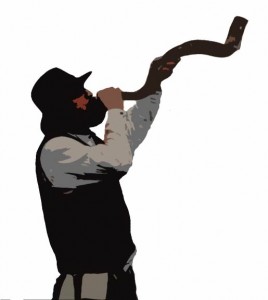
Psalms 81:3, Blow the trumpet [Heb. shofar] at the time of the New Moon [or concealed, covered], at the full moon, on our solemn feast day (NKJV). The ArtScroll Stone Edition Tanach translates this verse alternatively as follows,

Blow the shofar at the moon’s renewal, at the time appointed for our festive day.

The origins of the Hebrew word keseh behind the phrase “full moon” is uncertain and there is debate among the experts on this subject. Some Hebrew lexicons relate it to a Hebrew root word meaning “to conceal, to cover” (Strong’s number H3677 cp. H3678), while others tell us that it is an Aramaic loan word meaning “full moon” (Brown Driver Briggs Hebrew Lexicon).

Orthodox Jewish scholars tell us that keseh means “to conceal or to cover.” They say that the only biblical festival that occurs at the time of the new moon (biblically, when the first sliver of the new moon becomes visible) is Yom Teruah (or Rosh HaShanah), which occurs on the first day of the seventh month (in late summer). At this time, the moon is nearly completely covered or concealed except for a small, visible sliver.

The next phrase in this verse speaks of a solemn feast day, which is the Hebrew word chag. This word refers to the three pilgrimage festivals, which are Passover/the Feast (chag) of Unleavened, the Feast (chag) of Weeks or Pentecost and the Feast (chag) of Tabernacles (Exod 23:14–16; Deut 16:16).

Jewish scholars relate the word chag to Yom Teruah (which they say refers to Rosh HaShanah, see The ArtScroll Tanach Series Tehillim/Psalms Commentary on this verse). The problem with this interpretation is that the Scriptures never call the day of the new moon (rosh chodesh) a chag, nor is Yom Teruah technically a chag either in the strictest sense. Therefore, the word keseh, if it means “concealment” must be referring to both the new moon day (the first day of each month, and to Yom Teruah, which occurs on the first day of the seventh month), while the chag must be referring to the three pilgrimage festivals.

Those scholars who take the word keseh to mean “full moon” say that the phrase in this verse containing this word refers to the pilgrimage festivals (Passover/Feast of Unleavened Bread, Feast of Weeks, and Feast of Tabernacles), which all occurred on or very near the time of the full moon.

Whichever interpretation you side with, the bottom line is this: The Scriptures command us to sound the shofar at the time of the New Moon, on Yom Teruah and during the three pilgrimage feasts. Similarly Numbers 10:10 tells us,

[Sound the shofar a]lso in the day of your gladness, in your appointed feasts, and at the beginning of your months, you shall blow the trumpets over your burnt offerings and over the sacrifices of your peace offerings; and they shall be a memorial for you before your Elohim: I am YHVH your Elohim. (NKJV)

So go get yourself a shofar and join in the fun!


Blog Scripture Readings for 6/17 through 6/23/12

Aside

Deuteronomy 20–26; Jonah 1–4; Micah 1–7; Nahum 1–3; Habakkuk 1–3; and Psalms 80–86

Most of this week’s blog discussion points will be on these passages. The full year’s Bible Reading Schedule can be found on the right sidebar under “Helpful Links.”

If you have general comments or questions on the weekly Scripture readings not addressed in a blog post, here’s a place for you to post those. Just use the “leave a reply” link below.


Blog Scripture Readings for 6/10 through 6/16/12

Aside

Deuteronomy 13–19; Hosea 13–14; Joel 1–3; Amos 1–9; Obadiah; and Psalms 73–79

Most of this week’s blog discussion points will be on these passages. The full year’s Bible Reading Schedule can be found on the right sidebar under “Helpful Links.”

If you have general comments or questions on the weekly Scripture readings not addressed in a blog post, here’s a place for you to post those. Just use the “leave a reply” link below.


The Feast Days in the Messianic Age/Millennium

The following is a list of the scriptures that prophesy that YHVH’s people would observe the weekly Sabbath and biblical feasts during the church age and into the Millennium or Messianic Age.

  • Ezek 45:17 — The Sabbaths (plural, includes the weekly and annual Sabbaths; i.e., Holy Day festivals) and solemnities (moedim) or appointed times (see also v. 9).
  • Ezek 45:21 — Passover and Feast of Unleavened Bread
  • Ezek 45:25 — The Feast of Tabernacles
  • Ezek 46:1 — The weekly Sabbath
  • Ezek 46:9 and 11 — solemn or appointed times (moedim) and feasts (Heb. chag meaning “pilgrimage feast, festival, celebration, holy day, time of dancing, cyclical/yearly seasonal event; i.e., the feast days”)
  • Zech 14:16,18,19 — The Feast of Tabernacles

As you read these passages, you will see that it was not only Israel, but the nations of the world (i.e., the Gentiles) who would be celebrating YHVH’s appointed times.

It is curious to me how church leaders have told us for nearly 1900 years that the “Jewish” feasts were for the Jews only and not for the Christians. So let me get this straight: YHVH expected his people—ancient Israel—to celebrate the feasts, Yeshua celebrated them as did the early church and the apostles, yet when the Gentile church came along, they no longer had to do them, but then when Yeshua returns, YHVH will expect his people along with all the nations of the world to celebrate them, and if they don’t he will punish them for their disobedience? Something doesn’t add up here, and it’s not the Word of Elohim that’s off!

At this point, I’m reminded of the words of Yeshua in Mark 7:13, where when speaking to the religious hypercritical leaders of his day, he accused them of making of no effect the word of Elohim by their religious traditions.


Blog Scripture Readings for 6/3 through 6/9/12

Aside

Deuteronomy 6–12; Ezekiel 47–48; Hosea 1–12; and Psalms 66–72

Most of this week’s blog discussion points will be on these passages. The full year’s Bible Reading Schedule can be found on the right sidebar under “Helpful Links.”

If you have general comments or questions on the weekly Scripture readings not addressed in a blog post, here’s a place for you to post those. Just use the “leave a reply” link below.


The Reunification of Israel & the Return of the Messiah.

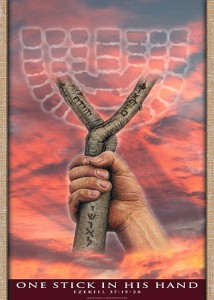
Ezekiel 37:14–28, The vision of the two sticks (trees). The second vision Ezekiel records in chapter 37 involves YHVH commanding him to take two sticks (or trees) and writing upon one stick “for Judah and for the children of Israel and his companions [i.e., those who have knit themselves together with or joined to the tribe of Judah],” and upon the other stick, write “for Joseph, the stick of Ephraim, and for all the house of Israel and his companions.” Ezekiel was to then join the two sticks together so that they would become one stick (or tree) in his hand (verses 15–17).

One Stick in His Hand

Image courtesy of messianicisrael.com

How were these two nations, which separated from each other some three thousand years ago, to be rejoined into one nation? That has been the subject of much debate between both Jewish and Christian commentators for years. Some modern historical revisionists view this prophecy as having been fulfilled when the Jews returned to the land of Israel in the time of Ezra and Nehemiah after their Babylonian captivity ended. But this interpretation leaves some unanswered questions. The book of Ezra, which chronicles the return of a remnant of Jews from Babylon to the land of Israel, lists the numbers and tribes of those who returned. All the tribes listed were originally from Jerusalem and Judah and were from the tribes of Judah and Benjamin (Ezra 2:1; 4:1; 10:9), and there is no mention made that any of the ten northern Israelite tribes joined the Jews in resettling the land of Israel. So far as the returning Jews were concerned, it is likely that they considered their northern brothers lost and assimilated among their Assyrian captors and that only they were left of all the twelve tribes to resettle the Promised Land. If this were so, this may explain why they considered themselves to be “all Israel” (Ezra 2:70; 6:17), since they considered themselves to be the representative remnant of all the twelve tribes, even though their numbers did not consist of the twelve tribes of Israel.

Furthermore, how do those who teach that the prophecy of the two sticks has already been fulfilled explain how anytime in Israel’s past history the two sticks became one nation, and how the once scattered twelve tribes of Israel were regathered from the nations of the world, and how all were resettled in their own land (Ezek 37:21)? Whenever in the past did all the twelve tribes of Israel completely disassociate themselves from the pollution and defilement of paganism and start serving Elohim in perfect righteousness (Ezek 37:23)? Moreover, has David ever been resurrected from the grave to rule over the regathered and reunited Israel as this prophecy declares will happen (Ezek 37:24–25)? After all, the Scriptures tells us that David is dead and buried to this day (Acts 2:29), and awaits the resurrection of the saints at the second coming of Yeshua.  Continue reading →


Overview of Deuteronomy

Overview of the Book of Deuteronomy/Devarim from Various Commentators

This last book of the Torah starts out with “These are the words which Moses spoke ….” The Hebrew name for Deuteronomy is Devarim meaning “words,” which is the plural form of devar meaning “word, speech, a matter or thing, a commandment, a report, a message, promise.” Note the similarity between the Hebrew word devar and the Greek word logos from John 1:1 (“In the beginning was the Word, and the Word was with Elohim, and the Word was Elohim.”). From this connection, we see that Yeshua was the Word of both the OT and the NT. He is the message of the entire Bible (Spirit Filled Life Bible, from the “Word Wealth” at Deut 1:1).

Deuteronomy is written similarly to the vassal-treaties formulated between captor and captive nations prior to 1000 B.C. It contains historical information, enumerates laws, and concludes with threats and promises (Hebrew Greek Key Study Bible, from the Introduction to Deuteronomy). From a general survey of Deuteronomy, it is sufficiently evident that the exposition of the commandments, statutes, and rights of the law had no other object than this: to pledge the nation in the most solemn manner to an inviolable observance, in the land of Canaan, of the covenant, which YHVH had made with Israel at Horeb (Deut 28:29, Keil and Delitzsch Commentary of the Old Testament, from the introductory note to Deut).

In Deuteronomy, Moses speaks like a dying father giving a farewell song to his children all the while he celebrates Elohim as the spiritual Rock of Israel. While the eyes of the Israelites may have fixated too much upon Moses their physical leader (instead of Elohim) for forty years, Moses now attempts to redirect their eyes, trust and allegiance heavenward and onto YHVH, their real spiritual Leader who had been behind Moses—a mere human leader—all the time.  Continue reading →