Blog Scripture Reading for 1-3 Through 1-9-16

Aside

THIS WEEK’S SCRIPTURE READINGS FOR STUDY AND DISCUSSION:

Parashat Va’eira — Exodus 6:2 – 9:35
Haftarah — Ezekiel 28:25 – 29:21
Prophets — 2 Samuel 15:1 – 21:22
Writings — Psalms 89:1 – 94:23
Testimony — Luke 3:1 – 6:26

Most of this week’s blog discussion points will be on these passages. If you have general comments or questions on the weekly Scripture readings not addressed in a blog post, here’s a place for you to post those. Just use the “leave a reply” link below.

The full “Read Through The Scriptures In A Year” schedule, broken down by each day, can be found on the right sidebar under “Helpful Links.” There are 4 sections of scripture to read each day. One each from the Torah, the Prophets, the Writings, and from the Testimony of Yeshua. Each week, the Torah and haftarah readings will follow the traditional one-year reading cycle.

Weekly Blog Scripture Readings for 1/3 through 1/9/16.


Was Yeshua Born in a Manger or Sukkah?

Luke 2:7, Manger.

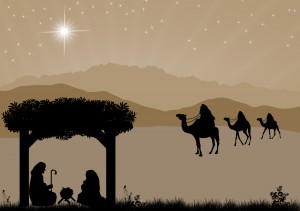
Manger. (Gr. phatne) The Greek word phatne literally means “feeding trough” and according to the word’s etymology and lexicology as stated in The TDNT, there is no indication that this manger is anything but a standard feeding trough or manger. Nevertheless, this manger may have been a sukkah or tabernacle, which is the flimsy little hut that Israelites build during the biblical Feast of Tabernacles (Heb. Chag Sukkot) as commanded in the Torah (Lev 23:33–43). Here’s why.

Christmas nativity scene

We see the connection between a manger and a sukkah in Genesis 33:17 where Jacob built booths (or tabernacles; Heb. succot or sukkot is the plural form of sukkah) for his livestock showing us that the Hebrew word sukkah (pl. sukkot) can also mean “livestock barn or manger” as well as a temporary habitation where Israelites dwell during the biblically commanded festival of Sukkot.

This raises the possibility that Yeshua was born in a festival sukkah during the Feast of Tabernacles or Sukkot and not just in an animal barn as Christian folklore would have us believe. The LXX Greek word for sukkah in Gen 33:17 is skenas meaning “habitation, dwelling or tabernacle” and is the same word used in John 1:14 and Rev 21:1–3 in reference to Yeshua tabernacling with his people.

Putting all the pieces together, Yeshua may have been born in a sukkah-manger prior to or during the Feast of Tabernacles with a human sukkah (or body, of which the physical sukkah during Sukkot is a metaphorical picture) in order to redeem man from sin, so that Yeshua might tabernacle with redeemed men forever in the New Jerusalem (Rev 21:3).


Who Hardened Pharaoh’s Heart?

Exodus 4:21, I will harden Pharaoh’s heart. There is an interesting interplay in the Torah’s narrative regarding the a condition of Pharaoh’s heart. At times, it’s recorded that Pharaoh hardened his own heart (Exod 7:23; 8:15, 32; 9:34), and at times, we read that Elohim hardened Pharaoh’s heart (Exod 7:3, 13, 22; 8:19; 9:7, 12, 35; 10:1, 20, 27; 11:10; 14:4, 5, 8).
22319344

Who was in control of Pharaoh’s heart? Pharaoh or Elohim? Initially, it appears that Pharaoh had some control over his heart disposition, but as time progressed, his heart became totally sold out to rebellion against YHVH. When he crossed this line, it was a point of no return for Pharaoh, and so YHVH simply used him to accomplish his purposes.

Paul discusses the sovereignty of Elohim with regard to the free will of men in Romans 9:15–18. YHVH can save who he wishes (Mark 10:26–27 cp. Rom 9:18) and condemn who he wishes (Rom 9:18, 22).

It is true that YHVH loves the whole world (John 3:16) and is not willing that any should perish, but desires all to be saved (2 Pet 3:9). He has made the wicked for the day of his judgment (Job 21:30; Rom 9:22). However, YHVH sets before humans two paths: life and death. All have the freedom and ability to choose the path of righteousness, leading to life, or wickedness leading to death (Deut 30:15–20).

When Pharaoh chose the path of wickedness and death and hardened his heart to go in that direction, YHVH simply complied with the dictates of the king’s heart and used him accordingly for his sovereign purposes.

In the Exodus record relating to the condition of Pharaoh’s heart, we see that initially sometimes Pharaoh hardened his own heart, and sometimes it was YHVH who did it. In the end, however, it was YHVH who exclusively hardened Pharaoh’s heart. This is because by this time, Pharaoh had already predetermined to harden his heart, and YHVH was simply manipulating Pharaoh according to his sovereign purposes. YHVH had not violated Pharaoh’s freedom of choice, but was playing along with the choices Pharaoh and already made.

 

Peace on Earth; Good Will Toward Men(?)

Luke 2:14, Peace on earth. (See William Mounce’s Basics of Biblical Greek textbook, p. 43 for further explanation on this.) This often quoted phrase can also be translated as “on earth, peace toward men of good will.” This phrasing makes more sense, since the biblical concept of peace or shalom is a blessing only to men who have good will, make good choices or who are benevolent or of kindly intent, which is the definition of the Greek word eudokia.

green planet with the word peace

The shalom or total well-being, which is a gift from YHVH, doesn’t come to men who are of ill-intent or ill-will.

For example, when Yeshua was teaching his disciples how to preach the gospel, when going from town to town, he instructed them to lodge in homes that were worthy to hear the message. Upon them, the disciples were to leave their peace. Those homes who didn’t receive the gospel message were to considered unworthy and their peace was not to be left with them (Matt 10:11–14).

This teaches us that peace is something that is befitting of those who are worthy or of good will, and not to those who are unworthy or of ill-will.


The Rest of the Story: Shepherds Abiding in the Field

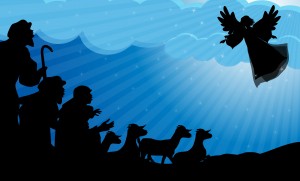
Luke 2:8, Shepherds living out in the fields. According to the Mishnah (a rabbinic Jewish legal-historical document from the end of the second century AD), these were no ordinary sheep or shepherds, but were shepherds who watched over sheep that were destined to become burnt offerings, peace offerings and the Passover offering for the temple service in Jerusalem (Mishnah Sheq 7:4; The Life and Times of Jesus the Messiah, by Alfred Edersheim, pp. 132–133).

Shepherds and angel silhouette

Such sheep were kept in the environs of Jerusalem including Bethlehem which lies just five miles south of that city.

These sheep were apparently kept outdoors all year round. Presumably they were carefully watched over to keep them safe from incurring any blemish that might render them unusable for the temple service.

Imagine the spiritual and prophetic significance of heaven’s angelic messenger revealing to these shepherds the birth in Bethlehem of the spotless and sin-free Lamb of Elohim who was destined to be sacrificed from the beginning of the world (Rev 13:8; John 1:29; 2 Cor 5:21; 1 Pet 2:22; 1 John 3:5). The angel announced that this newborn child was YHVH the Messiah (Isa 53:1; Christ the Lord)—the Savior (Luke 2:8 cp. Isa 53:6, 10–11). He once and for all would take away the sins of the world (Heb 10:10, 12), thus rendering their jobs as temple shepherds unnecessary.


A Gift for Yeshua: Why I Love Him — Reflections on His Nativity

In December, many people think of the birth of Jesus (Yeshua). Most people who are knowledgable know that he wasn’t born in December, but in the early fall. But nine months before the actual time of his birth puts us at the end of December when Yeshua was conceived — when the life of our Savior began in Mary’s womb. It was at this time that the heaven-sent Yeshua, miraculously pierced the spiritual darkness of the this world at the darkest time of the year. This divine spark of life in the womb of a woman would become the spiritual light of this world to lead men out of the darkness of sin and evil and to the supernal light of his Father, Elohim, and to eternal life.

Angelic Star over Bethlehem

Whether you celebrate the birth of the babe in the manger in December or in the fall, Yeshua’s arrival is still heaven’s ultimate love gift to humanity as John 3:16 says. “For Elohim so loved the world that He gave His only begotten Son, that whoever believes in Him should not perish but have everlasting life.” Please stop for a moment and quiet your heart and mind to reflect on the significance of this momentous event that occurred in the tiny town of Bethlehem some 2000 years ago.

For years since I was a child, my mind fully believed what the Bible tells us about the birth of Yeshua. But it wasn’t until years later, as an adult, that, while I was alone one night and Continue reading