Matthew 13:1–58,Yeshua reveals some fundamental mysteries pertaining to the kingdom of heaven.
Let’s systematically analyze this amazing chapter section-by-section to see if we can unlock some deep mysteries pertaining to the kingdom of Elohim.
In the Parable of the Sower, Yeshua reveals that he is sowing the seeds of the gospel message far and wide across the field of the world (v. 38). That seeds falls on all types of ground and there are external influences (i.e. the world, the flesh and the devil) that affect whether the seed will germinate and come to fruition or not. The bottom line is that the majority of seed gets destroyed along the way and fails to produce fruit.
Yeshua then explains the purpose of parables (see comments on v. 14). The main point of this discussion is that only those who are genuine and earnest truth seekers will find the deep spiritual truths of Yeshua’s kingdom behind his parables. These are the ones who have “eyes to see and ears to hear” who will eventually become part of his kingdom. All others will fall by the wayside having disqualified themselves by their lack of spiritual zeal and tenacity to enter into his kingdom.
Matthew 12:1–14,On the Sabbath. (See also Mark 2:23–28; also see note on John 5:18.) From this passage, many Christians reason that since Yeshua is the Lord of the Sabbath, it was therefore permissible for him (and us) to break it, that is, to ignore the biblical Sabbath commands, and even to violate them flagrantly. Billions of Christians have been taught this and believe it. However does this passage substantiate this line of reasoning from biblical Hebraic thought, even simple logic and common sense? Let’s examine this issue.
Let’s now examine this passage carefully, instead of just thoughtlessly accepting church tradition.
For starters, there is no law in the Torah prohibiting picking food to eat as one is walking along the way. This is not harvesting a field—something which is work, and is thus forbidden on the Sabbath. Instead, Yeshua was violating a non-biblical, man-made Jewish legal regulation.
Moreover, this scripture teaches us that there are levels of Torah laws, and some laws take precedence over others. For example, the priests technically violated the Sabbath during the tabernacle and temple service, but were guiltless because Torah commanded them to do certain things on the Shabbat that otherwise would have been forbidden. The Talmud explains this by saying that whenever a positive commandment and a negative commandment contradict, the positive commandment takes precedence over or supersedes the negative one (b. Shabbat 133a). What Yeshua is teaching in this passage is that the temple service trumps the Sabbath, and human need or saving life (i.e. the ox-in-the-ditch scenario) trumps the temple service. This view is confirmed by the Jewish sages (b. Yoma 85b). In verse six, when Yeshua said, “But I say unto you, that in this place is one [a supplied word and not found in the Greek] greater than the temple” he is not saying that he is greater than the Sabbath, and hence it is permissible for him to break it. If this were true, then two things would be true which contradict the Scriptures: a) It is permissible for Yeshua to sin, for sin is the violation of the Torah, and b) YHVH magnifies his word above his name (Ps 138:2); therefore, he’s obeying his own word (making him a liar!) by breaking the Sabbath, which he commanded men to keep (Exod 20:8–11, the fourth commandment). What Yeshua is really saying here is that the thing greater than the temple was the hunger of his disciples.
Furthermore, Leviticus 18:5 states, “You shall therefore keep my statutes, and my judgments: which if a man do, he shall live in them.” The Jewish sages take this to mean that a commandment can be set aside to save life (again, the ox-in-the-ditch scenario). The saving of a life trumps the keeping of the commandment, since this verse says that man is to “live by [the Torah]” not die by it. Therefore, it is permissible to “violate” the Sabbath to preserve life. In fact, the sages go so far as to say that any commandment could be broken to save a life except those against murder and sexual immorality (b. Sanhedrin 74a).
This is why Yeshua quotes Hosea 6:6 that YHVH desires mercy (or loving-kindness), not sacrifice; the knowledge of Elohim, not burnt offerings (Matt 12:7). The heart and spirit of the Torah, in Yeshua’s thinking, are the weightier matters of the Torah although they do not replace the letter of the Torah. In Yeshua’s mind, to properly keep the Torah, one needs to keep both the letter and the spirit (Matt 23:23).
On several occasions, Yeshua used the Hosea 6:6 passage to teach us that love, compassion and mercy for one’s fellowman takes precedence (at times) over fulfilling the letter of the law, although this is not a justification for habitually and intentionally violating the Torah (Matt 9:12–13; Mark 12:33; Luke 10:36–37). Paul echoes this truth about the preeminence of love in the famous chapter on love in 1 Corinthians 13. There we learn that all manner of spiritual activity is meaningless in the eyes of Elohim if it is not accompanied with love.
In Mark 2:23–28 (the corollary passage to Matthew 12:1–7), Yeshua declares, “The Sabbath was made for man, and not man for the Sabbath; therefore, the Son of Man is Lord also of the Sabbath” (verses 27–28).
Yeshua is greater than the Sabbath because he is the lord of the Sabbath, for he created the Sabbath (verse 8), and because he was the perfect epitome of walking out both the letter and spirit of the Torah. Whatever he was doing on the Sabbath, it wasn’t a violation of the Sabbath’s no work principle. Also, saving life was greater than the temple service, as is Yeshua who was the Living Torah-Word of Elohim incarnate.
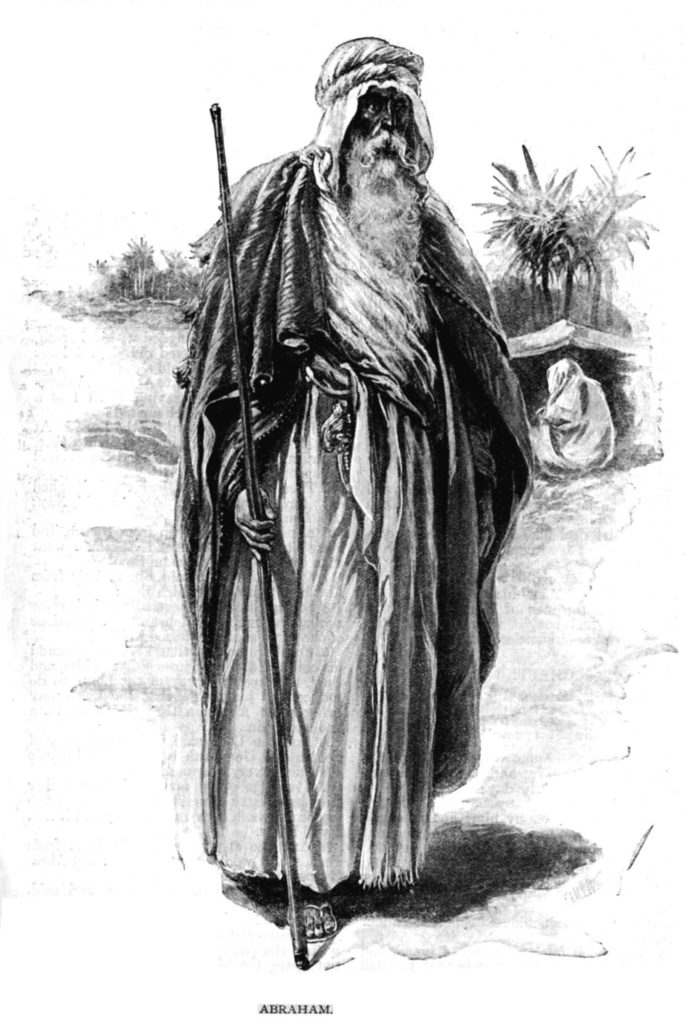
Genesis 12:4, So Abram departed.(cp. Gen 15:6, And he believed in YHVH and he accounted it to him for righteousness.) Abraham showed evidence of a circumcised heart in his belief in and willing obedience to YHVH long before he was circumcised physically. Heart circumcision precedes the physical act. The latter, like ritual of baptism for the remission of sin, is merely an outward expression of a preexisting inner reality.
Genesis 12:7, 8(also 13:4, 18; 22:9 cp. 26:25; 33:20; 35:1, 3, 7), There he built an altar to YHVH. Altar is the Hebrew word mizbe-ach meaning “a place to slaughter for sacrifice.” Note that nearly wherever Abraham went in the Promised Land, he built a place to worship YHVH through sacrifice. Today, we make sacrifice to YHVH through our praise and worship (Ps 69:30–31; Jer 33:11; Heb 13:15,16) and with our lips by prayer (Hos 14:2). All that we do should be a living sacrifice to YHVH (Rom 12:1). The redeemed of the most high are now to YHVH a spiritual house and a set-apart and royal priesthood called to offer up spiritual sacrifices acceptable to Elohim through the blood of Yeshua (1 Pet 2:5,9).
Do we follow the example of our father Abraham and seek first the kingdom of Elohim and his righteousness (Matt 6:33) in all that we do wherever we go by building an “altar” — a place of worship?
Genesis 12:7,(also 13:4), Called on the name of YHVH. Call is the Hebrew word qara meaning “to call out, recite, read, cry out, proclaim, to summon, to invite, call for.” (See also Gen 4:26). The psalmist declares that YHVH is near to those who call (qara) upon him in truth (Ps 145:18), and Isaiah says that YHVH will answer the call (qara) of the righteous. The day is coming when YHVH will restore to his people a pure language so that they will be able to call (qara)upon his name of YHVH and serve him with one consent (Zeph 3:9). At that time, we will know for certain the proper pronunciation of YHVH!
Genesis 12:8, Bethel…Hai. Abraham pitched his tent somewhere between these two cities whose meaning is, respectively, “house of El” and “a heap of ruins.” Figuratively and spiritually, that’s where most of us find our lives—between the blessing and the curse, between the perfect and blessed will of Elohim as a result of our obedience to his will, and a ruinous place because of our disobedience to his will. For example, when Abraham left Canaan—the place Elohim told him to move to—and went down to Egypt (Gen 12:10), the results were ruinous—he almost lost his wife to the king of Egypt. Hai represents the place we end up spiritually as a result of being tempted by our flesh to disobey YHVH—the results of sin and disobedience.
Genesis 12:10, Down to Egypt. Abraham left the Canaan, representing YHVH’s perfect will for Abraham, and went down (not up) to Egypt, albeit to escape famine. Instead of trusting Elohim to provide for him in Canaan, he Abraham compromised and relied on his own flesh and went down to Egypt to seek food, which almost resulted in him losing his wife to the king of Egypt, and then to his being deported from Egypt. When we leave the perfect will of Elohim for our lives and trust in our own mind, it results in our “going downhill” spiritually.
Genesis 13:1, 3,And Abram went up out of Egypt … even to Bethel. The Jewish sages note the significance of this passage in that one always speaks of “going up” or “making aliyah” (i.e. ascending) to the land of Israel and Jerusalem. Going up from what to what spiritually speaking? Here the country Abram is leaving represents what spiritually? Where does he end up? What does the name Beth-el mean? Doesn’t this speak of the spiritual journey each of us is on as we leave the spiritual servitude, bondage and slavery of the world, flesh and the devil seeking to “dwell in the house of YHVH forever” as David states in Psalm 23:6?
Genesis 13:5–13,Abraham versus Lot. The account of Abram and Lot is very revealing concerning each individual’s character. One was greedy and selfish; the other was a peacemaker even to his own detriment esteeming others better than himself (or “in honor preferring one another,” Rom 12:10). Abram lived by the kingdom principles of give and it shall be given to you; whoever is greatest let him be the servant; and die to self in order to live. What were the end results of this approach in Abram’s life? Where did Lot’s orientation eventually get him? Loss or gain? Discuss and reflect on the motives and actions of your own life in this regard.
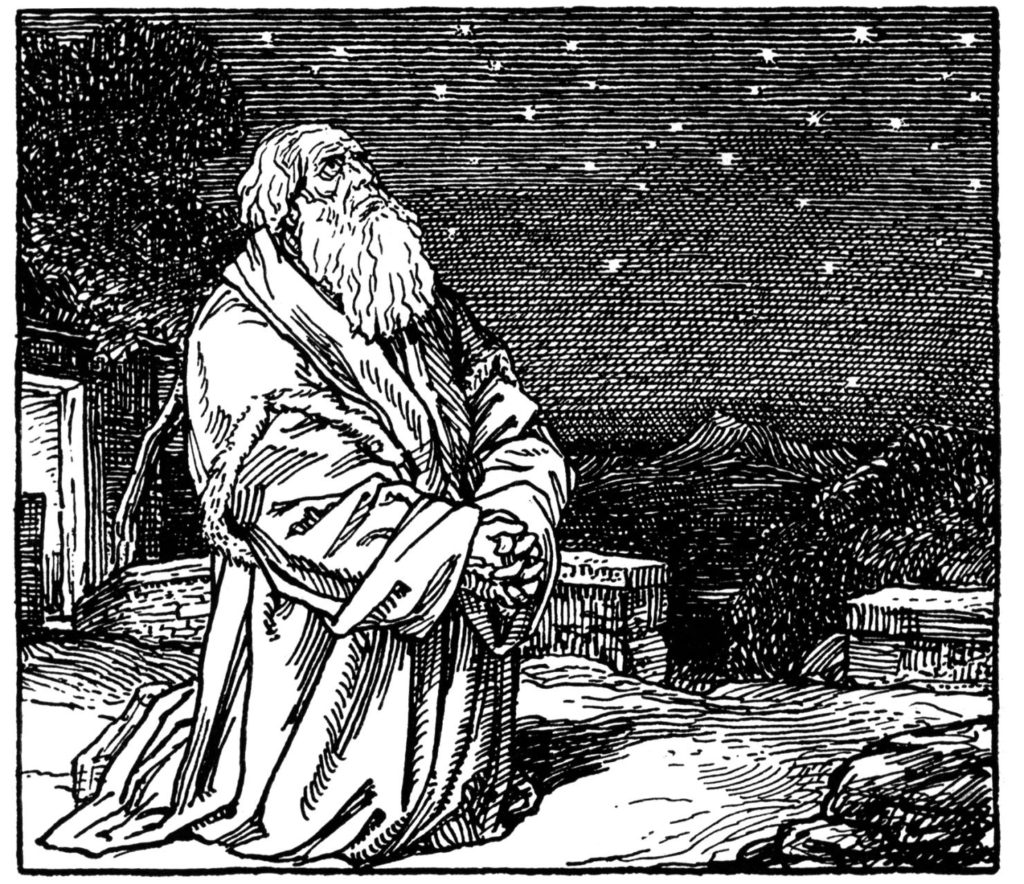
Genesis 12:2, I will bless you.YHVH promised to bless Abram by making him into a great nation and making his descendants as numerous as the stars of heaven (Gen 15:5).
Presently there are only 12 to 15 million Jews alive worldwide. There are currently over 100 times more Muslims alive than Jews. Many of them trace their lineage back to Abraham through Ishmael or Esau. Did YHVH fail to fulfill his promise to Abraham through Isaac and is his word not true?
If his promise were true, then where are the numerous descendants YHVH promised to Abraham?
Check out Romans 4:16; 9:8, 11; Galatians 3:7, 9, 14, 28–29; 6:16 and Ephesians 2:11–19 for the rather surprising, yet revealing answer to this question.
This psalm contains three sections that shows a wonderful and logical progression from the greater (Elohim) to the lesser (man), from the macro downward to the micro. At first appearance, these three sections may seem unrelated, by they each section flows logically to the next revealing some deep mysterious truths about YHVH Elohim’s plan of redemption for humans.
This psalm contains three sections that shows a wonderful and logical progression from the greater (Elohim) to the lesser (man), from the macro downward to the micro. At first appearance, these three sections may seem unrelated, but upon second glance, each section actually flows logically to the next revealing some deep mysterious truths about YHVH Elohim’s plan of redemption for humans.
Section one (vv. 1–6) describes the creation of Elohim, which points to the glory of Elohim, the Creator. It concludes by describing the sun, which is the physical light of the world, which is like a bridegroom in his full glory emerging from his private chambers about to marry his bride. Moreover, the physical universe is governed by physical laws, which keep it functioning in an orderly manner.
Section two (vv. 7–11) describes the glorious attributes of the Torah-law of Elohim, which reveals the character of the Creator, and it shows man what his response should be to the Almighty upon viewing the glories of his creation. Man is to worship the Creator, not the creation. When followed, the Torah helps to keep man’s life structured in a way that brings order, blessing and causes his life to function smoothly, even as the universe is structured and ordered by Elohim’s and functions smoothly because of his physical laws. A Torah lifestyle is also how the saint of Elohim is a spiritual light to the world (Deut 4:6).
Moreover, as the sun’s light pierces the physical darkness of the world, the light of the Torah brings the spiritual light of Elohim into the world along with many benefits for a blessed life.
Psalm 16:5–6,Lot…lines.The English word lot means “a portion that is assigned to someone” and may refer to the idea of randomly drawing lots as part of a decision making process. Likely, our English word lot as in a piece of land, or a land lot, derives from these concepts.
In ancient Israel, the tribal land allotments were determined by the casting of lots once the children of Israel came into the Promised Land (Josh 13:6; 14:2). Part of this ancient process of surveying land involved measuring parcels of land with a cord (Manners and Customs of Bible Lands, pp. 245–246, by Fred H. Wight; also Ps 78:55; Amos 7:17). When lots were cast for land allotments, pebbles were placed in a bag with marks on each stone to represent each parcel of property. Pebbles were drawn, and each man received his lot. Each individual soon discovered whether his portion of land was desirable or not.
David used the analogy of lots as an illustration of Elohim’s goodness to him when he makes the praise declaration in verse 6 that “the lines have fallen to me in pleasant places” (ibid.). No doubt, David is referring to the spiritual inheritance of the righteous, for he proclaims that YHVH is his portion and his inheritance (v. 5).
My mathematical and brainiac wife has just looked at all the data from various sources and put together a chart with the anticipated dates for the 2020 biblical feasts or appointed times (moedim). These dates for the spring feasts will, of course, be finalized when we spot both the new moon of the first month of the new biblical year (in the early spring) and the abib barely is found in the land of Israel at the same time. The dates for the fall feasts will be finalized when we sight the moon for the first day of the seventh month. Until then, this is our best projection. Hopefully, this info will help you in your planning, so that you can celebrate YHVH’s feasts when and how he has instructed us. Blessings!