Overview of the Book of Numbers

The English name Numbers derives from the fact that in this book the Israelites are counted or numbered on several occasions (see chapters 1, 2, 3, 4, 26). Leviticus ends with YHVH instructing his people to count their flocks for tithe purposes, while Numbers begins with YHVH, as the ultimate Good Shepherd (or in Hebrews, YHVH Rohee), counting the Israelites themselves, who are the sheep of his pasture (Pss 74:1; 79:13; 95:7; 100:3). The fact that this counting took place in the wilderness proves that it was not for political or national economic reasons, but was in fulfillment of YHVH’s Torah instructions. Each Israelite was to give a half-shekel of silver toward the maintenance of the tabernacle. The shekels then counted would give the exact number of Israelites (Exod 30:12–16).

The Book of B'midbar—In the wilderness.

The Book of B’midbar—In the wilderness.

The Hebrew name B’midbar meaning “in the wilderness” originates from the fact that this book chronicles Israel’s wandering in the wilderness. The Book of Exodus, on the other hand, records the deliverance of Israel from Egypt, its establishment as a nation, its covenantal relationship with YHVH and the construction of the tabernacle (mishkan), which was the symbol of YHVH dwelling or tabernacling in the midst of his chosen people. The Book of Leviticus deals with the inner workings of that tabernacle and the mechanics of how sinful man could maintain a right spiritual relationship with a righteous Elohim. This was accomplished through the agency of the Levitical priesthood that would function within the tabernacle as a human intermediary between man and his Creator. Continue reading →


Blog Scripture Readings for 5/5 through 5/11/13

Aside

Parashat B’midbar — Numbers 1:1 – 4:20
Haftarah — Hosea 2:1 (1:10) – 2:22 (2:20)*
Prophets — Jeremiah 26:1 – 31:40
Writings — Job 30:1 – 36:33
Testimony — 2 Peter 1:1 – 3:18; 1 John 1:1 – 4:21

* Verse numbers in parenthesis refer to the verse number in Christian Bibles.

Most of this week’s blog discussion points will be on these passages. If you have general comments or questions on the weekly Scripture readings not addressed in a blog post, here’s a place for you to post those. Just use the “leave a reply” link below.

The full “Read Through The Scriptures In A Year” schedule, broken down by each day, can be found on the right sidebar under “Helpful Links.” There are 4 sections of scripture to read each day. One each from the Torah, the Prophets, the Writings, and from the Testimony of Yeshua. Each week, the Torah and haftarah readings will follow the traditional one-year reading cycle.

Weekly Blog Scripture Readings for 5/5 through 5/11/13.

We are instructed in Vayikra/Leviticus 23:15-16: “You shall count for yourselves – 
from the morrow after the Shabbat, 
from the day when you bring the Omer of the waving – seven Shabbatot [weeks], they shall be complete. 
Until the morrow after the seventh Shabbat 
you shall count fifty days; 
and you shall offer a new meal offering to YHVH.”

This is the 6th week of the counting of 7 complete weeks.


Study, Study, and Study the Word of Elohim! It’s Your Lifeline.

I just wanted to share how Carol White from Los Cruces, New Mexico organizes her week around the Hoshana Rabbah Biblical Discipleship Resource’s Bible study materials. Perhaps this will give you some ideas of some possibilities in how to study the Word of Elohim in a disciplined manner.

Bible, studying the

Just wanted to let you know how much I appreciate your Blog Scripture Readings. It has worked out so well in my daily prayers and readings.

On Sunday I read the Parashat. Monday the Haftarah. Tuesday the Prophets. Wednesday the Writings. And then on Thursday the Testimony.

This leaves Friday and Saturday where I can focus on the Sabbath and studying the other materials you provide on the website.

What a great way to spend the week in Abba’s Word and stay on track with the weekly Parashat and other Scriptures!

Thank you so much for developing this helpful and useful blog.

I can’t emphasize enough the importance of a daily routine of studying the Word of Elohim. It’s literally a spiritual lifesaver for every child of Elohim. It is the answer to all the ills that face you individually, your family, your city, your state, our nation and the world!

The Bible is full of examples that point us to the need to be washed in the water of YHVH’s Word daily. Whether it was the twice daily sacrifices that occurred in the tabernacle and temple that are a picture of our prayers and devotions going up to heaven, or the menorah being cleaned and relit each evening, or the Jerusalem apostles visiting the temple for the regular set time of prayer, or David worshipping Elohim seven times daily, or Daniel thrice daily, our daily Bible study is a spiritual lifeline that enables us to survive and thrive in a world that is bent on snuffing out every ember of YHVH’s spiritual light, love and truth.

The reason I started this blog was to encourage and to facilitate the study of the Word of Elohim in your life. This is what our whole ministry is dedicated to doing.


Does the Torah Advocate Socialism or Capitalism or Both?

Leviticus 25, Chapter 25 lays out Israel’s social welfare and economic system. Basically, it was a capitalistic economic system where private individuals owned property and small businesses controlled the means and productions of goods and services.

32251517

This is not the case in a purely socialistic (or Marxist or communistic) economic system where the government owns most of the property and controls the means and distribution of goods and services.

39197076


However, the capitalistic system that YHVH gave to Israel contained some quasi-socialistic checks and balances in that individuals couldn’t became greedy rich at the expense of the poor. Socialistic economic philosophy demands that the wealth of the nation be equally distributed among everyone including the poor. This may sound good in theory, but it doesn’t work.

In reality, socialism stifles individual initiative by punishing (often through taxation and other means of wealth confiscation and redistribution by the government) those who, through hard work, sacrifice, initiative, and inventiveness have become wealthy. So, it stands to reason, why should the wealthy work hard if the fruits of their labors will only be confiscated and be given to the poor or the “have nots?”

At the same time, capitalism is also a flawed system, since in time, the wealthy often end up owning much of the land and controling most of the wealth. Human nature being what it is, the greedy wealthy will turn a capitalistic system into oligarchic capitalism where only a few rich capitalists control nearly everything including the economic and political systems. This is the end-times system that is described in Revelation 13 and 18 and is called Babylon the Great. Such a system ends up enslaving people through economic and political means, and creating a veritable serfdom of those who are under its rule (see Rev 18:13, 23).

With these things in mind, as you are reading through chapter 25, note how YHVH instructed the poor to be cared for. There was no government welfare system based on taxing the producers and giving to the non-producers. Everyone worked. Notice how debt was handled, and how people worked to pay off their debts. Notice how the jubilee year prevented the wealthy from acquiring all the land, and how every 50 years there was a redistribution of land, so that those who through sloth or mismanagement of their resources lost their land could have it restored to their family. Such individuals were mercifully given a second chance to start over again and learn from their past mistakes. Lending to the poor was encouraged, and the charging of interest was prohibited.

As you read through this chapter, consider how YHVH deals with the perennial social and economic ills that have plague the world from time immemorial compared to how men currently deal with these same problems and usually end up making the problems worse.

Though it would be difficult to implement such a system in our highly collectivized and industrialized society of today, it is likely that in the future, during the Millennium, when the Torah will be the rule of the earth and agrarianism will likely be the dominant paradigm, that such a Torah-based system will once again be put in place.


How to Test Heavenly Versus Demonic Wisdom

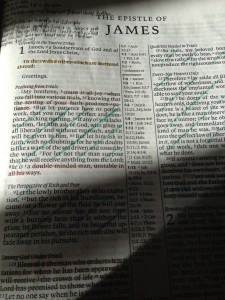
James 3:13–18, Who is wise. In this passage, James discusses heavenly versus demonic wisdom. Did you ever wonder how to tell the difference between the voice of Elohim speaking to you and the voice the world, the flesh and the devil? This passage gives us some guidelines on how to differentiate between the four voices that are trying to influence our minds and hearts.

15090964

Let’s first establish the fact that Yeshua wants to talk to his spiritual sheep. In John chapter ten, Yeshua declares that he is the Good Shepherd, and that his sheep hear and know his voice, that he calls them by name, and that he leads them spiritually and they follow him (John 10:3–4). At the same time, someone else is vying for the sheep’s attention—the thief. Yes, the thief wants to lead the sheep astray, for his intention is to kill, steal and to destroy (John 10:1, 8, 10), while the Good Shepherd wants to save and protect the sheep (John 10:9, 11, 14).

Throughout the pages of the Bible, we read the record of YHVH Elohim speaking to his servants and leading them. Yeshua makes it clear that he is still speaking to and leading his sheep, and the Book of Acts and the Epistles confirm this.

So how does this passage in James help us to hear and to follow the voice of YHVH-Yeshua, the Good Shepherd? When we get thoughts and impressions that we think are the leading of the Holy Spirit, we must first determine their origin by putting them to the spiritual test. Is what we are hearing the wisdom or knowledge that is from above, or is it the wisdom or knowledge that is from below—that is earthly (of this world), sensual (from the carnal mind of man) or devilish (from the demonic realm, James 3:13–15)? How do we know its origin? James tells us. The wisdom that is from below is envious, selfish or self-seeking, engenders confusion, and produces evil, while that which is from above is pure, peaceable, gentle, willing to yield, full of mercy and good fruits, without partiality and hypocrisy, and it produces righteousness (James 3:16–18).


“Faith Without Works is Dead”—Is James Contradicting Paul?

James 2:20–24, Faith without works is dead. James here is referring to the works of faith, not the works of the law. No man can live a good enough life to be saved by his Torah-obedience—the works of the law (Rom 3:20, 28; Gal 2:16; 3:11).

James

However, faith in Elohim is more than just mental ascent—“a knowing in your heart.” It has to be backed up by action (and we’re not talking about the works of the law). For example, when Elohim told Abraham to leave Babylon or to sacrifice Isaac, he obeyed. Many were healed in Yeshua’s ministry because they had faith in the Master and backed that faith up with corresponding action, which was the evidence of their faith.

This faith-action continuum had nothing to do with Torah-obedience, but had everything to do with “putting your money where your mouth is” so to speak.

This is what James is talking about here, and this in no wise contradicts the teachings of Paul who said that no man is justified by the works of the law.  When Paul declares in Ephesians 2:8–9, “For by grace you are saved through faith, and that not of yourselves; it is the gift of Elohim, not of works…,” he was correct and not opposed to James.

What’s more, Paul goes on to say in verse 10, “For we are [Elohim’s] workmanship, created in Messiah Yeshua for good works…that we should walk in them.” These good works (i.e., obedience to the Torah) are the fruits, evidence or proof of our salvation—the works that back up our faith.

So, in summary, the Bible teaches that we need the works of faith to lead us to salvation, as well as the works of faith after we have received Elohim’s free gift of salvation as evidence that we are saved. This fact in no way contravenes the reality of salvation by grace through trusting belief in Yeshua the Messiah, which is apart from the works of the Torah-law.


Blog Scripture Readings for 4/28 through 5/4/13

Aside

Parashat Behar-B’chukotai — Leviticus 25:1 – 27:34
Haftarah — Jeremiah 16:19–17:14
Prophets — Jeremiah 19:1 – 25:38
Writings — Job 23:1 – 29:25
Testimony — James 4:1 – 5:20: 1 Peter 1:1 – 5:14

Most of this week’s blog discussion points will be on these passages. If you have general comments or questions on the weekly Scripture readings not addressed in a blog post, here’s a place for you to post those. Just use the “leave a reply” link below.

The full “Read Through The Scriptures In A Year” schedule, broken down by each day, can be found on the right sidebar under “Helpful Links.” There are 4 sections of scripture to read each day. One each from the Torah, the Prophets, the Writings, and from the Testimony of Yeshua. Each week, the Torah and haftarah readings will follow the traditional one-year reading cycle.

Weekly Blog Scripture Readings for 4/28 through 5/4/13.

We are instructed in Vayikra/Leviticus 23:15-16: “You shall count for yourselves – 
from the morrow after the Shabbat, 
from the day when you bring the Omer of the waving – seven Shabbatot [weeks], they shall be complete. 
Until the morrow after the seventh Shabbat 
you shall count fifty days; 
and you shall offer a new meal offering to YHVH.”

This is the 5th week of the counting of 7 weeks.