One of the coolest Messianic prophecies in the Bible

Yeshua—YHVH Elohim’s gift to mankind from heaven!

Read and study the Bible and discover the genius of the Creator’s mind breathed into its words. Fall in love with the Elohim and his Word as you read it, and let it transform your life and thinking! — Natan

Notes from Natan’s Bible commentary:

Isaiah 7:11–17, A sign. This is an amazing prophecy—a twofer prophetically showcasing the genius of the Creator’s ability to accomplish so much by saying so little. Here Isaiah prophecies to the rebellious Jewish king his kingdom’s (and hence his own) downfall, but at that same time, the rising up of the King Messiah to be born of a virgin woman as well as being deity. So while Isaiah prophesies judgment upon the apostate southern kingdom of Judah, at the same time he is giving a message of hope in predicting the coming Messiah—the ultimate and eternal hope of Elohim’s people even in the midst of darkness and judgment.

Isaiah 7:11, A sign … either in the depth, or in the height above. Sign is the Hebrew word owth (Strong’s H226) meaning “sign, token, signal, a beacon, a monument, evidence, prodigy or omen.” Traditionally, Christians have viewed this passage along with the following verses as a prophecy concerning the Messiah would be born of a virgin. Some who are opposed to the virgin birth interpretation of Isaiah 7:14 will say that owth is never used in Scripture in reference to a miraculous sign. To the contrary, there are numerous examples in the Scriptures where owth is indeed used in reference to a miraculous sign (e.g. Exod 4:8, 9, 17, 28, 30; 7:3; 8:23; 10:1, 2; Num 14:22; Deut 4:34; 6:22; 7:19; 11:3; 2 Kgs. 20:8–11; Neh 9:10; Isa 20:3; Jer 32:20, 21). For example, owt describes such supernatural occurrences as rods becoming serpents, the Nile turning to blood, the death of the Egypt’s first born, the splitting of the Red Sea or time moving backward ten degrees on Hezekiah’s sundial. So when Isa 7:11–14 uses the word owth to describe a virgin miraculously giving birth to a child, such an interpretation is not a biblical hermeneutical twist on this scripture.

The word depth is the Hebrew masculine noun aymek (Strong’s H6009 from H6010) meaning “valley or depression.” This same Hebrew word in its adjective form (same spelling, different vowel points) refers to the depths of sheol or hell (Prov 9:18; Job 11:8). In Psalm 139:15, David in reference to his formation in his mother’s womb (verse 13) says, “I … was curiously wrought in the lowest parts of the earth (Heb. aretz). Aretz (Strong’s H776) is the commonly used word for earth or land in Scripture. A valley or depression is the lowest part of the earth. Here David figuratively likens his mother’s womb to a low place or depression in the earth. Though the Hebrew words for depth in Isaiah 7:11 and lowest parts in Psalm 139:15 are different, the Hebraic concepts seem connected and analogous.

Height is the Hebrew word gabahh (Strong’s H1361) and means “to soar, to be lofty, to exalt.” This root word in its adjective form is also gabahh (Strong’s H1362) with the only difference between the two words being a slight vowel pronunciation difference in the second syllable. This word means “lofty or high.” We see this adjective used in Job 35:5 as a poetic reference to heaven (Heb. shamayim) as well as in Isaiah 55:9; Psalm 103:11 (“For as the heaven/shamayim is high above the earth …” or “according to the heights of heaven” (alternate Hebrew rendering, KJV marginal notes).

Above, which is opposite the word height in the passage under analysis, is the word ma’al (Strong’s H4605) meaning “upward, above, overhead, from the top, exceedingly.” Thus, the phrase in this verse could be rendered as highest heaven (where YHVH abides). The word ma’al can be used as an adjective to refer to heaven above where YHVH dwells (Deut 4:39; Josh 2:11).

What is the point we are trying to make here? YHVH prophesies, through Isaiah, that he will give a supernatural, miraculous sign to the house of Judah from both the depths (or womb of a woman) and the highest heavens. In verse 14 Isaiah speaks of the (the Hebrew uses the definite article the) virgin or the young maiden (depending on your Bible translation) giving birth to a son named Immanuel meaning “El With Us.” Now great controversy has raged as to the meaning of the word virgin (Heb. almah). Does it refer simply to a young maiden or to an actual virgin? Much has been written by scholars on both sides of this hotly debated issue and it is outside the scope of this work to deal with this particular subject. Both sides (the pro-virgin birth side and the anti-virgin birth of Messiah side) have valid points to their credit. This author maintains that if Isaiah 7:14 were to stand alone, it would be difficult, if not impossible, to prove the virgin birth of the Messiah either way. However, with the context of verse 11 considered (not to mention the other references in the Tanakh referring to the virgin birth of the Messiah (e.g., Gen 3:15; Isa 9:6–7; Pss 2:7; 110:1–7), it seems that Isaiah had one thing in mind in penning verse 14: the Messiah would be born of a virgin. He would be formed in the womb of a woman (without the seed of a man (see Gen 3:15) and at the same time would originate from the highest heaven. This seems to be a clear reference to the incarnation, that YHVH would miraculously fuse (by the Spirit of Elohim [Matt 1:20]) with the physical egg of a woman to form the Yah-Man (God-Man) referred to in Christian theology as the incarnation or the hypostatic union.


 

“Children are their oppressors…women rule over them.”

Isaiah 3:1–5, 12, YHVH…takes away…children…insolent…women rule over them. When YHVH’s judgment comes on a sinful nation, godly leadership and his protection is removed from that nation leaving a moral and spiritual vacuum. When the fear of Elohim is gone, so goes wisdom. With the absence of the wise, fools and the foolish rise up and take over a nation. This godless vacuum will soon be filled with ungodly, silly and rebellious youth and feminized male leaders and masculinized female leaders—Ahabs and Jezebels! Children who are insolent against their parents and elders are proof of the spiritual declension of a nation and YHVH’s hand being taken off that nation and his resulting judgment against it are the result. Isaiah clearly lays out this process in this passage. The cause and effect results were as true then with ancient Judah as they are today with modern America.

Since my youth (growing up in the 1960s and 70s), I have seen children go from acting respectfully to their parents and adults in general (“Yes sir,” “No Sir,” “Mr.” and Mrs.”) to total foul-mouthed disrespect and mocking scorn for older people. Correction and discipline of these rebellious brats has gone out the window, been tossed in the trash can of political correctness. When was the last time you saw a paddle in the school principal’s office? It was the norm in my day. Now such a school leader would be fired and convicted of “child abuse.” Moreover, gender roles, in many cases, have been reversed. The term “house husband” now has common currency. Many women have become masculine and men have become feminized. As an example of this, names that have been traditionally reserved for the male gender or now popular for girls along with woman smoking cigars, sporting tatoos, men wearing hair buns, earrings, painting their toenails, and the list goes on. Now there’s even gender identity confusion and “gender reassignment” operations. Is it any wonder?

This process has been horrendously sad and deeply painful for those of us in the older generation to watch, but it is merely symptomatic of a nation that has turned its back on Elohim. We know what things used to be like when families still went to church, there was prayer in schools, patriotism was taught in our institutions of education, mothers raised their children at home, divorce was rare, godly masculinity was a virtue and the fear of Elohim and adherence to biblical values still, to one degree or another, was the norm societally.

This is much more than looking back and waxing eloquent for the good old days. It’s about mourning for a nation that has lost its moral and spiritual compass and has gone from a God-fearing nation to one that loathes to keep Elohim in its memory, and is too blind by its own pride and self-absorption to recognize that two plus two equals four.

May YHVH Elohim help us to be children of his light in these times of gross darkness. Do not become weary in well-doing!


Blog Scripture Readings for 6-11 Through 6-17-17

Aside

THIS WEEK’S SCRIPTURE READINGS FOR STUDY AND DISCUSSION:

Parashat Sh’lach L’cha — Numbers 13:1 – 15:41
Haftarah — Joshua 2:1-24
Prophets — Jeremiah 33:1 – 39:18
Writings — Ecclesiastes 4:1 – 10:20
Testimony — Romans 7:1 – 13:14

Our full Scripture Reading Schedule for 2016-2017 is available to download and print.

Most of this week’s blog discussion points will be on these passages. If you have general comments or questions on the weekly Scripture readings not addressed in a blog post, here’s a place for you to post those. Just use the “leave a reply” link below.

The full “Read Through The Scriptures In A Year” schedule, broken down by each day, can be found on the right sidebar under “Helpful Links.” There are 4 sections of scripture to read each day. One each from the Torah, the Prophets, the Writings, and from the Testimony of Yeshua. Each week, the Torah and haftarah readings will follow the traditional one-year reading cycle.

Weekly Blog Scripture Readings for 6/11/17 through 6/17/17.


New Video: The Old & New Covenants Compared—The Letter & Spirit of the Law Explained

YHVH Elohim is calling His saints to be spiritual mountain climbers. In their spiritual journey upward, His people started at sea level in Egypt, then He called them to meet Him at Mount Sinai to receive the Torah, then to come up closer to Him at Mount Zion, then higher still to receive the Set-Apart Spirit and the Torah-law written on their hearts on the Day of Pentecost, and higher still to the New Jerusalem from above, which is coming to the earth soon at the second coming of the Messiah.

The study notes to this teaching are available at https://hoshanarabbah.org/blog/2017/06/03/happy-shavuot-2017/


Where was the upper room really located (probably)?

Many of us just finished celebrating the Feast of Shavuot/Pentecost. Did the Acts chapter 2 Pentecost event occur in the upper room as many suppose? If not, then where? What is the upper room? 

The following is a discussion on this subject based on some research I have just conducted. Enjoy! —Natan

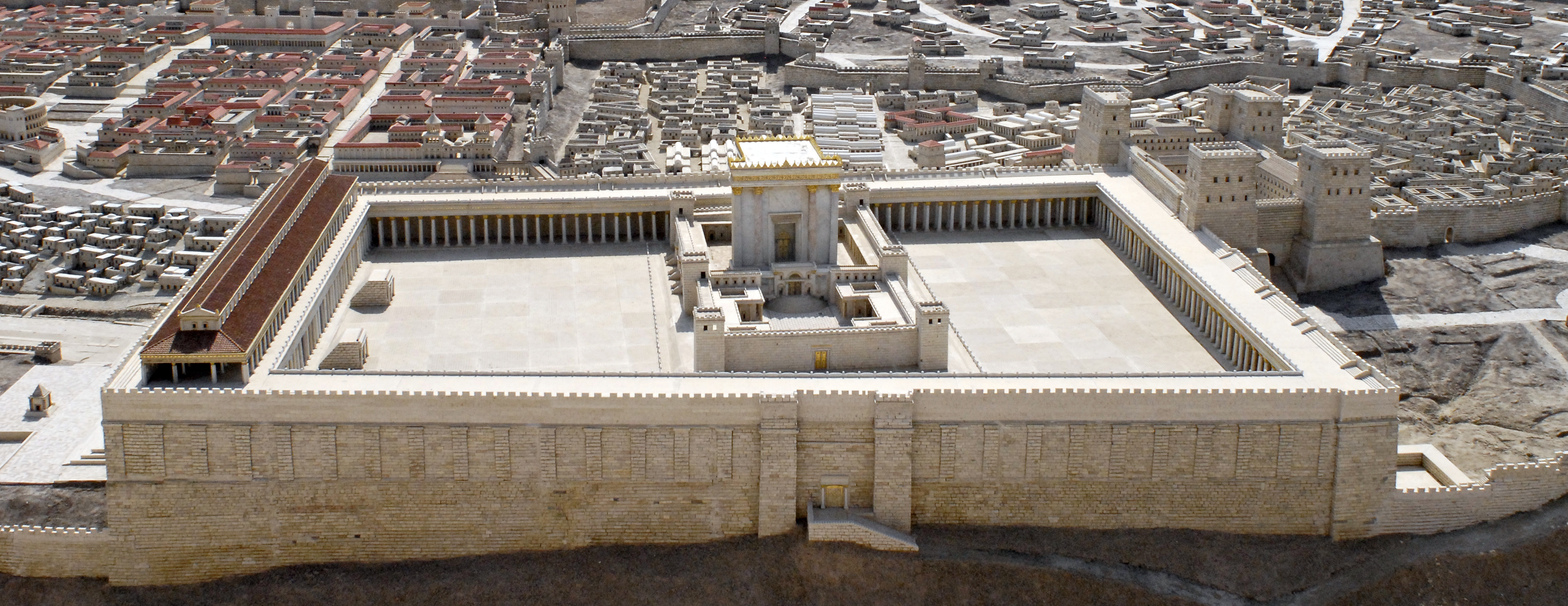
Acts 2:1, With one accord in one place. The location of this event was likely in the Solomon’s portico area of the temple mount, and not in the traditional site of the upper room located on Mount Zion in the City of David, which is southeast and outside of the temple mount area. (See notes at Acts 5:12.) Here, the disciples were gathered in one accord. This is likely the spot where the Acts 2 Pentecost gathering occurred.  The reasons for this supposition are these: First, this area was large enough to accommodate thousands of people (unlike the traditional upper room location on Mount Zion in the City of David). Second, people from many nations would have been passing through the city gates located in this area en route to the temple and would have heard Peter preaching. Third, mikveh pools were located just to the south of the Temple Mount (and are still visible today) where those who repented and believed could have been easily and quickly baptized.

Acts 5:12, Solomon’s porch/portico/colonnade. (See also John 10:23 and Acts 3:11.) This was a large covered area supported by marble columns which supported a wooden roof structure and was located on the east side of the temple mount area along the eastern wall that overlooked the Kidron Valley and faced the Mount of Olives just above the Garden of Gethsemane. This portico was built so that pilgrims and Levites visiting the temple would have a place to gather that was protected from the weather. Meetings and gatherings occurred here, and this was a gathering place of the early disciples as noted in Acts 3:11. There Yeshua taught and debated with the Jews (John 10:22–29). Here, the disciples were gathered in one accord (Acts 5:12). This is likely the spot where the Acts 2 Pentecost gathering occurred. (See additional comments at Acts 2:1.)

This portico (colonnade or cloister) that was located on the eastern wall and that existed in the time of Yeshua and the disciples was originally constructed by King Solomon according to Flavius Josephus.

These cloisters belonged to the outer court, and were situated in a deep valley, and had walls that reached four hundred cubits [in length], and were built of square and very white stones, the length of each of which stones was twenty cubits, and their height six cubits. This was the work of King Solomon, who first of all built the entire temple. (Josephus Flavius Ant. xx.9.7)

While the Babylonians destroyed the temple in their conquest of Jerusalem in about 586 B.C., if we are to believe Josephus, they apparently left Solomon’s Portico intact.

In the description of Solomon’s Temple and the complex including not only the temple itself, but its adjacent houses, upper chambers or rooms and inner chambers we read the following:

Then David gave to his son Solomon the plan of the porch of the temple, its buildings, its storehouses, its upper rooms, its inner rooms and the room for the mercy seat; and the plan of all that he had in mind, for the courts of the house of the LORD, and for all the surrounding rooms, for the storehouses of the house of God and for the storehouses of the dedicated things… (1 Chron 28
11–12; NASB)

We don’t know where these upper rooms were located in the temple complex, but if they were located in what later became known as Solomon’s Porch, which was still in existence in the first century, then this may give us a clue where the upper room that is mentioned in the Book of Acts was located, and where the gathering of the saints on the day of Pentecost occurred. In addition to Solomon’s Porch on the east side of the Temple Mount area, additional porticos were constructed subsequently by King Herod (in 16 B.C.) on all the other sides of the Temple Mount along the outside walls (Smith’s Bible Dictionary, p. 681; The International Standard Bible Encyclopedia, vol 4, p. 772). The portico on the south side was larger and taller than the others and was called the Royal Portico (ibid.; Jospephus’ Ant. xv.11.5). (For a further discussion on this, see notes at Acts 2:1.)


Angels or the Saints?

Are the “angels” Jacob saw in his dream angels or the saints?

I received the following question from S.P. in Owego, NY about something I wrote in a recent blog post. Here’s the question.
We read your blog of Happy Shavuot 2017. Great Article and agree how important it is to continue to go higher in our relationship with YHVH Elohim!
The following is from the section labeled “Following the Glory Cloud Onward and Upward”:
“The angels or, more correctly, the messengers going up and down that ladder that Jacob saw in his dream are the glorified bride-saints of Yeshua, who will be ruling and reigning with Yeshua from the New Jerusalem over his millennial kingdom.”
Would you be able to give us some references as to how you know that the angels going up and down the ladder are the glorified saints and that they are ruling and reigning with Yeshua from the New Jerusalem over his millennial kingdom?
Here’s my answer:
The word “angels” in reference to Jacob’s dream is the Hebrew word malak which simple means “messenger.” It can be a divine messenger such as an angel, or it can refer to the preincarnate Yeshua who is referred to in our poorly translated English Bible numerous times as “the Angel of the LORD/YHVH.” Obviously, Yeshua is not an angel in the traditional meaning of the word. He is, however, the messenger of  Elohim as the Word of Elohim sent to man. So angel simply means messenger. It can even be a human messenger as well.
Now go to John 1:51 where Yeshua says that the angels of Elohim are descending on the Son of Man—that’s Yeshua. From this we know that the ladder that Jacob saw was a metaphor for Yeshua who is the way of salvaston. He is the way to the Father. We must go through him to come to the Father. This is how we gain salvation. This obviously applies to humans, not to angels. The word for angels in John 1:51 is the Greek word angelos which is equivalent in meaning to the Hebrew word malak. It can mean a human messenger as well as an angelic one. From Yeshua’s statement, we know that it has to be referring to the saints who are YHVH’s messengers to the world. This, in my opinion, based on good evidence, is what Jacob saw.
To take this one step further, in the book of Revelation, there is strong evidence that the New Jerusalem will be hovering over the earth during the millennium. If this is the case, this will the habitation of King Yeshua who will be ruling the  earth. The glorified saints will be kings and priests helping Yeshua to rule and as such will to likely going to and from earth to the NJ to receive instructions and teachings from Yeshua which they will then come back to earth to implement during their millennial reign of the humans living on the earth at this time. I believe that this is what Jacob saw in his prophetic dream. This all may seem a bit suppositional to some, but it makes sense to me when we put all the pieces together.
Here is a link to an article I wrote on Jacob’s ladder dream and its spiritual and prophetic implications for those who want to go real deep on this fascinating subject: https://www.hoshanarabbah.org/pdfs/ladder.pdf
Sorry for the paragraph spacing issues in this blog. WordPress is having problems, which I can’t fix.
 

John 20:17, “Touch me not,” Explained

Recently I received an email from someone asking me to explain John 20:17 where Yeshua had a conversation with Mary Magdalene after his resurrection, but before his ascension to heaven and said the following:


Jesus said to her, “Do not cling to Me, for I have not yet ascended to My Father; but go to My brethren and say to them, ‘I am ascending to My Father and your Father, and to My God and your God.’”

John 20:17, Touch me not. Touch is the Greek word haptomai meaning “to fasten one’s self to, adhere to, cling to,” and can be used to refer to touching in a carnal and passionate way as between a man and a woman. Perhaps Yeshua didn’t want his disciples to cling to him as a wife clings to her husband, since, in a spiritual sense, they (and us) were/are only betrothed and not yet married to him yet. (The marriage of the saints to Yeshua will occur at his second coming.)

Additionally, Yeshua had not yet ascended to heaven where he would be accepted by his Father as the perfect, unspotted, undefiled and sinless sacrificial Lamb of Elohim. If a sinful human had touched him, this may have ceremonially defiled his state of perfect cleanliness.

In the Torah, for example, if a man touched a dead human carcass, he would become ceremonially unclean and need cleansing (Num 19:11–13). This was the law of the red heifer, which was a prophetic picture of Yeshua dying on the cross for our sins, which had to be perfect and blemish free (Num 19:1–10; Heb 13:10–12).

The lesson here is that all men are dead in their sins until they come into contact with Yeshua the Messiah, which is the lesson of the red heifer.

For additional information on the red heifer, here is a link to an article I have written on the subject: https://www.hoshanarabbah.org/pdfs/redheifer.pdf.