Giving “three times a year”… the practical and deeper meaning

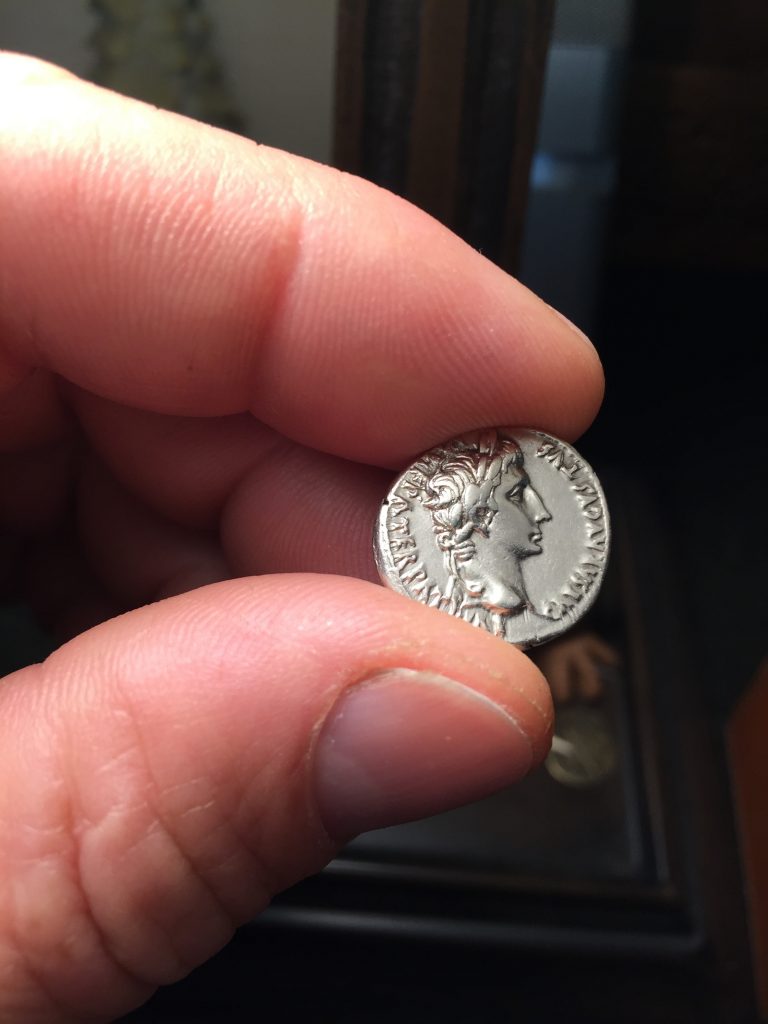
A widow’s mite or prutah.

Exodus 23:14–19, Three times you shall keep a feast. The Scriptures teach us that during the three biblical pilgrimage festivals of Passover/Unleavened Bread, Pentecost and Tabernacles all the individuals of the nation are to leave their place of individual isolation and are to rendezvous in the presence of the one Elohim of Israel. This was to occur in the festival circle (or chag) around the common sanctuary (where YHVH has chosen to place his name, Deut 16:2, 11, 15), thereby becoming conscious that each one is connected to all the other members of the nation, with YHVH Elohim, and with the Torah (The Pentateuch—Deuteronomy, p. 310, by S. R. Hirsch). In biblical times, the Israelites would gather wherever the tabernacle had been placed. When the temple was built in Jerusalem, this city became the destination point for the Israelite pilgrims during these three biblical feasts. For the saints who celebrate the biblical feasts now, there is no temple in Jerusalem to gather around. The saints are now the spiritual temple of the Spirit of Elohim (1 Cor 3:16). Moreover, Yeshua has promised to be in the midst of his people when they gather together (Matt 18:20). In light of these spiritual realities, YHVH’s people need to pray and seek his facer where he wants them to gather for his feasts, and then obey him in faith believing that he will be with them.

But there is much more to this spiritual picture if we add Yeshua the Messiah of Israel into the picture, for each of the three feasts point directly to him. Passover and the Feast of Unleavened Bread, the Feast of Weeks or Pentecost, and the Feast of Tabernacles all point to Yeshua, since the first two festal periods point to Yeshua’s first coming, while the last fall feast points to his second coming. Each of these feasts represent milestones in the spiritual journey of the redeemed believer from initial redemption to glorification and eternal life in the presence of YHVH Elohim.

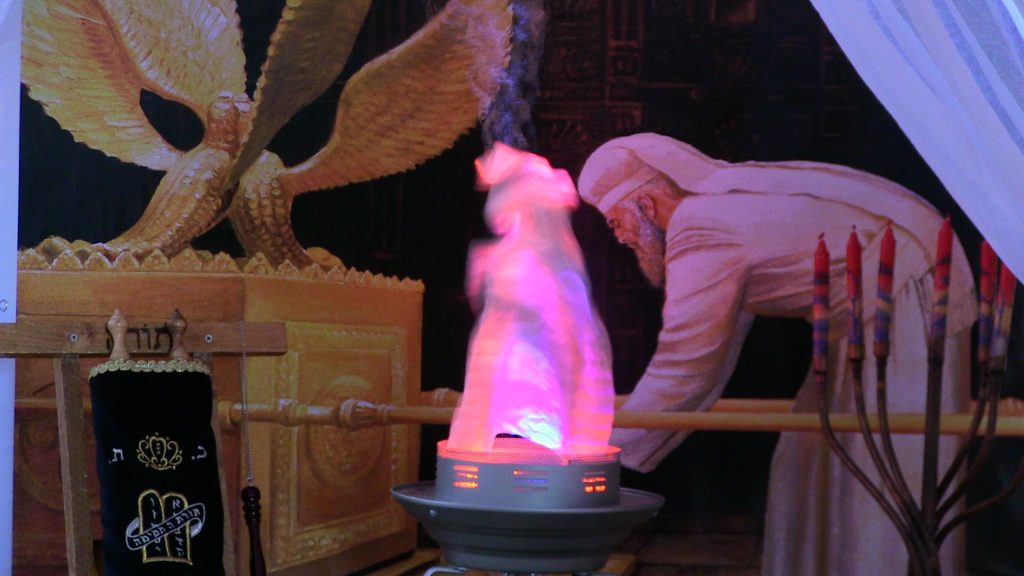
The three feasts also spiritually represent the three sections in the Tabernacle of Moses (Heb. mishkan). These are the outer courtyard, the holy place and the holy of holies. These three sections of the tabernacle correspond with the three parts of man, which are his body, soul and spirit (1 Thess 5:23). The feasts of Passover (Heb. Pesach) and Unleavened Bread (Heb. Chag haMatzot) are the first two feasts the righteous believers are to celebrate in the spring and represent the first steps in a new believer’s spiritual walk. This corresponds with the outer courtyard and relates more to the spiritual cleansing of the outer parts or body of man. It is here that one begins their spiritual walk and relationship with Yeshua, who is the Word of Elohim. The Feast of Weeks or Pentecost (Heb. Shavuot) is the next step one takes in their spiritual walk as one goes into the tabernacle of Moses. The tabernacle’s holy place speaks of one bringing one’s soul (the mind, will and emotions) into submission to the will of YHVH as one advances in their spiritual walk and grows in the fruits and gifts of the Spirit of Elohim. This readies the redeemed Israelites to move into a place of worship and praise before the Almighty.

Finally, the holy of holies corresponds to the Feast of Tabernacles (Heb. Chag haSukkot) and the spirit part of man. This section of the tabernacle points to man’s ultimate spiritual relationship with Elohim. It is here that man relates to Elohim, who is a Spirit, on a deeper spirit to Spirit level (John 4:24; 1 Cor 2:10–13). This prophetically points to man’s ultimate destiny as glorified beings in the New Jerusalem as adopted members into the family of Elohim (John 1:12; Rom 8:14–15, 23; 9:4; 2 Cor 6:18; Gal 4:5–6; Eph 1:5; 1 John 3:1; Rev 21:7).

Exodus 23:17, Three times in the year. Three times a year at the three pilgrimage feasts—the Feast of Unleavened Bread, Feast of Weeks (Pentecost) and Feast of Tabernacles—Elohim commands that all men appear before him at the place where he has chosen to place his name (Deut 16:2, 6, 11, 15, 16). At these three times, Israelites would gather wherever the tabernacle or temple of Elohim was located to celebrate before Elohim with their fellow Israelites. The Torah repeats this command in Deuteronomy 16:6–17.

On these three occasions, YHVH commands that all males bring with them a feast offering—they were not to appear before YHVH empty-handed, but they were to bring an offering as they were able according to how YHVH had blessed them (Deut 16:16). This was not a tithe, but a freewill offering in addition to their regular tithes. Through Malachi the prophet, YHVH accuses backslid Israel of robbing him by not giving to him their tithes and offerings (or contributions). Because of this negligence, Elohim declares that Israel has been cursed with a curse,whereupon he promises to reverse the curse, rebuke the devourer that has destroyed their prosperity, to open the windows of heaven over them so that the will not be able to contain the prosperity of YHVH (Mal 3:8–12).

Some people may insist that this offering no longer applies to those who are “under the new covenant.” However, Yeshua declares that not one jot or tittle of the Torah has been annulled (Matt 5:18), and those who follow the Torah will be blessed (Matt 5:19). Although, we may not be able now to fulfill all aspects of YHVH feasts laws, YHVH expects us to love him and to keep all of his commandments the best we can (John 14:14; 1 John 2:3–6). To not obey his Torah-commands is sin (1 John 3:4), and on judgment day, Yeshua promises to reject those who were Torahless (workers of iniquity), despite their professed religiosity (Matt 7:21–23).

Giving financially to those who are doing the ministry of Yeshua is a spiritual principle that is immutable, universal and is part of the walk of the righteous redeemed (Prov 3:9–10; Phil 4:14–17; 1 Tim 5:17–18; 1 Cor 9:13–14; Gal 6:6).

By the way, to the several of you that are fed spiritually by this ministry and who thus show your appreciation by giving financially to it, we offer a heartfelt thank you! May YHVH bless you mightily and supply all your needs according to his abundant riches in Yeshua the Messiah!


The Name Yehovah Found 1015 Times in Ancient Hebrew Manuscripts

In this video published on January 25, 2018, Hebrew scholar, Nehemia Gordon discusses manuscript evidence for the pronunciation of the personal name of YHVH with his team of researchers. Gordon and his team have been searching ancient Hebrew manuscripts of the Tanakh (OT) that go back to the ninth century A.D. After searching through thousands of ancient manuscripts and visually looking for the Hebrew letters Y-H-V-H, they have found 1015 instances where the Jewish sages have filled in the vowel points of these four letters for the name of Elohim so that it reads Yehovah. To date, they have not found a single instance where Y-H-V-H has been written as Yahweh. At 41:40 in the video, Gordon and Keith Johnson discuss this fact. Gordon has put together a data base listing the places in the Bible where the name Yehovah occurs along with the name of the ancient manuscript in which Yehovah is found.

Here is a short version of this info:

In this short video, Nehemia Gordon explains why the six letter in the Hebrew alphabet is pronounced as a v and and not as a w. This information has a profound impact on how to vocalize or pronounce the personal name of YHVH.

This video is an abbreviated version of a much longer teaching Nehemia presented on his website where he gives more examples from ancient Hebrew manuscripts why the vav was correctly pronounced as a v and not as w by most ancient Hebrew speaking Jews, as well as how the w pronunciation came into the Hebrew language much later. He shows actual photos of these manuscripts in the longer version.


A Bond Servant to Yeshua FOREVER!

Exodus 21:6, Bore his ear. The servant who of his own freewill and out of love for his master chose to remain in his household forever was permanently marked in this manner to signify that he was willing to hear and obey all his master’s commands punctually. This is a spiritual picture of the disciples of Yeshua who chose to become his bond servants (e.g. Rom 1:1; Gal 1:10; Col 4:12; Tit 1:1; Jas 1:1; Jude 1; Rev 1:1; 15:3). Not only do the true disciples of Yeshua accept him as their Savior, but they submit to him as their Lord or Master. They accept the fact he has purchased them with his blood, and that they now owe their lives to him. They willing choose to dwell in his spiritual house forever, to serve him and to hear and to do all that he commands of them.

Forever. The Hebrew word olam translated as “forever throughout the Scriptures means “as long as the conditions exist” and not necessarily “for eternity” as the meaning of the English word “forever” often implies. In this verse, forever obviously means “as long as the servant shall live” and not “for eternity.” When the Hebrew word v’ad translated as “and ever” is added to olam (forever), the concept of eternity is connoted (e.g. YHVH’s reign as king is for eternity, Exod 15:18; Ps 10:16; the resurrected righteous will live for eternity, Pss 21:4; 45:6; Dan 12:3; during the millennium, righteous redeemed Israelites will walk with YHVH for eternity, Mic 4:5; the righteous will keep YHVH’s Torah for eternity, Ps 119:44; the righteous will praise YHVH for eternity, Ps 145:1, 2, 21).


What Are the 15 Enemies of Torah-Obedience?

In the Book of Deuteronomy, YHVH through Moses lays out the wonderful blessings that will come when YHVH’s people obey his Torah commandments. In stark terms, he also lays out the curses that will come as a  result of disobedience. Throughout Deuteronomy, it’s almost as if YHVH is pleading with his people to choose to obey him, so he can outrageously bless them. What a deal for the people! At the same time, he clearly shows that ultimately it is the choice of each person to choose which path they will follow: the path of obedience and righteousness that leads to blessings and life, or the path of disobedience and sin that leads to curses and death (Deut 30:15–20).

With the two paths so clearly laid out before men, you’d think that men would choose the path of blessings and life. Yet this isn’t the case. Most men will choose the path of sin and rebellion. Why is this? This is because man has several enemies that are working against YHVH to draw men away from him into a path of sin and rebellion. Who and what are these enemies?

Enemy Number One: Our Flesh Nature

The fallen nature, carnal heart of man (Jer 17:9; Rom 8:7). Man’s heart is naturally rebellious, stiffnecked and hard toward anyone or anything that tells it to do something it doesn’t want to do. The rebellious pride and stubborn hard-heartedness of the human mind, will and emotions is the greatest force working against one to obey YHVH’s commandments. What makes this enemy so lethal is that he’s inside of us — in our heart (how we feel) and in our mind (what we think). This enemy is very hard to detect, since it is so well camouflaged within each of us.

Enemy Number Two: The World

The influences of the world are a snare to us (Exod 34:12; Deut 7:16). The allurements of the pagan practices of the surrounding nations was ancient Israel’s downfall. The ways of the heathen are enticing because they appeal to and satiate the carnal nature within each man. This is why it is so hard for us to resist. The enemy outside of us is seducing the enemy within us and together they are warring against word or truth of Elohim in our spirit man (our conscience).

Enemy Number Three: Satan

Satan the devil, the adversary, is YHVH’s arch-rebel and is seeking to undermine everything that is good, true and righteous (1 Pet 5:8). He’ll use the world to draw man away from Elohim. He’ll use demonic, and lying spirits to tempt man to sin against YHVH. He’ll shoot fiery darts into man’s thinking (Eph 6:16) to deceive man and to lead him astray spiritually (Rev 12:9). He is the original sinner (1 John 3:8). He is the father of all lies (John 8:44) and he lies about and rebels against the truth of Elohim.

Enemy Number Four: Church Traditions

Church traditions or doctrines of men by which make the word of Elohim is made of non-effect is a major force keeping man from obeying all of YHVH’s Word including his Torah-commandments (Matt 15:6–9; Mark 7:8–9).

Enemy Number Five: Family and Friends

Family members and friends who are opposed to obedience to the Word of Elohim is a strong deterrent to one’s keeping YHVH’s commandments. After all, what will they think? How will that affect my relationship with them?

Other Reasons Why People Refuse to Obey YHVH’s Torah

They think it’s too difficult to do.

It requires lifestyle changes.

They’re afraid of what others may think.

They’re afraid they might lose their friends.

People have become a victim of spiritual complacency. They don’t want to leave their spiritual comfort zones.

They’re too busy with the cares of this life to want to make any major spiritual changes.

They’re really not in love with YHVH enough to want to obey his Word.

They lack the fear of YHVH, and therefore obeying his Word isn’t really that important.

They don’t take the Word of Elohim seriously enough.

They have succumbed to a faith of easy-believism when it comes to obeying YHVH’s Word where actions don’t have to back up one’s belief or fatih.

Does one really think that any of these reasons and excuses will pass muster with YHVH Elohim on judgment day when he’s determining a persons level of rewards in his kingdom?

Whoever therefore breaks one of the least of these commandments, and teaches men so, shall be called least in the kingdom of heaven; but whoever does and teaches them, he shall be called great in the kingdom of heaven. (Matt 5:19)

For we must all appear before the judgment seat of Messiah, that each one may receive the things done in the body, according to what he has done, whether good or bad. (2 Cor 5:10)

And behold, I am coming quickly, and My reward is with Me, to give to every one according to his work. (Rev 22:12)


The 18 Benefits of Studying and Obeying YHVH’s Torah

The Scriptures reveal that the Torah is much more than a list of dos and don’ts as many people have been led to believe, and is therefore, in their mind, a negative thing. Deuteronomy 4:6 says that the Torah is our wisdom and understanding before the nations of the world. In Deuteronomy 11:8, we learn that the Torah makes us strong. The word strong in Hebrew is chazaq meaning “to be strong, grow strong, to prevail, to be firm, be caught fast, be secure, to grow stout, grow rigid, to restore to strength, give strength, sustain, encourage, make bold, encourage, to repair or to withstand.” This sounds like a good thing!

Here is a list of the other benefits of studying and obeying YHVH’s Torah:

The Torah defines what sin (1 John 3:4) and righteousness are (Ps 119:172).

The Torah shows us what YHVH expects from man (Deut 10:12–13).

The Torah convicts man of sin or lawlessness and brings us to Yeshua by way of the cross (Gal 3:24).

The Torah brings temporal and spiritual rewards; life and blessing when followed; curses when disobeyed (Deut 28; Matt 5:19).

Obeying the Torah helps deepen a loving and intimate relationship with YHVH-Yeshua and helps us to abide in Yeshua (John 14:15; 1 John 2:3–6).

Obeying the Torah helps us to stay spiritually pure (1 John 3:3–6).

Obeying the Torah protects us from the influence of the devil (1 John 3:8).

The Torah provides a framework or basis for YHVH’s divine justice or judgment (Deut 17:11; John 12:48; Heb 4:12 cp. Rev 1:16; 2:16; 19:15, 21).

The Torah forms the basis for the jurisprudence system of civil government (Deut 17:11).

The Torah is heaven’s revelation of divine grace. It reveals how sinful man can be reconciled to a righteous Elohim; it reveals the path of redemption or salvation from slavery to sin through the idea of substitutionary sacrifice. This all points to Yeshua the Messiah, the Redeemer or Savior of the world.

The Torah reveals the concept of covenant between YHVH and man involving YHVH’s chosen people—the nation of Israel. Only through covenantal relationship with the Elohim of Israel and by being grafted into the Israel of Elohim can one have eternal life (Eph 2:11–19).

The Torah will guide and keep us on the path of righteousness and lead us into YHVH’s everlasting kingdom and spiritual divine family. It acts as a protective guardrail to keep us on the road leading to eternal life. It keeps man from falling into the spiritual ditches or off the spiritual cliff along the side of the road of life.

The Torah is our light in a dark world; the answer to life’s questions and dilemmas (Ps 119:99, 105; Prov 6:23).

Through Yeshua the Living Torah, the Torah helps us to become the person that YHVH wants to live with forever. It prepares us to be the spiritual bride of Yeshua (Rev 19:7–8).

Obeying the Torah brings us eternal rewards (not eternal life, which is by grace through faith alone, see Eph 2:8) in the world to come (Matt 5:19).

Obeying the Torah helps deepen a loving and intimate relationship with YHVH-Yeshua and helps us to abide in Yeshua (John 14:15; 1 John 2:3–6).

Obeying the Torah-Word of YHVH helps to perfect YHVH-Yeshua’s love in us (1 John 3:6).

The Torah shows us how to love Elohim and our neighbor (Mark 12:29–31).


The Glorious Sound of the Shofar an Its RAM-ifications


Exodus 19:16,19 Voice of the trumpet [shofar]. In Jewish thought, the Scriptures speak of three great shofar blasts that have historical and prophetic significance: the first, last and great or final shofar blasts. These are:

The First Trump (or shofar blast) occurred on Shavuot at the giving of the Torah (Matan Torah) at Mount Sinai (Exod 19:16, 19). This shofar blast was of heavenly origin and is the first time the Bible records the sound of the shofar being heard.

The Last Trump (or shofar blast) occurs on Yom Teruah (the Day of Trumpets/Shofar Blasts, commonly called Rosh Hoshana) is the day of

the awakening blast calling the saints to prepare their spiritual garments in preparation for the coming Messiah or Bridegroom. This shofar blast corresponds to the last trumpet blast of Revelation 11:15 after which the resurrection of the righteous occurs (1 Cor 15:51–53).

The Great Trumpet or Final Trumpet (or shofar blast called the Shofar HaGadol) is blown on Yom Kippur (Day of Atonement) signifying the Elohim’s day of judgment and the return of Messiah Yeshua as the King and Judge of the earth. At this time, it seems likely that he will destroy Babylon the Great with its new world order religious, political and economic system (Rev 19:1–21 cp. Rev 18) just before the establishment of his millennial kingdom (Rev 20:1–10). Historically on the Day of Atonement, the jubilee trumpet sounded in Israel on the fiftieth year. At this time, the captives were set free, debts were forgiven and all land was returned to its original owners. Matthew says that Yeshua the Messiah will return with a great sound of a shofar (trumpet, Matt 24:30–31; 1 Thess 4:16). Perhaps this is a reference to the shofar ha-gadol when Yeshua returns to earth, will set the spiritual captives free from enslavement to the enslaving economic, religious and political tentacles of end time Babylon the Great.

What’s So Mystical About the Sound of the Shofar?

The Shofar

The ram’s horn shofar is a uniquely biblical instrument. Although the enemies of Elohim’s truth have misappropriated, counterfeited or perverted much of what is found in the Bible, so far as this author knows, the shofar is one thing that Satan, the adversary of all that is good, and his followers have left alone. It’s like the proverbial “hot potato” that’s Continue reading


The Terms and Conditions for Coming into the Presence of the Almighty

When coming into the Presence of Elohim, let’s never forget how high and set-apart he is and how low and defiled we are!

Exodus 19:10, Consecrate them today. How did Israel, as a bride-to-be, prepare herself to meet with YHVH? How are YHVH’s people now to be preparing themselves for their spiritual marriage with Yeshua? (Compare Exodus 19:10 with Revelation 19:7–9.) What is the righteousness of the saints (mentioned in Rev 19:8)? Righteousness is defined in Psalms 119:172 as, “… all thy [Torah] commandments are righteousness.” If what the Scriptures define as righteousness (i.e. the Torah) was “nailed to the cross,” as is popularly taught, then who is in error? The Scriptures or those who teach against YHVH’s Torah laws?

Discussion A. Why is it essential to study the example of the children of Israel preparing themselves to come into the presence of YHVH in Exodus 19? After all, if Yeshua did it all for us, we can just come boldly before the Father’s throne anytime, anyway we want, right (Heb 4:16)?

Let’s explore this concept a little to see what the Bible has to say about it.

Paul says in I Corinthians 10:11,

Now all these things happened to them [i.e. the children of Israel] as examples, and they were written for our admonition, upon whom the ends of the ages have come. (See also Rom 15:4.)

The writer of Hebrews has something similar to say in his prefatory remarks to his statement in Hebrews 4:16 about coming boldly before the throne of YHVH through the merits of the sinless righteousness of Yeshua our High Priest. In the preceding several Continue reading