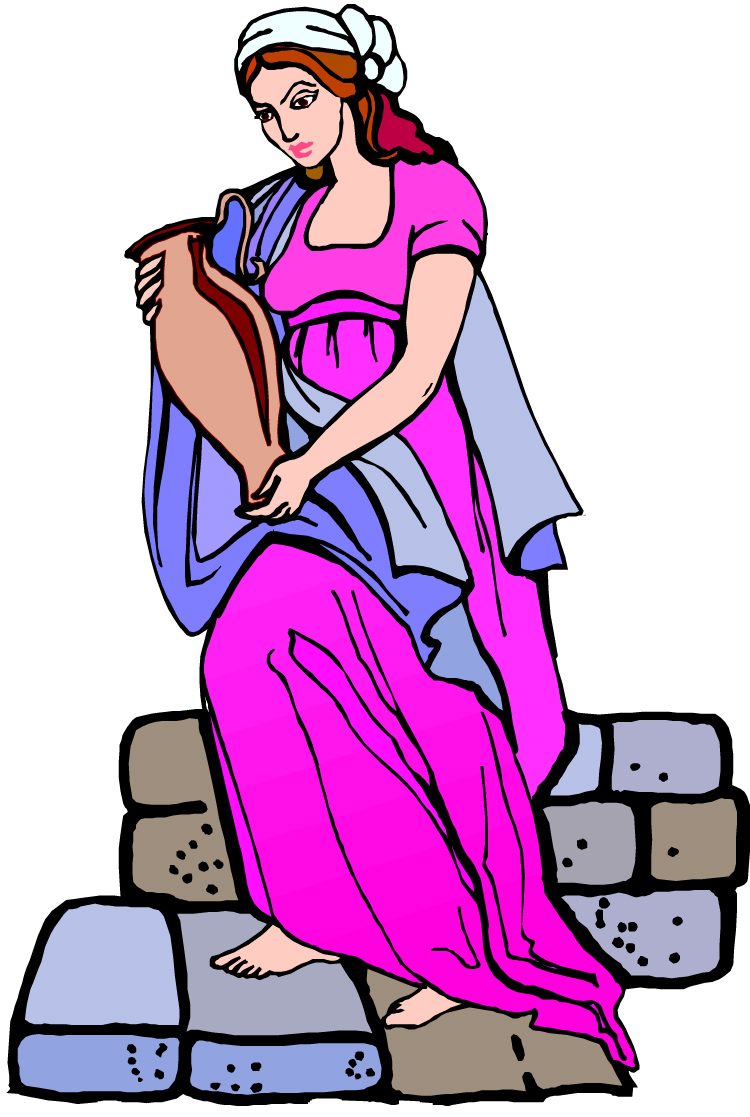
Finding a Wife for Isaac—A Lesson in Faith and Obedience

Genesis 24:2, So Abraham said. In appointing Eliezer to find a wife for Isaac, Abraham was deputizing him to become the friend of the bridegroom, or the family representative in this important mission. (For more on this subject, see notes at John 3:29.)

Genesis 24:2, 9, Your hand under my thigh. (Heb. yarek; see also Gen 47:29) Abraham’s servant literally placed his hands on Abraham’s testicles swearing an oath on Abraham’s projected progeny, even as in modern times we place our hands on the Bible. Interestingly, the word testicle or teste derives from the Latin words testis meaning “testimony, testify and testament.” Yarek is the same word the KJV translates “hollow of his thigh” in Genesis 32:25 and 32, although, in this case, it seems to be referring to the tendon of the hip.

Genesis 24:4, Take a wife for my son Isaac. Some Bible students see in Abraham’s sending Eliezer his servant an allegory of our Heavenly Father choosing a bride for Yeshua, his Son with the help of the Set-Apart Spirit. The analogy goes like this: When speaking to Abraham, YHVH refers to Isaac as “your only son…whom you love” (Gen 22:2). In this statement, it’s hard to miss the similarity with the well-known John 3:16 passage where Yeshua refers to himself as the only begotten Son whom his Father in heaven loves. Isaac is an obvious prophetic picture of Yeshua in that Abraham sacrificed a ram in place of his only son whom he loved on the very spot where, one thousand years later, the Temple of Continue reading


“YHVH, help us to forgive others as you have forgiven us…”

Roman denarius—a small silver coin

Matthew 18:24, 28, Ten thousand talents…a hundred denarii. A talent was a unit of measure for gold and silver and was equivalent to about 75 lbs. One talent of silver at a rate of $15 per ounce would be worth $36,000. Ten thousand talents of silver would be worth about $18 million. A denarius was equivalent to a fair day’s wages (Matt 20:2). If one earns $40,000 in a year and works 260 days per year, then 100 denarii would be equivalent to about $15,384. 

The lesson of Yeshua’s parable abut the unforgiving servant is obvious. If one’s master forgives him of a debt that’s impossible to repay ($36 million), then one should forgive one’s neighbor the small debt of $15,384.

Likewise, if Yeshua through his death on the cross forgives a repentant sinner of the wages of sin, which is death (an impossible debt for a sinner to pay), then shouldn’t the same forgiven sinner likewise forgive those who have offended him (Matt 18:6–8) or sinned against him (verse 15–19)?


Blog Scripture Readings for 10-28 Through 11-3-18

Aside

THIS WEEK’S SCRIPTURE READINGS FOR STUDY AND DISCUSSION:

Parashat Chayei Sarah — Genesis 23:1 – 25:18
Haftarah — 1 Kings 1:1–31
Prophets — Judges 5:1 – 10:18
Writings — Psalms 28:1 – 34:22
Testimony — Matthew 18:21 – 21:46

Most of this week’s blog discussion points will be on these passages. If you have general comments or questions on the weekly Scripture readings not addressed in a blog post, here’s a place for you to post those. Just use the “leave a reply” link below.

The full “Read Through The Scriptures In A Year” schedule, broken down by each day, can be found on the right sidebar under “Helpful Links.” There are 4 sections of scripture to read each day: one each from the Torah, the Prophets, the Writings, and from the Testimony of Yeshua. Each week, the Torah and haftarah readings will follow the traditional one-year reading cycle.

Weekly Blog Scripture Readings for 10/28/18 through 11/3/18.


The Three Types or Levels of Demonization

Matthew 17:21, This kind [of demon]. There are different kinds of demons that influence humans. The Testimony of Yeshua speaks of being “possessed with a demon” or “demons,”  “vexed with a demon,” or “severely possessed with a demon” (Matt 4:24; 8:16, 28, 33; 9:32; 12:22; 15:22; Mark 1:32; 5:15, 16, 18; Luke 8:36; John 10:21). 

All these ideas are expressed by the Greek word daimonizomai meaning “to be under the power of or possessed by a demon, or demonized.” There are levels of demonization.

The Bible reveals that demons can influence humans (e.g. from fiery darts of Satan shot at the saints by which he attempts to influence them [Eph 6:16], by lying to humans [1 Kgs 22:22–23], through unclean spirits [e.g. Matt 12:43; Mark 1:23, 26; 3:30] and by literally living in or possessing a person. The latter is the most extreme form of demonization. In this passage, a demon lived inside of a child (v. 18), and when Yeshua rebuked the demon, it came out of the child.

When a person is possessed with a demon, prayer and fasting may be necessary on the part of the deliverer to cast out the demon. This is because the deliverer has, to one degree or another, himself been weakened spiritually by faithlessness and perverseness and therefore lacks the spiritual power and faith to cast out the demon (vv. 17, 22), or because he has been negatively influenced by those around him who are this way (v. 17), and thus has been weakened by his spiritual environment. This is why Yeshua, at times, had to put the spiritually weak and faithless people out of the room before healing a sick person (Mark 5:40). Prayer and fasting energizes a person spiritually by afflicting the soul (the mind, will and emotions) and forcing it into conformity with the word, will and Spirit of Elohim through which one gains the spiritual power to accomplish supernatural feats such as  casting out demons.

When Yeshua speaks of “this kind” of demon (v. 18). What did he mean? What kind of demon? The Bible reveals that there are various levels and types of evil, satanic spirits (e.g. Eph 6:12). The Book of 1 Enoch teaches and second temple Jewish sages based on this that demons were the disembodied spirits of the nephilim (see Gen 6:2–4), who after their human bodies died continued to live (as ghost-like figures) roaming in search of a body (human or animal) or object to possess (1 Enoch 15:8–10). This may be what Yeshua is referring to here.

With regard to the origin of demons, the 1906 Jewish Encyclopedia under the articles entitles “Demonology” states,

The speculation regarding the nature and origin of these demons and their leaders led as early as the second pre-Christian century, in those fragments preserved under the name of the Book of Enoch, to the story of the fall of the angels (Enoch, vii.-viii.; lxix.). Like Beelzebub, or Lucifer (Isa. xiv. 12; compare Slavonic Enoch, xxix. 4), two hundred ‘Irin or “watchers” fell, attracted by the beauty of the daughters of men (Gen. vi. 4); only tradition obviously differed as to the leader of the rebellious host, whether it was Azazel or Shamazai. At any rate, they acknowledged the supremacy of Satan (liii. 3, liv. 6), though occasionally many satans are mentioned (xl. 7 et al.), and these fallen angels became “the evil spirits” (xv. 8, xix. 19) who taught mankind all the arts of deception, witchcraft, and sin (vii.-viii., lxix.). But their children, the offspring of this mixture of an earthly and a celestial race, became, when slain, the hybrid race of disembodiedspirits or demons doing the work of destruction until the Day of Judgment (xvi. 1). 


The “Sacrifice” of Isaac at Mount Moriah and Yeshua the Messiah

Genesis 22:13, A ram caught in a thicket by his horns. YHVH credited to Abraham’s spiritual account his willingness to sacrifice Isaac as if he had actually done so. In fact, there is an ancient rabbinical tradition that states Isaac actually died and was resurrected as the midrash comments on this passage: “As the knife reached his throat, Isaac’s soul flew away and left [e.g., he died]. But when a voice went forth from between the angels saying, ‘Do not stretch out your hand against the lad’ (Genesis 22:12), his soul returned to his body” (Pirkei DeRabbi Eliezer 31 as quoted in The ArtScroll Davis Edition Baal HaTurim Chumash Bamidbar, p. 1417) (bracketed comments are in the original). The Jewish sages also note that Scripture states that both Abraham and Isaac ascended the mountain, but that it is recorded that only Abraham descended (Gen 22:19). Isaac’s absence from the Genesis narrative until many years latter (Gen 24:62) has given rise to much speculation on the part of the sages as to Isaac’s whereabouts in the interim (The ArtScroll Bereishis Vol. 1a, pp. 812–813). 

Regardless of the rabbinic interpretations, does Scripture leave Isaac out of the narrative as if to highlight his absence, and to give the impression (albeit a prophetic allegorical one) that he was actually sacrificed? After all, what was the ram caught in the thorn bush thicket (wearing a crown of thorns) by its two horns all about? That ram is understood by many to be a substitute sacrifice prophetically picturing Yeshua the Messiah much later dying on the cross while wearing a crown of thorns. 

Moreover, who was it that commanded Abraham to lay down the knife and slaughter the ram instead? It was the Messenger (Heb. malak) of YHVH (verses 11–12, 15), who was none other than the pre-incarnate YHVH-Yeshua, the Word or Messenger of Elohim (John 1:1, 14), whose audible voice Abraham heard some 1900 years before his appearance as the Messiah in human form on earth as the Lamb of Elohim slain from the foundation of the earth.

 The Messenger of YHVH at the Binding of Isaac

In Genesis 22:11, 15–17 we read the following,

11 And the Messenger/Malak of YHVH called unto him out of heaven, and said, Abraham, Abraham: and he said, Here am I … 15 And the Messenger/Malak of YHVH called unto Abraham out of heaven the second time, 16 And said, By myself have I sworn, saith YHVH, for because thou hast done this thing, and hast not withheld thy son, thine only son: 17 That in blessing I will bless thee, and in multiplying I will multiply thy seed as the stars of the heaven.

In this passage, there is no mention of the Messenger of YHVH visibly appearing to Abraham in some bodily form, but only his voice calling from heaven. What we want to emphasize in this passage is that the Messenger of YHVH is equating himself with YHVH (verse 16). The biblical passages where the Malak of YHVH equates himself with YHVH while appearing in human form have perennially defied reasonable explanation by the Jewish sages.

Notwithstanding, the ancient Targum Jerusalem (the pre-Christian Aramaic translation of the Hebrew Scriptures) equates the Malak of YHVH with “the Word of Elohim” in verse eight implying that YHVH and the Word of YHVH are in some way different from each other:

And Abraham said, The Word of Elohim will prepare for me a lamb; and if not, then thou art the offering, my son! And they went both of them together with a contrite heart.

Some Jewish sages asserts that “the angel speaks in God’s name, in first person” while others maintain that it was “God Himself who opened the Continue reading


The “Son of Elohim/God” Prophesied About in the Old Testament

Matthew 16:16, The Son of the living Elohim. One day, Yeshua asked his disciples who they thought he was. Peter answered, “You are the Messiah, the Son of the living God. (Matt 16:15–16) How did Peter know this? Were there any hints in the Tanakh (Old Testament) that the Messiah would be the Son of Elohim, since these were the only Scriptures Peter had?

Their are numerous prophecies in the Tanakh about the Messiah. Here is a list of scriptures that prophesy specifically that he would be the Son of Elohim with some brief comments following.

Therefore Adonai himself shall give you a sign: Behold, a virgin shall conceive, and bear a son, and shall call his name Immanuel [Heb. God with us]. (Isaiah 7:14)

Many Bible prophecies have double meanings or fulfillments. Such is the case with this prophecy. It was partially fulfilled in Isaiah’s life (Isa 8:3), but not completely. Isaiah’s son was neither deity nor was he known as “God with us.” Yeshua the Messiah was (Matt 1:23).

He shall cry unto me, “You are my father, my El [God], and the rock of my salvation.” Also I will make him my firstborn, higher than the kings of the earth. (Psalm 89:26, 27)

Again, this prophecy has a double fulfillment. It was partially fulfilled by David and his sons, but not completely. Only Yeshua, who also was from David’s line.g. fulfilled the superlative aspects of this prophecy. Not only that, Solomon, David’s son who ruled after him, wasn’t David’s firstborn. Yeshua was Elohim’s firstborn, however. 

Who has ascended up into heaven, or descended? Who has gathered the wind in his fists? Who has bound the waters in a garment? Who has established all the ends of the earth? What is his name, and what is his son’s name, if you can tell? (Prov 30:4)

This is a clear and direct reference to the Son of Elohim, who, the Testimony of Yeshua (the New Testament) tells us in several places, was also the One through whom Elohim created all things (e.g. John 1:7).

I will declare the decree: YHVH has said unto me, “You are my Son; this day have I begotten you.… Kiss the Son, lest he be angry, and you perish from the way, when his wrath is kindled but a little. Blessed are all they that put their trust in him.” (Psalm 2:7, 12)

Here is yet another Messianic prophecy from the Tanakh that speaks of the Messiah King being the Son of Elohim. Neither King David nor his sons ever fulfilled this prophecy even remotely to its fullest extent. 

For unto us a child is born, unto us a son is given: and the government shall be upon his shoulder: and his name shall be called Wonderful, Counsellor, The mighty El [God], The everlasting Father, The Prince of Peace. (Isaiah 9:6)

In this Messianic prophecy, the Son and Elohim are equated. He is both Elohim and the Son of Elohim. He is also a son of David who will sit on David’s throne, and whose government will ultimately fill the earth (verse 7). In this prophecy, the Messiah is called “the Everlasting Father.” How can he be a Father and a Son at the same time? The same way any man can be both a father and a son. Spiritually the pre-incarnate Yeshua as YHVH the Son married Israel and begot spiritual children through that nation (Ezek 16:1–14). Similarly, Yeshua as the Messiah is in the process of marrying his bride, who is redeemed Israel (the saints), and who is begetting spiritual children, and will continue to do so on into the Messianic Era (the Millennium; e.g. Rev 12:1–2; 2 Cor 11:2; Rom 7:4).