A t-Shaped Cross Vs. an I-Shaped Cross Discussed

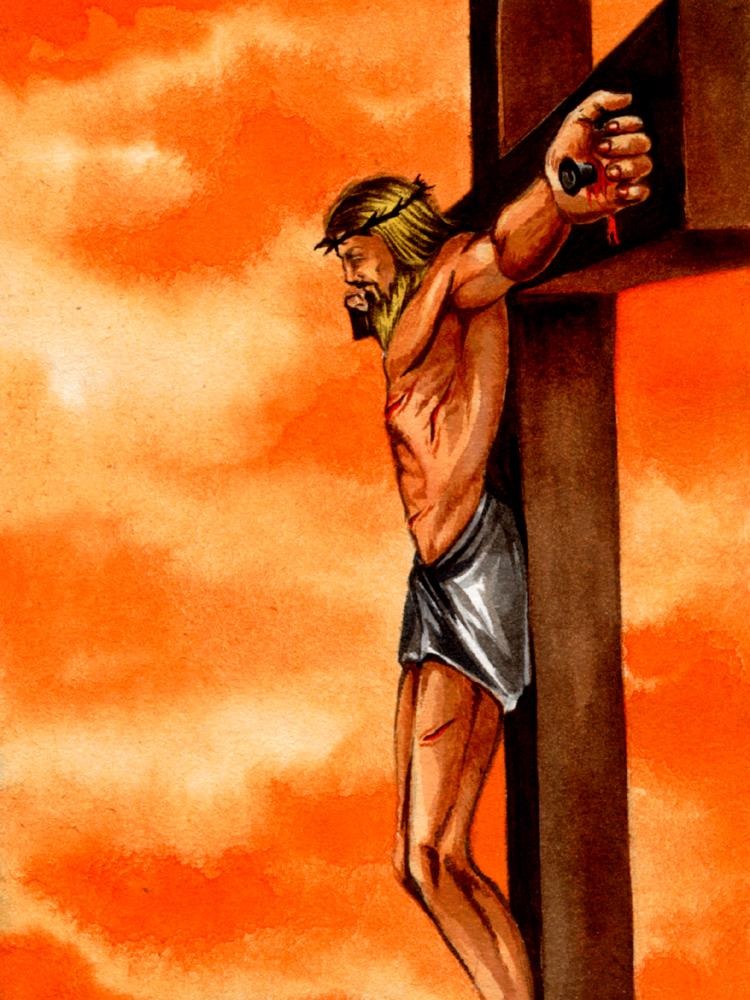
Matthew 27:40, The cross. Stauros, the Koine Greek word for cross, like most words in all languages, has several meanings. To arrive at the true meaning of a word, we can’t just look at the first meaning in a list of dictionary definitions or choose the meaning that best suits our personal biases or theologies.

Too determine which dictionary definition of a word best applies to a particular word in a literary situation, we must consider all the meanings of a word and then look at the context of the literature in which the word is found, and then choose the meaning that best fits.

Even then, well meaning people will have differences of opinions on this (e.g. The Companion Bible, by E.W. Bullinger, appendix 162). This is the dilemma that scholars who translate literary documents from one language to another face. This is the case with the Koine Greek word, cross, which is found in the NT some 32 times.

Stauros literally refers to “an upright, pointed stake used for fencing or in the construction of a stockade.” It can also refer to a torture instrument, or a cross on which the Roman’s executed criminals. A stauros came in several basic forms: a vertical upright, pointed stake, or an upright stake with a crossbeam resembling our capital letter “T” or our small Continue reading


The Science of the Crucifixion

Matthew 27:35, Crucified him. 

By Cahleen Shrier, Ph.D. (originally posted at http://www.apu.edu/articles/15657/)

Each year, Cahleen Shrier, Ph.D., associate professor in the Department of Biology and Chemistry [at Azuza Pacific University in California], presents a special lecture on the science of Christ’s crucifixion. She details the physiological processes a typical crucified victim underwent and teaches her students to see Christ’s death on the cross with new understanding. The exact events in this scenario may not have happened in Jesus’ specific case, but the account is based on historical documentation of crucifixion procedures used during that time period. Please be aware that the following is of a realistic and graphic nature.

It is important to understand from the beginning that Jesus would have been in excellent physical condition. As a carpenter by trade, He participated in physical labor. In addition, He spent much of His ministry traveling on foot across the countryside. His stamina and strength were, most likely, very well developed. With that in mind, it is clear just how much He suffered: If this torture could break a man in such good shape, it must have been a horrific experience.

Matthew 26:36-46, Mark 14:37-42, Luke 22:39-44

After the Passover celebration, Jesus takes His disciples to Gethsemene to pray. During His anxious prayer about the events to come, Jesus sweats drops of blood. There is a rare medical condition called hemohedrosis, during which the capillary blood vessels that feed Continue reading


Jacob Versus Laban = YHVH’s Saints Versus End Times Babylon

Is the greedy, idolatrous and enslaving grasp of modern Babylon holding you back from your spiritual destiny? It’s time to begin breaking free!

Genesis 31:43, These daughters are my daughters. Laban claims that Jacob’s wives and children belonged to him. Laban was also steeped in the idolatry of Babylon having in his possession idols or images called teraphim (Gen 31:19, 34–35), which legal symbols of his wealth, since they were actual title deeds to his property. These gods of one’s property also acted as good luck charms insuring the land’s prosperity. 

Is there a modern-day counterpart to this? Yes. Doesn’t modern Babylon want to control and possess the wives and children of redeemed Israel, indoctrinate them in its pagan religious system, and then keep Jacob’s modern descendants (Christians and Jews) from returning to their spiritual and physical homeland and birthright inheritance, and from returning to the Torah-faith of their fathers? Are governmental institutions (e.g. public educational institutions and state and federal Child Protective Services agencies, social welfare programs, various government regulations that have greatly diminished or eliminated many of our personal freedoms along with Elohim-given parental rights), socio-political organizations (e.g. ACLU, UN) and greedy corporate systems (banking systems that enslave people through debt, corrupters of our food supplies that destroy people’s health, pharmaceutical companies and the mainstream medical establishment that enslaves and destroys people’s minds and bodies through drugs) modern-day Labans who want to kill, steal and destroy for the benefit of money, power and control? Again, yes. 

Revelation 18:13 says that end times Babylon the Great will traffic in the bodies and souls of men. This is likely a reference to the trafficking in human body parts (for medical purposes, no doubt) and the enslavement of men’s hearts and minds. This speaks at some level of the modern day enslavement of people—of their religious expression, freedom of thought and action. In these end times, the saints of Elohim must protect themselves and their loved ones from the idols and the evil machinations of the Elohim-hating, devil worshiping idolators. 

Let us not forget John’s closing words in his first epistle: “Little children, keep yourselves from idols” (1 John 5:21). An idol is anything that gets between us and Elohim, and which moves us downward and away from him on our spiritual path instead of upward and closer to him.

Laban and Balaam. It is quite possible that the false prophet Balaam, who heard from YHVH and had a sense of righteousness, though was still steeped in paganism, was a descendant of Laban. Both Laban and Balaam were from Aram (part of greater Babylon) and only 280 years separated them. One of the Aramaic Targums (Targum Jonathan) equates Balaam with Laban, while other scholars view Balaam as Laban’s grandson. Both were involved in a mixed-religious system—some truth and some error, some good and some evil. This is the nature of religious Babylon (meaning “mixture” or “confusion”). A mixture of what? Of good and evil. Remember the tree by that name in the Garden of Eden? Who was the one who enticed man to indulge in that fruit in rebellion to YHVH’s commands? 

Even today, Satan the serpent is at the helm of spiritual Babylon trying to lure people into his system of good and evil. Like the tree of knowledge, the religious Babylon of today, out of which YHVH is calling his people (Rev 18:4), is just that—a mixture of truth and pagan lies. How else, for example, do we account for the name of the Christian festival called Easter or Ishtar named after the Babylonian sex goddess of fertility? Or how else do we account for the Christmas tree phallus symbol that also originated from Babylonian sex worship? Or how about the Easter egg (an ancient Babylonian fertility or sex symbol) or the egg on the Jewish Passover Seder plate? All these are symbols of pagan sex worship. 

As YHVH called Jacob away from Babylon back to Beth-el (the House of El), and as YHVH turned Jacob’s heart back to the ways of his fathers, is not the same YHVH likewise now calling his people to come out of religious Babylon (Rev 18:4), to separate themselves from that which is unclean or not kosher (2 Cor 6:17)? 

Yes, YHVH is pleading for the modern descendants of Jacob (redeemed Israelites or the Israel of Elohim, Gal 6:16) to not succumb to the lying forked-tongued Labans and Balaams of today who always over-promise and underdeliver—who would through deceptive lies pull Elohim’s back into their religious systems that are a mixture of truth and error. Elohim is urging his people to remember the good, ancient and blessed paths of the Torah of Moses his servant and to listen to the spirit of Elijah as the children’s hearts re turned back to the Hebraic fathers of their faith (Jer 6:16, 19; Mal 4:4–6).


 

The Spirit of Judas is alive and well today!

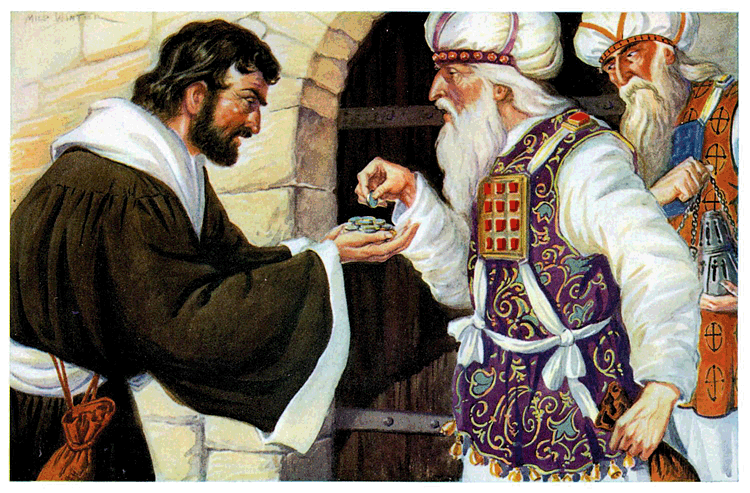
Matthew 26:14–15, Then Judas. When Yeshua plainly stated that he’d be crucified soon, Judas evidently became disillusioned, since he was expecting a Conquering King Messiah, not a Suffering Servant Messiah. With Yeshua as a conquering king, Judas could have expected a prominent position in Yeshua’s government.

The lust for money and power were likely the motives behind Judas’ following Yeshua (after all, Judas carried the money bag for Yeshua’s ministry). When Yeshua predicted his crucifixion, Judas’ incentives for following him suddenly vanished. Judas figured he’d salvage what he could of his unfulfilled expectations and enrich himself, even if it meant betraying Yeshua for money. Judas had come to the conclusion that Yeshua was a false Messiah faker and that he had wasted several years of his life following him, so, in his mind, giving Yeshua over to the Jewish authorities wasn’t an act of betrayal at all, but was an act of civil service to expose Yeshua as a trouble-making fraud.

To Judas, the Jewish leaders had been right after all to reject Yeshua as the Messiah. To them, he was merely a pretender, a deceiver, an agitator and a troubler, and Judas had come to the same conclusion. When Judas came to this realization, he now found it advantageous to his personal well-being to cast his lot in with the Jewish religious establishment and to make some money from it as well.

In our day, there many Judas-type people who turn away from following Yeshua. Many reasons can be given for this, but it boils down to three things: the lusts of the flesh, the lust of the eyes and the pride of life. Selah!


The Bible Law of Reciprocity—You Reap What You Sow

Genesis 28:22, I will surely give the tenth. To whom would Jacob ultimately tithe? We don’t know, but Jacob may have been making a prophecy about his descendants bringing their tithes and offerings to the house of El or the temple that would eventually be built on that exact spot.

Jacob’s dream in Genesis 28 was his first, life-changing personal encounter with the Elohim of his fathers (Gen 28:10ff). What was his response? It was to serve YHVH and to worship him by giving him one-tenth (a tithe) of his increase (verse 22). What prompted this response on Jacob’s part? Why was such a response appropriate?

When did you have your first encounter with your Heavenly Father and Master? In following the example of Jacob, have you faithfully used the first fruits of your increase to honor, worship and express your gratitude to him ever since? If not, why not? Scripture calls not tithing “robbing Elohim” and that as a result a curse may be on your finances (see Mal 3:8–11). Proverbs 3:9 lays out a solid truth about how tithing is a form of worshipping the Creator. “Honour [glorify] YHVH with thy substance, and with the first fruits of all thine increase, so shall thy barns be filled with plenty, and thy presses shall burst out with new wine.”

The Scriptures reveal the importance of the spiritual law of reciprocity; namely, you reap what you sow (Gen 8:22; Gal 6:7–9). If you don’t sow you will not reap. If you sow evil or good you will reap the same. Jacob had to learn this law the hard way. In Job 4:8 we read, “Even as I have seen, they that plow iniquity, and sow wickedness, reap the same.”

Jacob gained the birthright through posing as Esau (a deception) and Laban in turn deceives Jacob by putting Leah under the veil posing as Rachel in Jacob’s marriage bed. It is very easy to see the principle of reaping and sowing in others’ lives, but can we see it in our own life? This is very difficult to do! Aren’t we prone to concoct every excuse and argument imaginable to justify our sinful actions and then blame the results on others? Prayerfully take a long and hard look at your life, examine hardships and trials, and honestly ask yourself the question: Am I reaping what I have sown? It is never too late to repent and make a course correction—to bring your life into agreement with YHVH’s Word and will, so you can start reaping Elohim’s blessings.

Honesty, patience and submission to authority are fruits of righteousness. What did YHVH have to teach Jacob about these fruits of the Spirit? Jacob was impatient in submitting to YHVH’s will and waiting for the birthright to come to him in a righteous way. How did YHVH use Laban to correct these character flaws in Jacob? Jacob had to go into the Babylonian world for a season in order to be refined before being ready to be a patriarch worthy of honor and an example of righteousness as the father of the twelve tribes of Israel.

What is YHVH allowing you to go through to refine you of character flaws and defects to prepare you for the future mission he has for you? Are you submitting to his refining fires that are burning the wood, hay and stubble out of your life (1 Cor 3:12–15), or are you resisting him thereby forcing him to “turn up the heat” of his discipline to help you “to get the point” and learn your lesson? (Read Heb 12:5–15.)

Jacob was forced to go east (toward Babylon) as a form of exile and punishment for his sins. After serving as a bondservant to Laban for 20 years, he returned westward to Canaan, the land of promise. This eastward-westward movement was a pattern followed by Jacob’s descendants later on several occasions. Even Abraham left Babylon and went west to Canaan. What are the prophetic implications of this in the end times when YHVH is calling his people to “come out” of spiritual Babylon (Rev 18:4)?

Jacob builds a complete family in “exile” consisting of twelve tribal leaders. To return to the Promised Land of Canaan, he had to encounter Esau (or Edom) who is the father of many of the modern day Arab peoples. What is this a prophetic picture of? Did history repeat itself when the Jewish exilic remnant again encountered Esau’s descendants when they come back from Babylon under Ezra and Nehemiah? Isn’t this same thing happening again in our time as the exiled Jews return to Israel—their ancestral and Elohim-given homeland? Who currently is opposing their return and is openly vowing to annihilate them? Consider Edom’s opposition to Jacob past, present and future. What (or who) is really behind this opposition to Israel’s (Jacob’s) inheriting his birthright that includes a land inheritance whose borders are from Egypt to the Euphrates River in modern Iraq?

Jacob vowing to tithe to Elohim was his acknowledging his submission to Elohim and to his will—that Elohim was the Lord over his life. Complete submission to Elohim came hard for Jacob. The same is true for us, and when we tithe this is an act of worship of Elohim and acknowledgement that we have come to a higher place of surrender in our lives.


Jacob’s Ladder YHVH’s Plan of Salvation From Genesis to Revelation—The BIG Picture!

Introduction to the Study of Genesis 28:10–22

Jacob’s vision of a ladder to heaven is one of those enigmatic Scriptural passages which has befuddled the
keen intellects of many Bible scholars down through the ages. Perhaps the deeper elucidations of Jacob’s
vision has escaped the reader as well. If so, you are not alone, for well-known Christian commentators such as Matthew Henry and Adam Clarke have stabbed at its meaning realizing it has something to do with the Person of Yeshua the Messiah and his heaven-ordained ministry to reconcile earth’s inhabitants to their Heavenly Father and Creator. Keil and Delitzsch don’t even connect this dream to the Person of Yeshua. Other than vague explanations as to the dream’s interpretations, these esteemed scholars have nothing more to proffer the reader. Little if anything is said of the allegorical meaning of the ladder, the dust, the stones (plural) becoming a stone (singular) or of the significance of “the place.” Even the unusually insightful biblical scholar Arthur W. Pink in his book, Gleanings In Genesis, though he draws 101 parallels between Joseph and Yeshua the Messiah, can gives us no more insights into the spiritual and prophetic implications of Jacob’s ladder than do Henry and Clarke. This is some of the best that Christianity has to offer on this subject.

Now what does the best of rabbinic Judaism have to offer us by way of explanation of Jacob’s dream? It goes without saying that their interpretations will be devoid of any references to Yeshua, but can we learn anything else from them. After all, they have been studying this passage for more than 3800 years! Rashi, viewed by some as the greatest Torah expositor of the last 1000 years has little to add to our understanding as does Samson Raphael Hirsch, the great nineteenth-century Torah teacher. The Baal HaTurim in his Torah commentary adds some interesting insights relating to the subsurface or hidden meaning of some of the Hebrew words used in the text that not only confirm the simple or plain meaning of the text, but add depth to it as well on an allegorical or prophetic level. We will cite a number of other Jewish scholars who between them contribute greatly to our understanding of the text. But for all their collective wisdom, they, not surprisingly, fail to connect the meaning of the ladder to YHVH’s plan of redemption and salvation for mankind. They fail to see the big picture and master plan involving the Messiah, the Living Word of Elohim sent from heaven to redeem lost mankind. 

Both the Christian scholars and the Jewish sages are blind in part since both have rejected half of the key to unlocking the full depth and panoramic understanding of this vision. The former has, to one degree or another, rejected its Jewish or Hebraic roots and the relevance of the written Torah to theological understanding and lifestyle, while the latter has rejected Yeshua, Living Word or Living Torah sent from Heaven to give us wisdom, understanding, redemption and salvation. Each side is spiritually blind in part to one-half of YHVH’s truth (Rom 11:25). Both have stumbled over the stone of stumbling and the rock of offence (Isa 8:14). The Christians have rejected much of the truth of the written Torah, while the Jews have rejected the spirit of prophecy as revealed through Yeshua, the Living Torah (Rev 19:20). To understand the heart of the Father as revealed in his written word, Yeshua said that it would take both spirit and truth (John 4:23–24). With these thoughts in mind, let us proceed to understand this vision of Jacob.

The Text 

Let’s now read the text in Genesis 28:10–22 pertaining to Jacob and his dream of the Continue reading


Blog Scripture Readings for 11-11 Through 11-17-18

Aside

THIS WEEK’S SCRIPTURE READINGS FOR STUDY AND DISCUSSION:

Parashat Vayetzei — Genesis 28:10 – 32:3 (2)*
Haftarah — Hosea 12:13 (12)* – 14:10 (9)*
Prophets — Judges 18:1 – 21:25; 1 Samuel 1:1 – 3:21
Writings — Psalms 41:1 – 47:9
Testimony — Matthew 25:31 – 27:31

Most of this week’s blog discussion points will be on these passages. If you have general comments or questions on the weekly Scripture readings not addressed in a blog post, here’s a place for you to post those. Just use the “leave a reply” link below.

The full “Read Through The Scriptures In A Year” schedule, broken down by each day, can be found on the right sidebar under “Helpful Links.” There are 4 sections of scripture to read each day: one each from the Torah, the Prophets, the Writings, and from the Testimony of Yeshua. Each week, the Torah and haftarah readings will follow the traditional one-year reading cycle.

* Verse numbers in parenthesis refer to the verse number in Christian English Bibles when they differ from Hebrew Bibles or the Tanakh.

Weekly Blog Scripture Readings for 11/11/18 through 11/17/18.