What’s the Big Deal About Abib Barley? It’s in the Bible, so you need to know!

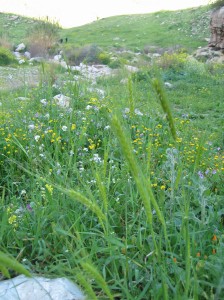
Exodus 9:31, The barley was in the head Barley was cultivated as a grain crop in ancient Egypt, as well as in Israel, and grows wild like a weed throughout the region to this day. Several passages in the Scriptures witness to the fact that the barley was the indicator of which month was to be the first month of the year for the Israelites, so that they could determine when the biblical feasts were to be observed.

Observe the month of Abib, and keep the Passover unto YHVH your Elohim: for in the month of Abib YHVH your Elohim brought thee forth out of Egypt by night. (Deut 16:1, emphasis added)

Barley in Israel  2

Please notice, the definite article the proceeding the phrase “month of Abib.” The state of the barley indicates a specific month in the spring. Months in the biblical Hebrew calendar have always been determined by the first visible sliver of the new moon from antiquity. This specific month is to be the beginning the biblical new year (Exod 12:2). The month of the Abib is not so much the name of a month as it is a description of the month. Below are listed the other three places in the Scriptures where this phrase is found.

This day came you out in the month Abib. (Exod 13:4)

You shall keep the Feast of Unleavened Bread: (you shall eat unleavened bread seven days, as I commanded thee, in the time appointed of the month Abib; for in it you came out from Egypt: and none shall appear before me empty). (Exod 23:15)

The feast of unleavened bread shall you keep. Seven days you shall eat unleavened bread, as I commanded you, in the time of the month Abib: for in the month Abib you came out from Egypt. (Exod 34:18)

What does the word abib in the phrase “the month of the Abib (or Aviv)” mean? Continue reading


New Video: Sukkot Northwest (Feast of Tabernacles) 2013 Highlights

This short video contains highlights from Sukkot Northwest’s 2013 eight-day long Feast of Tabernacles & Shemini Atzeret celebration — a rustic encampment in the intermountain wilderness of Central Oregon, USA. Never been to one? Watch the video, get the flavor, catch the vision and join us next year!


New Video: The Feast of Tabernacles

The fall biblical festival called the Feast of Tabernacles (in Hebrew, Sukkot) is a prophetic picture of the millennium when Yeshua the Messiah, along with the saints, will be reigning over this earth. In this video, Dr. Joseph Dombek explains the past, present and future implication of this festival and how it relates to the redeemed believer.

We invite you to watch this video at:


New Video: The Five-Fold Ministry Explained

In this video, Natan Lawrence explains the ministry offices of Ephesians 4:11 with special emphasis on the ministry of the apostle and prophet. He discusses how these, along with the other ministry offices should function in the local assembly and how the modern church has often missed the true intent of these ministries.


Sukkot Northwest 2013 photos — Wish you were here!

Shalom everyone from the intermountain region of Central Oregon, USA where we are celebrating Sukkot (the Feast of Tabernacles) with other like-minded redeemed Israelites who are returning to the Hebraic, pro-Torah roots of the Christian faith.

Below are a few photos I took with my I-Phone that will give you a small taste of what’s been going on here. More will come later.

We’re at a state campground where there’s no cell phone/wi-fi connections. Right now, I’m sitting in a Starbucks in nearby Bend, Oregon getting ready to upload these photos from my I-Phone.

I’m also in the process of trying to upload a teaching that Dr. Joseph Dombek, my assistant  shepherd at our Congregation Elim (Portland, Oregon) gave  here in La Pine on Sukkot. It’s a basic overview of this biblical feast that I recorded. YouTube is unusually slow at the moment, so I’m not sure if I’ll get Dr. Joe’s great teaching uploaded before we leave this Starbucks’ wi-fi hot spot.

Now here are the photos.

Let Sukkot NW 2013 at in La Pine, Oregon, USA begin.

Let Sukkot NW 2013 at in La Pine, Oregon, USA begin.


The Congregation Elim/Sukkot NW 2013 praise and worship team.

The Congregation Elim/Sukkot NW 2013 praise and worship team.


The Sukkot NW 2013 Sukkah.

The Sukkah NW 2013 Sukkah.


Worshipping YHVH in the dance at Sukkot NW 2013 in the wilderness of Central Oregon.

Worshipping YHVH in the dance at Sukkot NW 2013 in the wilderness of Central Oregon.

Tammy, Abigail and Terry from Texas, praising YHVH with lulavim in hand.Tammy, Abigail and Terry from Texas, praising YHVH with lulavim in hand.

Luzvi praising YHVH with tambourine, Linda with the praise banners, and our Davidic dancers in the background.

Luzvi praising YHVH with tambourine, Linda with the praise banners, and our Davidic dancers in the background.

John from California with tzitzit tied into his biblical beard.

John from California with tzitzit tied into his biblical beard.


Brother bill decked out in Hebraic regalia worshipping YHVH at Sukkot NW 2013.

Brother bill decked out in Hebraic regalia worshipping YHVH at Sukkot NW 2013.


Gone on Vacation: Happy Sukkot!

Shalom Everyone,

It’s that time of year again — time to head out into the wilderness to celebrate Sukkot (the biblical Feast of Tabernacles). This year, it starts on the evening of Sept. 21 and ends on Shemeni Atzeret on Sept. 29.

37648232

My family and I will be loading up our personal gear as well as well as the ministry stuff (sound equipment, etc.) into our vehicles and trailers and heading over the mountains into the intermountain region of Central Oregon. There, we will be joined by others from several states and Canada for eight days of celebration, teachings, fellowship and group activities. You can read all about it on our Sukkot Northwest website at http://sukkotnw.org.

This all means that I won’t be posting anything on this blog for a while. I will I be out of cell service most of the time, but if I find a wi-fi hot spot somewhere, I’ll upload some photos of our event as I did last year.

To learn more about the biblical Feast of Tabernacles, I invite you to read my teaching on the  subject at http://www.hoshanarabbah.org/pdfs/sukkot.pdf.

Maybe next year some of you can join us if not in Jerusalem, then here!

Sukkot


Shabbat Shalom: It’s Yom Kippur (on the biblical calendar)

Yom Kippur is a day of contradictions and contrasts: Joy and sorrow. Rewards for the righteous and judgments for the wicked rebels. Joy for the righteous when Satan and his demons, death and Babylon are destroyed by the King of kings.

Yom Kippur banner

On this day the high priest of ancient Israel went into the holy of holies of the Tabernacle of Moses (and later the temple in Jerusalem). There he sprinkled blood on the mercy seat (Heb. kapporet) and the ground seven times. Atonement was made for the high priest himself, his family as well as for all Israel. On this day the sanctuary, tabernacle, the priesthood and the all Israelites were cleansed. It represented corporate or community cleansing and entering into a deeper and more intimate relationship with YHVH.
The Passover and Day of Atonement are related though different:

  • Pesach (Passover) is the time of the sacrifice or atonement for personal sin—initial repentance from sins committed before being born again.
  • Yom Kippur (Day of Atonement) is the time of the atonement or covering of the individual’s as well as the corporate sins of Israel committed in ignorance (Heb 9:27) during the past year. On-going repentance is needed by the individual believer as well as the community of believers in order to stay in right-standing (called righteousness) before YHVH (1 John 1:9).

It is important to note that the shedding of innocent blood for the remission of sins is a central theme to both the Passover and the Day of Atonement (Yom Kippur) events. The question may rightly be asked, Continue reading