According to some individuals who assert the validity of a Torah-obedient lifestyle for modern saints, the biblical feasts aren’t able to be kept except in the land of Israel and specifically in Jerusalem. Since they live outside the land of Israel, they use this as a justification for not celebrating the seven biblical holidays. They also maintain that YHVH didn’t require the Israelites to celebrate his feasts outside of the Promised Land. They reason that since they are in “exile” outside the land of Israel, it is impossible to properly keep the feasts, and they’re, therefore, exempt from having to do so.
The following is a list of scriptural truths that show the fallacy of this reasoning. Doubtless, many more scriptures could be given, and we will add more in the future.
- When Genesis 1:14 uses the word seasons, the Hebrew word seasons is moedim and can also mean feasts. This is a clear reference to the biblical feasts and indicates that YHVH’s feasts were from the foundation of the world.
- Genesis 26:5 tells us that Abraham was Torah-obedient including YHVH’s commandments, statutes and laws. This would include the biblical feasts.
- The children of Israel kept Passover and the Feast of Unleavened Bread before coming to Mount Sinai and receiving the law of Moses and before entering the Promised Land (Exodus 12 and 13). This indicates that YHVH wanted his people to keep the feasts even while still outside the Promised Land.
- In Leviticus 23, the Sabbath is mentioned at the head of the list as one of YHVH’s feasts along with the other seven annual high holy day feasts (Lev 23:1–3). The implication here is that the Sabbath and biblical feasts come as an indivisible unit. If the seventh day Sabbath is to be kept, then so are the feasts.
- When Leviticus 23:4 states that the biblical feasts (i.e., the holy days, not the weekly Sabbath) are to be at their appointed times or “in their season” as some Bibles translate this phrases, this indicates that YHVH created the seasons around the biblical feasts. That is to say, in YHVH’s order of creation, the feasts predate the four seasons. Except at the equator and perhaps at the poles, the seasons are a global phenomenon, and therefore, it would seem, wherever seasons occur, YHVH’s feasts should be celebrated.
- Several times in Leviticus 23 and elsewhere in several places (Lev 23:21, 31, 41; Exod 12:14, 17, 24), YHVH’s word states that the feasts are forever. There is no indication that they are to be kept only in Jerusalem.
- Nowhere in the Scriptures is there a command to celebrate the feasts only in the land of Israel or in Jerusalem. Rather, in several places in Deuteronomy YHVH commands his people to celebrate the pilgrimage feasts where he has chosen to place his name (Deut 16:2, 6, 11). At that time, his name was where the tabernacle and latter the temple resided. However, both the tabernacle and temple are gone. Paul teaches us that the saints are YHVH’s temple because his presence, in the form of the Holy Spirit, now resides in them as opposed to the holy of holies in the former temple (1 Cor 3:16; 6:19). Based on this, it can reasoned that the saints can now celebrate the biblical feasts wherever YHVH leads them to do so whether in the land of Israel or not, for as Yeshua said, where two or more are gathered together in his name, he is in their midsts (Matt 18:20). Furthermore, YHVH is in the midst of his people wherever they are, for the psalmist tells us that he inhabits the praises of his people (Ps 22:3). Where YHVH is, that is where is name and anointing will be.
- In Ezekiel 20, we see that YHVH’s feasts (or sabbaths) are a covenantal sign between YHVH and his people (Ezek 20:12) that they were to live by (Ezek 20:11), yet which Israel, in rebellion, refused to do while in the wilderness. Instead they defiled his sabbaths by, presumably, not doing them and doing other things on those holy days (Ezek 20:13). Israel’s rebellion against YHVH with regard to their refusal to keep his sabbaths brought upon them YHVH’s judgments (Ezek 20:13). In other words, it was YHVH’s will for the Israelites to keep his sabbaths in the wilderness, but because of their idolatrous rebellion, they refused to do so. In fact, YHVH calls refusing to observe his sabbaths idolatry and for this sin (along with other sins), the Israelites had to wander in the wilderness for forty years (Ezek 20:15–16). In profaning his sabbaths, YHVH accuses the Israelites of despising his Torah (Ezek 20:16). YHVH then goes on to urge his people to not follow the example of their rebellious forefathers, but rather to walk in all of his Torah commands (including his sabbaths, Ezek 20:18–20). Because of their profaning his sabbaths, he punished them by scattering them in exile among the heathens. Those modern saints who refuse to keep YHVH’s Sabbath and feasts are walking in the same sin as the ancient Israelites. Often people who refuse to keep YHVH’s feast days holy do so because the feasts conflict with their secular activities (such as their jobs). YHVH calls this idolatry and being like the heathen (Ezek 20:30, 32). In the end times, YHVH is going to separate his people out from the heathen and bring them back into covenantal agreement with him including obedience to his sabbaths (Ezek 20:33–38). He will purge from his people those rebels who refuse to obey him including keeping his sabbaths (Ezek 20:38), which are a sign of his covenantal relationship with them.
- In Matthew 5:18, Yeshua says that not one yud or tag of the Torah would pass away until heaven and earth ceased to exist. Clearly, in Yeshua’s mind, the biblical feasts along with the rest of the Torah are still for his people today.
- Yeshua told his disciples to celebrate the Passover in remembrance of him (Luke 22:19; 1 Cor 11:24, 25). Nowhere does he qualify this statement by saying that the Passover can only be done in Jerusalem or the land of Israel. In fact, when Paul is giving these instructions to celebrate the Passover to the believers in Corinth he doesn’t say that it can be done only in the land of Israel, and that this feast can’t be celebrated outside the land of Israel.
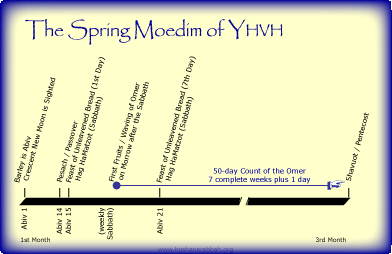
- In the book of Acts, it is mentioned that Paul hastened to Jerusalem in order to keep Pentecost (Acts 20:16), which was one of the four pilgrimage feasts (along with Passover/Unleavened Bread and the Feast of Tabernacles). Yet at the same time, he commands the believers in Corinth to celebrate the Feast of Unleavened Bread (1 Cor 5:7), which was one of the pilgrimage feasts. He also celebrated the Feast of Unleavened Bread outside of Jerusalem (Acts 20:6) even though it, like Pentecost, was one of the pilgrimage feasts. Obviously, he didn’t make going to Jerusalem a condition for observing this feast.
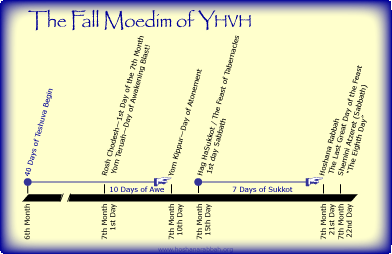
- Two of the seven feasts weren’t kept in Jerusalem, but at home. These were the Day of Trumpets and the Day of Atonement. There is no command in the Torah to go where YHVH has placed his name to celebrate these feasts. Therefore, those who say that we can’t celebrate the feasts except in the land of Israel and specifically in Jerusalem should at least celebrate these two feasts at home. In fact, Acts 27:9 indicates that Paul celebrated Yom Kippur on the island of Crete, not in Jerusalem. If he didn’t celebrate this holy day, why mention it?
- Moses in the Torah prophesied that the Israelites would forsake YHVH’s Torah covenant and serve foreign, pagan gods resulting in YHVH having to punish them with captivity in “another land” (Deut 29:25–27). Moses then goes on to prophesy that from the nations where Israel had been scattered because of its sin of Torahlessness, the Israelites would “return to YHVH your Elohim and obey his voice, according to all that I commanded you today” (Deut 30:2). As a result of their repentance and return to Torah-obedience (including keeping YHVH’s sabbaths or feasts, which they had forsaken along with the rest of the Torah), YHVH promises to bring them back (to the land of Israel) from captivity and regather them from all the nations where they have been scattered (Deut 30:3–5). This passage makes it clear that conditional to Israel’s regathering and return to their land would be a whole-hearted repentance and return to the Torah (Deut 30:2) including the biblical holidays, while still in the land of their exile.
- Interestingly, the religious Jews to this day have no tradition mandating that the biblical feasts can’t be kept outside the land of Israel. In synagogues all over the world, the Jews still celebrate all the biblical feasts.
The bottom line why people don’t want to keep YHVH’s feasts is this:
Because the carnal mind is enmity against Elohim; for it is not subject to the law of Elohim, nor indeed can be. So then those that are in the flesh cannot please Elohim. (Romans 8:7–8)