

Let’s go up to the mountain of Elohim…

Psalm 121:1, Lift my eyes to the hills. Hills is the Hebrew word har and also mean “mountain.” This psalm is a Song of Ascents. Ascents is the Hebrew word ma’alah meaning “elevation, that is, the act (literally a journey to a higher place, figuratively a thought arising), or (concretely) the condition (literally a step or grade mark, figuratively a superiority of station); specifically a climactic progression (in certain Psalms).” There are 15 ascent songs recorded in the psalms (from Psalm 120 through 134) that were song as the priests were climbing the steps to the temple; there was one song for each step. This first verse along with its title teaches us several things.

First, for the Israelites, coming into the set-apart or kadosh presence of Elohim was viewed as an upward, progressive movement, one step at a time like climbing a mountain. This was a slow, reverent, thoughtful and deliberate process accompanied by songs of worship and praise at each step. They literally “enter[ed] into His gates with thanksgiving, and into His courts with praise. Be thankful to Him, and bless His name” (Ps 100:4).

Second, YHVH Elohim’s kadosh presence was metaphorically represented as being located on a mountain, which is the highest place on earth that represents heaven. This is why the temple was located in Jerusalem, which was the located on the highest geographical point in the land of Israel (with the exception of Mount Hermon in the extreme north). For this reason, when traveling to Jerusalem, Scripture almost always refers to it as “going up to Jerusalem,” for this is where the physical dwelling place of Elohim among his people was locate—at the highest point in the land of Israel. 

The laborious act of going up, like climbing a mountain, required physical exertion—especially since travel in ancient times was by foot. Whichever direction the Israelite pilgrim was traveling to Jerusalem from whether coming from the western coastal plains along the Mediterranean Sea or from Jordan Valley at the Dead Sea—the lowest point on earth, or from any other direction, the journey required hard work, perseverance, determination and endurance; all physical obstacles and gravity and fleshly limitations had to be overcome one step at a time. 

This journey to Jerusalem is an apt symbolic picture of the saints spiritual journey against the downward pulls of the world, the flesh and the devil that is required come into the heavenly presence of Elohim. Yeshua likens it to climbing a ladder—Jacob’s ladder (John 1:51).

The idea of Elohim’s presence being on a mountaintop was not lost on the heathens, who, in their perennial attempt to counterfeit the truth of Elohim and subvert humans to their own devilish religious systems, typically located the temples to their demon gods on mountains. 

This psalm, by contrast, enjoins YHVH’s people to lift their eyes up to him and view his presence as symbolically being on a mountain, rather than looking to demon gods, false religious systems and men’s governments and human institutions, which are often also located on hills or mountains. In this light, think of the Vatican located on its seven hills of Rome, or Mount Olympus, the Acropolis in Athens, the mountains of Tibet for those into Buddhism, the stereotypical guru is perched on some mountain top somewhere, Capital Hill in Washington D.C. as well as many churches and hospital complexes. These can all serve as false gods to which many people lift their eyes instead of the one true God of the Bible, YHVH Elohim.

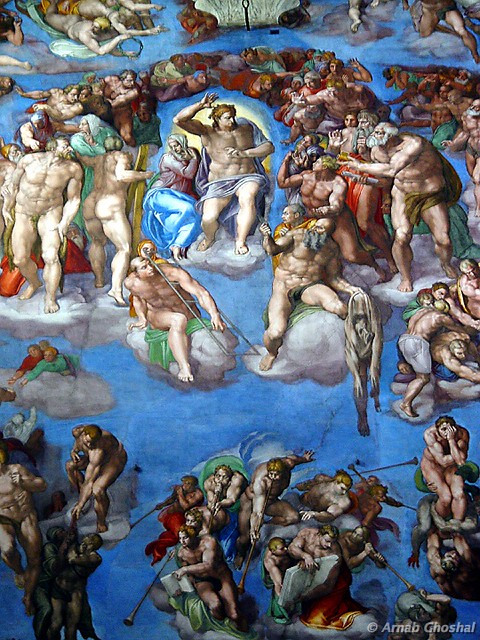
 

Big E Elohim Versus Small e elohim Explained

Psalm 82:1, Elohim stands…the gods/Congregation of the mighty. Dr. Michael Heiser in his two books, Reversing Hermon and The Unseen Realm puts forth a convincing argument that the elohim mentioned in this verse are what Scripture refers to in many places as “the hosts of heaven” and refer to Elohim’s divine heavenly council. This same council is also referred to in Deut 33:2; 1 Kgs 22:19; 2 Chron 18:18; Job 15:8; Jer 23:18; Dan 7:9–10 and Heb 2:1; Acts 7:53. 

“The congregation of the mighty” seems to be a reference to Elohim acting as the Supreme Judge among his divine, heavenly council that carries out his orders. This is more than the traditional “Godhead” (i.e. the Father, Son and Holy Spirit) and also includes angelic and spirit beings, and even Satan himself. 

From time to time, Elohim gathers his council together as we see in Job (Job 1:6; 2:1). Even lying spirits are subject to and do the bidding of Elohim who presides over this council also referred to as the host of heaven (1 Kgs 22:19–23). Moreover, some of the “Us” passages in the Scriptures, which have typically been attributed to the “Godhead,” likely also refer to this divine counsel (e.g. Gen 11:7; Ezek 44:6). This has been the view of ancient Jewish sages as well.

Modern biblical theologians have traditionally taken a non-supernaturalistic view of this passage by saying that the gods here refer to human rulers. While elohim may by definition and biblical usage refer to human rulers, this passage can’t be limited to this definition alone, since verse seven refers to these gods/elohim as “dying like men” as a result of Elohim’s divine judgment on them because of their wickedness. This threat makes little or no sense if it is referring only to human rulers. 

For the record, Yeshua quotes verse six in reference to human rulers (John 10:34; 14:30; 16:11), so this passage should not be taken to refer only to Elohim’s divine counsel or just to human rulers, but probably to both. This is because behind human rulers are evil spirits or principalities that govern the nations (Dan 10:20; Eph 6:12; Rev 13:2) and all under the aegis of Satan, who has his own kingdom (Matt 12:26) and is presently the ruler of this world (John 12:31); however, all of this is under the ultimate authority of YHVH Elohim.

The idea that there were and are unseen evil spirits and demi-gods that behind the scenes rule the nations of the world is revealed in the book of Enoch and is also found in traditional ancient Mesopotamian historical accounts and forms the basis for the ancient Greek mythos. 

Additionally, we learn from Genesis chapter ten (the Table of the Nations) that, at that time, there were seventy nations of the world that rebelled against YHVH at the Tower of Babel (Gen 11). Interestingly, and a little later, Jacob had 70 descendants who went down to Egypt (Exod 1:5) and who become the children of Israel. From them, Moses chose 70 elders to rule over Israel (Exod 24:1), which would eventually became the Great Sanhedrin that ruled the Jewish people. YHVH then commissioned Israel to evangelize the apostate nations by being a spiritual light to them (Deut 4:5–8)—a task they utterly failed to perform. Picking up where ancient Israel failed in its mission, Yeshua chose 70 disciples not only to replace the Jewish Sanhedrin in spiritual authority over the people of Elohim, but to go forth and to preach the gospel to the 70 nations (Luke 10:1–12, 17; Acts 1:8 cp. Matt 28:18–20) that had been lost to the kingdom of Satan at the Tower of Babel, thereby to reclaim the world for the kingdom of Elohim at the devil’s expense.

Eventually, and hopefully in the not too distant future, the resurrected and glorified saints, who will become the sons of Elohim and will be adopted into his divine family as small E elohim (John 1:12; 1 John 3:1; Gal 3:26; Rom 8:14; Eph 1:5), will rule and reign with Elohim (Rev 1:6; 5:10; 20:6) over the new heavens and new earth. This will all to Satan’s detriment and to that of the small E elohim rulers of his present-day earthly kingdom, all of whom will be cast into the lake of fire at the end of the age (Rev 20:10).