Jewish and Christian Opposition to Moses’ Messianic Prophecy

Deuteronomy 18:15, A prophet from your midst, like me, shall YHVH your Elohim raise up for you. 

Moses—A Prophetic Type of the Messiah

Obviously, Moses’ Deuteronomy 18 prophecy concerning the Messiah was fulfilled in the person of Yeshua. Who else in the history of the world could have fulfilled this prophecy? Despite this, the non-believing religious Jews, to their discredit, run around in philosophical circles attempting to prove that this verse does not apply to Yeshua. Similarly, the Christian church, in its own way, also disbelieves this prophecy. Let us examine some of the arguments attempting to circumvent the simple truth of this messianic prophecy.

For example, the Orthodox Jewish Torah translation The ArtScroll Stone Edition Chumash in its commentary states, “Moses told the nation that just as he was one of them, so God would designate future prophets [plural] from among the people to bring them his word” (p. 1033, emphasis added). What is wrong with this statement? Is the verse quoted accurately? Moses said “prophet” singular, not “prophets” plural, as the commentary says. So in this manner, the Jewish commentators switch the focus off of one single prophet who would arise, and make it appear as if all the prophets recorded in the Scriptures helped to fulfill this prophecy. This is dishonest biblical interpretation.

On another note, does the “Jesus” of the mainstream church who, it is taught by many church leaders, broke the Sabbath and came to do away with the Torah-law of Moses fulfill this prophecy? Didn’t Moses say that the prophet would speak only the words that Elohim would give him (and the implication is that those words would not contradict what was given at Mount Sinai)? So did Yeshua come to do away with the Torah-law or not? (Read Matt 5:17–19.) In commissioning his disciples in Matthew 28:20, didn’t Yeshua tell them to do and to pass on to others all that he had commanded them? Didn’t Paul tell us to, “Follow me as I follow the Messiah” (1 Cor 11:1)? So how is it that so many people in the mainstream church believe otherwise about Messiah Yeshua and Paul relative to their teachings on the Torah-law? The point we are trying to make here is that the “Jesus” of the Sunday church who, it is taught, came to annul the Torah, does not fit the criteria of this prophecy of Deuteronomy 18:15–19. Either the Torah is correct and the mainstream church is wrong or it is the other way around. We choose the former to be the truth, not the latter!

A prophet…like unto me. Let’s now study the parallels between Moses (Heb. Moshe) and Yeshua the Messiah (Heb. Machiach)to see how Yeshua perfectly fulfilled this prophecy.

Moses’ early life seems to foreshadow some details of Yeshua’s life and ministry. This really should not surprise us when we consider the words of the book of Hebrews (10:7 from Ps 40:7), which attributed to YHVH-Yeshua, who said, “The volume of the scroll was written of me.” Yeshua himself, when confronting the Pharisees in John 5:46, said “For had you believed Moses, you would have believed me, for he wrote of me.”

Continue reading
 

Colossians 2—What was wiped out and nailed to the cross?

Liar!

The mainstream church has lied to you about Colossians chapter two. How is this, you ask? Read on for the answer…

Colossians 2:14, Having wiped out. Here Paul mentions that Yeshua blotted out the handwritings of legal decrees that were against us when he died on the cross (Col 2:12–15). What was against us? It was the Torah law that specified that the sin of adultery carried the death penalty (Lev 20:10). For those who are washed in Yeshua’s redeeming blood and have been buried with him by water immersion or baptism (Col 2:12 cp. Rom 6:3–11), the devil, who is the accuser of the brethren (Rev 12:10), no longer has any legal basis against which to lay the charges of the sin of unfaithfulness against us before the Almighty (Col 2:15). Likely, there is a heavenly record of each man’s sins written in one of the books (which are in addition to the book of life) mentioned in Revelation 20:12. These books be opened at the last judgement and will be used to determine one’s eternal rewards based on one’s works of righteousness (v. 12). Some will be granted eternal life, while others will be destroyed in the lake of fire (v. 15). As mentioned, those who are under the blood of Yeshua and whose names are written in the Lamb’s book of life, there is no condemnation. 

In this passage, Paul may be alluding to the law of the jealous regarding an unfaithful woman (Num 5:11–31). In this case, the Torah instructs a man to bring his wife whom he suspects of adultery before the priests along with an offering of barley meal. What follows is one of the Torah’s more curious rituals. The priests, in front of the woman, sprinkle some dirt from the door of the tabernacle into an earthen vessel filled with holy water. Her head is uncovered, and she is then made to hold the barley meal, while she is put under oath and questioned about her alleged extramarital sexual activities. A curse is put on her if she has been unfaithful, and the curses are written in a book. The words are then scraped from the book and put into the water. The woman is then made to drink the bitter waters. If she is guilty, the curse takes effect causing her belly to swell and her thigh to rot. 

Continue reading
 

Christianity and Aleister Crowleyism

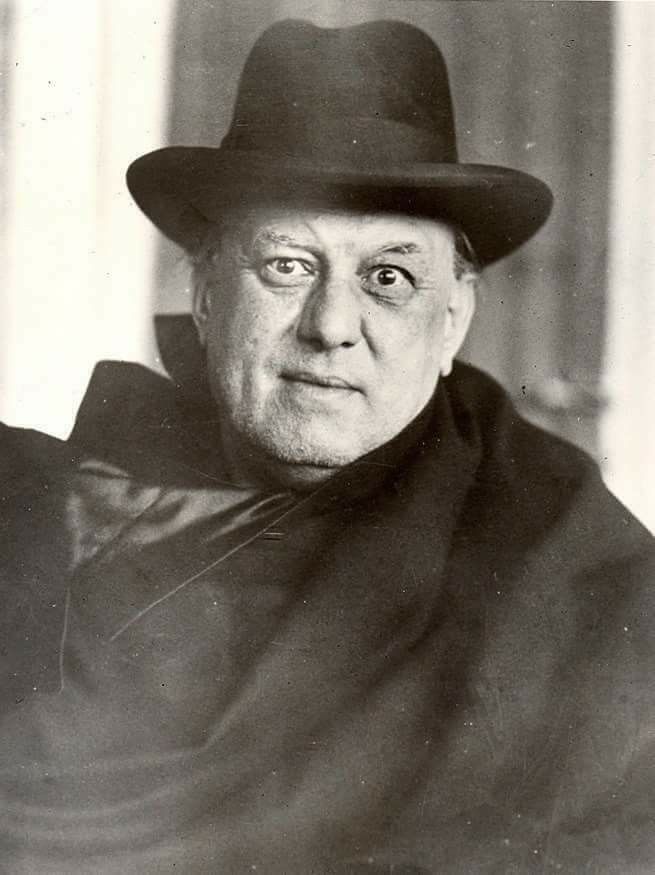
The occultist and Satanist Aleister Crowley (1875-1947)

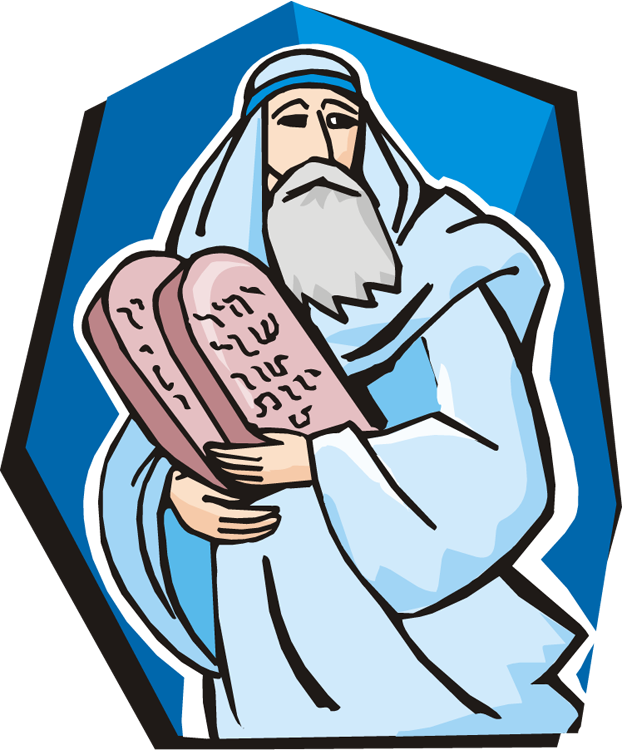
Deuteronomy 10:4–5, Wrote on the tablets…put the tablets in the ark. If the two tablets are biblical symbols for the heart of man onto which YHVH Elohim writes his laws (see notes at Exod 34:1), then the ark of acacia wood which sites in the holy of holies (the earthly representation of Elohim’s throne room) into which the two tablets were deposited represents the human body and life which, ideally, should abide in the presence of Elohim guided by the Torah-Word of Elohim. Aaron’s rod that budded and the pot of manna, which the ark also contained, respectively represent the tree of life or tree-cross on which Yeshua gave his life as an atonement for our sin and Yeshua as the bread of life, which is a prophetic picture of the Word of Elohim that the saint must feed on in order to obtain eternal life.

Ten Commandments…down from the mountain. Moses received the Torah-instructions from out of the fiery presence of Elohim and brought them down from the mountain—a symbol of heaven. Elohim gave his Torah-law or instructions in righteousness to man to be deposited in the ark (a symbol of the human heart and mind). In light of these facts, it is unthinkable that Christian theologians came along many centuries latter and developed a philosophical system that, to one degree or another, relegated YHVH’s Torah-law—his instructions in righteousness—to past times and people, and subsequently declared to millions of Christians that the Torah was “done ways with,” “fulfilled,” “nailed to the cross” and was “against us,” and therefore is largely irrelevant and unnecessary to obey. The pride and hubris of such a belief is, frankly, astounding and clearly demonstrates to what degree the carnal mind of man will twist the Word of Elohim to devise his own religious system to fit his own will. 

This mainstream Christian belief system is totally in accordance with the lying words of the snake in the tree: “Has Elohim indeed said?” (Gen 3:1), and the rebellious deceitfulness and sinfulness of the unregenerate human heart (Jer 17:9; Rom 8:7).

Moreover, such a theological approach is akin to the occult social or spiritual philosophy developed in the early 1900s by the occultist and Satanist Aliester Crowley—dubbed at the time as “The wickedest man in the world” (1875-1947). Crowely dubbed his Torah-hating religious system Thelema where the mantra was, “Do what thou wilt shall be the whole of the Law.” Crowley taught that “adherents of Thelema should seek out and follow their true path, i.e. find or determine their True Will” (https://en.wikipedia.org/wiki/Thelema). 

How is the philosophy of Thelema any different than the one that the serpent seduced Adam and Eve at the tree of knowledge into believing when he questioned the Torah-Word and sovereign authority of the Creator of the universe? Now follow the bouncing ball. Christian theology that, to one degree or another, advocates the abrogation and irrelevance of YHVH’s Torah contains within it the same underlaying fundamental philosophical strains as the Satanic religious system that Crowley founded more than a century ago. In mainstream Christianity, “Do what thou wilt” means, in essence, that one has the freedom to pick and choose only those aspects Elohim’s Torah-law that one desires or wills to follow. Sadly, this belief system simply illustrates what two biblical authors wrote long ago about the inherent sinful and rebellious nature of man:

The heart is deceitful above all things, and desperately wicked; who can know it? (Jer 17:9)

For those who live according to the flesh set their minds on the things of the flesh, but those who live according to the Spirit, the things of the Spirit. For to be carnally minded is death, but to be spiritually minded is life and peace. Because the carnal mind is enmity against Elohim; for it is not subject to the Torah-law of Elohim, nor indeed can be. (Rom 8:5–7, emphasis added)

To wit, most Christians do not follow the Holy Bible, which declares that man shall live by every word the proceeds from the mouth of Elohim (Deuteronomy 8:3; Matt 4:4), Rather they follow the Holey Bible, the Swiss Cheese Version—a version with pages ripped out of it. Those pages contain the instructions of Elohim that they deem not necessary to obey.

I have a lot of Bibles in the Bible collection in my personal library. This is my least favorite one! — NL
 

Notes on 1 Corinthians 1 and 2

Corinthians 1

1 Corinthians 1:12, I am of Paul. Truly it is amazing how many scriptural admonitions and truths which many in the Christian church totally ignore and walk in direct opposition to. For example, note how many denominations are named after men (e.g. Lutheran, Wesleyan, Mennonite, Amish) and how many follow doctrines named after men (e.g. Calvanist, Arminian)—a practice that is exactly what Paul condemns in this passage. Similar to this is the use of ecclesiastical titles (e.g. father, teacher or rabbi), which Yeshua condemns in Matthew 23:8–10. What does this teach us when people engage in such practices that Scripture forbids? Simply this. Many if not most people don’t take the Word of Elohim that seriously. These people  view the commands and instructions of Scripture more as suggestions than as actual rules and boundaries by which to live. Such people lack a sufficient fear of Elohim and don’t tremble before his Word (Isa 66:2). They also lift up and glory in men and the doctrines and traditions of men, which Jeremiah admonishes us not to do (Jer 9:23), and which Paul alludes to in verse 30, and which Yeshua warns against in Mark 7:13.

1 Corinthians 1:18, The message of the cross is foolishness. Anyone who has preached the gospel to those who are spiritually lost will appreciate Paul’s statement in this verse that the preaching of the cross is foolishness to those who are perishing. Why is this? It is because of the mind of man and human pride, which convinces a person (a) that they don’t need saving from their sins because they really aren’t that bad of a person, or (b) because it is incredulous to think that Elohim become a man who died for the sins of the world. 

1 Corinthians 1:21, The wisdom of Elohim. In so many ways, the world has inverted the truth of Elohim. What Elohim calls truth, the world calls error. What Elohim calls riches and life, the world calls poverty and death. Similarly, what Elohim calls light and wisdom, the world calls darkness and foolishness. This teaches us that the carnal mind is in direct opposition to the wisdom, truth and laws of Elohim (Jer 17:9; Rom 8:7).

1 Corinthians 1:22, We preach Messiah crucified. This is the essence of the gospel. It is interesting to note that Paul didn’t say, “We preach the Torah-law” or something similar. This is because the Torah cannot save a person; only Messiah can save. In their zeal for restoring the truth of the Torah and their aversion to mainstream Christianity (or churchianity), sadly many Hebraic-minded individuals have forgotten this important truth.

1 Corinthians 2

1 Corinthians 2:1, 3–4, Excellence of speech…persuasive words. A preacher’s oratorical, persuasive or rhetorical skills are not prerequisite to bring a person to conviction of their sins and to faith in Yeshua the Messiah. Rather, it is the message of the gospel itself, the Word of Elohim, when preached that brings conviction, repentance and salvation. This is because the Word of Elohim doesn’t return void, but carries its own powerful anointing regardless of the weakness or inabilities of the human vessel doing the preaching. Elohim can use any willing vessel or “Balaam’s donkey” to preach the gospel. 

Spirit and power. The gospel is efficacious not because of one’s ability to preach, but because one is filled with the Spirit of Elohim and is preaching in the dynamic power thereof. Therefore, YHVH can use nearly anyone to preach the gospel, as long as they are full of his Spirit. As the saying goes, Elohim isn’t looking for ability in a person, but availability—a willing human vessel to “go ye therefore into all the world and to preach the gospel.”

1 Corinthians 2:16, Mind of Messiah. (See also Phil 2:5 cp. 1 Pet 4:1.) Mind is the Greek word nooce meaning “1) the mind, comprising alike the faculties of perceiving and understanding and those of feeling, judging, determining, the intellectual faculty, the understanding, reason in the narrower sense, as the capacity for spiritual truth, the higher powers of the soul, the faculty of perceiving divine things, of recognizing goodness and of hating evil, the power of considering and judging soberly, calmly and impartially; a particular mode of thinking and judging, i.e thoughts, feelings, purposes, desires.” The implications of this truth, that the redeemed believer has the literal mind of Messiah is astounding. We must, by YHVH’s grace and by faith, appropriate (pray to receive) and then live out this reality.


Christmas in May

Jeremiah 10:2–5, 

A Christmas Tree?

Is this passage a denunciation of the Christmas tree? Some say yes, and others so no. Let’s briefly discuss this issue.

The use of trees or wooden poles as an object of worship in the ancient world was universal as a fertility/phallic symbol. The Bible strongly condemns involvement with this pagan custom. Obviously the tree of Jer 10 is not a Christmas tree, since Christmas as we know it didn’t enter into Christianity until about the late fifth century AD. However, the pagan implications of the Christmas tree are clear as evidenced by history, which is why it was outlawed by the Puritans and many other religious groups in America. It was not until the 1850s with many Germans migrating to America with their Christmas tree tradition that Christmas became popularized again in this country.

The scriptures advise us to abstain from all appearances of evil. At the very least, because of its pagan connotation, a Christmas tree is an appearance of evil. Furthermore, where in the Bible do we find any examples of YHVH’s people reclaiming a pagan tradition, sanitizing it, and them practicing it? This occurred only when Israel was in a state of apostasy or was attempting to syncretize the religion of the Bible with the pagan practices of the surrounding nations.

True, many things in our daily lives have been tainted by paganism. If we were to toss out everything that fits that category, we probably wouldn’t be able to say anything, wear anything, eat anything, or do anything! What we are to throw out are those things that the Bible forbids, anything that is indigenously pagan, or anything that leads us away from YHVH and his Word.

Often our view of the Scriptures is filtered through our emotions. We all struggle with this spiritual disease. When we’re extremely partial to a belief or an idea, we have a hard time conforming our lives to those Scriptures that disagree with us. Thus, we have a spiritual blind spot. For many, Christmas has become a spiritual blind spot because it is so ingrained in our families and the culture. It is perhaps the hardest thing for people to let go of because of family and emotional ties. Each of us has to make the choice: do we love the praises of family or the praises of Elohim more (John 12:43)?

Some might accuse those who see Jeremiah 10 as a denunciation of the Christmas tree of prooftexting. By definition, a prooftext is a biblical passage used to support a theological argument or position. It can’t be denied that Jeremiah 10 is the perfect description of what has come to be known as a Christmas tree. This is not prooftexting, this is fact. The Word of Elohim says don’t do it. This is fact. I didn’t make it up, I just read it and believe it. Furthermore, to view Jeremiah 10 as a stand alone scripture or prooftext is incorrect. When Jeremiah 10 is placed against the larger context of the heathen practices of the Gentile cultures around ancient Israel, and against the Bible’s repeated prohibitions against (a) Israel’s adopting pagan religious practices of any kind, and (b) more specifically, not bringing into Israel the worship of the pagan fertility symbols of which the tree was a central object, YHVH’s prohibition against the Jeremiah 10 tree was much wider and broader implications. Basically, YHVH says “don’t do it,” and for me that settles it. YHVH wants a people for his own who will unquestioningly obey his word; who are of a contrite heart and tremble before (i.e., obey) his word (Isa 66:2). 

Elohim has given us seven biblical feasts that we can do that will bring glory and honor to him. Let’s practice and rejoice in what he has given us.

Continue reading
 

Who will rise up against the evils in the church system?

Who will rise up for me against the evildoers? Who will stand up for me against the workers of iniquity? (Psalm 94:16)

Jeremiah 7:4, The temple of YHVH. Trusting in man-made religion is pointless. Religious icons, systems and rituals will not save a person or nation from YHVH’s judgment against sin and apostasy. The Jews found out the hard ways that just because YHVH’s temple was located in their land, this was not a guaranteed get-of-jail-free card or a fire insurance policy that would magically save them from the results of their sinful disobedience and rebellion to YHVH and his commandments. Similarly, simply going to church, attending mass or synagogue, praying the rosary or shema, or adorning one’s house with Christmas lights and a Christmas tree or any other religious exercise will not save a person if they fail to repent of their sinful ways and turn back to serving YHVH with their whole heart!

Jeremiah 7:16, Do not pray. (Also see Jer 11:14 and 14:11.) There comes a time when YHVH’s people have become so apostate and reprobate that in their condition of lostness it is pointless to pray for them, and so YHVH will not hear any intercessory prayers offered up on their behalf. At this point, the only things that will capture the attention of such a people is severe divine judgment.

Jeremiah 7:22, For I did not speak. YHVH added the sacrificial system because of Israel refused to hear and obey YHVH (verse 23). It was YHVH’s original intent that Israel simply obey YHVH from a willing heart without a rigorous sacrificial system. It was a temporary system to teach Israel that sin doesn’t pay, to train his people to obey him, and to point the way to Yeshua, who would be that our great sin sacrifice once and for all. 

Jeremiah 7:31–32, Burn their sons…in the fire. Child sacrifice as part of their cultic rituals was how the ancients disposed of unwanted children even as abortion serves the same wicked and grisly purpose in our day. These children were offered on the altars of Tophet while priests beat drums to drown out the shrieks of the children being burned alive (The ArtScroll Chumash, p. 1167). Jeremiah prophesied that those Jews who practiced this holocaust would become victims themselves with their very own carcasses becoming food for the scavenger birds. (This sad prophecy has been fulfilled numerous times in the long history of the Jewish people including most recently during the holocaust of WW II.) 

It has been said that the abortion rate is the same in the American Christian church as that of non-Christians. How concerned are you about the slaughter of the innocent in America, and what are you doing about it?


Jeremiah” Most Religious Practices Are an Abomination to YHVH

Jeremiah 7–9

Jeremiah 7:21–8:3, 9:22 (23)–23 (24), “The Sacrifice of the Wicked Is an Abomination” to YHVH (Prov 15:8).

This message of Jeremiah reveals that the purpose of sacrifice and of all outward acts of worship should be to deepen the inward sense of religion and to stimulate one to a holy or set-apart life. Jeremiah, speaking for YHVH, decries the uselessness of religious activity when accompanied with unholiness and unrighteousness. Furthermore, he denounces the mere mechanical performance of acts of worship; of the superstition that the temple ritual could be a guarantee of security from the judgments of Elohim, while the Israelites were divorced from obedience to YHVH’s Torah. Only whole-hearted repentance could avert a national disaster brought on by YHVH’s judgments (Soncino Pentateuch, p. 439).

What is the true meaning of religion and what was the true purpose of the temple in Israel? Its purpose was to transform people into living temples that would be set-apart or holy unto YHVH Elohim. If they acted one way while in the temple and another way while outside the temple, then the temple activities had only become a mockery of YHVH, a farce and a repugnance to the very one they had supposedly come to worship. Humans may kid themselves by their religiosity, but they cannot deceive the Holy One of Israel who sees all and who reads their hearts and minds. He is not moved by mere outward show of religious piety. What are your true heart motives for pursuing the religion of the Bible? If it is for any reason other than out of a deep, abiding love for Yeshua, for a desire to draw close to the Father in a personal one-on-one way, to walk in righteousness as an act of faith and worship toward him, then your motives need to be reevaluated and readjusted.

Let us define some important words that sadly all too often relate to religious folk. These words are:

  • Pretense, which is “a claim made or implied, but not supported by fact; ostentation.”
  • Ostentation, which is “anexcessive display; pretentiousness.”
  • Hypocrisy, which is “a feigning to be what one is not or to believe what one does not; the false assumption of an appearance of virtue or religion.”

What does the Word of Elohim have to say about hypocrisy? Please review the following biblical passages:

  • Job 13:16; 15:31,33,34; 20:4,5; 27:8–10
  • Psalm 78:34–37
  • Proverbs 15:7; 21:27
  • Isaiah 1:13,15; 29:13–16; 48:1–2; 66:3–5
  • Jeremiah 3:10; 7:4, 8–10
  • Hosea 10:1,4
  • Matthew 6:1,2,5,16,24; 7:5,15,21–23; 15:7–9, chapter 23
  • Luke 11:39,42,44,52
  • Romans 16:18
  • Galatians 6:3
  • Titus 1:16
  • James 1:8,22–24,26; 2:14–26; 3:17
  • 2 Peter 2:1–3,17,19
  • 1 John 2:4,9,19; 4:20
  • Revelation 3:15–18

Now let’s review some statistics relevant to the state of the American Christian church from George Barna’s book, The Index of Leading Spiritual Indicators—A Statistical Report on the State of Religion in America. This book was first published in 1996, yet how much has the American church changed for the better since then? Here are some startling statistics:

  • 85% of Americans claim to be Christian
  • 10% of Americans are “Bible Christians”: that is, they fully accept biblical authority, total trust in Christ for salvation, are evangelistic and are active in a church, and believe in moral absolutes.
  • 25% of Americans are “Conventional Christians”: they claim total trust in Christ for salvation, are involved in a church, they exercise a privatized faith, believe in moral relativism and appreciate the Bible.
  • 28% of Americans are “Cultural Christians”: they have a universalistic world-view, their religion is works based (i.e., they believe that good people will go to heaven), they are moral relativistic, nominal church involvement and are Christian in name only.
  • Of those who claim to be Christian, only 40 percent believe in a literal Satan; 63 percent believe in the accuracy of the Bible; only 30 percent read their Bible in a week; only 57 percent agree that good people will go to heaven; only 31 percent believe in a fiery place of torment after death; 37 percent believe hell is only symbolic; only 9 percent knew what the “Great Commission” was; 63 percent had no idea what “John 3:16” referred to; and only 35 percent could accurately define the meaning of the word gospel.

YHVH sent the prophet Jeremiah to warn the nation of Israel of impending doom if it failed to repent of its disobedience to him. He then cites many examples of various sins that had become odious in YHVH’s nostrils. In their smugness, the Jews felt secure because they possessed the temple in Jerusalem. Surely YHVH would not allow the Jews to be destroyed for the sake of his spiritual house. Yet Jeremiah warned that this security was a false one and to prove his point he calls to their attention the example of the Northern Kingdom or house of Israel, which had already been taken captive a couple of generations earlier. What parallels do we see in the Christian church that are similar to those of the Southern Kingdom or house of Judah of Jeremiah’s day? How many Americans take comfort (and pride) in the notion that America is a “Christian nation” and that certainly YHVH would allow nothing disastrous to happen here? Some take comfort in America’s military and economic might. Others feel that a pre-tribulation rapture will carry them “out of here” when the going gets tough. Is it possible that some might be in for a rude awakening one of these days when things don’t go as planned? We know from history that the temple in Jerusalem—as if it were some lucky talisman—did not protect the Jews who. The stark reality of this came to rest on the Jewish people as they watched their beloved temple go up in flames, even as their conquerors were dragging them off in chains to be slaves in a foreign nation. Could the unexpected happen to America, or any other country? Is YHVH any more duty-bound to protect us than he was the Jews of that day?