Psalms 81 and 82 on New Moons and Small e Gods

Psalm 81 

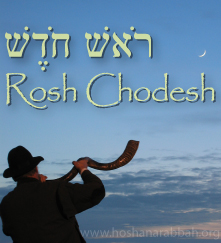
Psalm 81:3, Blow the trumpet [Heb. shofar] at the time of the New Moon [Heb. chodesh], at the full moon [Heb. keseh meaning full moon or concealed, covered — scholars disagree as to its meaning and the origin of the word], on our solemn feast day [Heb. chag] — NKJV. The ArtScroll Stone Edition Tanach translates this verse alternatively as follows,

Blow the shofar at the moon’s renewal, at the time appointed for our festive day.
The origins of the Hebrew word keseh behind the phrase “full moon” is uncertain and there is debate among the experts on this subject. Some Hebrew lexicons relate it to a Hebrew root word meaning “to conceal, to cover” (e.g., Gesenius; Strong’s number H3677 cp. H3678), while others tell us that it means “fullness; full moon” (e.g., Brown Driver Briggs Hebrew Lexicon; cp. The TWOT; Strong’s). BDB tells us that the origin of keseh is unknown and that it may be an Aramaic loan word meaning “full moon.” Gesenius in his lexicon states that the etymology of keseh isn’t clear, but he favors the idea of the moon being covered or concealed in darkness as opposed to being covered in light (i.e., in its full moon state). 

The only other usage of keseh in the Scriptures is found in Prov 7:20, which gives us no clue as to the exact meaning of the word.

Orthodox Jewish scholars tell us that keseh means “to conceal or to cover.” They say that the only biblical festival that occurs at the time of the new moon (biblically, when the first sliver of the new moon becomes visible) is Yom Teruah (or Rosh HaShanah), which occurs on the first day of the seventh month (in late summer). At this time, the moon is nearly completely covered or concealed except for a small, visible sliver.
The next phrase in this verse speaks of a solemn feast day, which is the Hebrew word chag. This word refers to the three pilgrimage festivals, which are Passover and the Feast (or chag) of Unleavened, the Feast (or chag) of Weeks or Pentecost and the Feast (or chag) of Tabernacles (Exod 23:14–16; Deut 16:16).

Jewish scholars relate the word chag to Yom Teruah (which they say refers to Rosh HaShanah, see The ArtScroll Tanach Series Tehillim/Psalms Commentary on this verse). The problem with this interpretation is that the Scriptures never call the day of the new moon (rosh chodesh) a chag, nor is Yom Teruah technically a chag either in the strictest sense of the meaning of the word and its usage in Scripture. Therefore, the word keseh, if it means “concealment” must be referring to both the new moon day (the first day of each month, and to Yom Teruah, which occurs on the first day of the seventh month), while the chag must be referring to the three pilgrimage festivals.

Those scholars who take the word keseh to mean “full moon” say that the phrase in this verse containing this word refers to the pilgrimage festivals (Passover/Feast of Unleavened Bread, Feast of Weeks, and Feast of Tabernacles), which all occurred on or very near the time of the full moon.

Whichever interpretation you side with, the bottom line is this: The Scriptures command us to sound the shofar at the time of the New Moon, on Yom Teruah and during the three pilgrimage feasts. (See also Num 10:10.)

Psalm 82

Psalm 82:1, Elohim stands…the gods/Congregation of the mighty.Dr. Michael Heiser in his two books, Reversing Hermon and The Unseen Realm puts forth a convincing argument that the elohim mentioned in this verse are what Scripture refers to in many places as “the hosts of heaven” and refer to Elohim’s divine heavenly council. This same council is also referred to in Deut 33:2; 1 Kgs 22:19; 2 Chron 18:18; Job 15:8; Jer 23:18; Dan 7:9–10 and Heb 2:1; Acts 7:53. 

“The congregation of the mighty” seems to be a reference to Elohim acting as the Supreme Judge among his divine, heavenly council that carries out his orders. This is more than the traditional “Godhead” (i.e., the Father, Son and Holy Spirit) and also includes angelic and spirit beings, and even Satan himself. 

From time to time, Elohim gathers his council together as we see in Job (Job 1:6; 2:1). Even lying spirits are subject to and do the bidding of Elohim who presides over this council also referred to as the host of heaven (1 Kgs 22:19–23). Moreover, some of the “Us” passages in the Scriptures, which have typically been attributed to the “Godhead,” according to Heiser, likely refer to this divine counsel (e.g., Gen 11:7; Ezek 44:6). This has been the view of ancient Jewish sages as well.

Modern biblical theologians have traditionally taken a non-supernaturalistic view of Psalm 82:1 by saying that the gods here refer to human rulers. While elohim may by definition and biblical usage refer to human rulers, this passage cannot be limited to this definition alone, since verse seven refers to these gods or elohim as “dying like men” as a result of Elohim’s divine judgment on them because of their wickedness. This threat makes little or no sense if it is referring only to human rulers. 

For the record, Yeshua quotes verse six in reference to human rulers (John 10:34; 14:30; 16:11), so this passage should not be taken to refer only to Elohim’s divine counsel or just to human rulers, but probably to both. This is because behind human rulers are evil spirits or principalities that govern the nations (Dan 10:20; Eph 6:12; Rev 13:2) and all of these are under the aegis of Satan, who has his own kingdom (Matt 12:26) and is presently the ruler of this world (John 12:31); however, even Satan’s kingdom is under the ultimate authority of YHVH Elohim.

The idea that there were and are unseen evil spirits and demi-gods that rule the nations of the world behind the scenes is revealed in the book of First Enoch and is also found in traditional ancient Mesopotamian historical accounts and forms the basis for the ancient Greek mythos, as Heiser proves. 

Additionally, we learn from Genesis chapter ten (in the Table of the Nations) that, at that time, there were seventy nations of the world that rebelled against YHVH at the Tower of Babel (Gen 11). Interestingly, and a little later, Jacob had 70 descendants who went down to Egypt (Exod 1:5) and who become the children of Israel. From them, Moses chose 70 elders to rule over Israel (Exod 24:1), which would eventually became the Great Sanhedrin that ruled the Jewish people. YHVH then commissioned Israel to evangelize the apostate nations by being a spiritual light to them (Deut 4:5–8)—a task they utterly failed to perform. Picking up where ancient Israel failed in its mission, Yeshua chose 70 disciples not only to replace the Jewish Sanhedrin in spiritual authority over the people of Elohim, but to go forth and to preach the gospel to the 70 nations (Luke 10:1–12, 17; Acts 1:8 cp. Matt 28:18–20) that had been lost to the kingdom of Satan at the Tower of Babel, thereby to reclaim the world for the kingdom of Elohim at the devil’s expense.

Eventually, and hopefully in the not too distant future, the resurrected and glorified saints, who will become the sons of Elohim and will be adopted into his divine family as small E elohim (John 1:12; 1 John 3:1; Gal 3:26; Rom 8:14; Eph 1:5), will rule and reign with Elohim (capital E Elohim, Rev 1:6; 5:10; 20:6) over the new heavens and new earth. This will all be to Satan and his kingdom’s detriment and to that of the small E elohim human rulers of his present-day earthly kingdom, all of whom will be cast into the lake of fire at the end of the age (Rev 20:10).

Psalm 82:6, You are gods…children of the Most High.This statement likely has a dual meaning or double entendré. It can refer to the righteous saints as Yeshua alludes to in John 10:34, or possibly to the demon-nephilim of Genesis 6:4–6 who were the spawn of the heavenly angelic hosts who became the fallen angels and who cohabited with women in the pre-flood world as the context of this psalm seems to suggest.

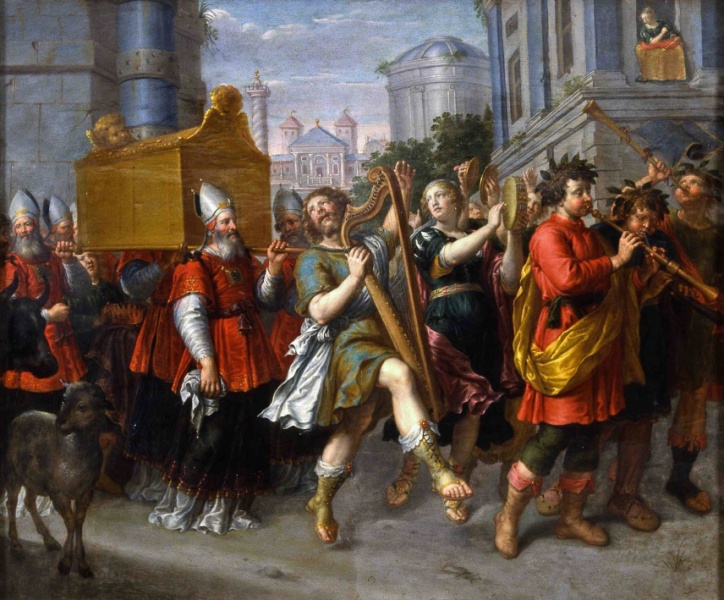
 

Despise Not the Anointed Presence of YHVH

2 Samuel 6–7

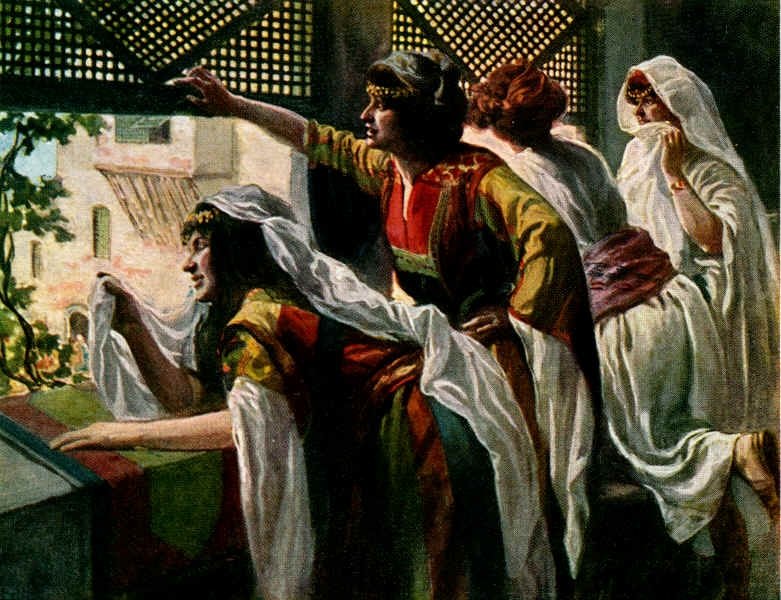
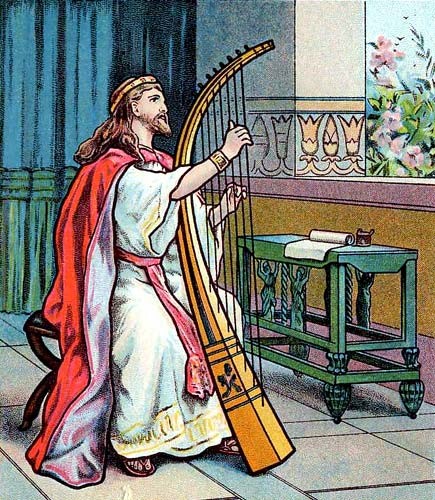
2 Samuel 6 :1–2, 14–23, Bring up the ark…David danced…Michal…despised him. Some people who are purveyors of dead, stale and fossilized religious systems may turn their noses airward in diffidence at the tokens or symbols of YHVH’s presence. On the other hand, there are those of equally petrified and lifeless religious systems that look to religious icons and tokens to somehow breathe life into that which is spiritually dead. Such can easily become nothing more than thinly veiled idolatry and relic worship. Neither of these situations was the case with David when he sought the return of the ark of the covenant to Jerusalem. The ark was, for the Israelites, the symbol of Elohim’s blessed presence among them. With passionate zeal from a heart of worship, David longed for the ark’s placement in Jerusalem in a place of honor, and YHVH honored David’s desire. Yet there were those, even in David’s own family, who in an effort to keep old dead systems alive, despised the anointed presence and David’s zeal for it.

As physical humans, YHVH knows that we need points of contact to aid us in connecting to the deeper things of life—especially to those things of the heavenly realm. In the physical realm, a cherished photo of a loved one, a wedding ring, a souvenir from a trip, a gift from a friend or a family heirloom may serve to refresh our memories and to stir the emotions reminding us of the people, places or events behind the keepsakes. A souvenir is something we purchase while on a trip to remind us of good memories when we return home. The word souvenir is a direct borrowing from the French word of the same spelling meaning “to remember.” The power of keepsakes, heirlooms or souvenirs over one’s mind and emotions can be so strong that they can cause us to shed a tear, go into a depression, or bring us great joy. Our emotional attachments are so strong to them that often they will be the things that we will retrieve before anything else from our burning home. These things serve as points of contact with important events that have happened in our lives. 

In our spiritual lives, we have similar points of contact. It could be a favorite Bible or another token of our faith and devotion to YHVH. The Bible reveals that anointing oil or an anointed cloth can be a point of contact with YHVH the Healer. Communion and baptism are both points of contact to higher spiritual truths. It is heresy, possibly even idolatry, to say that the water of baptism actually spiritually cleanses the sinner, or the bread and wine become the actual the body and blood of the Savior. But they are important in that they are a physical representation of deeper spiritual truths or realities.

Perhaps now we can appreciate better David’s zeal over the ark of the covenant’s return to Jerusalem. Embodied in that box was the very heritage and future of Israel, for it represented YHVH’s divine presence in the midst of his people. David recognized this and knew that, like Moses, unless YHVH was with him (Exod 33:14–15), the future looked bleak and he despaired about going forward without YHVH’s presence among them.

What are the points of contact in your spiritual life that serve as points of reference, contacts, milestones, road signs, or souvenirs either reminding you of or pointing you toward YHVH’s grace in your life? 

David literally danced for joy before the people when the ark of the covenant paraded into Jerusalem. Do we have a similar emotional tenderness, enthusiasm and exuberance about spiritual things that we too, like David, can worship our Creator with total abandon? Or do we, like Michal, the daughter of King Saul and wife of David, criticize those who, like David, did so? In reality, everything in that ark pointed to Yeshua—the Living Word of Elohim. No doubt David, a spiritually attuned man after YHVH’as own heart, recognized the deeper symbolism of the ark and its contents, and he would have loved every bit of it unreservedly as evidenced by his zeal at the ark’s return. Similarly, do we still possess such a love for Yeshua, or have we lost it? (Read Rev 2:4–5.) What did YHVH-Yeshua threaten to do to the assembly at Ephesus if they did not reignite the passions of their first love for him?

 2 Samuel 6:3–7, The house of Abinidab. While in the house of Abinadab, the ark’s presence had become so commonplace such that, as Matthew Henry states in his commentary, the familiarity of it engendered contempt (or at least a casual disregard) for it. Perhaps an irreverence for YHVH’s set-apart things had gripped Uzzah’s heart prompting him to touch that which was forbidden to do so. In our modern culture, and Christianity is not exempt from this, there is very little respect for authority, one’s elders, the law or other’s property, much less holy or set-apart things. In YHVH’s order of things, this is unacceptable behavior. Scripture draws strict lines of demarcation between that which is holy (kadosh or set-apart) and that which is commonplace or profane. YHVH has designated certain times, places, things and even people to be honored and respected—even revered. Are we in danger of incurring Elohim’s wrath, as Uzzah did, for not properly recognizing this?

 2 Samuel 6:16, [Michal] despised [David] in her heart. In reality, what was Michal despising—David or the ark itself? Often humans in actuality are despising the things of YHVH even though they misdirect their disregard and spite toward his human agents. Scripture reveals that the children of Israel’s rebellion against Moses was really against YHVH himself. Similarly, if the ark was a prophetic picture of Yeshua, then for whom was Michal really showing contempt? Yeshua is a stone of stumbling and a rock of offense to many people. Many Christians claim to follow Yeshua, yet they despise his Word and his messengers. They also despise those who are passionate devotees and worshipers of Yeshua referring to them as right-wing fanatics, extremists, unbalanced, Bible-thumpers, Jesus freaks and other derisive terms. How passionate for Yeshua and his ways are you? What does YHVH say about this attitude? (Read Rev 3:15–19.)

Continue reading
 

Why David Had to Fight for His Throne Is Why We Have to Fight for Eternal Life

2 Samuel 2–5

What We Can Learn from Israel’s Internecine Conflict Over Who Would Be the Next King of Israel

Second Samuel chapters two through five chronicle the conflict between those Israelites allied with David and those loyal to the family of Saul over who would be Israel’s next king. Scripture characterizes this bloody civil war with swords and spears that lasted for seven long years this way, “Now there was a long war between the house of Saul and the house of David. But David grew stronger and stronger, and the house of Saul grew weaker and weaker,” (2 Sam 3:1). Even though at YHVH’s command the now deceased Samuel had chosen and anointed David king over Israel many years earlier, why did YHVH require David to have to fight his way to the top leadership position in Israel? Why didn’t the Almighty just hand David the keys to the throne of Israel after the untimely death of Saul and his sons? What lessons can we learn from this tragic portion of Scripture?

There may be other reasons for this, but upon prayerful reflection several immediately come to mind. The first is this: When YHVH gives us a promise, he often does not tell us how or when the promise will be fulfilled. That is to day, there is no guarantee that it will be handed to us on the proverbial silver platter. 

Why is this? 

Everything in life is an uphill battle, even in fulfilling one’s spiritual, Elohim-ordained destiny. This is because the saints have resist the spiritual gravitational pulls that keep us grounded as prisoners on this earth; they all conspire to keep us from flying high spiritually. We are, in a sense, condemned to fight against and to overcome the world, the flesh and devil, which are all aligned against the will and ways of the Creator. However, on the positive side, in the process of having to overcome these enemies of Elohim’s plans, one grows in faith, patience and dependence on his Creator. The character of the saint is refined and strengthened in the fires of adversity. As the saying goes, “No pain, no gain.” Weightlifters, body builders, athletes and coaches understand this principle well. Gravity and inertia are against success and victory and these must be overcome to win. For this reason, the aspiring athlete pushes his or her body past the point of pain and endurance in order to attain higher levels of achievements resulting in victories and broken records.  A trophy awaits the winner. The same is true on the spiritual playing field.

In the Scriptures, there are few if any examples of physical or spiritual achievement without hard work. It all started in the garden after the fall of man when sin entered the world. After that, man had to go to work. Life was no longer a free lunch, so to speak. The days of living in a paradise called the Garden of Eden were gone where man could just stroll about naked freely feeding himself with the fruit just hanging from trees ripe for the picking. Now he had to struggle not only against his own carnal, fallen sin nature as well as against the devil serpent, but also against the unrelenting earth itself where weeds and thorns now grew and would only reluctantly yield its fruit by blood, sweat and tears to satisfy man’s hungry belly.

Why did the Creator make it necessary for man to have to endure such a lifelong struggle from cradle till grave? Other than the fact that this struggle was man’s criminal sentence for rebelling against his Creator, there is a greater purpose for man’s otherwise painful and laborious existence trapped on this time-space capsule called Earth. It is this: YHVH has called his saints to be overcomers, even as Yeshua, who led the way for us, was an overcomer. We read the following in the Scriptures:

These things I have spoken to you, that in Me you may have peace. In the world you will have tribulation; but be of good cheer, I have overcome the world. (John 16:33)

You are of Elohim, little children, and have overcome them [i.e. the spirit of Antichrist that controls the world], because He who is in you is greater than he who is in the world. (1 John 4:4)

For whatever is born of Elohim overcomes the world. And this is the victory that has overcome the world—our faith. (1 John 5:4)

Why does YHVH require his saints to be overcomers? Because the rewards that he intends to hand out are beyond anything any human can think or imagine, and are only for those who are willing to fight hard for them and who will thus appreciate them. What are these rewards that require so much overcoming to achieve? We read,

To him who overcomes I will give to eat from the tree of life, which is in the midst of the Paradise of Elohim. (Rev 2:7)

He who overcomes shall not be hurt by the second death. (Rev 2:11)

To him who overcomes I will give some of the hidden manna to eat. And I will give him a white stone, and on the stone a new name written which no one knows except him who receives it. (Rev 2:17)

And he who overcomes, and keeps My works until the end, to him I will give power over the nations. (Rev 2:26)

He who overcomes shall be clothed in white garments, and I will not blot out his name from the Book of Life; but I will confess his name before My Father and before His angels. (Rev 3:5)

He who overcomes, I will make him a pillar in the temple of My Elohim, and he shall go out no more. I will write on him the name of My God and the name of the city of My Elohim, the New Jerusalem, which comes down out of heaven from My Elohim. And I will write on him My new name. (Rev 3:12)

To him who overcomes I will grant to sit with Me on My throne, as I also overcame and sat down with My Father on His throne. (Rev 3:21)

And finally, the pièce de résistance:

He who overcomes shall inherit all things, and I will be his Elohim and he shall be My son. (Rev 21:7)

So, in reality, this physical sin-sick, spiritual wilderness of life in which we are condemned to exist physically is, in reality, a proving or testing ground, a class room, or a cauldron of fire to test and refine us, if you will, to prepare us for something much greater, which is way beyond anything we can think or imagine. It is a launch pad, for those who qualify, to send us into a perpetual spiritual orbit around YHVH Elohim-Yeshua.

Eye has not seen, nor ear heard, nor have entered into the heart of man the things which
Elohim as prepared for those who love him. (1 Cor 2:9)

Yes, YHVH Elohim put the first humans into a garden paradise and set before them the free gift of eternal life on the condition that they would first pass the test of obedience. Well, we all know what happened: they flunked the test and here we are today in the ensuing, resulting chaotic mess. 

Yet despite it all, our Father in heaven, who so loves the world, is still offering the same reward to whomsoever will believe on him and meet his conditions by passing the obedience-sin test. This is why we must swim upstream and overcome all that is coming against us and trying to pull us downward, for this is what it takes to fullfil the spiritual destiny to which he has ordained us and to win the prized trophy of eternal life. David had to pass such a test, as did Abraham, Moses, Yeshua and everyone else who would inherit eternal life. 

After two previous rebellions (i.e., the Luciferian and the Adamic rebellions), YHVH Elohim will not allow a third rebellion to occur resulting in everlasting chaos in his eternal kingdom. He wants peace, joy, love, holiness and righteous to be set in stone forever, not the opposite.


Natan’s Commentary on Psalms 76 to 78

Psalm 76

Psalm 76:11, Bring presents/gifts. The only gift we can bring to Elohim is ourselves—our time and our hearts. Everything else he already possesses, and this ought to be done in the spirit of fear—both reverential awe and dread fear, which Scripture presents as the two aspects of the fear of Yehovah Elohim.

Psalm 77

Psalm 77:10–11, My anguish…I will remember. In times of personal anguish when YHVH, the Most High or Elyon seems far away and that he has turned a deaf ear to one’s cries, this is the time to encourage oneself by remembering his mighty right hand works that he has performed for us in past and how he has answered blessed and delivered us by answering our prayers. 

Psalm 77:13, Your way…in the sanctuary [Heb. kodesh]. This is a reference to the holy place of Tabernacle of Moses, which reveals the seven steps in YHVH’s plan of salvation for mankind, and to bring us to the Father through Yeshua the Messiah, which is the basic good news, gospel message. The tabernacle is literally a three-dimensional gospel tract designed to engage and inspire people physically, emotionally, mentally and spiritually to step onto the path and begin the journey that leads us to our Father in heaven. By studying the Tabernacle of Moses we learn the glorious mysteries of heaven’s plan of salvation, the wonder of the gospel message and the central that Yeshua the Messiah plays in the process of redeeming mankind and uniting him with the Elohim.

Psalm 78

Psalm 78:1, Give ear…incline. The Scriptures here and elsewhere admonish people to incline their ears (elsewhere, their hearts; see Josh 24:23; cp. Pss 49:4; 71:2; Prov 2:2; Isa 55:3) to Elohim. Elsewhere and conversely, The Scriptures reveal that YHVH inclines himself to his people (Pss 17:6; 45:10; Isa 37:17; Dan 9:19). Our spiritual walk with YHVH, that is, being reconciled to him, is a two-way street. Moreover, sometimes YHVH even has to incline our hearts to him (1 Kgs 8:58 ; Ps 119:36; 141:4), or else, it could be reasoned, that due to the powerful sinful inclinations of human nature, there may be no humans that would ever follow him.

Psalm 78:9–11, Being armed…turned back…refused. The Ephraimites were defeated in the battles of physical warfare because they refused to walk in accordance with YHVH’s Torah-law. Is it possible that to the degree that the saints turn away from YHVH’s Torah-law, they too will be defeated in their spiritual warfare battles? YHVH’s standards of righteousness have never changed, and the Bible teaches from cover to cover that YHVH rewards righteousness and obedience to his commandments, and punishes wickedness and disobedience to his commandments. He makes his face to shine upon and blesses the former, and turns his face against the latter who suffer the consequences of their sinful or Torahless actions.

Psalm 78:22, His salvation. Heb. Yeshuati or Yeshua.

Psalm 78:36–37, They flattered him…their heart was not steadfast. How often do religious people who claim to love Elohim make verbal professions of their faith in and devotion to him, yet the actions of their daily lifestyles demonstrate anything but that? This was the case with the children of Israel, as well as many of the religious zealots of Isaiah and Yeshua’s day (Isa 29:13 cp. Matt 15:7–9): “[T]his people draw near me with their mouth, and with their lips do honour me, but have removed their heart far from me….” To this day human nature has not changed, for there is nothing new under the sun! Many still people say a lot, but few actually do.


Saul—A Portrait of a Split Personality (like you and me?)

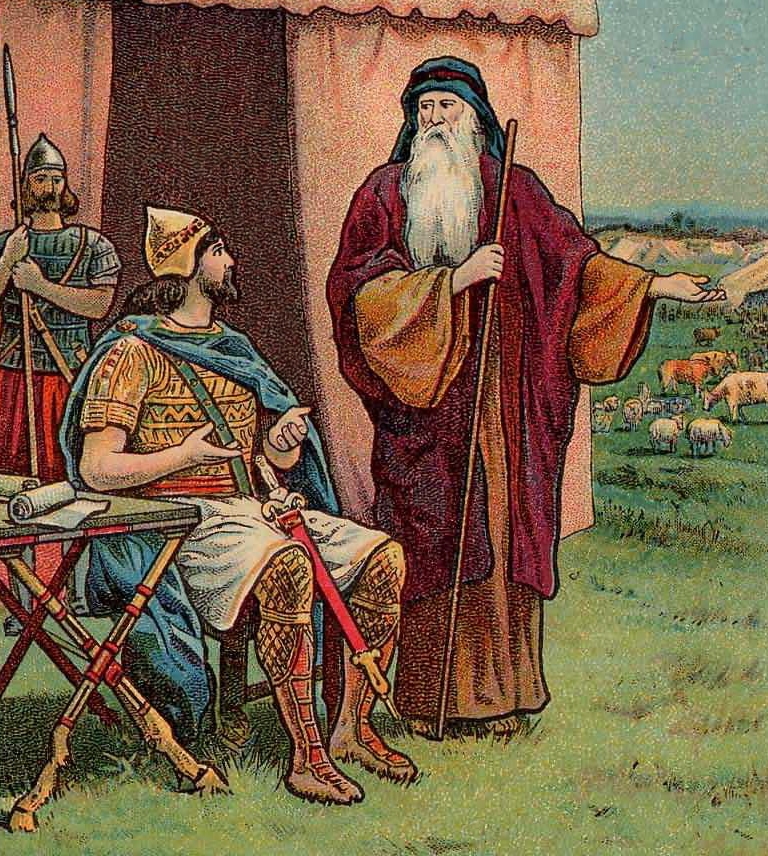
Saul rejected as king of Israel.

If we were tasked with writing an epitaph on the life of King Saul what would it be, and, perhaps more importantly, what lessons would we learn from the life of Israel’s first king? Several notable aspects on his life beg to be addressed, and since the young David figures so prominently in the saga of Saul’s life, it is almost impossible not to contrast the character qualities of these two Israelites when analyzing the life of the former.

The first character quality—a notable one—when first looking at Saul’s life is that he started out as a virtual nobody from a non-notable family from Israel’s tiniest tribe and because of this he was small in his own eyes. Although he was tall and handsome, Scripture presents him as a somewhat humble and definitely a timid individual. Sadly, however, he did not remain humble once kingship came knocking on the door of his life. The prestige and power associated with regnal authority went to his head and it corrupted him as it does with most leaders of men be it the religious, political or business spheres. It is a rare individual who can remain virtuous, much less godly, when tempted with the allurements of popularity, wealth and power. Saul was no exception. How many modern politician and, sadly, most major religious leaders have fallen into this same trap? To whit, in our day, the public’s resect for both of these categories of individuals has probably never been lower than it now is. 

Saul had another flaw, as well, that manifested itself early in his life. He felt the need to tap into a “crystal ball”, if you will, in an attempt to ascertain his fortune or his future. Often it was not to determine the will of Elohim for his life, but for his own selfish purposes. We first see this tendency in Saul when he endeavored to pay Samuel the prophet to divine where his lost donkeys could be found. Several times after that, Saul called on the his personal priest to use the Urim and Thummim to ascertain the will of Elohim especially when it came to doing battle. This was not a bad thing, for David did the same thing. The problem is that when YHVH failed to answer Saul in this manner, instead of asking why Elohim was no longer speaking to him and then repenting of his errant ways, he turned to witchcraft—to necromancy or spiritism—to discover his fortune. This act demonstrates a notable flaw in Saul’s character. He cared less about obeying and serving Elohim than he did about serving his own interests no matter the means necessary to do so. This is not unlike many Christians in our day who seek “personal prophecies” to know what their future holds from church “prophets” who claim to have an inside track with Elohim.

YHVH Elohim has told us in his Word what he wants us to do: obey him and keep his commandments. In other words, doing the will of Elohim must be the top priority in our lives. This was not the case with Saul and most modern Christians. Too many people are like Saul in that they serve Elohim only when it benefits them and it is convenient to do so. In other words, they conform the Word of Elohim to fit their lifestyles instead of the other way around. 

Moreover, for Saul, if Elohim did not respond to him when he snapped his fingers, he looked elsewhere. Sadly, a majority of “Christians” are just like Saul. When it serves their interests, they are loyal and obedient to Elohim. However, if YHVH fails to do their bidding according to their time schedule, they turn elsewhere for aid and comfort, instead of waiting patiently in faith for heaven’s answer. Yeshua referred to this split loyalty as serving both Elohim and mammon. James referred to such a person as being double minded and unstable (Jas 1:8) and a sinner (Jas 4:8). Why is such a person a sinner? Simply because YHVH is not on the throne of such a person’s life. Following the dictates of one’s carnal, sin nature over the Word and will of Elohim is, in reality, self-worship or idolatry, which is a violation of the second commandment: “Thou shalt have no other gods before me,” (Exod 20:3). It is making oneself into the god of one’s life instead of YHVH Elohim. Many claim that Yeshua is their Lord (Master) and Savior, but is he really in charge of our lives?  Face it dear reader, make no mistake, for you and I are guilty all too often of the same sin as Saul—of willful rebellion against the Word and will of our Master! Take a long, hard look in the mirror. Who is really the Master of your life? Your own mind, will and emotions, that is, the dictates of your own heart, or the Word and will of the Almighty Elohim? Do you consult the Word and Spirit of Elohim at all times for direction in your life, and then wait for YHVH to answer you? Or do you just take matters into your own hands and impetuously and wilfully blast forward regardless, as Saul did many times, instead of waiting on Elohim?

Saul’s lack of unconditional loyalty to Elohim caused him constantly to step out of will of Elohim, which, as Samuel declared, was rebellion and witchcraft (1 Sam 15:23). One does not have to don a black robe and pointed hat and fly around on a broom to be a witch! By biblical definition, we fall into witchcraft anytime we rebelliously step out of the will of Elohim, go against his Word, and do what is right in our own eyes, when it is contrary to Elohim’s Word. Eventually, Saul persisted in his rebellion and witchcraft and even found himself consulting a witch in an attempt to foretell his future.

Going against the Word, will and laws of Elohim or Torahlessness is a form of witchcraft, for it is putting our will over that of Elohim’s. Another expression of this idea is, “Do what thou wilt,” which is the modern mantra of those who have given themselves over to the religion of Satanism. Whenever, Saul stepped out of Elohim’s will, he was, in reality, resisting the Spirit of Elohim, and stepping over to the dark side—the side of the Adversary or Satan the devil. It was at this time that a evil, even murderous, spirit from Elohim began tormenting Saul. In reality, this was Elohim’s judgment against Saul. In essence, YHVH was telling Saul, “If you don’t want me to rule over you, then you’ve chosen the devil to rule over you instead. Now see where that gets you!” When YHVH pulled off of Saul the light of his grace and his Spirit, the void that was left was filled by darkness—an evil spirit. At this time, Saul could have repented and turned back to Elohim, but, instead, he persisted in his wilful, stubborn rebellion against heaven’s rule and, as a result, he lost his kingdom and his life. The devil always over-promises and under-delivers! As Proverbs declares, “There is a way which seemeth right unto a man, but the end thereof are the ways of death,” (Prov 14:12; 16:25).

Continue reading
 

Natan’s Commentary on Psalms 73 to 75

Psalm 73

Psalm 73:17, Went into the sanctuary. Divine revelation comes in the presence of Elohim.

Psalm 73:18, Slippery places. The wicked, though they may look blessed, prosperous, happy and successful by all appearances actually have one foot on a spiritual banana peel.

Psalm 73:23, You hold me. Like a loving father walking hand-in-hand with his child, so Elohim guides and counsels his spiritual children.

Psalm 74

Psalm 74:4, 8, Meeting place/s [synagogue, KJV]. (Heb. moedim). Moedim literally means “appointment, season or festival” and figuratively “assembly or meeting place.” For a discussion on the history of the synagogue in ancient times, see The Companion Bible (appendix 120).

Psalm 74:11, Withdraw your…right hand…out of your bosom. In 18th and 19th century portraiture, placing the right (and sometimes the left) hand in a one’s waistcoat or vest was considered both a sign of the upper class and of manly boldness tempered with modesty, while conveying calm assurance. This practice seems to go back to the sixth century B.C., where it was considered rude in some Greek circles to speak with the hands outside of the clothing, especially when conducting matters of state. This practice died out and was revived in the early seventeenth century and is seen in portraits of Napoleon I, Samuel Colt, Karl Marx, U.S. Major General George McClellan, President Andrew Johnson and Joseph Stalin. Is it possible that the idea of the hand on the breast inside of one’s coat originated from this psalm?

Psalm 74:14, Leviathan. Heb. livyâthân meaning “a wreathed animal, that is, a serpent (especially the crocodile or some other large sea monster); figuratively the constellation of the dragon”. Leviathan is an unknown sea monster that makes its appearance in Scripture six times (Job 3:8; 41:1; Ps 74:14; 104:26; Isa 27:1). 

Metaphorically, Leviathan is a symbol of Egypt (a biblical metaphor for the world) in Psalm 74:14; a metaphor for Satan the twisted serpent who dwells in midst of the sea (a biblical metaphor for the peoples of the earth) in Isaiah 27:1; a laughing, mocking or scorning sea monster that YHVH has created in Psalm 104:26 (another picture of Satan the sea monster in the midst of the seas of humanity); and, finally, an evil sea monster in Job 3:8. In general, Leviathan is an untamable and unconquerable and is the cruel enemy of YHVH’s people that YHVH created and has power over (Job 41:10), and who YHVH will punish and then ultimately slay (Isa 27:1). The Bible reveals that the same fate is in store for Satan the serpent at the end of the age whom YHVH will punish by casting him into the bottomless pit (Rev 20:1–3), and then destroy (his influence) by confining him to the lake of fire forever (Rev 20:1:10).

Interestingly, in Psalm 74:14, Leviathan is characterized as having many heads. This conjures up images of two of the Greek mythological demon-gods Medusa (who had snakes for hair) and Hydra (who had multiple heads). Indeed, in a sense, Satan the devil serpent can transform himself in many ways to trick and deceive humans. As the god of this world, he is also the founder and head many false religious, philosophical and socio-political-economic systems to enslave humans and to draw them into his rebellion against YHVH Elohim.

Psalm 75

Psalm 75:2, Your wondrous works. How does YHVH’s creation declare that his name is near? Simply this. Hebraically, his name encompasses his reputation and character—who he is and his glory. His creation declares this (see Ps 19:1 cp. Rom 1:19–20).

Psalm 75:10, Horn. (See notes at Exod 34:29.) Horn is the Hebrew word qeren meaning “horn, hill or ray.” This word is used to describe the rays of light rays emanating from the face of Moses after his encounter with YHVH (Exod 34:29) and the horns of an animal (Ps 69:31). In ancient cultures, the horn was a metaphor for physical strength or spiritual power (Deut 33:17; 2 Sam 22:3; Ps 18:2). Elsewhere, YHVH is referred to as man’s “horn of salvation” (e.g., 2 Sam 22:3; Ps 18:2) meaning he is the strength of our salvation.


Natan’s Commentary on 1 Samuel 21 to 29

1 Samuel 21

1 Samuel 21:6, Showbread.David likely had not eaten food for the better part of four days (three days hiding from Saul in the wilderness and the fourth day fleeing to Nob, 1 Sam 20:19 cp. 1 Sam 21:1), and so he was famished. Yeshua makes reference to this incident in Matthew 12:3 when justifying his picking grain and eating it on the Sabbath. Harvesting grain on the Sabbath is forbidden in the Torah, even as eating of the showbread was forbidden for anyone other than the priests (Exod 25:30; Lev 24:5–9). Yet, Yeshua demonstrated that, even as the Torah allows an ox to be pulled out of a ditch on the Sabbath to save the ox’s life, so it was allowable for him to “harvest” grain on the Sabbath to stave off hunger, even as David ate the showbread when he was famished. (See note at Matthew 12:1–14 for a full discussion of this subject.)

1 Samuel 24

1 Samuel 24:4, Corner of Saul’s robe. Corner in Hebrew is kanaph meaning “wing, extremity, edge, border, corner of a garment.” The kanaph was the same part of a garment to which YHVH instructed the children of Israel to attache the tzitzit or blue tassel (Num 15:37–41). Thus, in can be deduced that if Saul were Torah-obedient, then a tzitzit would have been attached to the corner of Saul’s garment. This tzitzit that David cut off was symbolic of Saul’s covenantal relationship and devotion to YHVH.

1 Samuel 24:6, 10, YHVH’s anointed. Interestingly, David was also YHVH’s anointed—as much so as Saul. However, Saul occupied the throne at the time, and David didn’t, so he respected Saul’s position until such time as YHVH removed him from the kingship. David wasn’t one to presume, rush things or to usurp any authority not given him. He was patient to wait for YHVH’s timing, including the time when the throne would his according to Samuel’s prophecy.

1 Samuel 24:16–21 (also 26:25), You are more righteous than I. Here King Saul prophesies that David will succeed him as king over Israel, and that he will do go great things and prevail. There were other instances of Saul coming under a spirit of prophecy (e.g., 1 Sam 10:10–11; 19:23–24). Saul was capable of hearing the voice of Elohim, but because of unrestrained carnality, a spirit of rebellion (15:23), and his inability to submit to the will of Elohim, he was spiritually conflicted. Clearly, YHVH was not in his heart (1 Sam 15:15, 21, 30). Within him was a constant struggle between doing the will of Elohim and his own will. The latter usually won out, because he had not unconditionally surrendered his will to YHVH (15:23, 26). Saul was swayed more by popular opinion than by the Word of Elohim (1 Sam 1 Sam 15:24, 30). Saul was able to worship Elohim (15:31), but was spiritually weak and not able to obey the Word of Elohim (15:23, 26). It is impossible to love and worship Elohim without obeying his Word. Let’s be honest. Most of us are at least a little if not a lot like Saul in these areas.

Yeshua declared that those who love him will obey his commandments or his Word (John 14:15). James wrote that the demons even tremble before Elohim (Jas 2:19), even though they are in rebellion against the Word of Elohim. Faith, works and obedience must accompany the worship and fear of Elohim (Jas 2:14–26). Though Saul paid lip service to YHVH, his heart was far from him. He obeyed when it was convenient and expedient to him. Isaiah similarly spoke of the rebellious Israelites who drew near to YHVH with their lips, but in reality, their hearts were far from him (Isa 29:13). Yeshua quoted and applied this verse to the hypocritical and rebellious religious leaders of his day (Matt 15:6–7).

In a certain sense, Saul is spiritual type of Christianity, which teaches and obeys the Torah-Word of Elohim only in part, and otherwise follows their own anti-Torah belief systems. 

1 Samuel 25

1 Samuel 25:1, Samuel died. Samuel was able to die in peace, since his ultimate mission was now complete. David’s kingship was safe, since Saul had just ceased pursuing David and admitted that David would be king. 

 1 Samuel 27

1 Samuel 27:3, So David dwelt with Achish. Why would the Philistines now accept David into their midst after he had fought against and killed so many of them as a general in Saul’s army? They accepted David because he was now an enemy of Saul. It was a political move on their part. This is a classic case example of the saying, the enemy of my enemy is my friend.

1 Samuel 28

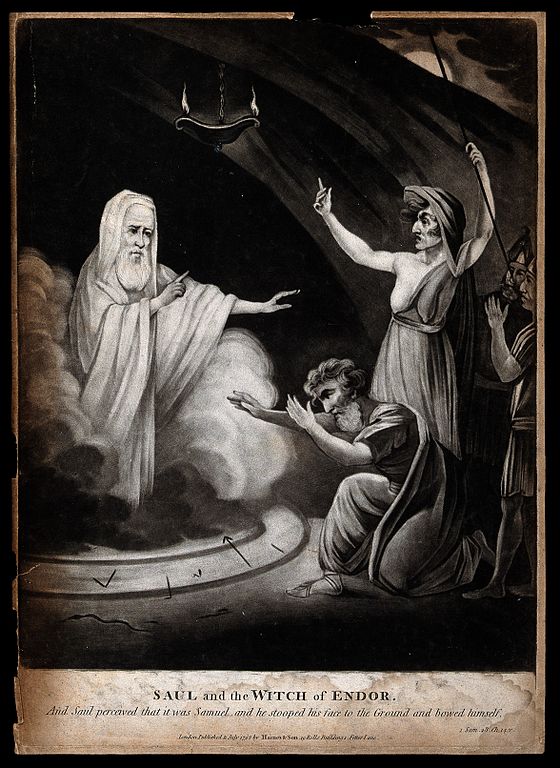
1 Samuel 28:15, 19 Samuel. Was this actually Samuel, and does this scripture passage prove that Samuel’s soul was immortal, as many in the mainstream Christian church teach, thus proving the doctrine of the immortality of the soul?

In this passage of Scripture, the witch of Endor is acting as a spiritist or medium—a necromancer. A demon is speaking and is posing as the dead Samuel. Yes, this demon looked and sounded like Samuel, but it wasn’t. Even though Scripture calls this demonic impersonator Samuel, this was written from the human perspective, as many Scriptures are, since the Bible is often quoting humans who are speaking and writing from their own perspective based on their limited knowledge, and not necessarily stating truth in the full sense of the word. This is where the astute and Spirit-led Bible student will rightly divide the Word of Elohim, so that they don’t make it say things that are contrary to spiritual truth or contradict other scriptural truths. Moreover, do you not think that the sovereign, all powerful Elohim can’t use anyone or anything to communicate to anyone in any way he chooses—in this case to King Saul? After all, he used a donkey to speak to Balaam. Yeshua said that Elohim could raise up rocks to praise him. Elohim used lying spirits to prophesy lies to King Ahab through the mouths of his false prophets (1 Kgs 22:19–23). Know ye not that even Satan can transform himself transforms himself into an angel of light. (2 Cor 11:14)?

In verse 19, the demon posing as Samuel declares that Saul and his sons will be with him. If one believes this is Samuel speaking, and believes that the soul is immortal and goes to heaven when a saint dies, then it would be logical to assume that Saul and his sons would be going to heaven. However, if this is a demon speaking, where is he speaking from? Yes, the demon is saying that Saul and his sons will be with the him wherever he happens to be—probably in what the Bible refers in several place to as the pit, abyss or, in the Greek, tartaroos (2 Pet 2:4)—the place where the demons are being held in prison awaiting the final judgment.

1 Samuel 28:24, Calf in the house. In ancient times, in the average Israelite home, animals lived in the house with the people.

1 Samuel 29

1 Samuel 29:6, As YHVH lives. Here Achish the Philistine is invoking the name of YHVH. Why would a heathen whose people worship Dagon (the wheat harvest or fish god of fertility)call on the name of YHVH, the Deity of the Hebrews? Ancient history shows that the people of Canaan in biblical times worshipped a pantheon of deities including Ba’al, Asherahm, Berith, Chemosh, Dagon, El, Elyon, Moloch, YHVH and many others, whereas the Israelites worshipped only YHVH Elohim. The biblical record reveals that at one time, the inhabitants of the earth knew the name of YHVH, and called on him (Gen 4:26). This doesn’t mean, however, that they remained faithful to the truth he had revealed to them through his servants (e.g., Adam, Enoch, Noah, or Shem) even though the use of the name YHVH continued. In our day, the use of the names God, Jesus, Christ can mean many things to different people, and their use may have little or no relevance to what the Scriptures reveal about the Godhead or what he requires in the way of obedience.