
Divine Judgment in the “Age of Grace”?!

Acts 5:1–11, The deaths of Ananias and Sapphira. Why did YHVH kill them? They committed the unpardonable sin in that they willfully and in a premeditated plot lied to the YHVH. There is no sacrifice or forgiveness for willful sin. YHVH was showing us that even in the age of the New Covenant, his grace doesn’t cover willful sin. Let us all fear YHVH Elohim and tremble before him all the time!

Some scholars suggest that YHVH killed them because they violated the Torah laws regarding the handling of devoted things, for which there was a death penalty (Lev 27:28–29). Perhaps so.

Whatever the case, it’s interesting to note that YHVH struck Ananias and Sapphira dead after the cross in, what many Christians call, the dispensation of grace era when, in their minds, sin doesn’t carry the same severe penalty us under “old covenant,” law of Moses era. What we learn from this is that YHVH still views sin as sin, and the wages of sin is still death (Rom 6:23). This has never changed before or after the cross of Yeshua.

Just because one isn’t struck dead immediately upon having sinned doesn’t mean one hasn’t incurred the death penalty. That death penalty is only waived when one repents of their sin and asks for YHVH’s forgiveness through faith in Yeshua whose death paid the death penalty price for our sins.

Likely, such divine judgments still occur in our day more frequently than we realize. It may not involve the death of the individual, but rather sickness, demonic attacks, financial setbacks and other adversities that occur to us. The problem is that because of human pride and spiritual deafness and blindness, most people fail to recognize the cause of their problems. We attribute them instead to random circumstances and time and chance instead of to YHVH’s hand of judgment against us because of our sin, which we fail to recognize and repent of.

Paul addresses this issue in 1 Cor 11:27–32 with regard to those who eat of the communion elements in a careless or indifferent manner.

Therefore whoever eats this bread or drinks this cup of the Lord in an unworthy manner will be guilty of the body and blood of the Lord.

But let a man examine himself, and so let him eat of the bread and drink of the cup.

For he who eats and drinks in an unworthy manner eats and drinks judgment to himself, not discerning the Lord’s body.

For this reason many are weak and sick among you, and many sleep.

For if we would judge ourselves, we would not be judged.

But when we are judged, we are chastened by the Lord, that we may not be condemned with the world.

 

Blog Scripture Readings for 4-9 Through 4-15-17

Aside

THIS WEEK’S SCRIPTURE READINGS FOR STUDY AND DISCUSSION:

Parashat — (No Parasha This Week)
Haftarah — Ezekiel 37:1-14**
Prophets — Isaiah 29:1 – 37:38
Writings — Job 1:1 – 7:21
Testimony — Acts 4:23 – 8:25

Our new Scripture Reading Schedule for 2016-2017 is available to download!

Most of this week’s blog discussion points will be on these passages. If you have general comments or questions on the weekly Scripture readings not addressed in a blog post, here’s a place for you to post those. Just use the “leave a reply” link below.

The full “Read Through The Scriptures In A Year” schedule, broken down by each day, can be found on the right sidebar under “Helpful Links.” There are 4 sections of scripture to read each day. One each from the Torah, the Prophets, the Writings, and from the Testimony of Yeshua. Each week, the Torah and haftarah readings will follow the traditional one-year reading cycle.

** A different Haftarah is read when it is a special sabbath in Jewish tradition. This week it is Pesach Shabbat Chol hammed (the Sabbath that falls during the Feast of Unleavened Bread) on the traditional calendar.

Weekly Blog Scripture Readings for 4/9/17 through 4/15/17.


Preparing Your Heart for Passover


Out With Leaven For the Feast of Unleavened Bread


Why Celebrate Passover? The Seder Explained


The Biblical Origins of the Baptism Ritual

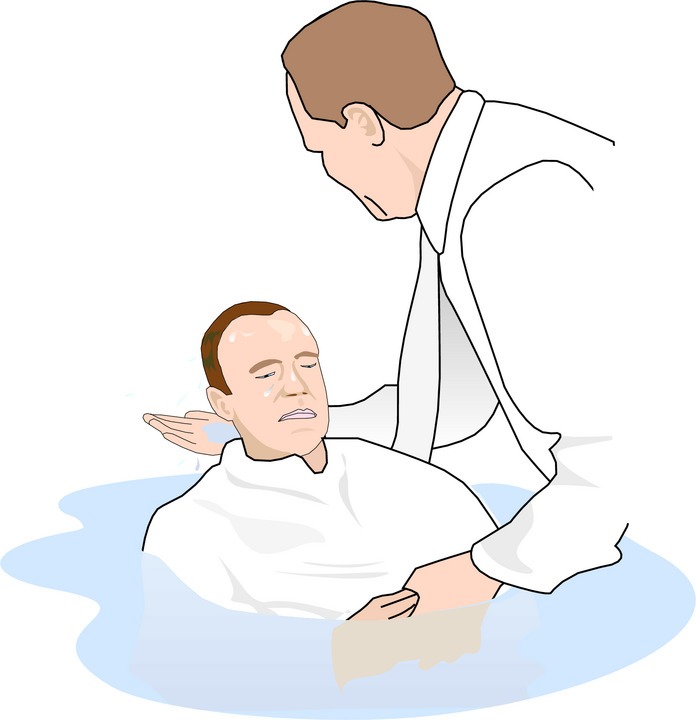
Acts 2:23, Be baptized. (Also see notes at Matt 28:19.) The term baptism in Hebrew is tevilah meaning “immersion” which occurs at a mikveh meaning “a gathering of waters.” For those coming from a Christian background baptism is something that occurs at the beginning of a believer’s spiritual walk and involves baptism (immersion) in water for the remission of sins (Acts 2:38; 22:16; Rom 6:3–6; 1 Cor 15:29; Gal 3:27; Eph 4:5; Col 2:12; 1 Pet 3:21). Yet the Paul the apostle talks of baptisms (plural) in Heb 6:2. Evidently, in Jewish thought immersion for the remission of sins is but one of many such ritual immersions.

Indeed, in the Testimony of Yeshua we not only read about baptism for the remission of sins, but the baptism of repentance of John the Baptist (Acts 1:5; 10:37; 13:24; 19:4); baptism (immersion) of the Set-Apart Spirit (Luke 3:16; Acts 1:5; 8:16; 11:16); baptism with fire (Matt 3:11; Luke 3:16). Here we see the four types of immersions spoken of in the Testimony of Yeshua.

The concept of ritual immersion for a variety of reasons stems from commands in the Torah relating to ceremonial washings signifying spiritual and physical cleansing (Lev 14:1–4, 7, 9; Exod 19:10; Lev 8:6; 15:5, 8, 10–13, 16–18, 21; 16:4).

Moreover, the prophet Ezekiel speaks of YHVH sprinkling his people to cleanse them from their impurities, which is a picture of the new spiritual life of which immersion is e a type (Ezek 36:25).


Got the Anointing? Got the Anointed One??

Leviticus 8:12, Anointing oil … consecrates [Heb. kadash]. The Hebrew word kadash signifies the state of something that belongs to the realm of the sacred, and which is set-apart for divine use and has been separated from the sphere of the secular, common or profane. The Bible often uses the term holy (meaning “set-apart”) to signify this state of being. The word of Elohim designate many things as set-apart:

  • The ground upon which YHVH is standing (Exod 3:5; Josh 5:15)
  • The people of Israel (Exod 19:6; Deut 14:21; 26:19)
  • The Sabbath (Exod 16:23; 20:8)
  • The Tabernacle of Moses (Exod 26:33)
  • The garments worn by the high priest (Exod 28:2)
  • The altar of sacrifice (Exod 40:10)
  • The offerings made on the altar (Lev 6:18)
  • YHVH’s feast days (Lev 23:2)
  • The camp of Israel (Deut 23:14)
  • Heaven as the abode of Elohim (Deut 26:15)
  • YHVH Elohim (Job 6:10; Pss 22:3; 78:4; 99:5)
  • Zion and Jerusalem (Ps 2:6; Matt 27:53; Rev 22:19)
  • The Spirit of Elohim (Matt 1:20)
  • The angels (Matt 25:31)
  • The servants of Elohim (Mark 6:20)
  • The name of YHVH (Luke 1:49)
  • Yeshua (Acts 2:27; 3:14)
  • YHVH’s prophets (Acts 3:21)
  • The saints (1 Pet 2:9; Rev 22:11)
  • The Torah (2 Pet 3:21)

YHVH’s people are to learn to make a difference between that which he designates as being kadash (holy) and that which is profane (Lev 10:10). In order to do this, one must know what YHVH defines as set-apart and then align our thinking and lifestyle with that.

The act of consecrating someone (or something, e.g. Exod 30:26), as occurs in Leviticus 8:12, often involves the ritual of pouring olive oil on them to signify their being set-apart for a special work or service. This is called anointing (see Exod 28:41; 29:7; 1 Sam 16:12; 1 Kgs 1:34; Isa 61:1; 2 Cor 1:21).

Yeshua’s title is Messiah (Heb. Mashiach) literally meaning, “one who is anointed, smeared or consecrated with (olive) oil.” The English word Christ derives from the Greek word Christos/Cristos, which is the Greek equivalent of the Hebrew word mashhiach. In biblical thought, the Messiah would be One coming from heaven who would possess a super-anointing of the Spirit of Elohim (Isa 11:1–10; 42:1–21; 61:1–3; John 3:34) to accomplish the purposes of Elohim on earth.

Have you placed your trusting faith in Yeshua the Messiah, the Anointed One from heaven? He is the only one who can take away the shame, guilt and penalty of your sin, and the only one who defeated death and can lead you past the veil of death and into immortality.