Paul Equates Torah With Yeshua

Deuteronomy 30:11–14, Does YHVH’s Torah set an impossible standard by which we are to live? If so, we are logically compelled to ask ourselves this question: Would a righteous and just Creator and a loving Heavenly Father give to his chosen people and children a set of standards that were humanly impossible to perform, then curse them for their inability to meet these standards? If so, then we must face the fact that Elohim is an unjust and a wicked tyrant!

If Torah isn’t an impossible standard to follow, then what is the Torah’s purpose in our lives, and why does the Creator impose the Torah upon his people?

We believe that the Torah sets a standard of faith, trusting in Elohim, and that if followed it provides a system of repentance and sacrifice for obtaining forgiveness from Elohim and restoring a condition of being considered righteous in his sight. The Torah also teaches man how to achieve peace on earth and good will toward men by showing humans how to love Elohim with all their heart, soul, mind and strength and their neighbor as themselves.

Paul quotes this same Deuteronomy passage in Romans 10:6–8 where he relates the Written Torah to Yeshua, the Living Torah or Word of Elohim incarnate (in the flesh). (Compare with John 1:1, 14.) He shows that they are one in the same and that Messiah Yeshua, through his life, came to reveal to man the righteousness of the Torah-law. This righteousness is available to us if we will but have a heartfelt faith in him (Rom 10:4, 9–10) and allow him to live out his righteousness in us through the empowering work of the Spirit of Elohim. In verses 11 through 21, Paul goes on to relate this very truth to being the central message of the gospel that Isaiah prophesied (Isa 52:7) would be preached to redeem both houses of Israel to Yeshua their Messiah. Furthermore, in Romans 10:4 Paul reveals that Yeshua is the end goal, target of or the full flowering or embodiment of the Written Torah in human form.

 

How the Red Heifer Relates to Yeshua’s Death on the Cross

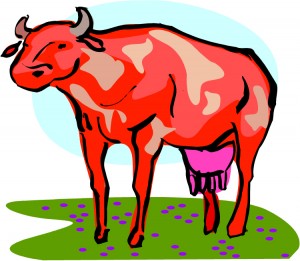
How does the mysterious ritual of the red heifer relate to Yeshua’s atoning death on the cross? Below is a list points of how Yeshua’s death fulfilled every aspect of the curious red heifer ritual.

  • The heifer was to be pure red in color (Num 19:2). Red is the color of the stain of sin (Isa 1:18, “though your sins be as scarlet … red like crimson.”). Red is the color of the tzaaras skin infection dealt with in Leviticus 13:19, 24, 42–43. Red is also the color of clay earth out of which Elohim formed the first man naming him Adam (Strong’s H119/120) which meansruddy, red, bloody or rosy in color.” Red is also the color of the Second Adam, Yeshua the Messiah, who was literally red, while being covered in his own blood while hanging on the cross as our sin sacrifice.
  • The red heifer was to be spotless and without blemish or defect (Num 19:2). More care was exercised in choosing a spotless cow than in any other sacrifice. This spotless purity represents Messiah Yeshua, the perfect, and sinless sacrifice.
  • The red cow had borne no yoke (Num 19:2). Similarly, Messiah was neither under the yoke of sin nor was beholden to or under bondage to any human, institution, government, religious system or anything else of an earthly nature.
  • The heifer was slain outside of the camp (Num 19:3). During the first and second temple eras the red heifer was slain on the Mount of Olives by the priests. The Mount of Olives was located off the Temple Mount and outside the walls of the city of Jerusalem (see The Pentateuch/Numbers, p. 329, by Samson Hirsch). Messiah Yeshua was sacrificed outside of the city gates of Jerusalem (Heb 13:12) and very possible, contrary to Christian tradition, on the Mount of Olives from which the front of the temple and the veil was clearly visible. Remember, the rent veil was visible from the place of crucifixion (Matt 27:51, 54; Mark 15:38–39).
  • The red heifer was to be slaughtered and then totally burnt (Num 19:5). This represents the burning and agonizing death and suffering of Messiah on the cross. Messiah suffered in body, soul and spirit (Isa 53) to atone for man’s sin.
  • The red heifer is just one more of the many shadow pictures that point to the Suffering Servant Messiah found in Torah. Other of these antetypes or prophetic shadow-pictures include: Continue reading
 

The Ancient Ritual of Two Doves … and Yeshua??

Leviticus 14:4–32, Read this scripture passage and see how many clues you can find that point to Yeshua. We’ll give you hints along the way by providing you with the scripture verses to look up that will give you the answers. The purpose of this exercise is to show you that all the ceremonies and rituals that were part of the sacrificial system all prophetically pointed to Yeshua the Messiah, who fulfilled them all. This means that if we place our trusting faith in him, we no longer have to do the laborious and involved rituals that our ancient forefathers had to do in order to atone for their sins—we simply have to repent and believe in, love, follow and obey Yeshua and his word.

Now let’s look at the ritual for cleansing a metzora (one with a skin disease—a picture of our sinfulness) who had tzaraas (an infectious skin disease caused by sin).

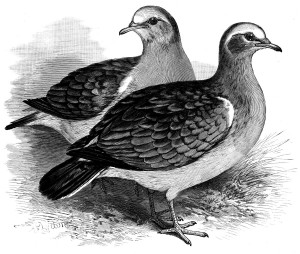
Verses 4–7, two birds: One bird (likely a dove or pigeon) was killed in a clay pot over running water. The other bird along with the cedar wood, scarlet cloth and hyssop were dipped into the clay pot containing the blood from the killed bird and the running water. The water-blood mixture was then sprinkled on the diseased person (metzora) who was being purified, and the living bird was let loose and allowed to fly away. There is a lot going on here, but it all prophetically pointed to Yeshua’s death, burial and resurrection. Before deciphering this ritual out, perhaps it would help to understand the spiritual meaning of the wood, scarlet and hyssop, which we will explain next.
Continue reading


He Is Risen!—Proven from the Tanakh (OT)

An Analysis of Tanakh Scriptures That Predict the Resurrection of the Messiah

Psalms 16:10, For thou wilt not leave my soul [nephesh] in hell [sheol]; neither wilt thou suffer thine Holy [chaseed or faithful, kind, pious, devout, saint, godly] One to see ­corruption [shakhath or decay of the grave according to The Theological Wordbook of the Old Testament (TWOT)].

Commentary: To whom is this verse referring? Obviously not normal humans whose bodies and souls go into the grave at the time of death (so says this verse) (to await the resurrection) and where they decay? Who in Scripture, but Messiah Yeshua resurrected after three days before his body could corrupt (start to decay)? According to Jewish thought bodily decay starts after three days.

Continue reading


When Did Easter Originate?

When Did the Early Christians First Celebrate a Day Commemorating the Resurrection?

In A History of Christianity, vol. 1, Kenneth Scott Latourette states that notice of Easter as a festival occurs in the middle of the second century, but that festivals commemorating the resurrection of Messiah were presumably observed by at least some Christians from much earlier times (p. 137). Philip Schaff also attributes the beginning of the Easter festival to the middle of the second century (History of the Christian Church, Vol. 2, p. 207). He states that the Christian Passover naturally grew out of the Jewish Passover, as “The Lord’s Day” (Sunday) grew out of the Sabbath. “It is based on the view that Christ crucified and risen is the centre of faith. The Jewish Christians would very naturally from the beginning continue to celebrate the legal Passover, but in the light of its fulfillment by the sacrifice of Christ, and would dwell chiefly on the aspect of the crucifixion. The Gentile Christians, for whom the Jewish Passover had no meaning except through reflection on the cross, would chiefly celebrate the Lord’s resurrection as they did on every Sunday of the week.” He notes that the early Christians commemorated the entire period between the death and resurrection of Yeshua with vigils, fasting, special devotions, meetings culminating in a resurrection feast celebrating the whole work of redemption. The feast of the resurrection gradually became the most prominent aspect of the Christian Passover (Easter celebration), but the crucifixion continued to be celebrated on Good Friday” (Ibid., pp. 207–208).

Continue reading


The Sprinkling of Blood & Yeshua’s Crucifixion

More Passover meditations—

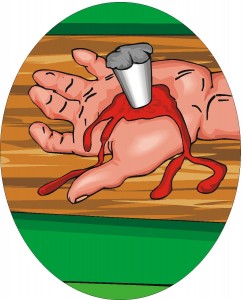
Leviticus 1:5, Sprinkle. The Heb. word zaraq means “to scatter, sprinkle, toss, throw, scatter abundantly, strew.” The sprinkling of the blood of the sacrificed animal on and around the altar of sacrifice (and elsewhere in the tabernacle as well) is mentioned numerous times in the Torah (e.g. Exod 24:6; 29:16; Lev 1:11; 3:2, 8, 13; 4:6,17; 5:9; 7:2). The blood was even sprinkled on the people (Exod 24:8), and on Aaron and his sons (Exod 29:20–21). This is a prophetic picture of Yeshua bleeding, while dying on the cross and shedding his blood as an atonement for our sins. Yeshua’s sprinkling of his blood on the cross fulfilled the sprinkling of blood under the sacrificial system in the following ways:

  • On the altar, which is a picture of the cross (Exod 24:6–8).
  • All around the altar (Exod 29:12–16) including on the earth beneath the altar (Lev 7:2). Yeshua’s blood covered himself and the entire area around
    the cross.
  • On the high priest’s garments (Exod 29:20–21). Yeshua is our Great High Priest who was covered in his own blood during his crucifixion.
  • The blood was sprinkled seven times for perfection (Lev 4:6–7). Yeshua bled from seven areas of his body (his head, back, two hands, two feet, and his side).
  • At the bottom of the altar (Lev 4:6–7). Yeshua’s blood would have dripped down and pooled at the base of the cross.
  • On the side of the altar (Lev 5:9). The cross was entirely covered in blood.
  • Sprinkled seven times before the door of the tabernacle (Num 19:4). Yeshua died (probably on the Mount of Olives) on the hill of Golgotha (or Calvary) in view of the temple in Jerusalem just outside the city gates (Heb 13:12).

The Scriptures tell us that the life of the flesh is in the blood, and that YHVH has given it to us upon the altar as an atonement for sins, for it is the blood that makes atonement for our soul (Lev 17:11). Additionally, without the shedding of blood, there is no remission for sins (Heb 9:22).

All the religions of the world (including rabbinic Judaism), except those that have faith in Yeshua, are bloodless and have no provision to save man from his sins.

Let’s ponder Yeshua’s death on the cross and his shedding his blood to make atonement for (or to cover) our sins as we approach Passover.


How Yeshua Perfectly Fulfilled the Passover

Hey folks, Passover is less than two weeks ago. It’s time to start thinking about it! Let’s jump in…

How did Yeshua the Messiah perfectly fulfill the Exodus Passover?

According to the laws of statistical probability, what are the chances of an event happening and then fifteen hundred years later another event occurring bearing an uncanny resemblance to the first one? Now suppose that not only did fifteen hundred years separate the two events, but that they occurred in two different countries several hundred miles apart. Further suppose that the second event involved the death of a person, and that the events leading up to their death including the manner and timing of that death was beyond the control of the individual dying so that in no way could the person dying stage his death to mirror the first event. In fact, those killing the individual possessed no foreknowledge of the event that had occurred fifteen hundred years earlier. What are the chances of this occurring?

This is not a fictional story! Truth is stranger than fiction. The details of these two events are chronicled in the pages of the Bible. The first event occurred in ancient Egypt and is recorded in the Book of Exodus chapters eleven and twelve. There we find recorded the details of the Children of Israel’s first Passover while they were yet slaves in the land of Egypt. A whole series of events led up to this first Passover, which culminated with each family’s ritual killing of a lamb, smearing its blood on the frame of their doors, roasting the lamb, and then eating it. Doing this insured that YHVH would pass over their homes leaving those inside alive. The firstborn of those whose homes did not have the blood painted on the door frames were killed.

Continue reading