The Mysterious Ceremony Involving a Red Heifer Explained

Numbers 19:1–11. The red heifer. 

The Overview of the Ceremony and Its Greater Implications

The Jewish sages teach that the commandment (mitzvah) of the red cow is “beyond human understanding.” Like the afikoman (the middle broken matzah that is “buried” and “resurrected,” which is a picture of the death, burial and resurrection of Yeshua) in the Passover (Pesach) Seder, the meaning of which to this day remains unclear to the Jewish scholars, the red cow is a ritual that makes sense only when Yeshua the Messiah is added to the picture.

Red Cow 1-20010795-1

While the symbolism of the red heifer was, to Jewish Torah scholars, admittedly incomprehensible to human reason, by the second temple era they began to speculate about its spiritual significance in their aggadic literature. Some felt that it was an atonement for the sin of the golden calf (The Encyclopedia of Jewish Religion, Massada – P.E.C. Press, 1965, p. 327; The ArtScroll Chumash, p. 839). Others viewed it as somehow relating to the azazel or scapegoat and the bullock sin offering of Yom Kippur, since all were sacrificed outside the camp of Israel (Lev 16:27).

The sacrifice of the red heifer was for the purpose of purifying someone who had become ritually impure or polluted through contact with the dead, or for purifying metal war booty (Num 31:21ff). This sacrifice was to be made outside of the camp of Israel, and later occurred outside of the walls of the city of Jerusalem on the Mount of Olives, not far from the Temple. The concept of the camp signifies outside of or away from the divine presence or shekinah of YHVH meaning outside the tabernacle courtyard (The ArtScroll Chumash, p. 839).

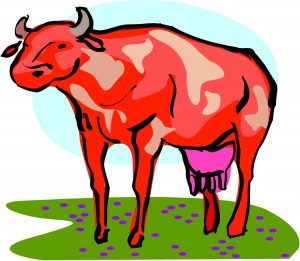
The heifer was to be three to five years of age and totally red in color, blemish free and to have never born a burden and, according to Jewish tradition, to be without a single black or white hair on its body. Continue reading


Nuggets From Song of Solomon Chapters 1 and 2

Song of Solomon chapter 1

Song 1:2, Kisses of his mouth. This is referring to the tokens of Yeshua’s love for his bride: his grace and pardon, the joy and peace that comes from knowing him, the hope he has given us for the present and the future, and the fruits and gifts of his Spirit.

Your love is better than wine. Though wine joys the heart and calms the nerves, it is but a temporary and superficial fix to life’s problems. Like a band-aid on a wound, it doesn’t get to the cause of the problem. The love of Yeshua, on the other hand, is a river of life that is a never-ending source of joy, which strengthens and heals us at the deepest levels.

Ephesians 5:18 says, “Be not drunk with wine … but be filled with the Spirit,” which is Yeshua’s love gift or mohar to his betrothed bride. The Set-Apart Spirit — its fruits and gifts — is Yeshua’s engagement ring, down payment, guarantee, pledge or earnest money (2 Cor 1:22; 5:5) of our future inheritance (i.e., marriage to him) until the full redemption (or glorification of our bodies at the resurrection) of the purchased possession (the redeemed believer, Eph 1:14).

Song 1:3, Your name is better than ointment poured forth. (Heb. sheman: oil.) Is the name of Yeshua better than any ointment? Ointment or olive oil soothes and heals wounded, chaffed, burned, and aching flesh. When you are wounded emotionally and spiritually, there is always a place of healing and comfort for you at the foot of Yeshua’s cross, the foot of Yeshua’s throne, and in the arms of the one whose arms were open wide in loving acceptance of you at the cross. There is healing, forgiveness, power, victory and healing in the name of Yeshua. Faith in him overcomes all fear and anything that the world, the flesh and the devil would throw at us.

The virgins love you. Those undefiled by the world have their eyes only on Yeshua and are not drawn away by the passions of this world. They follow Yeshua the lamb, their Bridegroom, wherever he leads them (Rev 14:4). Why? Because they have not grown cold in their love for Yeshua. He is still their first love  (Rev 2:4).

Song 1:4, Draw me away. Are our (virgin) hearts drawn away from Yeshua by the world, the flesh or the devil, or are we totally dedicated to him? Do we long to be with and to know Yeshua and his love?

We will run. (Daughters of Jerusalem speaking). Are those around us drawn to Yeshua because they see our unreserved and undefiled love for him? Are we a light to our children, to our unbelieving family members, to our neighbors and work associates? Yeshua speaks of two classes of virgins: those who are wise and are prepared for Yeshua, the Bridegroom, and those who are not (Matt 25:1–13); those who are on the inside with Yeshua at his wedding feast because they love and prepared, and those on the outside who are looking in because they did not prepare themselves for him. They love Yeshua too, but not as much as the Shulamite. That’s why they were not brought into his chambers. The daughters of Jerusalem are immature, carnal believers who are not yet established in their faith and wholly serving and walking with Yeshua.

Song of Solomon chapter 2

Song 2:1, Rose of Sharon. Sharon means “plain” and is the region lying between the mountains of central Israel and the Mediterranean Sea north of Joppa and on the east side of the Jordan near Gilead and Bashan. The flower itself is not the Rose of Sharon we know, which is native to China, but is believed to be the saffron, tulip, anemone, or crocus. The redeemed bride of Yeshua is to view herself in this manner. Coming into spiritual relationship with Yeshua should cause one to have a higher view of oneself than they did while they were an unrepentant and unredeemed sinner. Coming to Yeshua greatly improves one’s self worth and self esteem.

Lily of the valley. Heb. shushan, lit. “big flower, water lily;” from suws meaning “exult, rejoice, display joy.” According to The TWOT, these were the lilies carved as a motif in the stone pillars in Solomon’s temple. It is used several times in the Song with reference to the bride. The woman’s name Shoshana (or Susanna) derives from this. This is a tall flower with a weak stem. As the tall, weak-stemmed lily that has a beautiful but heavy flower may need a stake to support it, the believer needs Yeshua to support him.

Song 2:2, Thorns. Heb. chowach meaning “to pierce, brier, thorn bush, thicket, hook, ring, fetter.” Believers are lilies among the thorny wicked of this world. Yeshua said that his followers though in the world, they were not to be of the world (John 17:10, 15). The wicked can be like thorns in flesh of the righteous. Thorns are worthless, dangerous and noxious and are good only for burning. Likewise, the wicked unrepentant will burn in the lake of fire.

Song 2:3, Apple tree in the trees of the woods. This is another analogy like the lily among the thorn simile. Yeshua’s people are to bear fruit for him. They are to be his personal garden bearing the fruit of the Spirit, and to be like the trees planted next to Yeshua who is the river of life (Ps 1:1–3). The trees of the world are barren and fruitless. This is not the case with the trees of Yeshua who bear fruit through him.

Song 2:4, Banqueting. Heb. lit. wine/yayin meaning “effervesce, wine.” Torah commands that Israelites drink wine and strong drink during the three pilgrmage festivals (Deut 14:26). This speaks of the joy of the biblical Hebrew wedding that culminates in a great wedding feast, prophetically pictured by the Feast of Tabernacles, which is a picture of the wedding supper of the Lamb.

Banqueting house …his banner over me was love. Is the groom giving her a glimpse of his house, and what she can expect once they are fully married? Does not Yeshua do this with us by giving us glimpses into the future spiritual glory he has in store for his bride in the world to come?

 

The New Covenant? Now or Later?

Jeremiah 31:31, New covenant. When does this new covenant take effect?

covenant

Yeshua initiated the new covenant at the Last Supper (Matt 26:28), and will finalize it as per this prophecy at his second coming. It will be finalized after YHVH has gathered (or redeemed, v. 11) all the families of Israel (v. 1; i.e., the houses of Ephraim or Israel­—loosely speaking, the Christians and Judah—loosely speaking, the Jewish people, vv. 9, 20, 27, 31) from the north country, the coasts of the earth and the isles (vv. 8, 10) where they have been scattered, and brings them back to Zion (the land of Israel) with joy, singing and dancing (vv. 12–13, 24). Obviously, this hasn’t happened yet in its entirety. This will occur after Ephraim (Christians) repents (v. 20, of Torahlessness) and YHVH’s daughter turns away from her backsliding (vv. 21–22), and comes out of her captivity (v. 23, in spiritual Egypt or Babylon the Great, see Rev 18:4).

At that time, YHVH will make (or finalize) a new or renewed covenant with the two houses of Israel (vv. 31–33).

Also at this time, all Israel will know Elohim from the least to the greatest. Again, this prophecy has yet to be fulfilled. The writer of Hebrews quotes this verse in Hebrews 8:8. (See notes at Heb 8:8.)


An Unpopular Message: Fear God and Live!

Numbers 3:38, The the outsider who comes near. This verse teaches the principle of the fear and reverence of YHVH when approaching his divine Presence. Other scriptures that teach our need to be careful when approaching him include Psalms 15:1–5; 24:3–5 and Ecclesiastes 5:1–2 (see also Gen 28:16–17; Exod 3:5; Lev 10:3; Josh 5:15; Ps 89:7; Heb 12:28–29).

Worshipping 5806141

As YHVH didn’t permit the Israelites to come near to him except through the intermediary of the Aaronic priests, we can only come to our Father in heaven through the intermediary of Yeshua the Son of Elohim, and our Great High Priest (Heb 4:14), who is the spiritual door and way to the Father (John 14:6).

Although, YHVH permits his set-apart ones (the saints) to come boldly before him through the agency of Yeshua’s high priesthood and his blood (Rev 5:6–8) to obtain mercy and grace in time of need (Heb 4:16), let’s not forget two things. First, we come to YHVH Elohim in human weakness needing help and grace from him who is greater than us; therefore, we need to maintain a humble disposition.

Second, our Elohim is a consuming fire (Heb 12:29); therefore, we need to serve him with reverence and godly fear (Heb 12:28), since in his hands he holds the power of life and death (Matt 10:28). Fire is a biblical metaphor for judgment, and YHVH will judge all people including his own people (Heb 10:30–31) for all that they have done while in the flesh whether good or bad to determine levels of rewards and punishment (Matt 5:19; 16:27; 2 Cor 5:10; Rev 20:12; 22:12). In fact, Peter admonishes us to conduct our lives in the fear of Elohim and to be holy as he is holy who will judge each man according to his works (1 Pet 1:17).

I am convinced that the fear and reverence of Elohim is a message that is all but lacking in most of the modern-era church, which is why the church in much of the world (especially in the West) is so impotent and is in such rapid decline.


How to Test Heavenly Versus Demonic Wisdom

James 3:13–18, Who is wise. In this passage, James discusses heavenly versus demonic wisdom. Did you ever wonder how to tell the difference between the voice of Elohim speaking to you and the voice the world, the flesh and the devil? This passage gives us some guidelines on how to differentiate between the four voices that are trying to influence our minds and hearts.

15090964

Let’s first establish the fact that Yeshua wants to talk to his spiritual sheep. In John chapter ten, Yeshua declares that he is the Good Shepherd, and that his sheep hear and know his voice, that he calls them by name, and that he leads them spiritually and they follow him (John 10:3–4). At the same time, someone else is vying for the sheep’s attention—the thief. Yes, the thief wants to lead the sheep astray, for his intention is to kill, steal and to destroy (John 10:1, 8, 10), while the Good Shepherd wants to save and protect the sheep (John 10:9, 11, 14).

Throughout the pages of the Bible, we read the record of YHVH Elohim speaking to his servants and leading them. Yeshua makes it clear that he is still speaking to and leading his sheep, and the Book of Acts and the Epistles confirm this.

So how does this passage in James help us to hear and to follow the voice of YHVH-Yeshua, the Good Shepherd? When we get thoughts and impressions that we think are the leading of the Holy Spirit, we must first determine their origin by putting them to the spiritual test. Is what we are hearing the wisdom or knowledge that is from above, or is it the wisdom or knowledge that is from below—that is earthly (of this world), sensual (from the carnal mind of man) or devilish (from the demonic realm, James 3:13–15)? How do we know its origin? James tells us. The wisdom that is from below is envious, selfish or self-seeking, engenders confusion, and produces evil, while that which is from above is pure, peaceable, gentle, willing to yield, full of mercy and good fruits, without partiality and hypocrisy, and it produces righteousness (James 3:16–18).


New Video: Life in the Wilderness En Route to the Promised Land

We all live in a spiritual wilderness called life. But will we live and die there, or will we follow Yeshua the Messiah as he leads us into the Promised Land of the kingdom of Elohim?

In this video, Natan Lawrence discusses the prophetic implications of the Hebrew/Biblical Roots Movement that is sweeping the globe, and how YHVH Elohim is preparing the saints for the second coming of Yeshua and the kingdom of Elohim.


New Video: The Gospel of Yeshua in the Sanctuary of the Tabernacle of Moses

In this video, Natan begins to decode the mysteries of the Tabernacle of Moses and shows how YHVH’s plan of salvation and the gospel message of Yeshua are encrypted within the tabernacle’s ceremonies and furnishings. The focus of this teaching is on the tabernacle sanctuary.

Learn how the following things point to Yeshua and relate to your spiritual journey to the New Jerusalem:

  • The door to the Tabernacle of Moses
  • The menorah
  • The table of showbread
  • The altar of incense
  • The veil
  • The ark of the covenant
  • The glory cloud

A free study guide is available at http://hoshanarabbah.org/pdfs/tabernacle.pdf.

Watch this video at