You don’t have choose to be gay or transgender…there are other (better) options!
Life is a series of choices like forks in a road. Which way will you go? Your life is the sum total of the choices that you will make and the consequences which are the results thereof. Thus, would it not be prudent to stop and think before making deciding which way to go? This goes for everyone including those choosing the LGBTQ+ lifestyle. Will this be the right choice and can I live with the consequences for the rest of my life?
Let’s ask ourselves another important question. Am I making decisions based on my feelings and emotions or based on logic and reason? Each of us has an emotional and rational part. What one do we follow? If we ignore one or the other, we might be missing an important piece of the puzzle that gives us the whole picture versus a narrow or incomplete view of it.
The thing about feelings and emotions, as wonderful as they can be, is that they are transitory, ephemeral and often momentary. They come and go and change over time. How you feel this moment will likely change the next moment depending on many life factors that evolve over time—especially as you grow older. Feelings are powerful and can overshadow our more rational side. You may feel like you are making a rational decision, when in reality it is based on your emotions. That is why it is important to stop and let the dust of emotions settle, so your mind can present a clearer picture pertaining to the choices you are about to make.
When considering entering the LGBTQ+ lifestyle, here some questions to ask yourself. What is your purpose on this planet and what brings you the deepest fulfillment? What is your deepest psychological and emotional need? What is your ultimate destiny? What is your chief goal in life? It is material possessions? Fortune? Mental enlightenment, intellectual stimulation and the acquisition of knowledge? Or the strong desire for power, fame and social prominence? How about pursuit of pleasure? Or satiating the sex drive? Having a good time with friends? Food? Physical intimacy? The goals we choose will determine where we end up at the end of your life. When you are on your death bed, will you look back on your life with regrets, wishing you had made different and better choices? These are things that most young people who have their whole lives ahead of them think little about. But life is fleeting and goes by quickly, and no one knows how long they have before they die—when life will end.
If you have chosen the LGBTQ+ lifestyle or are thinking about going in to it, here are some things to think about. What is important to you? Is it your sexual orientation or your gender? Is this the thing that you are most passionate about in life? Is this your main identity that describes who you are? Who you want to be remembered as? Is this the thing in your whole life that will bring you the most fulfillment, meaning and purpose? Will it still be as important to you in ten or twenty years, or when you are 50, 60 or 80 years old? Now consider this: what happens when you die? If there is an afterlife, what will be your fate? Will it be a good or bad one? How can you be sure?
In this video, Nathan poses questions to someone in the LGBTQ+ lifestyle or who is thinking about going there. This message is especially directed at young people including pre-teens and older. Nathan talks about life changing choices that we make when we are young and the often irreversible impacts whether positive or negative that they will have on us for the rest of our lives. He asks the listener to stop and then move past feelings and emotions, which are transitory and ever-changing, and to engage one’s critical thinking skills and to consider the consequences of the choices we make as this relates to one’s purpose and meaning in life as well as one’s destiny, legacy, and the afterlife.
This and other videos by Nathan are available as podcasts on Spotify and Apple podcast under “Hoshana Rabbah.”
If you are interested in participating in Hoshana Rabbah’s weekly Shabbat online fellowship (Oasis Elim Online), send an email to hoshanarabbah@earthlink.net for more information.
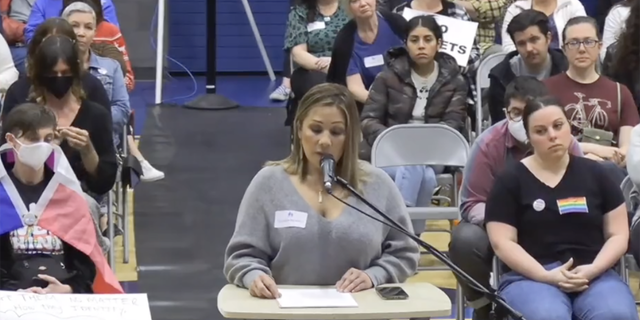
Aurora Regino, a concerned mother from California’s Chico Unified School District, weighs in after the school board votes to uphold a ‘parental secrecy policy.’
A California mom is outraged after her daughter’s school district upheld a “parental secrecy policy” allowing school officials to offer gender counseling without informing parents.
Aurora Regino said her 11-year-old daughter’s elementary school in the Chico Unified School District helped her transition from female to male during the last school year, but a guidance counselor kept her in the dark during the entire process.
“During one of the meetings, my daughter told the counselor she wanted to tell me about her new identity. They ignored her request and did nothing to support her in letting me know what was going on at school,” she told board members at a meeting last Wednesday.
The board weighed a measure that would allow for “more parental inclusion” but ultimately voted to keep the existing so-called “parental secrecy policy” in place with a 3-2 vote.
“It was a really sad decision that they made, but unfortunately I wasn’t extremely surprised,” Regino told “Fox & Friends First” host Todd Piro on Tuesday.
“This policy that they have in place, to keep these situations a secret from the family, is incredibly damaging. It was extremely damaging in my case with my daughter. She was bullied and she didn’t have the support that she needed from her family and, also, she was outed within the school with other people within the office knowing her new gender and pronouns that she didn’t even tell them, and she had to go through those feelings of wondering how they even knew all on her own.”
California mom Aurora Regino speaks to her daughter’s school board ahead of a vote offering more transparency for parents. (Chico Unified School Board of Education)
Regino, who is suing the district for keeping her in the dark about her daughter’s identity and transition, lambasted the policy as “incredibly dangerous” and said the struggle to advance parental rights in the area had been hard-fought.
She told Piro her daughter is doing well, but she is determined to speak out on behalf of her family and others with similar experiences, so everyone knows what is taking place in public schools.
“When this originally happened to our family, nobody could’ve ever told me that this was going on, especially at the young age of elementary school,” she said.
The policy that board members voted to uphold, according to Regino, extends to children as young as pre-kindergarten who are approximately five years old and reaches through the 12th grade.
“It’s incredibly damaging that they’re upholding such a crazy policy for such young children,” she continued after a moment, arguing that such a tumultuous time in children and adolescents’ lives is when they need parental guidance the most.
Sydney Wright is a business sales representative in the private sector and a student at Georgia Northwestern Technical College.
I can’t wrap my head around all that I’ve done to myself in the last two years, much less the “help” that some health care professionals have done to me.
Two years ago, I was a healthy, beautiful girl heading toward high school graduation. Before long, I turned into an overweight, pre-diabetic nightmare of a transgender man.
I won’t place the full blame on health care providers, because I should have known better. But they sure helped me do a lot of harm to myself—and they made a hefty buck doing it.
Here’s my story.
Congress is moving to impeach the president. But will their plan to remove him from office succeed? Find out more now >>
From my earliest years, I was always different from the other girls. I wore boy clothes, and I played with boy toys. I was a classic tomboy.
As I got older, I became romantically interested in other girls. In fact, with the exception of one guy I dated in high school, I exclusively dated girls.
At the time, you wouldn’t have been able to tell I was gay just from looking at me. I had long, blond hair, wore makeup, and carried myself rather femininely. But in my head, I knew I was gay—though I was more of a self-loathing gay.
The truth is, I didn’t like gays, and didn’t want to be associated with them. Yet there I was, dating only other girls.
Sydney as a senior in high school. (Photo: Sydney Wright)
By the time I was 17, my parents had long divorced and I was living with my dad. That’s when he found out I was dating girls. He promptly kicked me out of the house, saying it was his way or the highway.
Walt Heyer is an author and public speaker. Through his website, SexChangeRegret.com, and his blog, WaltHeyer.com, Heyer raises public awareness about those who regret gender change and the tragic consequences suffered as a result.
Less than a year after having gender surgery, Nathaniel now says, “This whole thing was a bad idea. I am 19 years old, and I feel as though I have ruined my life.”
It’s heartbreaking each time I get a letter from someone who underwent gender-change surgery and regrets it, especially someone as young as Nathaniel.
With his permission, I’m telling a bit of his story to raise awareness of the young lives being ruined by the rush to surgery, and hoping that hearing the testimony of this young man will influence others on this path to slow down and consider the consequences before consenting to surgery.
In Nathaniel’s case, he says he was bullied by the boys in elementary school because he was sensitive and preferred playing girl games. When he was a bit older, he discovered internet pornography, heard about transgenderism, and as he says, “convinced myself that’s what I was.”
When he finally worked up the nerve to tell his mother in the summer after eighth grade, she made an appointment with, in his words, “a doctor at an informed-consent clinic.”
Target’s stock price has plummeted after over one million people boycotted the retailer over its transgendered bathroom stance.
The company’s stock dropped from $83.98 per share on April 19, when Target announced its new policy, to around $81.33 on April 28 when the petition hit one million signatures.
Target’s new policy allows “transgender team members and guests to use the restroom or fitting room facility that corresponds with their gender identity,” the retailer stated in a press release which sparked nationwide condemnation.
“Target’s policy is exactly how sexual predators get access to their victims, and with Target publicly boasting that men can enter women’s bathrooms, where do you think predators are going to go?” The petition drafted by the American Family Association states. “Clearly, Target’s dangerous new policy poses a danger to wives and daughters.”
“We think many customers will agree.”
It certainly appears so, but just how bad will Target’s bathroom policy hurt the company’s bottom line?
Given that the average Target customer spends $62 per trip, according to credit card records, and that the customer conservatively visits the retailer twice per month, a boycott of one million people will likely cost the retailer $1.5 billion annually and perhaps even more.
“We should also consider that most people who decide to move their business from Target to some other retailer will likely never sign a petition,” Mark West with the Patriot Post reported. “They’ll simply leave Target in disgust as they see a company that has abandoned common sense values.”
“So it’s not far fetched to conclude that at the end of the day, the total financial impact to Target will be $5-10 billion in lost revenue annually, approximately 10% of its annual sales.”
We have a Target store in our town a few minutes from our house. Won’t go there anymore until they change their bathroom policy. First they forbid those with conceal carry permits from carrying in their store, now this. What a bunch of losers Target officials are! May YHVH’s judgment fall on their finances for taking the side of Satan! — Natan
The American Family Association is calling for a boycott of Target after the retail giant said it would allow men to use the women’s restrooms and dressing rooms in their stores.
On its web site this week, Target announced, “[W]e welcome transgender team members and guests to use the restroom or fitting room facility that corresponds with their gender identity. …Everyone deserves to feel like they belong.”
This means a man can simply say he “feels like a woman today” and enter the women’s restroom…even if young girls or women are already in there.
Target’s policy is exactly how sexual predators get access to their victims. And with Target publicly boasting that men can enter women’s bathrooms, where do you think predators are going to go?
Clearly, Target’s dangerous new policy poses a danger to wives and daughters. We think many customers will agree. And we think the average Target customer is willing to pledge to boycott Target stores until it makes protecting women and children a priority.
One solution is a common-sense approach and a reasonable solution to the issue of transgendered customers: a unisex bathroom. Target should keep separate facilities for men and women, but for the trans community and for those who simply like using the bathroom alone, a single occupancy unisex option should be provided.
Take Action
Sign a pledge to boycott Target now! Target should not allow men to enter the women’s restrooms and dressing rooms.
After you sign the pledge, contact Target and let them know you’ve signed the Pledge. Call Target Guest Relations at 1-800-440-0680.
Share your concerns on their Facebook page at https://www.facebook.com/target. When sharing this on social media use #BoycottTarget.
Here are examples of what Target’s policy can lead to: