Eagerly Seek YHVH’s Manifest Presence

Psalm 63:1–2, Early [eagerly, diligently] will I see You. Read verse one in the context of verse two. Do we eagerly seek Elohim when we come into his sanctuary? What is his sanctuary (Hebrew: kodesh, which was another name for the Tabernacle of Moses, where the presence of Elohim abode)? Paul said in several places that the saints are now the temple of the Holy Spirit (e.g., 1 Cor 3:16; 6:19; Eph 2:21).

When David went into the sanctuary, what did he look for? He wanted to see (Heb. to see as a seer in an ecstatic state, to perceive with the intelligence, to prophesy, to perceive with the inner vision, to see a vision) the power (Heb. might, strength) of Elohim and his glory (Heb. YHVH’s manifest presence).

What does this all mean? How does this apply to us today? Does Elohim still manifest himself in this way to his people who seek him diligently?


Overview of Deuteronomy

Overview of the Book of Deuteronomy/Devarim from Various Commentators

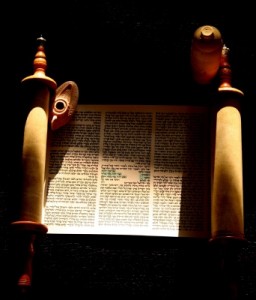
This last book of the Torah starts out with “These are the words which Moses spoke ….” The Hebrew name for Deuteronomy is Devarim meaning “words,” which is the plural form of devar meaning “word, speech, a matter or thing, a commandment, a report, a message, promise.” Note the similarity between the Hebrew word devar and the Greek word logos from John 1:1 (“In the beginning was the Word, and the Word was with Elohim, and the Word was Elohim.”). From this connection, we see that Yeshua was the Word of both the OT and the NT. He is the message of the entire Bible (Spirit Filled Life Bible, from the “Word Wealth” at Deut 1:1).

Deuteronomy is written similarly to the vassal-treaties formulated between captor and captive nations prior to 1000 B.C. It contains historical information, enumerates laws, and concludes with threats and promises (Hebrew Greek Key Study Bible, from the Introduction to Deuteronomy). From a general survey of Deuteronomy, it is sufficiently evident that the exposition of the commandments, statutes, and rights of the law had no other object than this: to pledge the nation in the most solemn manner to an inviolable observance, in the land of Canaan, of the covenant, which YHVH had made with Israel at Horeb (Deut 28:29, Keil and Delitzsch Commentary of the Old Testament, from the introductory note to Deut).

In Deuteronomy, Moses speaks like a dying father giving a farewell song to his children all the while he celebrates Elohim as the spiritual Rock of Israel. While the eyes of the Israelites may have fixated too much upon Moses their physical leader (instead of Elohim) for forty years, Moses now attempts to redirect their eyes, trust and allegiance heavenward and onto YHVH, their real spiritual Leader who had been behind Moses—a mere human leader—all the time.  Continue reading →


Blog Scripture Readings for 5/27 through 6/2/12

Aside

Numbers 34–36; Deuteronomy 1–5; Ezekiel 33–46; and Psalms 59–65

Most of this week’s blog discussion points will be on these passages. The full year’s Bible Reading Schedule can be found on the right sidebar under “Helpful Links.”

If you have general comments or questions on the weekly Scripture readings not addressed in a blog post, here’s a place for you to post those. Just use the “leave a reply” link below.


Meeting Your Maker…On Pentecost!

A Study on Exodus 19—Are You Ready for Pentecost?

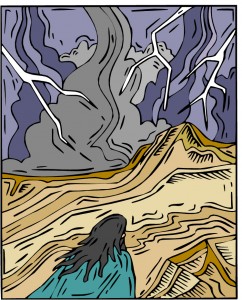
On Shavuot or Pentecost, YHVH gave his people Israel the Torah at Mount Sinai. But before they could see his glorious manifest presence, hear his voice, and receive his Word, they had to prepare themselves to meet him. Are you preparing yourself to meet YHVH this coming Sunday—on Pentecost?

An invitation. In this chapter, YHVH invites his people to come near to him, to receive his Torah, and to enter into a spiritual relationship with him. He had just delivered them from their sins, suffering and bondage when he led them out of Egypt (v. 4). He now offered them enticing blessings and status among the nations of the world (v. 6) if, and only if, his people would agree to his terms and conditions (v. 5).
But he would not allow his people to accept his benefits on their terms, but only on his terms. This is where men and religious systems have missed it: they want to accept YHVH on their own terms, not YHVH’s terms. Such is the religion of humanism—that man knows better than YHVH what is good for him, which is the religion the serpent pawned off on the first man and woman at the tree of knowledge. The problem is that accepting YHVH on our terms is called sin, which leads to misery and eventually to eternal death!

There are preconditions to meeting with YHVH and coming into relationship with him—coming to his high and holy mountain, his place of abiding, and his presence. Coming to this place is not without cost. David talks about who can come to the mountain of YHVH in Psalms 15 and 24. Only those who have clean hands and pure heart and who abstain from sin.

YHVH told the children of Israel that they could approach him and become his special people if they would meet certain conditions, and only then would he bless them (v. 5–6).

Even after the people had agreed with his terms (v. 8), after they had accepted him as their Savior when they put the blood of the lamb on the door posts of their homes resulting in the judgments of YHVH passing over them (Exod 12), YHVH’s blessings could come only after they had met certain requirements. Salvation is based on faith and grace alone, but rewards and blessings come based on obedience to the commandments of Elohim (Matt 5:19). To receive YHVH’s blessing, the Israelites had to consecrate themselves to him (vv. 10,14). This involved putting away the filth of the world (symbolized by washing their clothes) along with men’s carnal passions (symbolized by abstaining from sexual relations with their wives, vv. 10, 14–15). Graciously, YHVH gave them two days to accomplish this (v. 10). They had to get ready to meet YHVH (v. 11). One can’t expect simply to waltz into the presence of the Mighty King of the Universe in a casual and haphazardly manner!

YHVH had additional protocols that the people had to follow to come into his presence. Boundary stones were set up at the base of the mountain (v. 12). A death penalty came upon any who crossed those boundaries and came presumptuously into the presence of the Creator of the Universe (vv. 13, 22, 24). Moreover, before they could come into the presence of the Almighty, the fear of YHVH had to be established in the hearts of the people—something that is entirely lacking among most people in our generation including those in the church!

It was then and only then after the Israelites had agreed to meet YHVH’s terms and conditions, after having consecrated themselves for two days prior, and then set up boundary stones at the base of the mountain that the fire and glory of YHVH fell upon the mountain for all the people to see. It was then that YHVH hand delivered to his chosen and consecrated people his precious instructions in righteousness—the Torah.


 

Understanding the Feast of Weeks (Shavuot)

Shavuot is the third of the seven festivals (after Passover and the Feast of Unleavened Bread) of YHVH and occurs in the late spring of the year.

Passover pictures coming out of one’s spiritual Egypt or the world, putting faith in Yeshua the Messiah, and having one’s sins covered by the blood of Yeshua the Lamb of Elohim. As one comes out of the world and turns one’s life over to lordship of Yeshua, one turns from a life of sin and turns to loving and obeying the commands of Yeshua (John 14:15). In other words, one must leave one’s sin (as pictured by leavening in bread) in Egypt, and live a new sin-free life under Yeshua. The Feast of Unleavened Bread pictures this process of de-leavening one’s life of sin, and “eating” the unleavened bread of YHVH’s Word.

However, humans are not able to remove sin from their own lives by their own efforts anymore than one can pull oneself up by the ­bootstraps. Sin is too much a part of our mind, will and emotions that we need the working and enabling power of YHVH’s Set-Apart Spirit (Ruach HaKodesh) in our lives to bring sin to light and to empower us to overcome it. This happens as we begin to feed upon the Word of YHVH-Yeshua (the Bible) and little-by-little our lives come into conformity with that Word and with the life of Yeshua. He is the Word of YHVH made flesh (John 1:14; Rom 8:29). This is pictured by the children of Israel receiving the words and instructions on how to live a set-apart and sanctified life (contained in the Torah-law) of YHVH Elohim at Mount Sinai during the Feast of Weeks. This was repeated during the apostolic era on the Day of Pentecost as Yeshua promised to send the Comforter to live inside of redeemed believers aiding them at arriving at the truth of YHVH (John 14:16, 26; 15:26; 16:7, 13). This promise was fulfilled on the Day of Pentecost (Acts 2).

In the Bible, Shavuot is also known as the Feast of the Harvest of the First Fruits (Exod 23:16), Day of First Fruits (Num 28:26) and the Feast of Weeks or Shavuot (which is Hebrew for weeks, Exod 34:22; Deut 16:10, 16; 2 Chr 8:13). Shavuot falls fifty days “from the day after the [weekly] Sabbath” (NKJV) that falls during the Days of Unleavened Bread, and hence the derivation of the name Pentecost (meaning “to count fifty”) as recorded in the Testimony of Yeshua (or New Testament/NT, Acts 2:16).

YHVH through his Torah (the law of Moses) instructed his people that Shavuot was…

  • a day of rest where laborious or servile work was prohibited (Lev 23:21)
  • a commanded assembly (Lev 23:21)
  • a time when the priests offered up offerings and sacrifices (Lev 23:18–20)
  • a time when all males were to bring the tithes of the increase of their income (Exod 23:14; Deut 16:16)
  • a time when the priests were to offer up as a wave offering to YHVH two loaves of leavened bread made of the freshly harvested wheat (Lev. 23:17–20)
  • to occur where YHVH would place his name and all were to go there to celebrate it (Deut 16:11)
  • a time of rejoicing (Deut 16:11)
  • to be forever (Lev 23:21)
  • The early first-century, Book of Acts believers celebrated Shavuot (or Pentecost) in Acts 2:1 as did Paul (Acts 20:16).

Happy Shavuot!


Why Celebrate YHVH’s Feasts?

Shavuot/Pentecost is next Sunday (May 27, 2012). Are you ready to celebrate this biblical feast of YHVH? Here are seven reasons from the Bible why you should:

  1. YHVH’s feasts are a prophetic shadow-picture of things to come (Col 2:16–17; Heb 10:1). When they were given to ancient Israel, they pointed forward to future events that would occur to that nation. The spring feast days, for example, pointed to Messiah’s first coming, while the fall feast days point to his second coming leading into the Messianic Age (or Millennium) and into eternity beyond.
  2. All the feast days point to Yeshua. The name Yeshua means “salvation” and these days all point to the various steps along the path of salvation that redeemed believers find themselves on.
  3. Many of the feast days point back to historical events that occurred in Israel’s history from which we can learn lessons and that are representative of our own spiritual journey (1 Cor 10:1–6,11).
  4. In the Scriptures, YHVH commands his people to keep the biblical feasts. They are called moedim, which is a Hebrew word meaning “divine appointment.” They are times when YHVH makes a spiritual appointment to meet with his people (Lev 23:1–2, 4). At that time, YHVH teaches his people about his wonderful plan of salvation or redemption of the world through Yeshua the Messiah.
  5. The feasts are in the Bible, which is the inspired Word of Elohim (2 Tim 3:16). He commands his people everywhere to obey his Word and to observe his feasts (Matt 4:4; Lev 23; Matt 5:17–20) forever (Lev 23:14, 21, 41; Mal 3:6; Heb 13:8)!
  6. The feast days set forth the pattern of heavenly things on earth (Heb 8:1–2, 5; 9:8–9, 23; Exod 25:8–9, 40; 26:30; Num 8:4; Ezek 43:1–6, 10–12).
  7. We as physical beings need physical means and methods to help us understand spiritual realities. YHVH gives us things to do in this physical dimension to help us to understand the supernatural (or spiritual) level (1 Cor 2:9–13).

 Happy Shavuot!


Blog Scripture Readings for 5/20 through 5/26/12

Aside

For the seventh week of seven weeks of the 50-day count of the omer.

Numbers 27–33; Ezekiel 19–32; and Psalms 52–58

Most of this week’s blog discussion points will be on these passages. The full year’s Bible Reading Schedule can be found on the right sidebar under “Helpful Links.”

If you have general comments or questions on the weekly Scripture readings not addressed in a blog post, here’s a place for you to post those. Just use the “leave a reply” link below.