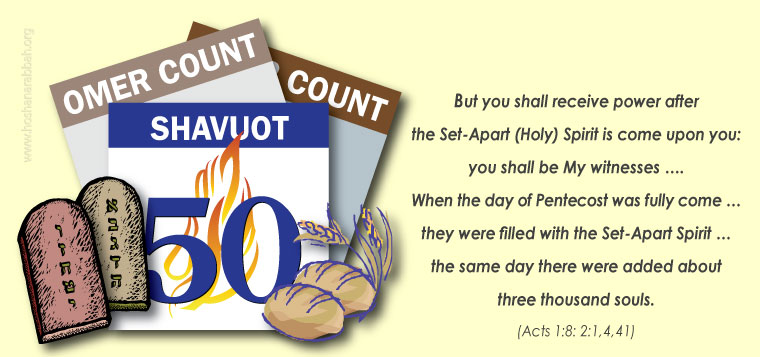
On Pentecost (Heb. Shavuot), YHVH gave his chosen people the Torah. Also on Shavuot, YHVH “married” Israel (Ezek 16:1–13) when he formulated a covenantal agreement with her to which she agreed when she said “I do” three times (Exod 19:8; 24:1–8). The Torah was the basis of that covenant, or the marriage vows, if you will, to which Israel swore allegiance.
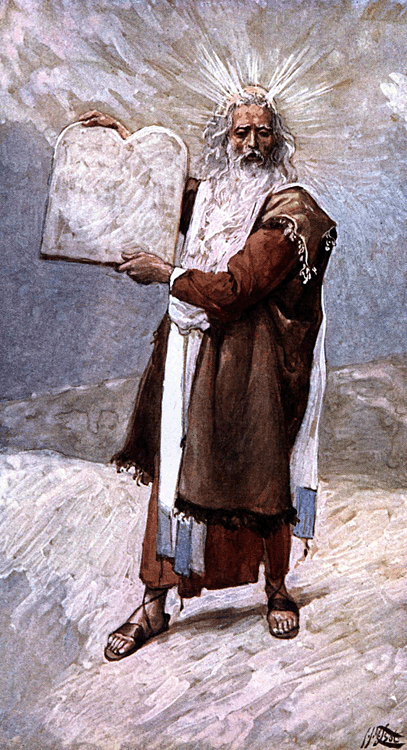
YHVH gave his people the words of life to live by, but because of the hardness of their hearts they were not able to be faithful to his Torah. Like a wife who says “I do” in response to her wedding vows, but cannot remain faithful to her marriage covenant, so Scripture likens Israel to such a woman who became a spiritual harlot (Ezek 16:14–34).
In spite of Israel’s apostasy and spiritual whoredoms, YHVH had made promises to Abraham and to his descendants that were unconditional in nature. Whether Abraham’s descendants remained faithful to YHVH or not, YHVH’s promises to Abraham were inviolate. Though the Israelites had violated the vows they made to YHVH at Mount Sinai, he revealed to the ancient Hebrew prophets that he would eventually formulate a second renewed covenant with Israel, and this time he would pour out upon them his Spirit and write his Torah-laws in their hearts (Jer 31:31–33; 24:7; Ezek 11:19; 36:25–27).
On Passover at the last supper, YHVH-Yeshua betrothed himself to Israel all over again (Matt 26:28; 1 Cor 11:25). As a seal or pledge of this betrothal, he promised to send to his Continue reading