No Forgiveness for Willful Sin—OUCH!

Numbers 15:27–31, Two types of sin are delineated in this passage. They are the sin of ignorance and the sin of presumption (i.e., willful sinning, or literally, “sinning with a high hand”). For the first sin there is an offering or atonement. For the second sin, the penalty is death as illustrated by the example of the Sabbath-breaker in verses 32–36. It is interesting to note that breaking the Sabbath is the example the Torah uses to illustrate willful or presumptuous sin. Why is this? Likely, YHVH in his prescience realized that Sabbath observance would be a great bone of contention and point of struggle for his people. Indeed, even to this day, the idea of resting on the seventh day Sabbath still raises the antagonism of many in the church.

Who me???

Who me???

Numbers 15:30–36, The person who does anything presumptuously. Here we see an example of presumptuous sin with regard to the Sabbath. Presumptuous sinners despise the Torah-commands in YHVH’s Word thinking themselves to be above the laws of Elohim thus refusing to be ruled by it. The act of gathering the sticks on the Sabbath was an affront both to the law and the Lawgiver (Henry, p. 133).

Here are some word definitions:

  • Presume means “to assume, to undertake without leave or clear justification, dare.”
  • Presumptuous means “audacity; overstepping due bounds, taking liberties.”

The Hebrew word for presume is ruwm (Strong’s H7311) meaning “to rise up, be high, be lofty, be exalted, to exalt oneself, magnify oneself, to be rotten, and to be wormy.”

Reflect on your own life. Are there areas of disobedience of which you need to repent? Many times we sin out of human weakness, not willful disobedience. Can such sin, if not eliminated, lead to presumptuous sin? Can we become so callous to sin that we become brazen and willful? Paul talks about those whose consciences have become seared (1 Tim 4:2). What does this mean? In the Testimony of Yeshua, willful or presumptuous sin is often known in common parlance as the unpardonable sin. Note what the writer of Hebrews has to say about this (see Heb 6:6–7 and 10:26–31).


 

Was Paul’s Favorite Meal Barbecued Bat Snouts?

If the biblical dietary laws have been abolished in the New Covenant as many in the church claim, then let’s all serve ourselves up a huge helping of our favorite dish of gourmet treif (unclean meats). How about some fricassee of roadkill skunk, rack of baboon brains, with chocolate covered maggots in creme brûlée for desert? Okay, you get the point. What did Paul really mean when he said that “nothing is unclean of itself”?

415894

Romans 14:14, Nothing is unclean in itself. In this verse, is the Apostle Paul declaring that there is no longer a distinction between clean and unclean foods, therefore making void the biblical dietary laws? Let’s analyze the contextual and linguistic aspects of this passage to see what Paul is really saying here.

The word unclean (koinos) in this verse can also mean “common,” and in three places in the Apostolic Scriptures the two words “common” and “unclean” are used side by side; q.v. Acts 10: 14, 28 and 11:8, which says, “But I said, Not so, Master: for nothing common [koinos] or unclean [akathartos] has at any time entered into my mouth. “From this example, we see that unclean in Romans 14 can also mean “common” as we find in Acts 11. The word for unclean in Acts 11:8 is an entirely different word; therefore, akathartos is a reference to unclean meat, as proscribed by the Torah. Koinos, on the other hand, cannot mean unclean meat in Romans 14, or else Acts 11:8 would be a superfluous and unexplainably redundant in using two words that mean exactly the same thing. The word koinos is used elsewhere in the Apostolic Scriptures not to mean “unclean,” as in “unclean meat,” but “unclean” as in unwashed hands (Matt. 7:2), or “common,” as in something that is shared commonly among people (Acts 2:44; 4:32; Tit 1:4; Jude 3). Of the seven places this word is used in the Apostolic Scriptures it never means unclean meat.

In David Stern’s Jewish New Testament Commentary, on Romans 14 he states that Paul is not abrogating the biblical dietary laws. On verse 14, Stern states that Paul is referring to ritual purity, not whether something is unclean (nonkosher) meat or not. What is ritual purity? It is a reference to either how something was slaughtered, and whether it was bled properly, or whether the meat had previously been sacrificed to idols before being sold in the public meat markets—a common practice in that day in pagan cities.

Furthermore, Paul could not have been advocating eating swine, and other unclean meats, without making himself into a total hypocrite and liar, since in several places in the Book of Acts he strongly states (toward the end of his life) that he was a Torah-observant Jew and walked orderly and kept the Torah (Acts 21:20), and that he had not broken any of the Torah laws (Acts 25:16), which would have included the dietary laws contained in the Torah.

Let’s also keep an important point in mind when speaking of YHVH’s biblical dietary commands: When some­one gets born again their digestive system does not change. Eating unclean or biblically unkosher meat is, from a purely medical standpoint, deleterious to one’s health regardless of whether one is a believer in Yeshua or not.


Stay Put in Fear and Die, Move Forward in Faith and Live

Numbers 13:28, This verse begins with the word but or nevertheless. The spies’ initial report (verse 27) was factual and was in agreement with what YHVH had already said about the land, but all that was disqualified and negated in the minds of the faithless spies by the statement in verse 28 beginning by the qualifier but.

41855725

Medieval Jewish Torah commentator Rambam comments that the key word in their report that revealed them to be lacking in faith was the word but. By using a word that implied a contradiction to the optimism of their first two sentences, they were, in effect, telling that nation that no matter how rich and blessed the land was, it was beyond their reach. The inhabitants were too strong and their cities too impregnable. Ordinary human beings could not do battle with giants. Thus the spies were advising the nation not even to attempt an assault on Canaan.

Numbers 13:32, It is a land which devours its inhabitants. The Jewish commentators in The ArtScroll Stone Edition Chumash cogently observe, “Such misinterpretations are typical of people who choose not to have faith. Invariably they interpret events in a way that will conform to their own notions” (p. 803). Having faith in YHVH is a conscious choice that one has to make. Faith does not come automatically. Fear, doubt and unbelief do, however, and are part of the fallen nature or evil inclination that all men possess.

Paul talks about leaving behind the fallen, faithless, sin-bent nature (Rom 7) and moving into a walk of faith in the Spirit of Elohim when in Romans 8:1–2 he contrasts the “law of sin and death” with “the law of the Spirit of life in Messiah Yeshua.” Through Yeshua we become more than conquerors (Rom 8:37). First John 5:4 says, “For whatever is born of Elohim overcomes the world, and this is the victory that overcomes the world, even our faith [i.e. faith in Yeshua who is the Author and Finisher of our faith, the One who gives us the gift of faith, the One in whom we have faith, and on whose words and promises believers stand firm and secure as a house built on a rock].”

Fear of death is the mother of all fears and is what plagued the disbelieving Israelites. Through identification with Yeshua’s death, burial and resurrection at baptism (Rom 6:3–6) we too (through Yeshua) can be victorious over the sting of death and the grave, which is the death sentence upon all Torah-lawbreaking mortals (note 1 Corinthians 15:47–58 and rejoice!).


Blog Scripture Readings for 5/26 through 6/1/13

Aside

Parashat Sh’lach L’cha — Numbers 13:1 – 15:41
Haftarah — Joshua 2:1-24
Prophets — Jeremiah 46:1 – 52:34
Writings — Lamentations 1:1 – 5:22; Ecclesiastes 1:1 – 2:26
Testimony — Romans 12:1 – 16:27; 1 Corinthians 1:1 – 2:16

Most of this week’s blog discussion points will be on these passages. If you have general comments or questions on the weekly Scripture readings not addressed in a blog post, here’s a place for you to post those. Just use the “leave a reply” link below.

The full “Read Through The Scriptures In A Year” schedule, broken down by each day, can be found on the right sidebar under “Helpful Links.” There are 4 sections of scripture to read each day. One each from the Torah, the Prophets, the Writings, and from the Testimony of Yeshua. Each week, the Torah and haftarah readings will follow the traditional one-year reading cycle.

Weekly Blog Scripture Readings for 5/26 through 6/1/13.


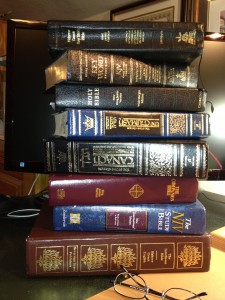
Natan’s Recommended Reading List

To help you to grow in your understanding of the Hebrew of roots of the Christian faith, here is Natan Lawrence’s recommended reading list:

IMG_0040

New to the Hebrew Roots Movement Top Ten List

  1. Israel Redeemed by Batya Wootten
  2. Israel’s Feasts and Their Fullness by Batya Wootten
  3. Matthew Henry Commentary on the Torah
  4. The Complete Jewish Bible by David Stern
  5. Complete Jewish NT Commentary by David Stern
  6. The Stone Edition Chumash
  7. Our Father Abraham by Marvin Wilson
  8. Strong’s Concordance
  9. Any good Bible dictionary
  10. Naves Topical Bible

Basics Bible Study Tools


True Righteousness Vs. Pseudo or Self-Righteousness

Romans 10:3, Elohim’s righteousness … their own righteousness.

Imputed Righteousness/Faith in Yeshua Combined with Torah-Obedience Equals True Righteousness

Rom 9:31–33, But Israel, which followed after the law of righteousness, hath not attained to the law of righteousness. Wherefore? Because they sought it not by faith, but as it were by the works of the law. For they stumbled at that stumblingstone; as it is written, “Behold, I lay in Zion a stumblingstone and rock of offence: and whosoever believeth on him shall not be ashamed.”

There is a psuedo-righteousness that comes from a perfect and legalistic obedience to the Torah. Theoretically, one could keep all the regulations of Torah, but without a circumcised heart characterized by love and faith, and still miss true righteousness. A letter-of-the-law, works-based or legalistic adherence is the pseudo-righteousness that Yeshua was attacking in the hypocritical religionists of his day. They were self-righteously proud of their works, yet they had missed the heart and the spirt of the Torah. Yeshua called these things — judgment, mercy and faith (i.e, the heart and the spirit of the Torah) — the weightier matters of the Torah (Matt 23:23).

Next we see that true righteousness combines faith in Yeshua the Living Torah with obedience to the Written Torah. Continue reading →


The Second Passover—A Second Chance for Salvation

Numbers 9:6–11, Defiled by a human corpse. This passage can also be understood allegorically.

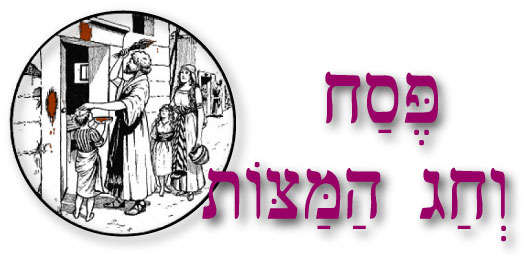
pesach_art


The second Passover is a prophetic picture pertaining to the lost and scattered sheep of the house of Israel who, like those individuals in this passage, had been journeying in exile (just like the prodigal son in Yeshua’s parable) among the Gentiles in a foreign land and away from the land and Elohim of Israel.

In the process of their spiritual wandering, they have become defiled by sin and death (likened here to touching a human corpse), since the wages of sin is death (Rom 6:23), and all men have sinned and fallen short of the YHVH’s glory (Rom 3:23).

While in exile (again like the prodigal son in the parable), they awake to their spiritual apostasy and want to come back home to observe the Passover (a picture of redemption or salvation). Passover is the only biblical festival for which YHVH’s allows a make up.

At the first Passover in Egypt, those who weren’t in their houses under the lamb’s blood-painted doors fell under the death penalty for sin and were killed. This teaches us that Passover is a picture of man’s obtaining salvation through the blood of Yeshua, the Messiah who is the Lamb of Elohim.

YHVH desires that all men be saved and come to know Yeshua the Savior, and Passover is a picture of this. This is why he gives men a second chance to keep the Passover—he wants all to be saved (John 3:16; 2 Pet 3:9), including his lost, scattered, exiled and prodigal children from the house of Israel.