
Let YHVH Deflate You … for Good!

Exodus 13:3, Went out of Egypt…no leavened bread. What is the spiritual connection between coming out of Egypt and the memorial (v. 9) of eating unleavened flat bread?

The keeping of the Feast of Unleavened Bread and the command to eat flat bread was to be an object lesson for successive generations Israelites as a sign and a memorial of what YHVH did against Egypt and of Israel’s deliverance (vv. 8–9). As the strong right arm of YHVH’s judgments (v. 3) pressed down upon proud and exalted Egypt until it was flattened as a nation, even so, YHVH’s judgment against the sin and idolatry in our lives demands that we become flattened, deleavened and contrite before him. He desires to squeeze or press out of us all the leaven of sin and pride that we have inherited from spiritual Egypt.

20147388

In the Scriptures, since leavening puffs up and sours bread, it is a biblical metaphor for sin, which does the same to the human heart and mind. It causes bitterness, pride, insincerity, hypocrisy and giving rise to false teachings and doctrines of men. We must put out the leaven of sin from our lives and from our spiritual assemblies, as Paul admonishes. The Feast of Unleavened Bread pictures this process. The saints are to keep the feast not with the old leaven of malice and wickedness, but with the unleavened bread of sincerity and truth (i.e., the Torah, 1 Cor 5:8, read vv. 1–11 for context).




One People One Law

Exodus 12: 49, One law. (Other “one law passages include Lev 24:22; Num 9:14; 15:16, 29). The context of this verse regards the observance of Passover (also Num 9:14). There was only to be one law pertaining to the observance of Passover for both the native Israelite and for the stranger who sojourns with the Israelite.

20436368

Leviticus 24:22 says that there is one law for the Israelite and the stranger in the areas of blasphemy, murder, slaying another man’s animal and harming one’s neighbor in any way.

Pertaining to the law about the various offerings for sin (i.e, despising the instructions or Torah of Elohim, verse 31), Numbers 15:15–16 and 29 states there is one law for both the Israelite and the sojourner forever throughout their generations.

Some will say that these “one Torah for everyone” passages pertain only to the specific Torah laws mentioned in these passages. This interpretation seems to be a strain, since, as noted above, the Leviticus 24 passage seems to include all of Torah. Furthermore, in numerous places, Israel was to take the Torah (the whole Torah) to the nations of the world, not just parts of the Torah (e.g., Deut 4:6–8; Isa 60:1–3; Zech 8:22–23; Matt 28:18–20; Luke 24:47), and that during the Messianic Age, the Torah will go forth to all the nations (Isa 2:3; Mic 4:2). So the Torah is not just for Israel only, but ultimately was to be for all the peoples of the earth.


Has the Real Source of Tzizit Blue Finally Been Discovered?

First definitive proof of ancient blue dye tekhelet revealed in Israel

Posted on December 31, 2013 by JNS.org.

tzitzitblue(JNS.org) The first definitive proof of production of the ancient blue dye tekhelet in Israel was revealed during an Israel Antiquities Authority presentation at a Jerusalem conference.

Derived from shellfish, tekhelet is mentioned in the Torah as the dye used in the clothing of the High Priest in the Jerusalem Temple, as well as being mixed in with white in the fringes of the tzitzit garment. But the origins of tekhelet were lost after the Roman exile, and most tzitzit fringes today are colored exclusively white. Over the past century, experts—including the late Chief Rabbi Dr. Isaac Herzog—have attempted to rediscover the origins of the dye, tracing it to the hillazon snail. (To  read more, http://www.jns.org/news-briefs/2013/12/31/first-definitive-proof-of-ancient-blue-dye-tekhelet-revealed-in-israel.)

Links to other articles on this subject: http://www.christianpost.com/news/israeli-researcher-discovers-evidence-of-rare-color-known-as-biblical-blue-111824/; http://www.theblaze.com/stories/2013/12/31/archaeologists-make-incredibly-rare-find-with-roots-in-the-bible/.


Check out these new videos

Genesis 49 Messianic Prophecies

Formulas, Tent Pegs and the Glory Cloud

Reaching Out to Those in Other Faiths


From Messy Antics to The Dance of Lovers

Alone in a Dark, Strange House

Have you ever found yourself groping and stumbling around in a totally dark, strange house without a light? Many people who have left the Christian church with some vague notion of returning to the Hebrew roots of their faith find themselves in such a house. Welcome to the house of the Messianic /Hebrew Roots Movement!

Many of us have been there asking ourselves questions like: Where are we? Where are we going? What’s next? Who’s out there? Am I alone?

Shifting from a Christian paradigm and lifestyle to that of the Hebrew/Jewish roots of the Christian faith as modelled by the early believers in the Book of Acts and Apostolic Epistles isn’t an easy one. Perhaps knowing the transition zones or spiritual growth stages we all go through might be like someone handing you a flashlight in that dark house.

Even a little light on the subject might save your toe and keep you from doing a nose plant on the floor! Not only that, knowing the stages most inevitably go through when making the transition from a traditional Sunday Christian to a Torah-conscious and Yeshua-loving Hebrew might just…

  • help us to stay on course so that we won’t get stuck in one stage of spiritual development and fail to move to the next stage.
  • help leaders to see where people are at in their path to spiritual maturity, and help them to the next level.
  • help those who have advanced through these stages to be gracious and helpful to those who have not yet done so.

Here are the stages, as I see them. Personal experiences may vary, but I think that most of us have more or less gone through these steps ourselves. Read and see what you think. Continue reading →


What’s the Big Deal About Abib Barley? It’s in the Bible, so you need to know!

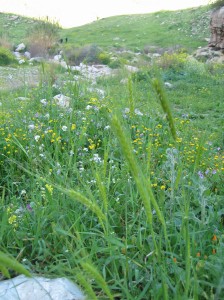
Exodus 9:31, The barley was in the head.  Barley was cultivated as a grain crop in ancient Egypt, as well as in Israel, and grows wild like a weed throughout the region to this day. Several passages in the Scriptures witness to the fact that the barley was the indicator of which month was to be the first month of the year for the Israelites, so that they could determine when the biblical feasts were to be observed.

Observe the month of Abib, and keep the Passover unto YHVH your Elohim: for in the month of Abib YHVH your Elohim brought thee forth out of Egypt by night. (Deut 16:1, emphasis added)

Barley in Israel  2

Please notice, the definite article the proceeding the phrase “month of Abib.” The state of the barley indicates a specific month in the spring. Months in the biblical Hebrew calendar have always been determined by the first visible sliver of the new moon from antiquity. This specific month is to be the beginning the biblical new year (Exod 12:2). The month of the Abib is not so much the name of a month as it is a description of the month. Below are listed the other three places in the Scriptures where this phrase is found.

This day came you out in the month Abib. (Exod 13:4)

You shall keep the Feast of Unleavened Bread: (you shall eat unleavened bread seven days, as I commanded thee, in the time appointed of the month Abib; for in it you came out from Egypt: and none shall appear before me empty). (Exod 23:15)

The feast of unleavened bread shall you keep. Seven days you shall eat unleavened bread, as I commanded you, in the time of the month Abib: for in the month Abib you came out from Egypt. (Exod 34:18)

What does the word abib in the phrase “the month of the Abib (or Aviv)” mean? Continue reading →


The Gift of Elohim’s Indwelling Presence

Psalms 91:1, 4, Under the shadow of the Almighty…under his wings. According to the ancient Jewish sages, Moses composed this psalm for the tribe of Levi who dwelt under the shadow of the wings of cherubim that stood over the ark of the covenant in the Tabernacle of Moses — a physical representation of YHVH’s throne room in heaven.

Sunlight 67963020The sages go on to explain that the psalmist describes the devout man of faith who lives with Elohim in his heart, and who never leaves Elohim’s shadow. Such a man is a true biblical hero of faith to whom Elohim pledges (v. 16) he will satisfy with long life and show him his salvation (The ArtScroll Tanach Series Tehillim/Psalms Commentary on Ps 91).

This psalm ends with the promise of the blessing of long life to those love and serve YHVH, and beyond that, salvation, which is the Hebrew word Yeshua — the very name of the coming Messiah who would offer his people deliverance from the ultimate enemy, namely sin and its death penalty. The result of this deliverance is the glorious divine gift of eternal life through faith in Yeshua the Messiah — the supreme gift and blessing of all! This psalm is a prophecy pointing to the Messiah.

In Jewish understanding, the Tabernacle of Moses wasn’t complete until the glory of Continue reading →
