Why Animal Sacrifices?

The Purpose of Sacrifice

The concept of animal sacrifices may be a hard for modern people to comprehend — especially for those who are squeamish when it comes to death and blood. This ancient ritual, rooted in the nomadic lifestyles of the inhabitants of the Middle East, carried more symbolic significance for a people whose daily existence was tied to the earth and dependent on domestic animals for their survival. It is out of this cultural background that the biblical narrative springs and with it the ritual symbols with which the ancient people described therein could relate. With these things in mind, the following is a list showing the main reasons for YHVH’s establishment of an animal sacrificial system as a means to help man to understand spiritual lessons far beyond the actual sacrifice itself.

  • The Levitical system foreshadowed and pointed to the Messiah’s ultimate sacrifice (Heb 9:11–12).
  • The tabernacle offerings were specifically designed to spiritually draw the offerer near to Elohim through the sacrifice of a prescribed animal (Ps 51:16–17; 50:12–15 cp. 1 Pet 2:21).
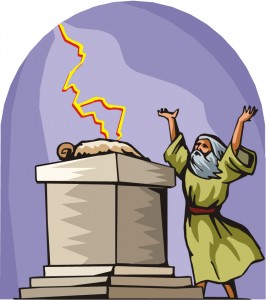
Sacrifice on Altar-lightening 20260002

  • Elohim commanded offerings to assist the offerer to better understand himself; his attitude, and his personal relationship with Elohim (e.g., Gen 3:21; 4:3–5; 8:20; 22:1–2 cp. 1 Cor 11:28).
  • Altars were erected by the patriarchs in order to honor Elohim through sacrifice after having had direct contact with him (Gen 12:6–8; 13:18; 26:24–25; 35:1; 35:2–4; Exod 17:13–16; cp. Exod 20:12).
  • Proper and regular sacrificial offerings kept the children of Israel in direct contact with the Elohim of the patriarchs (Exod 5:3; 10:25; cp. 1 Tim 2:5).
  • To make the offerer holy (set-apart) so that he would be allowed to approach and commune with the Set-Apart Elohim of Israel (Isa 43:15; 57:15; Lev 19:2 cp. 2 Cor 6:16–18).
  • Under certain circumstances, blood, as used in the Levitical system, could serve as Continue reading →
 

New Video: The Meaning of “Under the Law” Explained

Do you know what the biblical term “under the law” means? Most mainstream Christians think it means one thing, but, in reality, it means something else. Understanding the true meaning of this phrase will affect your spiritual walk and relationship with Yeshua (Jesus). When the Apostle Paul uses this term, is he taking a stand for or against the Torah-law of Moses? This video answers these questions.


Blog Scripture Readings for 3/2 through 3/8/14

Aside

THIS WEEK’S SCRIPTURE READINGS FOR STUDY AND DISCUSSION:

Parashat Vayikra — Leviticus 1:1 – 5:26 (6:7)*
Haftarah — Isaiah 43:21 – 44:23
Prophets —Isaiah 13:1 – 19:25
Writings — Psalms 145:1 – 150:6; Proverbs 1:1-33
Testimony — John 10:22 – 13:38

Most of this week’s blog discussion points will be on these passages. If you have general comments or questions on the weekly Scripture readings not addressed in a blog post, here’s a place for you to post those. Just use the “leave a reply” link below.

The full “Read Through The Scriptures In A Year” schedule, broken down by each day, can be found on the right sidebar under “Helpful Links.” There are 4 sections of scripture to read each day. One each from the Torah, the Prophets, the Writings, and from the Testimony of Yeshua. Each week, the Torah and haftarah readings will follow the traditional one-year reading cycle.

* Verse numbers in parenthesis refer to the verse number in Christian Bibles, which can at times differ from verse numbers in Hebrew Bibles.

Weekly Blog Scripture Readings for 3/2 through 3/8/14.


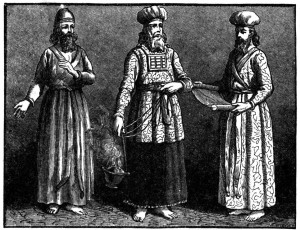
If Yeshua Calls You a Priest Then Act Like One!

Shabbat shalom everyone!

Here’s a long, meaty teaching for you to chew on today that will hopefully bring you into a closer spiritual walk with YHVH Elohim by giving you a deeper understand of his ways and expectations of us. Understanding the Tabernacle of Moses and the Levitical priesthood is the focal point of this teaching. It’s amazing how much we can learn from history and how it applies to us!

Scripture reveals that the saints are to be a holy or set-apart (kadosh) priesthood, not a profane (worldly and polluted) one. Which are you? Kadosh or profane?

YHVH Is Preparing His Saints to Be a Kingdom of Priests

In his Word YHVH revealed that ancient Israel’s destiny was to become a kingdom of priests (Exod. 19:6) and as such become a light to the nations to lead them to YHVH (Deut. 4:6-8). This is why YHVH in his sovereignty positioned the nation of Israel at the crossroads of the major trade routes of the ancient world—between three continents: Africa, Asia and Europe. Israel did not fulfill this prophetic destiny because of sin and rebellion. They desired to conform their lives to the standards of the wicked nations around them rather than conform to YHVH’s standards of righteousness as revealed in the Torah-law.

580176

Those who come to faith in Yeshua the Messiah become children of Abraham and are thus Israelites (Rom. 4:16; 9:8-11; Gal. 3:7, 9, 14, 28-29) who have been grafted in to the olive tree of Israel (Rom. 11). Ancient Israel never fulfilled its divine calling to a kingdom of priests and a light to the nations of the world. YHVH’s calling and purposes for Israel are without repentance (Rom. 11:29). What ancient Israel failed to accomplish because of disobedience, rebellion and faithlessness will be left to grafted in Israel—the one new man in Yeshua the Messiah—to accomplish. Yeshua commissioned his disciples to preach the Good News (Gospel) of the kingdom of Elohim to the world (Mark 16:15; Acts 1:8). But more than that, his disciples were to become that kingdom of priests that ancient Israel missed the opportunity to become.

We read in the Testimony of Yeshua (New Testament) that the Saints of YHVH will be called kings and priests (or a kingdom of priests) of YHVH-Yeshua the Messiah and will reign with him during the 1000-year Millennium or Messianic Age. Continue reading →


Moshe and Moshiach: Prophetic Shadows and Fulfillments

Moses Was a Type of Messiah Yeshua

Scripture infers that Moses was a figure who prophetically foreshadowed Yeshua the Messiah. Perhaps the most notable scripture in this regard is the Deuteronomy 18 passage where Moses, speaking to the Israelites, prophesies that, “YHVH your Elohim will raise up unto you a prophet from the midst of you, of your brethren, like unto me, unto him you shall listen” (verse 15). Below we have compiled a list of similarities between Moses and Yeshua, which are too numerous to be merely coincidental (the majority of these insights are from the book Gleanings In Exodus by A. W. Pink).

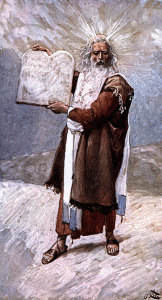
Moses' shining face

  • Both were Israelites.
  • Both were born while their nations were under the dominion of a hostile power.
  • As infants the lives of both were imperiled by the reigning king.
  • Both were adopted.
  • Both spent their childhood in Egypt.
  • Both were filled with deep compassion and sympathy for the plight of Israel.
  • Both renounced their kingly glory and took on the form of a servant.
  • Both were rejected by their brethren.
  • Both were shepherds (Exod 3:1 and John 10:11, 16).
  • Before entering into their ministry calling both spent time in seclusion in the wilderness: Moses for 40 years and Yeshua for 40 days.
  • Both were commissioned by YHVH to set the captives free.
  • The commission of both was confirmed by signs and miracles.
  • Moses’ first two miracles were power of the serpent and leprosy (Exod 4:6–8. After commencing his public ministry Yeshua’s first miracles were power over the serpent (Matt 4:10–11) and over leprosy (Matt 8:3).
  • Both delivered Israel.
  • The children of Israel were baptized into Moses (1 Cor 10:1–2) and redeemed believers into Yeshua (Rom 6:3). Continue reading →
 

“Yeshua Slept Here”

John  7:54, And everyone went to his own house. But Yeshua went to the Mount of Olives.

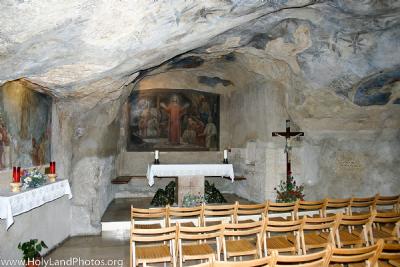
Below is a picture of the cave at the base of the Mount of Olives called the Grotto of Gethsemane, which is where Yeshua on occasion may have slept at night. This cave is a short five minute walk from the Temple Mount.

470_IJNTMOCG03_400


“Image courtesy of www.HolyLandPhotos.org


How do you best describe YHVH in one word?

Exodus 39:30, A crown of pure gold. What words were written on this golden crown that the high priest wore? Why did YHVH command that these words be written on the crown? To answer that question, think of this: What one word best describes who YHVH is? Most Christians would say that love is YHVH’s chief attribute. But is this what the Scriptures teach? Is there an attribute of YHVH’s that is even higher? Think of this: What are the six-winged seraphim declaring about YHVH Elohim day and night before his throne? (See Isa 6:5; Rev 4:8.)

Now consider this. YHVH made man in his own image (Gen 1:26), and wants man to become like him in character (note Lev 11:44,45; 19:2; 20:7). Now read Revelation 14:1 and compare this with Revelation 7:3. What does YHVH put on the heads of his end-time servants? What are the two noteworthy characteristics of YHVH’s end-times saints? (Note Rev 12:17; 14:12.) Holiness, Torah-obedience and a faith in Yeshua all go hand-in-hand. Now let’s bring this brief discussion full circle. As the high priest of old wore a gold crown inscribed with the words “Holiness to YHVH,” what does YHVH expect of his end-time saints? (See Heb 12:14; 1 Pet 1:15.) What does Peter call the saints of the Holy One of Israel? (See 1 Pet 2:9.) What will YHVH’s saints become in Yeshua’s millennial kingdom? (Read Rev 1:6; 5:10; 20:6.)

The word holiness (Heb. kadosh) as used in the Scriptures simply means “set-apart or the state of that which belongs to the sphere of the sacred, and which is distinct from the common or profane.” Elohim as the Creator is transcendent above his creation or that which is profane, earthly or worldly. Being kadosh isn’t only a positional consideration, but an ethical one as well.

The Torah is a reflection of the ethical qualities of Elohim, and is man’s ethical code book showing him how to be holy, set-apart or kadosh as Elohim is. Holiness in the Torah involves what we think, what we say, and what we do. This code of holiness which is a pathway to a relationship with our Father in heaven teaches us how to worship (or love) Elohim, and how to treat (or love) our fellow man. Yeshua, the Living Word or Torah of Elohim (John 1:1, 14) showed us how to walk out the Torah perfectly, and he then empowers us through his Spirit to live out the Torah’s holiness code, but this is another discussion.