Blog Scripture Readings for 2/22 through 2/28/15

Aside

THIS WEEK’S SCRIPTURE READINGS FOR STUDY AND DISCUSSION:

Parashat Tetzaveh — Exodus 27:20 – 30:10
Haftarah — Ezekiel 43:10 – 27 | 1 Samuel 15:2 – 15:34**
Prophets — 2 Kings 12:1 – 18:37
Writings — Psalms 142:1 – 150:6
Testimony — John 4:1 – 6:71

Most of this week’s blog discussion points will be on these passages. If you have general comments or questions on the weekly Scripture readings not addressed in a blog post, here’s a place for you to post those. Just use the “leave a reply” link below.

The full “Read Through The Scriptures In A Year” schedule, broken down by each day, can be found on the right sidebar under “Helpful Links.” There are 4 sections of scripture to read each day. One each from the Torah, the Prophets, the Writings, and from the Testimony of Yeshua. Each week, the Torah and haftarah readings will follow the traditional one-year reading cycle.

** A different Haftarah is read when it is a special sabbath in Jewish tradition. This week is Shabbat Zachor.

Weekly Blog Scripture Readings for 2/22 through 2/28/15.


New Video: What Is the Hebrew Roots Walk?

In this video, brother Bill explains what the basic steps are for the believer to take who’s returning to the Hebrew roots of the Christian faith. This is a great teaching for those who are new to the Hebrew roots movement or who want to understand what it’s all about.


Torah in a Box: Combatting Greasy Grace Torah-Obedience

Man-Made Torah Packages

The Torah comes in a lot of man-made  packages that tend to obscure the true essence of Torah as presented in the Scriptures. This is what I call toxic Torah. Here are a few examples of toxic Torah-packages being promoted today in the Messianic or Hebrew Roots Movement:

Divine Intervention

Torah Legalism (modern day Pharisees) — The modern day Torah police, like the Pharisees of old, are heresy hunter, nit-picking legalists who place more emphasis on the letter of the law and the dos and don’ts of the Torah then on the spirit of the law and the gospel message as presented by the Torah-obedient apostolic writers. They judge everyone else on the basis of their interpretation of the Torah and demand that everyone else come up to their level of righteousness.

Torah Terrorists — Every other word out of these folks’ mouth is “Torah.” They want everyone to come into perfect Torah obedience immediately. Torah is the answer to everything. The gospel message of Yeshua, who is the Living Torah of Elohim incarnate, and by who’s help we’re able to do the Torah, is often kicked “to the back of the bus” or is almost non-existent.

Humanistic Torah — In this case, traditions and doctrines of men are exalted over the word of Elohim. Sometimes Jewish or rabbinic traditions are more important than obedience to the actual Torah-word of Elohim.

Torah Lite — This is a window dressing Torah-obedience where the light duty stuff of Torah such as observing some of the fun biblical holidays, dancing around the Torah scroll while doing some Jewish liturgy mixed with some other Jewish traditions along with a love for the Jewish people and the land of Israel is done in place of actually living a Torah-submissive lifestyle.

The Torah idol of intellectualism — There are many who learn about Torah through worshipping  at the idol of intellectualism. These folks place a greater emphasis on studying the jots and tittles of the Torah (e.g., Paleo-Hebrew, gematria, the mystical and esoteric aspects of Torah, rabbinic head knowledge, and the minutia of Torah’s details) then they do the weightier matters of the Torah, which involve love, the gospel message and righteous living.

Greasy Grace Torah-Obedience — This is a Torah that often suits Christians who are new to the Torah. They see Torah’s validity and relevance to the born again believer, but they take the punch out of YHVH’s word and view Torah as more of an option, suggestion or blessing to do rather than a command from Elohim that is incumbent upon all believers. This view promotes the underlying idea that YHVH’s grace will cover my inability or lack of willingness to fully obey his commandments thus giving me a pass to be disobedient. This is the Torah box we want to discuss below.

The above listed points are just a few examples of the permutations of Torah being promoted in the present day nascent Hebrew Roots Movement. Other examples could be give as well. What I have described above are like neat little boxes. Few people fit exactly into these boxes. People who promote a skewed version of Torah will have a view that’s an admixture of points from several of these broad categories.

Greasy-Grace Torah

All too often a Christianized version of Torah is being peddled by Messianic or Hebrew Roots teachers. Though they promote Torah obedience, it’s a censored message to fit the appetites of Christians who are accustomed to hearing the traditional hyper-grace message of the mainstream church. These Torah teachers will proffer such concepts as these: Continue reading →


Are you an angel?

John 1:51, Angels of Elohim ascending. This is a clear reference to Jacob’s vision of the latter to heaven. The word angel (Gr. angelos) means “a messenger, envoy, one who is sent, an angel, a messenger from Elohim,” and can refer to human messengers as well as to angels (in the traditional sense of the word).

Jacob's ladder

Angelos is synonymous with the Hebrew word malak, which has the same definition. It was “angels” or messengers ascending and descending the ladder that Jacob saw in his vision. Both malak and angelos can refer to human messengers as well.

For example, Yeshua called John the Baptist a messenger (angelos, see Matt 11:10; Mark 1:2; Luke 7:27; also see 2 Cor 12:7; Phil 2:25). Therefore, the “angels” Jacob and Yeshua refer to who are climbing the ladder to heaven, which is Yeshua himself, could easily refer to YHVH’s heavenly earthly messengers, which are the saints as they presently or in Yeshua’s millennial kingdom go about their divine task of spreading the gospel of Yeshua who is the way to the Father in heaven.


Some good news (?) … I think: The Case Against Economic Collapse

The following is from http://www.shtfplan.com

The Case Against Imminent Economic Collapse: “They Can Keep Bailing Things Out for Several More Years Without Fear of Collapse”

February 16th, 2015

By Joel Skousen

This week, I’m going to diverge from my normal preparedness tips and switch to my geopolitical expertise as the editor of the World Affairs Brief (www.worldaffairsbrief.com) .  I feel the need to address the root controversy about what we are preparing for. I field more questions from subscribers and preppers each week on the subject of economic collapsethan any other topic, and despite the failure of all these collapse predictions since 2010, they are back again in 2015.

And, it’s no wonder. There is an unending flow of predictions of complete and imminent collapse coming from both the uninformed and some very bright financial newsletter writers on the conservative/libertarian side such as Jim Rickards, Peter Schiff, Michael Snyder, R.G. Allen, Robert Kiyosaki, John Williams (shadowstats.com), Mike Maloney, and Mike Dillard (who’s been pushing the collapse of the EURO for years now and still won’t stop despite the failure of his predictions).

I’m not going to tell you that things are fine.  They are not. The financial collapse writers are well informed about the problems of excessive debt, fiat money, and deficit spending that politically cannot be stopped nor solved now that the benefit corrupted voters can out-vote those of us who want government to stop these suicidal redistribution schemes.

But they have not thought out clearly the specifics of how and why it’s so difficult for an actual collapse to occur.  Historically, no nation has ever collapsed financially outside of the destruction of war—none (even the so-called “collapse of the Soviet Union” was a carefully crafted deception, as outlined in this piece).  Only when people are thrust into the most abject circumstances of survival, such as in WWII in Europe with the combination of allied bombing and the Russian invasion does an economy cease to function and turn into a mob of pillaging people.

Let me cover the various collapse scenarios that are being hyped constantly and why they aren’t necessarily imminent:

Electric Grid collapse: It is true that the nation would descend into massive social unrest should the electric grid go down and stay down for more than two weeks.  That said, there are a lot of uninformed predictions about a massive solar flare, or EMP strike by some terrorist or rogue nation that could cause a grid collapse.  The solar flare scenario is really only a threat to the grid in high northern latitudes since charged particles are channeled by the earth’s magnetic field toward the North Pole.  Canada is much more at risk from a massive solar flare.

And, contrary to a lot of arm-chair tacticians, a single nuclear EMP strike over the US by some terrorist group is not capable of taking down the entire grid.  It takes at least six simultaneous high altitude nuclear bursts to blanket the US, and only Russia and (to continue http://www.shtfplan.com/headline-news/the-case-against-imminent-economic-collapse-they-can-keep-bailing-things-out-for-several-more-years-without-fear-of-collapse_02162015.)


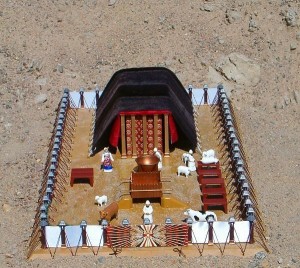
The World of the Tabernacle of Moses

If you were the Creator of the universe, what means would you use to communicate with those that you had created through love in your likeness and image? In a remote way, it’s like a human standing over an anthill trying to communicate with the ants. How do you do it? Similarly, how does an all powerful, Spirit Being, loving Father in heaven relate to his mortal children who are but mere specks of dust without vaporizing them with his raw power? The difficulty is compounded when fearful humans don’t want to hear the voice of Elohim, which is what happened when YHVH Elohim’s voice thundered from Mount Sinai. The children of Israel begged him not to talk to them, lest they die. They asked the Almighty One to speak to them instead through Moses (Exod 20:19).
tabernacle aerial5

When man sinned at the tree of knowledge, and YHVH kicked them out of the Garden of Eden, direct communications between man and his Maker were hampered, if not all but cut off. However, Elohim had a plan to restore the loving relationship he had with man before the rebellion. But if men refuse to hear you when you speak, what are you do?

To be certain, the Almighty doesn’t lack for ways to communicate with men. Man is without excuse when it comes to hearing Elohim, for even the heaven’s declare the glory of the Creator and the plans he has for mankind. The visible things of this creation shout loudly about the spiritual mysteries heaven desires to reveal to its earthly subjects. Furthermore, from time to time over the millennia, Elohim has chosen to speak directly to some select servants through dreams, visions, signs, wonders, angels, and even once through a donkey! But how does he speak to a whole nation, if that nation is plugging its ears and refusing to hear its Master’s voice?

Enter into the picture the Tabernacle of Moses, which was literally a three-dimensional gospel message tract. It is the visual demonstration of the whole message of the Bible in a building — the blueprint of the plan of redemption of wayward man. It was a functioning masterpiece of artwork demonstrating the Father’s love for his people, of his desire to commune and to communicate with Israel — his treasured possession, those he had hand picked and called out from the 70 nations of the world. Not only did the tabernacle involve the sense of sight, but the other four senses as well: sound, smell, touch, and taste. It also engaged and even challenged the heart, emotions, mind and spirit of man. The Tabernacle of Moses was a vehicle for the Creator of the universe to communicate with man using a panoply of communicative devices all of which pointed to the coming Messiah, the Redeemer of mankind who would die for the sins of the world to restore man into a loving relationship with his ever-loving, gracious, and longsuffering Father in heaven.

This is the story of the tabernacle, which, in every way, resembles a theatrical play, even a pageant, containing costumed actors each performing his carefully choreographed role on cue. Even a child can comprehend the message of this play, yet it contains mysteries and truths so deep that only in eternity itself will they be revealed to those who have been initiated into higher spiritual levels through the tabernacle’s spiritual paradigms of which its rites and ceremonies were mere prophetic shadows of things to come. To understand it, is to understand the message of the whole Bible from Genesis to Revelation.

Let’s now enter into this world of the Tabernacle of Moses. Welcome! (Please note, over the next several parshiot, we will be discussing the tabernacle in great detail. Later, when we get into Leviticus, we will explore the sacrificial system as well as the other tabernacle rites and ceremonies, and we will learn how they all pointed to Yeshua and how it relates to us.)

To read Natan’s entire teaching on the Tabernacle of Moses, please go to http://hoshanarabbah.org/pdfs/tabernacle.pdf.

 

Now let’s pass the offering plate…

As often as you hear the phrase (or something like it), “and now let’s pass the offering plate,” in modern churches, you’d think that this phrase occurred a gazillion times in the pages of the Scriptures. In fact, it only occurs twice.

Exodus 25:2, That they may bring me an offering. Interestingly, this is the only place in the Scriptures where an offering was taken of YHVH’s people to support the work of the ministry. In one other place in the Bible, a collection was taken, but what was its purpose and who was it for? (See 1 Cor 16:1–3 and Acts 11:27–30.)

Offering Plate This is not to say that the saints should not give of their substance to help support their spiritual leaders. What did Paul teach about the saints supporting the work of the ministry—especially those who are spiritually feed them? (Read 1 Cor 9:1–18; 1 Tim 5:17–18; Gal 6:6–9.)

The main point we wish to make here is that the taking of offerings or the passing of the plate isn’t a biblical norm. People were expected to give, but of their own freewill and without pressure or coercion from their spiritual leaders.

What did Yeshua say about giving? (Note Acts 20:35; Luke 6:38.) What did Paul say to those who do not share their substance with (or sow sparingly to) those who teach them? (Look at 2 Cor 9:6.)

What should be our heart attitude when giving to the ministry of Elohim? (See 2 Cor 9:7.)

What are the blessings from Elohim that one can expect from giving cheerfully? (Read 2 Cor 9:8–11.)