Many marijuana users think that Genesis 1:29-31 is the Bible’s stamp of approval on pot use. In this video, we discuss whether or not this is a correct understanding of this verse.


Many marijuana users think that Genesis 1:29-31 is the Bible’s stamp of approval on pot use. In this video, we discuss whether or not this is a correct understanding of this verse.
Exodus 12:31, 33, Rise up, get you forth. YHVH was leading Israel out of Egypt, while Egypt was, at the same time, thrusting Israel out of that nation.
This verse marks the beginning of Israel’s exodus from Egypt. The later biblical prophets speak about end times Israel being scattered and enslaved in the nations of the world (i.e., Babylon the Great). However, as a result of a series of miraculous events and YHVH’s judgments against their captor nations, end times Israel is finally set free. Released, they will return to the Promised Land of Israel where Yeshua the Messiah will rule and reign over them. Many biblical prophets predict this glorious event happening, and the Jewish sages have tenaciously clung to this hope for two millennia. This event (actually, a series of events) has euphemistically been referred to as “the second exodus.”
Many scriptures (e.g., Isa 11:1012:6; Jer 16:14–15; 23:7) refer to this when they prophesy of another exodus of Elohim’s people to occur in the last days which will be much larger in scope and will involve many more nations than the first exodus from Egypt.
Exodus 12:23, 27 cp. 6:6 (also Deut 5:15; 7:19), The destroyer…who passed over…he smote the Egyptians cp. Will redeem you with an outstretched arm. Who is the outstretched arm or YHVH? It is Yeshua (Isa 53:1 cp. Isa 52:10; 40:10; Ezek 20:34–35) who is at the right hand of Elohim (e.g., Rom 8:34; Col 3:1; etc.). We know that the preincarnate Yeshua, the Malak (mistranslated in most Bibles as Angel) or Messenger of YHVH led Israel through the wilderness. Likely, the preincarate Yeshua was the arm of YHVH’s judgment against Egypt’s firstborn, even as he will be the hand of Elohim’s judgment against the wicked in last days and at his second coming (Rev 19:15, 21).
How about a dose of reality in the face of political propaganda and reassuring babble from our so-called leaders?!
Bottom line: This nation needs a spiritual revival from top to bottom and vice versa. It’s our only hope. Until then, we’re destined only to receive more of the same. It’s called judgment!
Franklin Graham is right when the other day he stated that America’s problem is moral and spiritual sickness, and that only repentance from sin will cause the situation to improve.
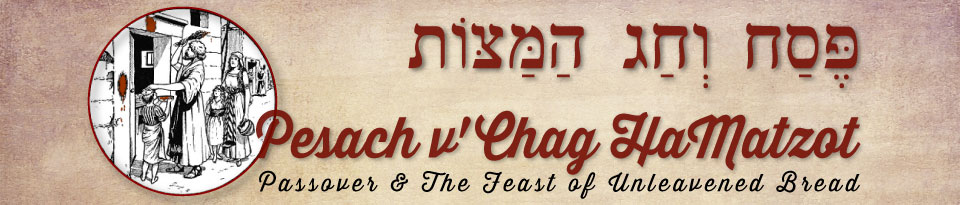
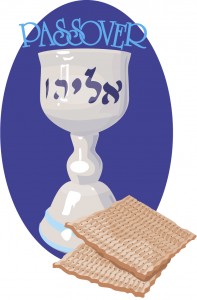
Exodus 12:14, You shall keep it a feast. The key elements of the Passover celebration or seder which memorializes the exodus were (a) eating lamb (Exod 12:8), (b) eating bitter herbs (Exod 12:8), (c) eating unleavened bread (Exod 12:8), (d) telling their children the story of the exodus (Exod 10:2), (e) celebrating (Passover is a chag or celebratory feast, Exod 12:14), and (f) keeping the day set-apart (Passover combined with the first day of Unleavened Bread is a set-apart convocation or a time when YHVH’s people are to gather together, Exod 12:16).
This verse also tells us when the Israelites actually ate the Passover meal: It was called a feast (Heb. chag). Passover day (the 14th day of the first month on the biblical calendar) technically is not a chag. However, the Feast (Chag) of Unleavened Bread is a feast and it starts on the 15th day of the first month (Lev 23:6). Therefore, the Israelites slaughtered and prepared the Passover lamb on the 14th day of the first month and ate it at the beginning of the 15th day, which is the evening portion of the Feast of Unleavened Bread.
Exodus 12:2, This month…first month of the year. The biblical month in which Passover occurs (March-April) marks the beginning of the biblical new year. It is also the time from which all biblical feasts are calculated. This is why it is important to understand the biblical calendar, so you will know when to celebrate YHVH’s feasts.
To learn about the ancient biblical calendar, we provide these free resources for you to study:
The Biblical Calendar and the New Moon at http://www.hoshanarabbah.org/pdfs/new_moons.pdf
The Biblical Calendar Demystified at http://www.hoshanarabbah.org/pdfs/cal_demyst.pdf
The Biblical Calendar: New Moon or Conjunction?
http://www.hoshanarabbah.org/pdfs/vis_moon.pdf

Exodus 12:6, At twilight [Heb. erev, or between the evenings]. This phrase can have several meanings.
Loosely speaking, according to first century Jewish tradition, this would have been the time from high noon when the sun is at its zenith when it starts to descend toward the horizon until approximately 6 PM when it disappears behind the horizon (The Life Time of Jesus, by Alfred Edersheim, p. 813; Hednrickson, 2002). From 12 noon onward is not the literal meaning of the Hebrew word erev though.
According to The TWOT, erev means “dark or evening and refers to sunset or evening” and applies to the actual darkening of the skies at twilight as the sun is beginning to sink behind the horizon. Therefore, between the evenings can also mean “between the evening of the 13th day of the first month going into the 14th day of the first month and the 14th day going into the 15th day.” That is to say, the entire daylight portion of the 14th day or Passover day could be the period between the two evenings.
With this understanding, it is not difficult to see how Yeshua and his disciples keeping the Passover or Lord’s Supper at the beginning of the 14th day is still called “the Passover” in the Gospels, even though the majority of the Jews traditionally ate the Passover meal at the end of the 14th going into the 15th.