Hoshana Rabbah Blog

Midrash with Natan Lawrence

Hoshana Rabbah Blog

Shame on Target…Time to Boycott!

First Target insulted us by forbidding people to exercise their constitutional rights to defend themselves by carrying concealed weapons on their property, and now this. We have a Target store  in our town, five minutes away. There’s nothing that Target has that I can’t buy somewhere else. 

These mega-corporations are so arrogant that they think they can ignore the silent majority who are morally straight and pander to a fraction of a percent of the population who are sexual deviants, let’s  show them who they really need to be taking into consideration when formulating policies!

Natan Lawrence

http://www.christianpost.com/news/target-faces-boycott-policy-allowing-men-womens-bathrooms-162395/

Target Faces Mass Boycott Over Policy Allowing Men in Women’s Bathrooms

BY MICHAEL GRYBOSKI , CHRISTIAN POST REPORTER
April 22, 2016|11:10 am

image: http://images.christianpost.com/full/96327/target.jpg

Target

Employees work at a Target store at St. Albert, Alberta, Canada, January 15, 2015.

After Target announced this week that its stores will allow men to use women’s bathrooms and dressing rooms, over 160,000 people have already signed onto a boycott of the popular retailer in just two days.

The American Family Association’s boycott was launched Wednesday and as of Friday morning more than 164,000 people have signed on to it.

In a statement posted earlier this week, the AFA argued that Target’s new bathroom policy threatens the safety of women and children.

“Target’s policy is exactly how sexual predators get access to their victims. And with Target publicly boasting that men can enter women’s bathrooms, where do you think predators are going to go?” stated AFA.

“Clearly, Target’s dangerous new policy poses a danger to wives and daughters. We think many customers will agree. And we think the average Target customer is willing to pledge to boycott Target stores until it makes protecting women and children a priority.”

gender-neutral bathroom(Photo: Reuters/Lucy Nicholson)A gender-neutral bathroom is seen at the University of California, Irvine in Irvine, California, September 30, 2014. The University of California will designate gender-neutral restrooms at its 10 campuses to accommodate transgender students — a move that may be the first of its kind for a system of colleges in the United States.

As a compromise, the AFA also stated that Target could provide a unisex bathroom for transgender customers.

“Target should keep separate facilities for men and women, but for the trans community and for those who simply like using the bathroom alone, a single occupancy unisex option should be provided,” continued AFA.

Earlier this week the corporate leadership of Target announced they would allow customers and employees to use the bathrooms of their choice.

The move came in response to the recent national headlines regarding debates over laws such as North Carolina’s bathroom bill that requires people to use the bathrooms, locker rooms and shower facilities that match their sex, not their gender identity. The law, however, gives private businesses the power to make their own policies on whether to allow men who identify as female to go into women’s facilities.

“Most relevant for the conversations currently underway, we welcome transgender team members and guests to use the restroom or fitting room facility that corresponds with their gender identity,” stated Target on Tuesday.

“Given the specific questions these legislative proposals raised about how we manage our fitting rooms and restrooms, we felt it was important to state our position. Everyone deserves to feel like they belong. And you’ll always be accepted, respected and welcomed at Target.”

The comments section for the Target announcement had over 300 posts, most of them expressing opposition to the announcement and vowing to stop shopping at the chain.

As of Friday morning, the top comments listed on the announcement were all opposed to the decision, with each post getting between 500 and 1,500 likes.

“Well … I won’t be shopping at Target anymore – was one of my favorite stores. So make sure you ‘include’ everyone because you just excluded me,” said one person, whose post got more than 900 likes.

“There is nothing that I buy at Target that I can’t buy elsewhere. So long. Farewell,” said another, getting over 1,300 likes.


How the First Passover Perfectly Pictured Yeshua the Messiah

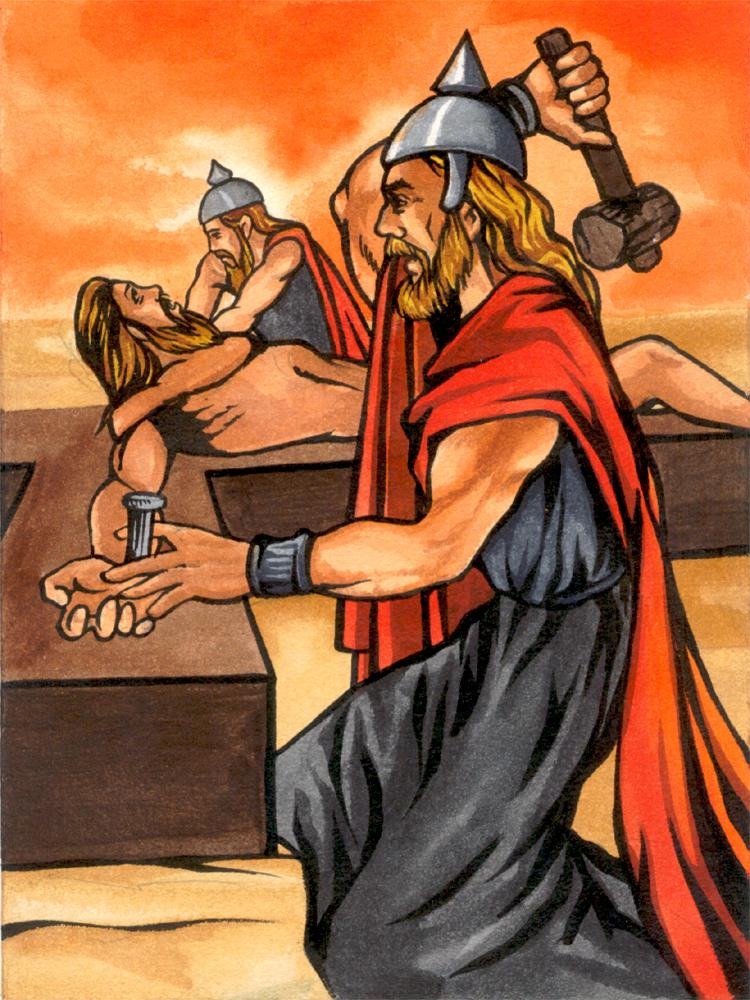
Cross-nailed to, 16957864

For I am not ashamed of the gospel of Messiah, for it is the power of Elohim to salvation for everyone who believes, for the Jew first and also for the Greek. (Rom 1:16)

For the preaching of the cross is to them that perish foolishness; but unto us which are saved it is the power of God. (1 Cor 1:18)

Neither is there salvation in any other: for there is none other name under heaven given among men, whereby we must be saved [except the name of Yeshua the Messiah]. (Acts 4:12)

According to the laws of statistical probability, what are the chances of an event happening and then fifteen hundred years later another event occurring bearing an uncanny resemblance to the first one? Now suppose that not only did fifteen hundred years separate the two events, but that they occurred in two different countries several hundred miles apart, which in the ancient world considering the difficulties of travel and communications may as well have been halfway around the globe. Now suppose that the second event involved the death of a person, and that the events leading up to their death including the manner and timing of that death was beyond the control of the individual dying so that in no way could the person dying stage his death to mirror the first event. In fact, those killing the individual possessed no foreknowledge of the event that had occurred fifteen hundred years earlier. What are the chances of this occurring? Well beyond the laws of possibility!

This is not a fictional story! Truth is sometimes stranger than fiction. The details of these two events are chronicled in the pages of the Bible. The first event occurred in ancient Egypt and is recorded in the Book of Exodus chapters eleven and twelve. There we find recorded the details of the children of Israel’s first Passover while they were yet slaves in the land of Egypt. A whole series of events led up to this first Passover, which culminated with each family’s ritual killing of a lamb, smearing its blood on the frame of their doors, roasting the lamb, and then eating it. Doing this insured that YHVH would pass over their homes leaving those inside alive. The firstborn of those whose homes did not have the blood on them were killed.

The second event involved a descendant of those ancient people who was born in a different land fifteen hundred years later. His name was Yeshua of Nazareth, a Jew, and viewed by many of his day as the long-awaited Messiah of Israel. One of Continue reading →


Why Celebrate the Passover?

Passover, Happy

Isn’t your life already busy enough? Who has time for a six-hour Passover Seder commemorating something that happened thousands of years ago? What could this possibly have to do with my life here and now, you may ask? How can a 3500-year-old Biblical ritual in any way relate to those living in the age of the laser, satellites, the worldwide web and computers? Well, let’s see!

The Preacher said in Ecclesiastes 3:15, “That which is has been already and that which will be has already been.…” Life is full of paradoxes. Do advancements in technology, science, economics, medicine, religion, and world government really promise to give men the rest for their weary souls for which they long?

How about a different approach to the questions and problems facing modern man? Is it possible to go forward by going backwards? This is a thesis that the ancient prophet Yermeyahu (Jeremiah) proffered to those who had ears to hear. He said, “Thus says YHVH, ‘Stand by the ways and see and ask for the ancient paths, where the good way is, and walk in it; and you will find rest for your souls. But they said, we will not walk in it’” (Jer 6:16). What were those ancient paths to which this white-haired Jewish prophet referred? Continue reading →


New Video: Preparing Yourself For Passover


What about Peter’s vision of the sheet?

Big garden snail

Acts 10:13–15, Peter’s vision. In Peter’s vision of the sheet covered with unclean animals, the voice from heaven commanded him three times to kill and eat these unclean animals. Peter was confused by the meaning of this vision since being a Torah-law abiding Jew he knew that eating unclean meat was forbidden and in good conscience he could not do that which was contrary to YHVH’s Torah-law, for to do so was sin (sin is the violation of the law, 1 John 3:4).

Often visions are metaphorical in nature and not literal. There are many examples in the Scriptures of people receiving metaphorical visions. For example, read the books of Daniel and Revelation. Indeed, Peter’s vision was no exception, for no sooner had the vision ended when three Gentile men appeared at his door seeking the gospel message and the Spirit of Elohim bade Peter to go and to meet them. Peter then realized that the interpretation of his vision was that he should not call any man common or unclean; that is, the gospel message is for all people regardless of their ethnicity (verse 28). In Peter’s case, Bible itself interprets his vision. The issue is not about whether it is now permissible to eat non-kosher meat or not, but rather the Spirit of Elohim was directing the apostles to begin taking the gospel to the Gentiles, who by Jewish standards were considered common and unclean (verse 28).

Now consider this. If Yeshua had meant to say in Matthew 15:11 and Mark 7:18–19 that it was now permissible to eat all foods including those meats that the Torah prohibits to be eaten (e.g., pork, shellfish, etc.), presumably Peter would have known this, since he was present when Yeshua made the statement (see Matt 15:15). If Peter knew that Yeshua had given the okay for his disciples now to eat unclean meat, why then did Peter so strongly object when the voice from heaven commanded him to eat the unclean animals in the vision (Acts 10:13–14)? Obviously, Peter had not changed his opinion about not eating unclean meat, since Yeshua had never annulled the Torah command forbidding the eating of unclean meats in the first place.


Is There a Connection Between Sin and Sickness?

What if any is the connection between the sins we commit and the sicknesses and diseases that come upon us? Much, as the Bible teaches.

First, let’s establish some basic truths.

Everyone will eventually die, so not all sickness is a result of sin (Heb 9:27).

Some sickness isn’t due to sin, but so that YHVH might be glorified when the person is miraculously healed (John 9:2–3).

The purpose of some sickness is for spiritual refinement to bring us to a higher level spiritually as was the case with Job.

In a general sense, pain, suffering and death came upon all men because of Adam and Eve’s initial rebellion against YHVH Elohim in the Garden of Eden. As a result of the “fall of man,” all men have come under this curse and suffer as a result.

Unto the woman [Elohim] said, I will greatly multiply thy sorrow and thy conception; in sorrow thou shalt bring forth children; and thy desire shall be to thy husband, and he shall rule over thee. And unto Adam he said, Because thou hast hearkened unto the voice of thy wife, and hast eaten of the tree, of which I commanded thee, saying, Thou shalt not eat of it: cursed is the ground for thy sake; in sorrow shalt thou eat of it all the days of thy life; thorns also and thistles shall it bring forth to thee; and thou shalt eat the herb of the field; in the sweat of thy face shalt thou eat bread, till thou return unto the ground; for out of it wast thou taken: for dust thou art, and unto dust shalt thou return. (Gen 3:16–19)

Some sickness is a direct result of disobeying YHVH’s commandments; it’s YHVH’s judgment against that sin. In Exodus 15:26, YHVH speaks about not putting the diseases of Egypt upon his people if they will follow his commandments.

And said, If thou wilt diligently hearken to the voice of YHVH thy Elohim, and wilt do that which is right in his sight, and wilt give ear to his commandments, and keep all his statutes, I will put none of these diseases upon thee, which I have brought upon the Egyptians: for I am YHVH that healeth thee.

The Torah further makes the connection between sin and sickness when it lists the curses for Torah disobedience in Deuteronomy 28:21–22.

YHVH will make the plague cling to you until He has consumed you from the land which you are going to possess. YHVH will strike you with consumption, with fever, with inflammation, with severe burning fever, with the sword, with scorching, and with mildew; they shall pursue you until you perish.

In Deuteronomy 7:15, YHVH again mentions not afflicting his people with the sicknesses of Egypt if they will obey his Torah-commandments.

And YHVH will take away from thee all sickness, and will put none of the evil diseases of Egypt, which thou knowest, upon thee; but will lay them upon all them that hate thee.

The Bible indicates a direct relationship between sin and healing in Psalm 103:3,

Who forgiveth all thine iniquities; who healeth all thy diseases…

“Leprosy” or the infectious skin disease the Torah refers to as tsaraat (Lev 14:34) was a judgment from YHVH against several specific sins.

When ye be come into the land of Canaan, which I give to you for a possession, and I put the plague of leprosy in a house of the land of your possession…

In several instances in the Scriptures, we read that tsaraat was a direct result of a specific sin. In the case of Miriam, it was the sin of pride and rebellion against spiritual authority and using her tongue in an evil manner against YHVH’s spiritual authority (Num 12:1, 9–10). In the case of Gehazi, he became leprous because of greed and lying (2 Kgs 5:20–27). Uzziah, the king of Judah, became leprous because of his pride and rebellion against YHVH when he dared to violate the Torah by burning incense in the temple (2 Chron 26:16–23).

Envy can bring on bone diseases. Envy can also refer to “jealousy and sexual passion.”

A sound heart is the life of the flesh: but envy the rottenness of the bones. (Prov 14:30)

Sexually transmitted diseases are a direct result of sexual promiscuity and idolatry, and is a judgment from Elohim against those who engage in such ungodly practices.

For this cause Elohim gave them up unto vile affections: for even their women did change the natural use into that which is against nature: and likewise also the men, leaving the natural use of the woman, burned in their lust one toward another; men with men working that which is unseemly, and receiving in themselves that recompense of their error which was meet. (Rom 1:26–27)

Yeshua, on several occasions, equates sin and healing. That is to say, he viewed forgiveness of sin and healing of disease as synonymous concepts. To him, the sickness was a result of sin.

Whether is easier, to say, Thy sins be forgiven thee; or to say, Rise up and walk? (John 5:24)

Yeshua shows that illness can be a direct punishment for sin, as well, when he states that a man whom he had just healed was sick because of his sin.

Afterward Yeshua findeth him in the temple, and said unto him, Behold, thou art made whole: sin no more, lest a worse thing come unto thee. (John 5:14)

YHVH’s laws of judgment against sin are still in operation even in the so-called “New Testament era of grace.” YHVH struck down and killed Annaias and Sapphira because they lied to the apostles and the Spirit of Elohim (Acts 5:1–11).

Paul confirms the truth that there is still a correlation between sin and sickness when he states that some within the body of Yeshua get sick and die because of sin. Illness is a direct punishment for sin. Paul teaches that this can occur when a believer doesn’t have the proper fear and respect for YHVH Elohim and those things which are set-apart of kadosh such as blood and body of Yeshua as symbolized in the Passover communion service by the bread and the wine.

For I have received of the Master that which also I delivered unto you, that the Master Yeshua the same night in which he was betrayed took bread: and when he had given thanks, he brake it, and said, Take, eat: this is my body, which is broken for you: this do in remembrance of me. After the same manner also he took the cup, when he had supped, saying, This cup is the new testament in my blood: this do ye, as oft as ye drink it, in remembrance of me. For as often as ye eat this bread, and drink this cup, ye do shew the Master’s death till he come. Wherefore whosoever shall eat this bread, and drink this cup of the Master, unworthily, shall be guilty of the body and blood of the Master. But let a man examine himself, and so let him eat of that bread, and drink of that cup. For he that eateth and drinketh unworthily, eateth and drinketh damnation to himself, not discerning the Lord’s body. For this cause many are weak and sickly among you, and many sleep. For if we would judge ourselves, we should not be judged. But when we are judged, we are chastened of the Master, that we should not be condemned with the world. (1 Cor 11:23–32)

When trials of our faith fall on us including sickness and disease, Scripture instructs us to receive it with joy realizing that this is occurring for our spiritual refinement. We are to then ask YHVH for wisdom presumably to help us to understand why the trial is occurring, so that we can repent of sin and learn from our mistakes.

My brethren, count it all joy when ye fall into divers temptations; knowing this, that the trying of your faith worketh patience. But let patience have her perfect work, that ye may be perfect and entire, wanting nothing. If any of you lack wisdom, let him ask of Elohim, that giveth to all men liberally, and upbraideth not; and it shall be given him. (Jas 1:2–5)

Let us not forget that whom our Father in heaven loves he chastens. Sickness often is a form of loving chastisement or discipline from YHVH Elohim,

And ye have forgotten the exhortation which speaketh unto you as unto children, My son, despise not thou the chastening of YHVH, nor faint when thou art rebuked of him: for whom the YHVH loveth he chasteneth, and scourgeth every son whom he receiveth. If ye endure chastening, Elohim dealeth with you as with sons; for what son is he whom the father chasteneth not? But if ye be without chastisement, whereof all are partakers, then are ye bastards, and not sons. Furthermore we have had fathers of our flesh which corrected us, and we gave them reverence: shall we not much rather be in subjection unto the Father of spirits, and live? For they verily for a few days chastened us after their own pleasure; but he for our profit, that we might be partakers of his holiness. Now no chastening for the present seemeth to be joyous, but grievous: nevertheless afterward it yieldeth the peaceable fruit of righteousness unto them which are exercised thereby. Wherefore lift up the hands which hang down, and the feeble knees; and make straight paths for your feet, lest that which is lame be turned out of the way; but let it rather be healed. (Heb 12:5–13)