New Video: Gen 37–40:23 Parashat Vayeshev

This is a gospel-oriented Torah study guide. Our goal is to connect the good news of Yeshua the Messiah (the gospel message) to its Hebraic, pro-Torah roots or foundations. The information given here is more than head knowledge. Understanding and wisdom (the right application of knowledge that is based on truth) is taught thus making biblical truth practical, relevant and applicable to your daily life. The truths of the Bible not only have the power to transform your life here and now for the better, but eventually to take you past the veil of death and into eternity.

This Torah study is subdivided in sections by topic in a magazine format thus making it easy to watch at several sittings.

May you be blessed as you watch this video.

For a free, printable adult and youth Torah study guide on this Torah portion (parashah), please go to http://www.hoshanarabbah.org/parshiot.html


Blog Scripture Reading Schedules for 12-18 Through 12-24-16

Aside

THIS WEEK’S SCRIPTURE READINGS FOR STUDY AND DISCUSSION:

Parashat Vayeshev — Genesis 37:1 – 40:23
Haftarah — Amos 2:6 – 3:8
Prophets — 1 Samuel 12:1 – 18:33
Writings — Psalms 65:1 – 71:24
Testimony — Mark 8:1 – 11:18

Our new Scripture Reading Schedule for 2016-2017 is available to download!

Most of this week’s blog discussion points will be on these passages. If you have general comments or questions on the weekly Scripture readings not addressed in a blog post, here’s a place for you to post those. Just use the “leave a reply” link below.

The full “Read Through The Scriptures In A Year” schedule, broken down by each day, can be found on the right sidebar under “Helpful Links.” There are 4 sections of scripture to read each day. One each from the Torah, the Prophets, the Writings, and from the Testimony of Yeshua. Each week, the Torah and haftarah readings will follow the traditional one-year reading cycle.

Weekly Blog Scripture Readings for 12/18/16 through 12/24/16.


Thank you…please continue giving!

A  big thank you from our hearts to those of you have sown financially into this ministry. Your financial gifts are very important. Nothing we do in live is not without cost. To those of you who are being fed spiritually here, please consider giving through the PayPal button on this page. You know all the Bible verses that tell us this is the right thing to do, so I won’t quote them here. Your regular donations are greatly appreciated. Freely we receive and freely we give as per the example of Yeshua. Yet it still takes finances to keep things going. That’s why Yeshua had a money bag. YHVH bless and love you all.


Did Yeshua really say, “Eat Pork…and poisonous frogs and deadly mushrooms” while you’re at it? Yeah right!

Really????

Did Yeshua really say that we could eat anything that we could get our hands on and stuff into our mouth as many in the  church believe and teach? Let’s use our brains and think this thing out!

Mark 7:19, Thus He declared all foods clean. This phrase is excluded from the KJV, but is included in the NAS, NIV and some other modern translations. Some Bible teachers see this phrase as Yeshua’s endorsement for eating unclean meats such as pork. Even if this phrase were in the original language, Yeshua would never have considered swine to be food—a very non-Jewish concept and out of context with a Torah-adherent society. Furthermore, the Jews in his audience would have strongly reacted against Yeshua saying such a thing. What’s more, earlier in this passage Yeshua upholds the Torah over men’s tradition (Mark 7:6–13), and so Yeshua wouldn’t be teaching anything against the Torah by saying we can eat swine!

Not only that, the context of this passage has nothing to do with eating meat. It has to do with eating bread (v. 2). No mention of meat is made here. Only bread, which in verse two is the Greek word artos meaning “food composed of flour mixed with water and baked.” This has nothing to do with meat. The issue was whether it was mandatory to wash one’s hands before eating bread, which was not a Torah law, but was an extra-biblical Jewish legal law. Period. This is what Yeshua was addressing.

The Hebrew Roots Version, which is a translation from the Aramaic, confirms the KJV rendering of this verse. However, some of the modern texts (e.g. the NIV and NAS) add the phrase to the end of this verse, “In saying this [Yeshua] declared all foods clean.” This variant phrase in the newer English translations is the source of the confusion in the minds of many who read this.

The KJV is translated from the Greek family of manuscripts called the Textus Receptus or Continue reading →


The Descendants of Esau Are Ephraim and Judah’s Arch-Enemy in the End Times

The Ancestry of the Modern Arabs

Esau and his army stood in the way preventing Jacob from returning to his homeland. This event is prophetic of what will happen in the end times.

We have already identified who the sons of Jacob are, how they were divided into two camps, or two houses, and two kingdoms (the northern kingdom of Israel and the southern kingdom of Israel). But who are the descendants of Esau?

Many, if not most of the modern Moslems (especially the Arabs) trace their lineage back if not biologically then spiritually to Ishmael, the son of Abraham by Hagar. Islam in its holy book, the Koran, claims that it was Abraham and Ishmael who founded the religion of Islam and built the Kaaba, which is the small building containing a stone that supposedly fell from heaven. This shrine is located in the midst of great mosque in Mecca, Saudi Arabia. Of Ishmael and his descendents, the Bible prophesies in Genesis 16:11–12,

The angel of YHVH said to her further, “Behold, you are with child, And you shall bear a son; and you shall call his name Ishmael, because YHVH has given heed to your affliction. And he will be a wild donkey of a man, his hand will be against everyone, and everyone’s hand will be against him; and he will live to the east of all his brothers.”

The Koran has further twisted the biblical account to teach declare that the patriarchs were Mulims and that Abraham gave the birthright blessing to Ishamael instead Isaac. Both Israelites and Arabs, therefore, believe that they have a right to the Promised Land of Canaan, and, hence, this disagreement roots of the modern Arab-Israeli conflict.

The Scriptures further record that Esau (Edom), the disinherited son of Isaac, also had ought against his brother Jacob, who, in a sense, stole the birthright promise from him. Furthermore, Esau married the daughter of Ishmael (Gen 28:9). Thus, some of Ishmael’s and Esau’s descendants merged becoming a people-group who had a jealous feud with the sons of Jacob or Israel.

The Bible has more to say prophetically about the descendants of Esau, who scripturally are referred to as Edom (Esau’s alternate name) than about those of Ishmael. Edom is portrayed as an aggressive and bloodthirsty people who are opposed to Israel at every step. We will discover what the Scripture have to say about this below.

In the mean time, let’s take a closer look at Edom. Continue reading →


Are you going up to Beth-El (the House of El)?

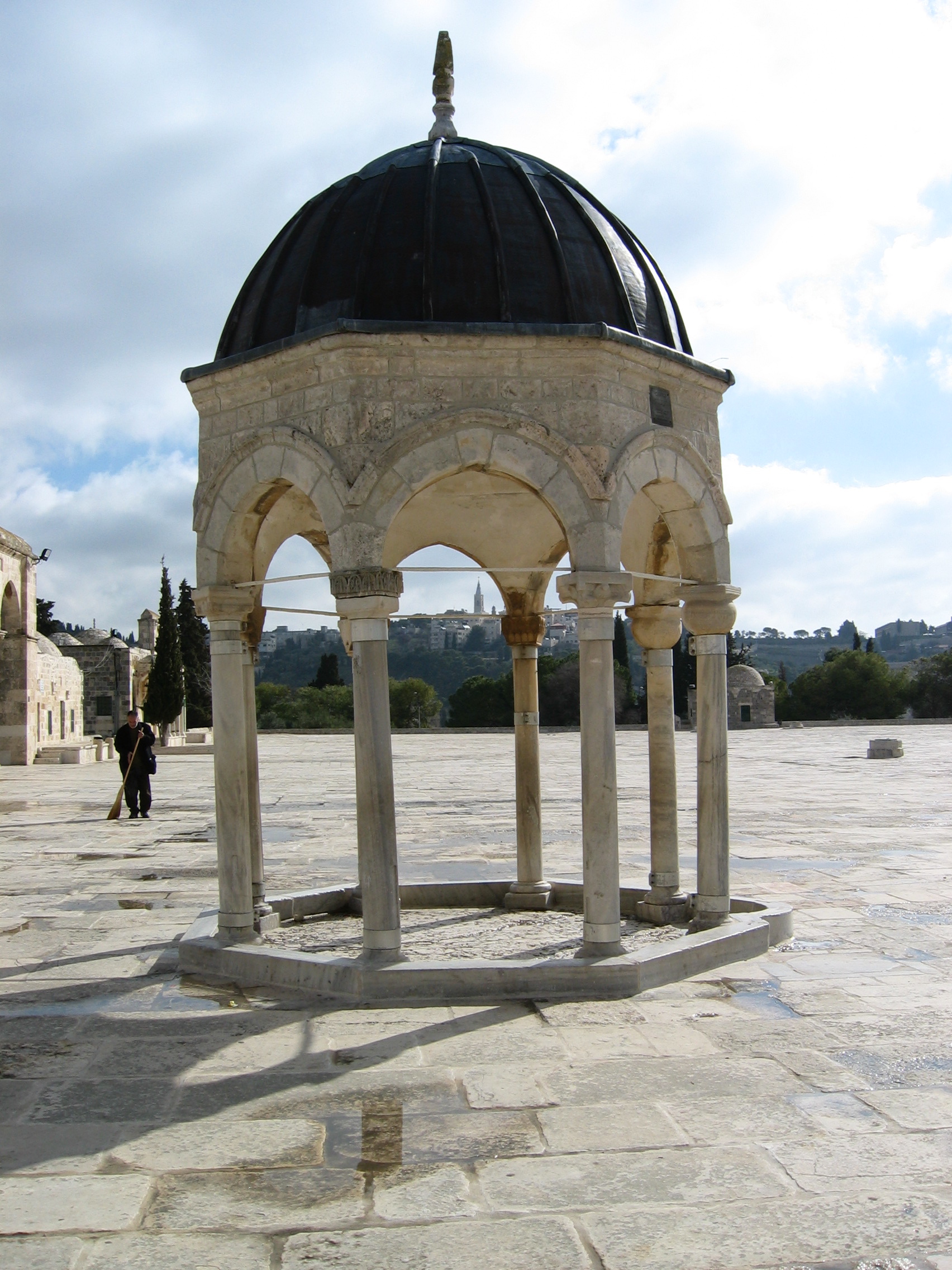
The Temple Mount or the House of El (Hebrew: Beth-El), and the likely spot where the Temple of Solomon stood, and the possible site of the actual holy of holies.

Genesis 35:1–15, Go up to Bethel. Jacob, twenty years earlier, had left Canaan in disgrace fleeing eastward into exile (as his descendants would do generations later), where in captivity to Laban he pays the price for being a deceiver.

In captivity, Jacob prospers and finally is able to return to the Promised Land.

En route westward back to Canaan, he goes through a wilderness experience, as the children of his namesake would do several generations later.

What type of individuals does YHVH not permit and permit to enter into the Land of Promise? The answers are in Hebrews 4:1–11 where the writer speaks of doubt and unbelief, faith, hardness of heart versus resting in YHVH and not in the works of our flesh. (Read it.)

To come home, like the prodigal son, to the home of his earthly parents and to that of his Heavenly Father (Beth-el or House of El) what was required of Jacob? He had to manifest brokenness, humility, a new identity, repentance, and make restitution for past sins committed against others (Gen 34).

Will YHVH similarly break our stiff necks, refine and purify us to become suitable for the Master’s use in his spiritual house? Are you fighting the process that YHVH is working in your life to prepare you for your spiritual Bethel?

Jacob got hit again and again until his carnal will was finally broken, his heart was circumcised and he died to the willfulness of his flesh and scheming to bring YHVH’s will to pass in his life. (Have other notable personages of Scripture tried the same things and had their will broken before they were useful to YHVH? Remember Moses when he murdered the Egyptian? What did YHVH do with him for 40 years?)

Remember, neither the uncircumcised in heart nor flesh will enter into the spiritual house of Elohim (Ezek 44:9), which is the ultimate Promised Land.

Where are you in this spiritual process?

The Promised Land belongs to those (i.e. the seed of Jacob) who pass the wilderness tests of YHVH (Gen 35:12).

Who is that seed? (Read Rom 4:16; 9:8, 11; Gal 3:7, 9, 14, 28, 29.)

Are we not following exactly in our father Jacob’s footsteps leaving our exile and captivity in Babylon (false religious systems, which contains a mixture of both good and evil, see Rev 18:4), returning westward across the Jordan into the land of Promise, to our spiritual inheritance, to the ancient and good paths of the Torah faith (Jer 6:16, 19), which is defined in terms of YHVH’s covenants with Israel (Eph 2:12–14)? Is not YHVH calling out a growing remnant of believers in Yeshua to do just that in our time? Do you see that Jacob’s life is a prophetic road map of what each individual believer must go through to obtain his spiritual inheritance? His life is a prophetic picture of what all Israel, collectively, must go through, as well.

 

New Video: River of Life (pt 1)—How to Come Out of the River of Death