Blog Scripture Readings for 1-22 Through 1-28-17

Aside

THIS WEEK’S SCRIPTURE READINGS FOR STUDY AND DISCUSSION:

Parashat Va’eira — Exodus 6:2 – 9:35
Haftarah — Ezekiel 28:25 – 29:21 | Numbers 28:9-15; Isaiah 66:1-24**
Prophets — 2 Samuel 18:1 – 24:25
Writings — Psalms 98:1 – 105:45
Testimony — Luke 8:26 – 11:13

Our new Scripture Reading Schedule for 2016-2017 is available to download!

Most of this week’s blog discussion points will be on these passages. If you have general comments or questions on the weekly Scripture readings not addressed in a blog post, here’s a place for you to post those. Just use the “leave a reply” link below.

The full “Read Through The Scriptures In A Year” schedule, broken down by each day, can be found on the right sidebar under “Helpful Links.” There are 4 sections of scripture to read each day. One each from the Torah, the Prophets, the Writings, and from the Testimony of Yeshua. Each week, the Torah and haftarah readings will follow the traditional one-year reading cycle.

** A different Haftarah is read when it is a special sabbath in Jewish tradition. This week it is Shabbat Rosh Chodesh on the traditional calendar. Otherwise, Ezekiel 28:25–29:21 would be read.

Weekly Blog Scripture Readings for 1/22/17 through 1/28/17.


New Video: Understanding Redemption/Salvation from a Torah Perspective


New Video: Who Is the “Angel” of the LORD in the Burning Bush?


The “I Am” Passages in the Testimony of Yeshua

In these passages in the Gospel of John, the apostle is not only acknowledging the deity of Yeshua, but recording Yeshua’s claim to be YHVH. That the Jews attempted to kill him for making this claim (John 8:59) indicates that they understood that he was applying the deific title of I AM (or YHVH) to himself.

Then said Yeshua unto them, “When ye have lifted up the Son of man, then shall ye know that I am [he (a supplied word that is not in the Greek)], and that I do nothing of myself; but as my Father hath taught me, I speak these things.… Yeshua said unto them, Verily, verily, I say unto you, Before Abraham was, I am.” Then they took up stones to throw at him. (John 8:28, 58–59)

Yeshua saith unto them, “I am [he (a supplied word)].” And Judas also, which betrayed him, stood with them. As soon then as he had said unto them, I am [he (a supplied word)], they went backward, and fell to the ground.… Yeshua answered, I have told you that I am [he (a supplied word)]: if therefore ye seek me, let these go their way. (John 18:5, 6, 8)


The Importance of Using the Biblical Names of Elohim

The rediscovery and use of the biblical names of deity is a fundamental aspect of returning to the Hebraic roots of the Christian faith. It is an essential element of coming out of pagan Babylonianism, getting back to biblical basics, and the restoration of biblical truths in the end times as the following article explains.

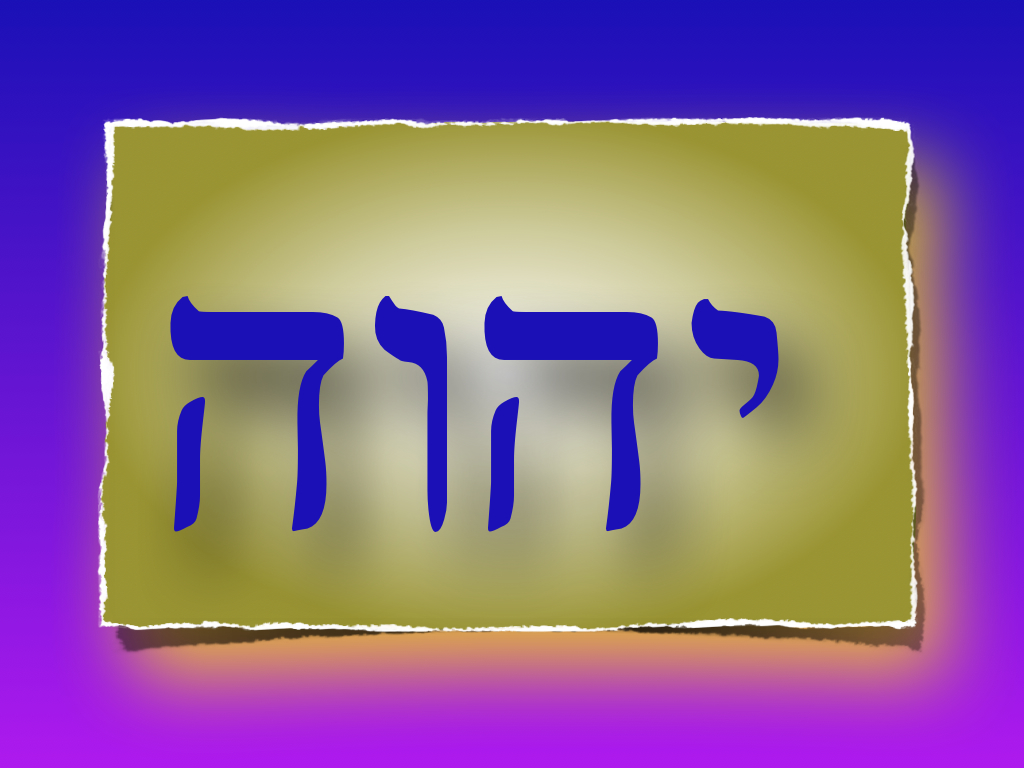
The Scriptures clearly teach us that YHVH wants his people to use his Hebrew names and titles (e.g. YHVH, Yah, El, Elohim, Adonai and Yeshua). If not, than why is “YHVH,” the personal name of the biblical deity, found in the Tanakh (or Old Testament) almost 7000 times?

Despite the proliferation of the name YHVH in the Bible, men are not to use his name carelessly as the third commandments teaches us (Exod 20:7).

The problem is that YHVH’s people have forgotten YHVH’s Hebrew names and worshipped pagan gods instead (Ps 44:20; Jer 23:27). Interesting, it’s a fact that most of our common English substitutes for the Hebrew names of Elohim derive from the names of pagan deities (e.g. God, Lord, Holy, Christ, Jesus). At the same time, the Scriptures prophesy that YHVH’s name will be restored and used again (Jer 23:6; 31:23; Ezek 39:7).

Interestingly, Satan’s name has never been changed down through the millennia from one language to another. The names of significant Hebrew biblical personalities along with Greek and Roman notable historical figures remain essentially unchanged to our day. However, the Hebrew names of Elohim and his Messiah not only have been changed, but often masked under the names of pre-exisiting pagan deities. Doesn’t this sound like a satanic conspiracy to hide the true identity of the Elohim of the Bible? It’s time for the Continue reading →


Yeshua on Self-Promoting, Self-Appointed Leaders and Teachers

Luke 6:40, Perfectly/fully trained. Those disciples of Yeshua the Master-Teacher who are properly trained, fit out, prepared or equipped can become like Yeshua the Master-Teacher. Those who aren’t properly equipped or trained to teach are like the blind leading the blind and will cause others to fall into a spiritual ditch (Luke 6:39).

Those who aren’t properly trained not only will be like a blind man leading the blind, but will also be hypocritical in his judgments and assessments of things. This is because he lacks the experience, wisdom and skills to be able to point out the faults of others because he is still inexperienced and has too many blind spots himself and is still like the blind leading the blind (Luke 6:41–42).

This is why Paul very carefully lays out the qualifications for those in spiritual leadership in the local congregation. A spiritual leader was not to be an inexperienced individual, a new convert or a novice (1 Tim 3:6), but well-discipled in YHVH’s truth before hand (Tit 1:9).

Paul says that it is good thing for a man to desire to be a spiritual leader (1 Tim 3:1), but it isn’t a good thing if he doesn’t meet the criteria or qualifications, which Paul then lays out (1 Tim 3:2–13).

The problem is that in our day, there are many individuals who desire to be leaders and teachers, who are self-appointed, and who have not been perfectly or fully trained. Since the advent of the internet, such people now have an easily accessible pulpit-platform from which to influence others. Sadly, they are like the blind hypocrite in Yeshua’s parable leading many astray and causing many to stumble and to fall into spiritual ditches of false doctrines and errant teachings.

Just because someone has a website, a YouTube channel, has published a book, spoken at a conference, has academic credentials or been on radio and television doesn’t mean they have been perfectly equipped or fully trained for the position of Bible teacher or a spiritual leader in the spiritual body of Yeshua.

We may not always know what a person’s background or qualifications are, but the spiritual fruit they produce, whether good or bad, can be an excellent indicator as to what type of spiritual tree they are, as Yeshua goes on to say in the next verses (Luke 6:43–45).

Those who sense a divine calling on their lives to teach or to lead YHVH’s people need to be first discipled and raised up by older and mature, wise spiritual leaders who have a proven track record of good spiritual fruit. This is the biblical way!

 

The Name of the Creator and How NOT to Pronounce It

Exodus 3:14–15, I AM THAT I AM. The name YHVH is Elohim’s memorial name forever. It reflects that fact that he is; that he is undefinable in human terms, and that he has always existed. This is the name by which he is to be remembered (not forgotten as is the case with the ineffable name concept of the rabbinic Jews whereby the names of deity are forbidden to be used).

In nearly all Bibles, whenever the tetragrammaton occurs, it has been substituted by the English word Lord. In some Bibles, Lord is written in all capital letters (i.e. LORD) to show that it’s the Hebrew word YHVH. This name has a variety of meanings including “the existing one” and “I am that I am.”

YHVH reveals his personal name in Exodus 3:14 and 15 where we read:

14 And Elohim said unto Moses, I AM THAT I AM (EHYEH ASHER EHYEH): and he said, Thus shalt thou say unto the children of Israel, I AM (EHYEH VHVT) hath sent me unto you. 15 And Elohim said moreover unto Moses, Thus shalt thou say unto the children of Israel, YHVH (vuvh) the Elohim of your fathers, the Elohim of Abraham, the Elohim of Isaac, and the Elohim of Jacob, hath sent me unto you: this is my name [Heb. shem] for ever, and this is my memorial [Heb. zeker] unto all generations.

Here are some examples of how various Bible versions translate the name of YHVH:

  • I Am That I Am (KJV)
  • I Am Who I Am (NAS, NIV, NKJV
  • I Am That Which I Am (YLT)
  • I Shall Be As I Shall Be (The ArtScroll Stone Edition Tanach)
  • I Will Be What I Will Be (The Gutnick Edition Chumash, JPS)
  • I Will Be There Howsoever I Will Be There (The Schocken Bible)
  • I Am the Being (LXX, Brenton)

Exodus 3:15 states that YHVH is the name Moses was to use when referring to I AM THAT I AM. Both the former and latter are forms of the Hebrew verb hayah meaning “to be.” YHVH instructed that YHVH was to be his memorial name forever. In other words, humans were to use YHVH to remember him by. There is no indication here that it was YHVH’s intention that his name was to be forgotten or hidden through euphemisation. The word memorial is the Hebrew word zeker (Strong’s H2143) and means “remembrance, memory.”

It must be noted here that we don’t refer to YHVH as I Am, for were we to do so it would be necessary to say “I Am,” and in all reality, we aren’t the I Am, but YHVH is the I Am. Just so there is no confusion when communicating YHVH’s name in every day speech, the Continue reading →