The Deity of Yeshua

The Preeminence and Deity of Yeshua

Phinehas, the grandson of Aaron the high priest, thrust a spear through Zimri the Israelite man and Cozbi the Midianite woman as they were bringing the curse of YHVH upon the nation of Israel by fornicating with each other within the camp of Israel. With the same righteous zeal as Phinehas, today’s righteous spiritual leaders must rise up and stand against secular philosophies that threaten to bring YHVH’s judgment upon redeemed Israel. In the face of evil in his day, David asked, “Who will rise up for me against the evildoers, or who will stand up for me against the workers of iniquity?” (Ps 94:16) The present issue relates to the dangerous and damnable trend within the body of redeemed Israelites believers to question and even deny the deity of Yeshua.

You’ve all heard the Christian axiom, “In essentials unity, in non-essentials liberty, and in everything else, charity.” What are the essentials of our faith that we must unite in, and around which we must draw the line in the sand and defend that turf until death?

As one who has been walking in the Torah for more than 40 years, who has spent time fellowshipping and ministering in both traditional Sunday Christian as well as Sabbatarian churches, and then pastoring and teaching in pro-Torah/Hebrew roots congregation for many years, it has become clear to me which issues are essential, and which are not. Those biblical truths that are salvational in nature are the essentials. These are the hills on which we must plant the flag of truth and be willing to defend at all costs! What are these immutable essentials?

  • YHVH Elohim (in Hebrew a plural word) is the Sovereign of the universe and the God of the Bible. He is one (Heb. echad, i.e. a compound unity), yet the Bible reveals the Godhead is comprised of three spiritual entities: the Father, the Spirit and the Son.
  • The Bible is the Word of Elohim from Genesis to Revelation.
  • The Torah is for all believers for all time.
  • Yeshua the Messiah, the Word of Elohim, is Elohim and is the Son of Elohim who was manifested incarnate on this earth being born of the virgin Mary. 
  • Yeshua lived a sinless life, died on the cross as an atonement for the sins of man, was buried and resurrected on the third day where he is now at the right hand of Elohim, and at the same time is on the throne of Elohim as Elohim.
  • Salvation is by the grace of Elohim through faith in Yeshua the Son of Elohim. As a result of one’s salvation, one will love Yeshua by keeping his commandments or word (the Torah), which will produce in his life the fruits of righteousness as defined by the Torah.

These are the essentials of our faith on which there can be no compromise. To take a weakened position on any of these issues is to begin down a spiritually slippery slope that can only lead to eternal separation from YHVH Elohim! Leaders must be quick to lift up the spiritual sword of the Word of Elohim against those who teach otherwise. In this brief treatise, I will deal with the major issues raised by those who want to diminish or eliminate the deity status of Yeshua the Messiah.

“The Earth Did Quake”

When the life of Yeshua, the divine Light of Elohim that pierced the spiritual darkness of this world, was being poured out while he was hanging dying on the cross, the earth was plunged into darkness (Matt 27:47). After Yeshua yielded up his spirit and died, the veil in Continue reading →


Blog Scripture Readings for 10-7 Through 10-13-18

Aside

THIS WEEK’S SCRIPTURE READINGS FOR STUDY AND DISCUSSION:

Parashat Noach — Genesis 6:9 – 11:32
Haftarah — Isaiah 54:1 – 55:5
Prophets — Joshua 8:1 – 14:15
Writings — Psalms 8:1 – 14:7
Testimony — Matthew 6:16 – 10:26

Our new annual Scripture Reading Schedule for 2018-2019 is available to download and print. If you are still working through 2017-2018’s Scripture Reading Schedule, the link will still be available on the right sidebar under “Helpful Links”.

Most of this week’s blog discussion points will be on these passages. If you have general comments or questions on the weekly Scripture readings not addressed in a blog post, here’s a place for you to post those. Just use the “leave a reply” link below.

The full “Read Through The Scriptures In A Year” schedule, broken down by each day, can be found on the right sidebar under “Helpful Links.” There are 4 sections of scripture to read each day: one each from the Torah, the Prophets, the Writings, and from the Testimony of Yeshua. Each week, the Torah and haftarah readings will follow the traditional one-year reading cycle.

Weekly Blog Scripture Readings for 10/7/18 through 10/13/18.


A Psalm by a 19 Year-Old Levitical Minstrel

Blessed is the man that walketh not in the counsel of the ungodly, nor standeth in the way of sinners, nor sitteth in the seat of the scornful. But his delight is in the Torah of YHVH; and in his Torah doth he meditate day and night. And he shall be like a tree planted by the rivers of water, that bringeth forth his fruit in his season; his leaf also shall not wither; and whatsoever he doeth shall prosper. (Ps 1:1–3)

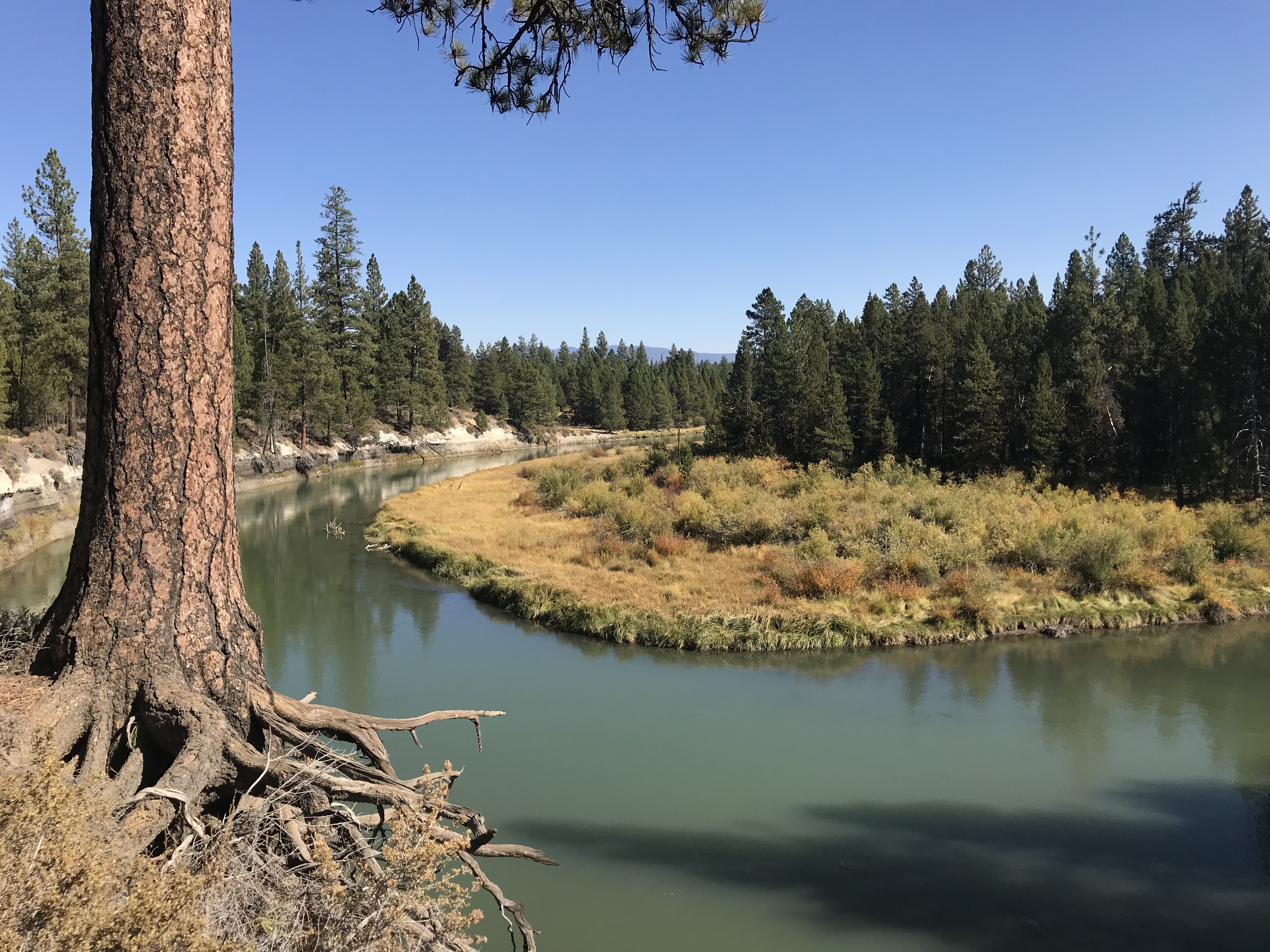
This psalm was birthed in the mountain wilderness by a river at Sukkot 2018 in Central Oregon and authored by a 19 year-old born again, Spirit-filled prophetic minstrel in the spirit of Asaph. This young Davidic tender warrior is a next generation spiritual torch bearer for Yeshua the Messiah.

O Lord, my El
Forgive me for I know not how I sin against You.
I sin with the same ease as I draw breath.
The flesh is the coach by which my soul steers,
Take the reigns.
Evil comes against what I desire, drawing me in.
Through Your strength, Your goodness prevails.
Alone I am but a nightcrawler,
Rummaging in the mud, hiding under the rock of evil.
But through You, the rock is lifted and Your light shines—
Transforming my soul and spirit cleansed.
The mud is washed away in Your waters,
I am made whole.
With You there is no lack nor want.
Praise the El of Abraham,
Worship the El of Isaac,
Sacrifice our fleshly lives to the El of Jacob,
So that we may transcend evil and come before You—
Casting our crowns!
Praise the El of complexity.
Praise our Lord Yeshua, King of our lives!

-Anonymous


Back from Sukkot 2018— A Praise Report!

We’ve just returned from our private Sukkot/Feast of Tabernacles celebration in the high desert of central Oregon at the base of the high Cascade Mountains. This was my 50  somethingith Sukkot, and it was uniquely refreshing.

I’ve been wanting to do a Sukkot like this for years! I’ve been to big Sukkot celebrations with thousands of people in stadiums and small ones with just a few people in a living room. I’ve done Sukkots on two continents and in three countries. From 2002 to 2016, my wife and I hosted a regional Sukkot gathering that was open to the public and where people came from multiple states and Canada. We’ve done the guest speaker thing with programs like a conference and fun activities. Not against this, but this year, we wanted to go deeper and higher spiritually. We succeeded in this, or at least we made a few steps in that direction, and I praise Yah for that! I’m not going to exaggerate. We still have a long way to go. Seeking and discovering YHVH at deeper levels is a lifelong pursuit because of who he is; we’ll never arrive at the end of it in this life or ever.

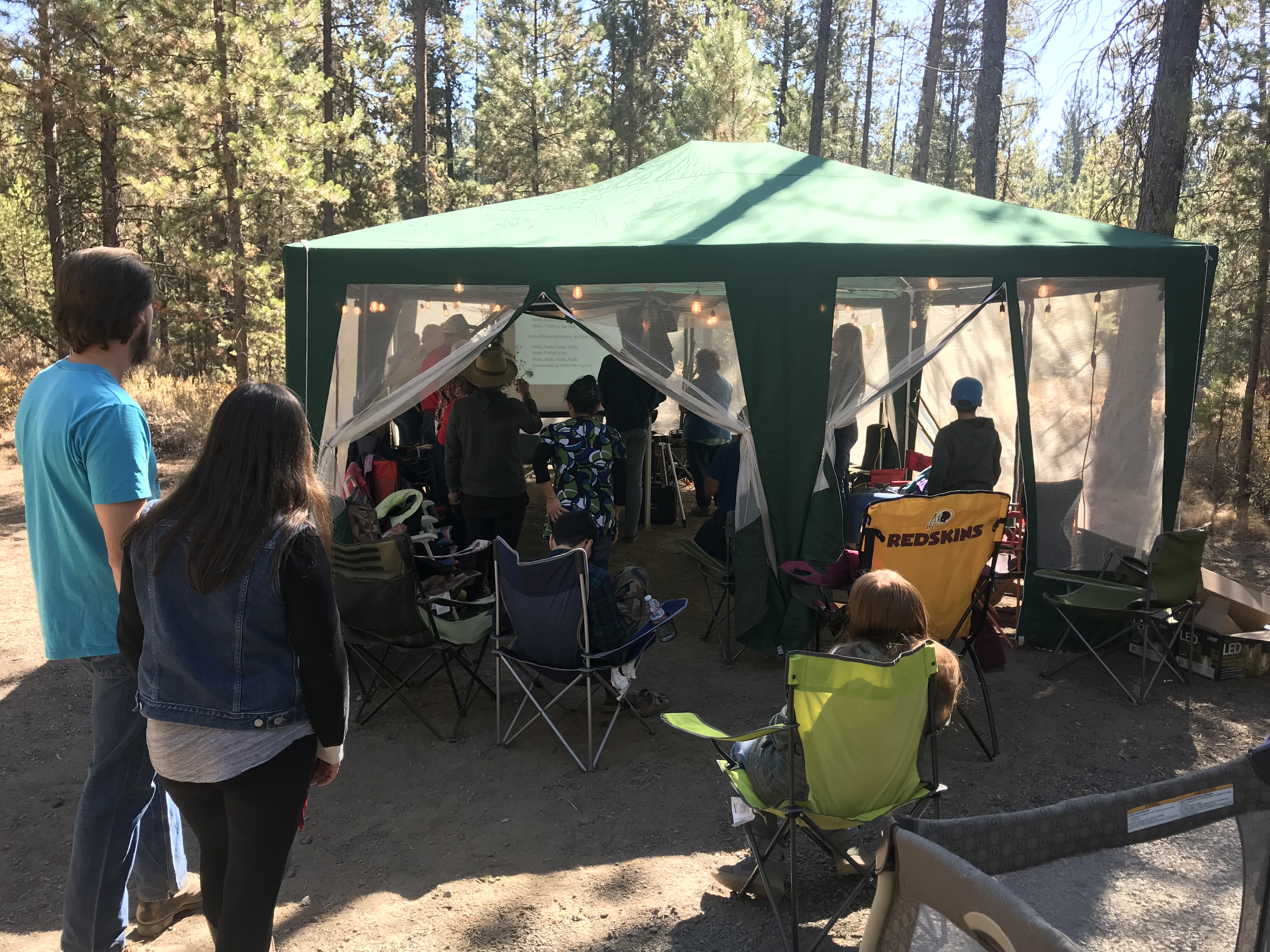
So what did we do? Simply this. My wife and I told our local congregation and a few friends where the Lawrence family would be camping and that they’d be welcome to join us if they wanted. There were no big name speakers, no programs, no special activities, no fancy decorations and pageantry. Just the raw beauty of the great outdoors—YHVH’s creation to inspire us. Everyone was responsible for making their own arrangements. We simply set up a couple of 12 by 17 foot screen room tents on a campsite in a state campground and left it at that. I promised to do a few teachings, and we had three guitarists and a couple of hand drummers to lead our praise and worship. We told them it would be the most rustic and Spirit-led Sukkot they’d ever experienced. They came and it was!

More than 25 people followed us out of “Babylon” and into the wilderness for the eight days, and another 10 to 15 joined us for the weekend from three states and Canada. One family drove 1,730 miles from northern British Columbia, Canada to have their son baptized and another came 1,230 miles from Nebraska. Amazing!

As the only Bible teacher there, I had been preparing myself spiritually for nearly nine months for this occasions through much Bible study, listening-prayer and meditation. I wanted to be a vessel in the Father’s hands to bring fresh spiritual manna for the people and not just more knowledge that swells the head but leaves the spirit in man shriveled and immature. There’s too much of that going on out there already!

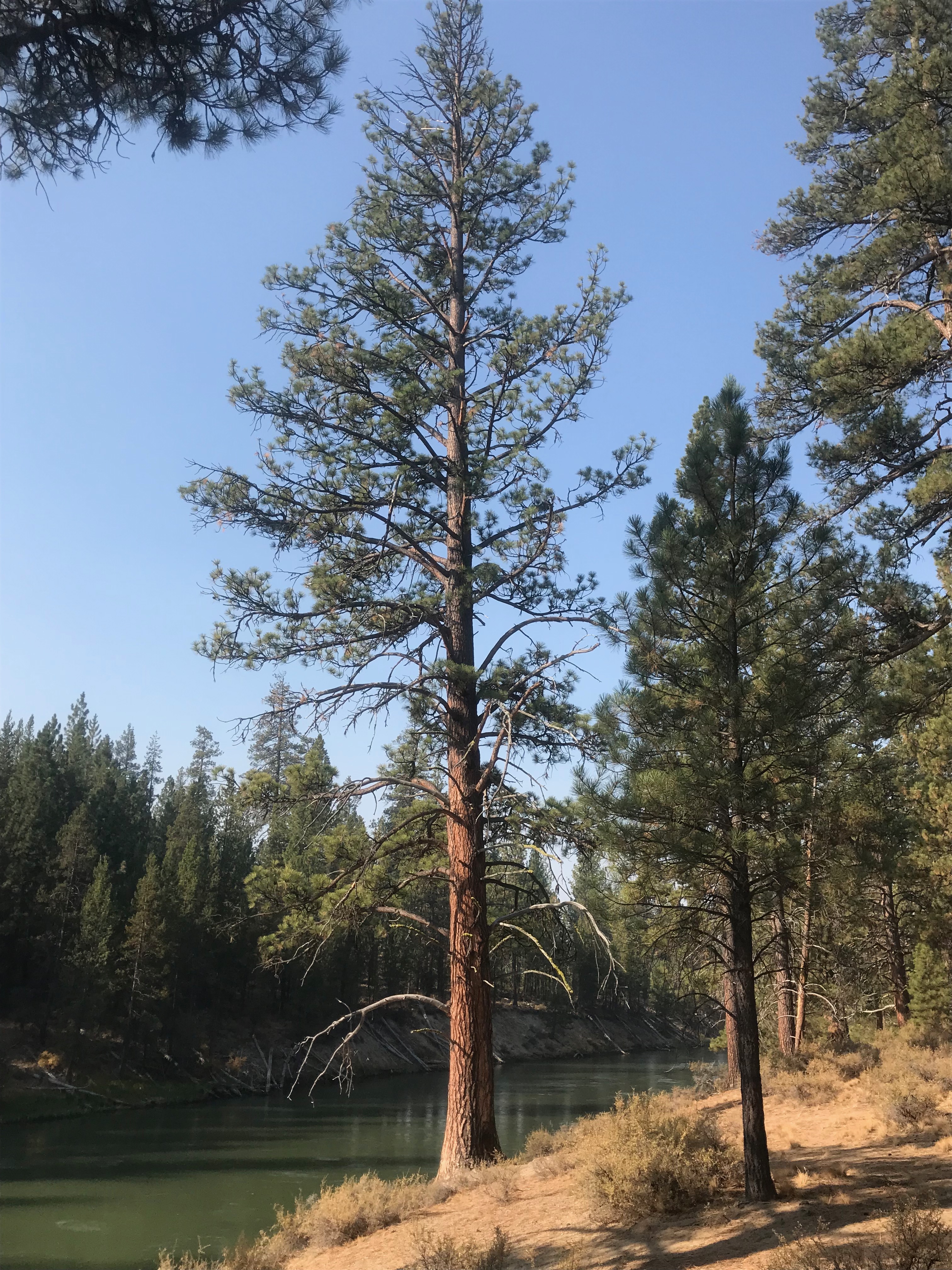
My teachings focused on each person developing their personal spirit, so that they can connect better to YHVH through the Ruach or Spirit of Elohim and survive and thrive in the end times assault against biblical truth. This is what I did nearly every day: I would give a short lecture/teaching to lay a scriptural foundation, and then would give the “students” an assignment that they had to do alone out in nature. The nature part was easy, since we were in the middle of a pine and sage brush forest a few steps from one of Oregon’s most wild and scenic rivers.

The activities were designed to help people go deeper and higher with Elohim by tuning into their personal spirit (as opposed to their soul man [i.e. their mind, will and emotions]), and learning to separate between the two (Heb 4:12). Man is a tripartite being (1 Thess 5:23), and Yeshua declared that we have to worship Elohim not just in truth or head knowledge, but also in spirit (John 4:23–24). We learn elsewhere that our personal spirit or conscience is the lamp of YHVH’s Set-Apart Spirit in each of us (e.g. Prov 20:27; Ps 18:28; Rom 8:16; Job 29:3). With these things in mind, I gave each person assignments to help develop their personal spirit and tune into Elohim through nature. Sometimes it helps to get away from the things of man and surround yourself with Elohim’s creation—all of which points to him—in order to hear his voice in your spirit man.

Our first assignment involved spiritual catharsis and reconciliation. I asked each person to allow the Ruach to convict them of a sin or two, and then go to a person they had wronged (especially a family member) and repent, be accountable and ask for help in overcoming that sin. Healing in personal relationships occurred. This has to happen before we can go deeper and higher with Elohim.

After that, we took various nature walks where we learned to hear Yah’s voice better, to hear prophetic words, to write psalms, to let nature speak to us of the glories of Elohim. Each person journaled what they heard and then, if they were comfortable to do so, shared what they received from above with the congregation to encourage and inspire others. We did theme and variation on this nearly every day for eight days.

Beyond that, we fellowshipped around the campfire, had an erev Shabbat dinner, and some of us took a hike to the 6,600 foot level to some high mountain lakes at the base of some 10,000 plus foot mountains. Some of us also mountain biked, went to Crater Lake National Park, visited hot springs and other local geological features and, of course, shopped in town.

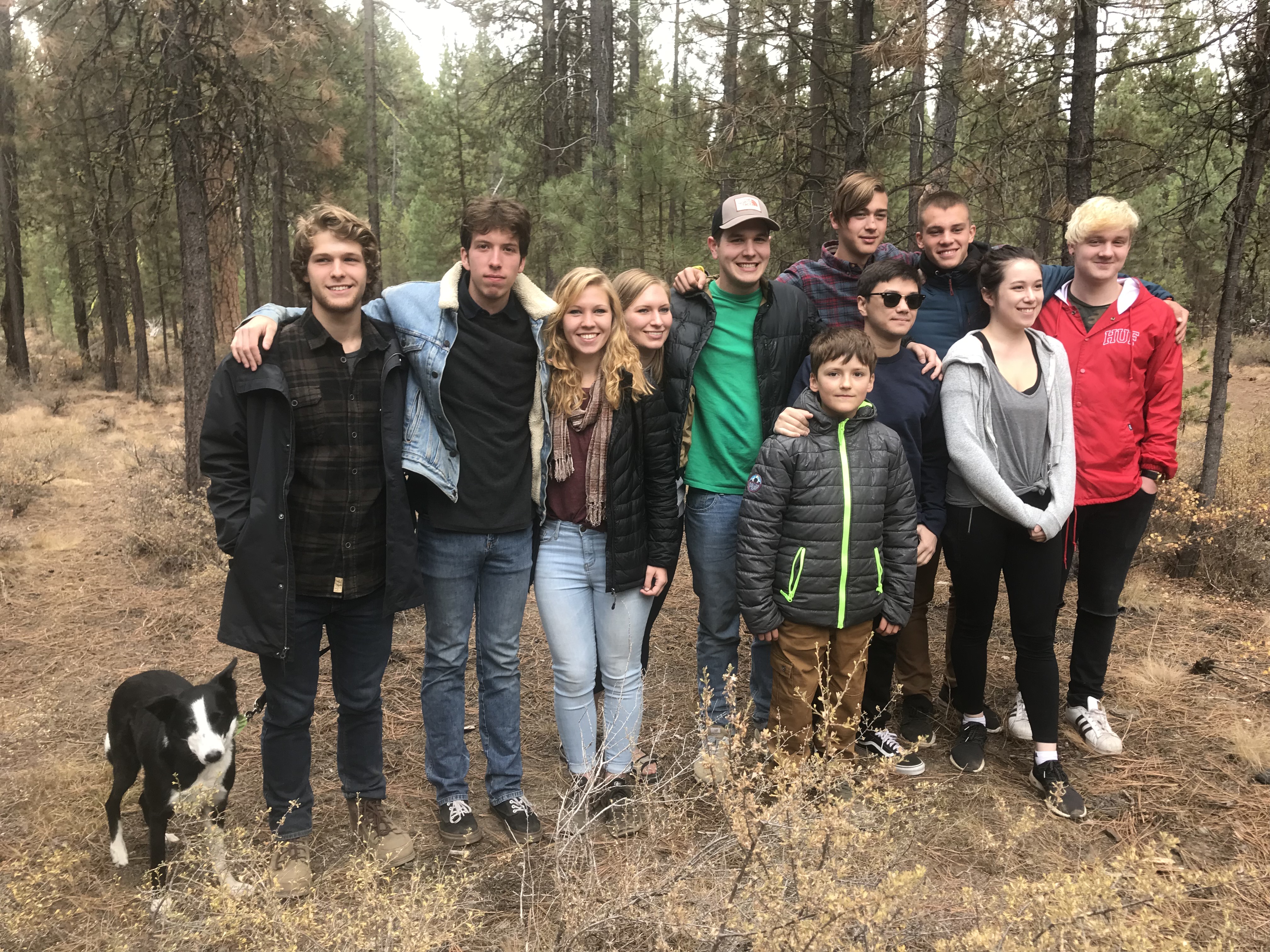
One of the most exciting things was the willing and eager participation of about a dozen of our precious young people in their teens and early twenties. They helped with the praise and worship, gave testimonies, wrote psalms, and received prophetic words from YHVH. One young teen was baptized in the river, and received the baptism of the Spirit all at the same time. The rain stopped, the clouds parted and when he came out of the water, the sunshine shone directly on him as an answer to his prayer and confirmation of a prophetic word that was given. Yah made his face to shine on young Nathanael that day.  To be sure, heaven is smiling to see the next generation picking up the spiritual torch!

Here are several pictures. Stay tuned for more to follow.


Genesis 6:2–4, “the Sons of Elohim” and “the Giants”

Genesis 6:2, Sons of God. We find here an interesting construction in the Hebrew text. Literally, the Hebrew reads, “sons of the gods” or beney–ha-elohim. Usually, the word elohim, when referring to the Creator, doesn’t have the definite article, but simply Elohim. The word elohim not only can refer to the Godhead, but can also mean “angels, gods, rulers or judges.” The phrase, “the gods/ha-elohim” referring to pagan demon-deities is also found in Exod 18:11, “Now I know that the LORD is greater than all the gods/ha-elohim; for in the very thing in which they behaved proudly, He was above them.” Is it possible then that the phrase, “sons of the gods” in this verse can refer to fallen angels? I believe so.

Genesis 6:3, My Spirit shall not strive [Heb. deen]. The LXX, Targums, Aramaic and Latin Vulgate all say abide instead of strive, which is an alternate translation from the MT. This is the translation that Philo presumes in his commentary on this passage (Allegorical Interpretation, “On the Giants,” chap. V.19). From this verse based on this alternate translation, it appears that the Spirit of Elohim was endeavoring to convict man of sinfulness and bring him back to the paths of righteousness, but that man was so evil and reprobate that Elohim gave up on this endeavor and had no choice but to pronounce divine judgment upon man as the final solution in dealing with the problem. Perhaps this gives us a clue as to what the “restrainer” of 2 Thess 2:7 is that Elohim will take away from the earth before the apotheosis of evil occurs in the last days just prior to Elohim pouring out his divine wrath on mankind as foretold in the Book of Revelation and elsewhere.

Genesis 6:4, Giants. Heb. Nephilim. This Hebrew word is found only one other place in the Bible. This is in Num 13:33 where it is used twice and where the nephilim are called to the descendants of Anak (see also Num 13:28; Deut 9:2; Josh 15:14; Judg 1:20). Scholars most often translate this word either as giants, mighty ones or fallen ones. Scholars disagree as to meaning of the root form of this verb and whether the stem means “those that cause others to fall down” or “fallen ones.” BDB confesses that the basic etymology of the word is questionable. At issue, according to The TWOT, is whether the root of nephilim is nepel meaning “untimely birth or miscarriage” (resulting in the production of superhuman monstrosities), or the more likely from the root napal, which relates to other Hebrew words meaning “be wonderful, strong or mighty.” The LXX (as apparently do the majority of the Targums) translates nephilim as giants, though The TWOT admits this may be misleading. This word is of unknown origins and may even mean “heros” or “fierce warriors.”

Adding to the confusion of this passage is the ambiguity as to whether the nephilim are the sons of Elohim or their offspring.

Whatever the meaning of nephilim and/or sons of Elohim may be, two schools of thought have prevailed in Jewish and Christian circles as to who these people were. One line of reasoning asserts that they were the children of Seth, while another presents the idea that the sons of Elohim were the offspring of sexual unions between fallen angels or demons and the daughters of men (called incubus) resulting in half-breed demon-humans (called Continue reading →


Only One Cure for Guilt and Shame!

Genesis 3:7, Naked…fig leaves. Guilt and shame. Guilt and shame are different. Guilt is a result of sin and brings conviction of sin leading to confession, forgiveness and cleansing from sin.

Shame, on the other hand, drives us to hide and tells us that we can’t truly be forgiven—that we need to hide. We have to hide behind something. Usually it’s a religious mask to make people think we’re different than we really are—to hide our true identity, who we really are. Adam and Eve used fig leaves. There was no church to hide in where they could play childish religious games of pretend.

Religious people are especially adept at play-acting with masks. This is often fueled by a sincere but misguided desire to please Elohim and others. In reality, we’re hiding our guilt, shame, scars, imperfections, hurts and sins without dealing with them.

The reality is that the shame and condemnation of sin doesn’t lift until one confesses sin and trusts Elohim to forgive them and then let him provide them with his own sin-covering. Elohim covered Adam and Eve in skins—probably a sheep skin, which was a picture of Yeshua—YHVH’s Lamb—dying for them at the cross.

Likewise, our sin must be covered in the atoning blood of Yeshua. Wearing masks instead of dealing with sin causes us to become smug, self-sufficient, dishonest, self-righteous and arrogant. This was the spiritual state of the Laodiceans.


The Activities of Satan the Devil

Genesis 3:1, The serpent .

  • He has a false trinity/godhead (i.e. the beast, false prophet and whore). Rev 13:2–10; 16:13; 17:1–2
  • He is a liar and the father of lies. John 8:44
  • He comes to kill, steal and destroy. John 10:10
  • He has his own synagogue. Rev 2:9
  • He has his doctrines. 1 Tim 4:1
  • He has his mysteries. Rev 2:24
  • He has his throne. Rev 2:13
  • He has his kingdom. Luke 4:6
  • He has his worshipers. Rev 13:4
  • He has his miracles. 2 Thess 2:9
  • He has his angles. Rev 12:7
  • He has his ministers. 2 Cor 11:15
  • He has his sacrifices. 1 Cor 10:20
  • He has his fellowship. 1 Cor 10:20
  • He has his armies. Isa 24:21
  • He sows his tares (workers) among Elohim’s wheat (people). Matt 13:24–30
  • He instigates false doctrine. 1 Tim 4:1–3
  • He perverts the word of Elohim. Gen 3:1–4
  • He hinders the work of Elohim’s servants. 1 Thess 2:18
  • He resists the prayer of the Elohim’s servants. Dan 10:12–13
  • He blinds men to the truth. 2 Cor 4:4
  • He steals the word of Elohim from human hearts. Matt 13:19
  • He accuses the saints before Elohim. Job 1:7–12
  • He lays snares for men. 2 Tim 2:26
  • He tempts people to sin. Matt 4:1
  • He afflicts people with pain and suffering. Job 2:7
  • He deceives. Rev 12:9
  • He undermines the sanctity of the home. 1 Cor 7:3–5
  • He prompts both saints and sinners to transgress against the holiness of Elohim. Matt 16:22–23
  • He lurks about as a roaring lion seeking whom he may devour. 1 Pet 5:8